
Google tailors search results based on location, behavior, and language preferences. If you're not seeing results in your preferred language—or if you frequently switch between languages—adjusting your Google search language settings can significantly improve relevance and usability. Whether you're traveling, learning a new language, or supporting multilingual users, customizing this setting ensures a smoother, more intuitive experience. This guide walks through the exact steps to change your Google search language across devices and accounts, along with tips to maintain consistency and accuracy.
Why Google Search Language Matters
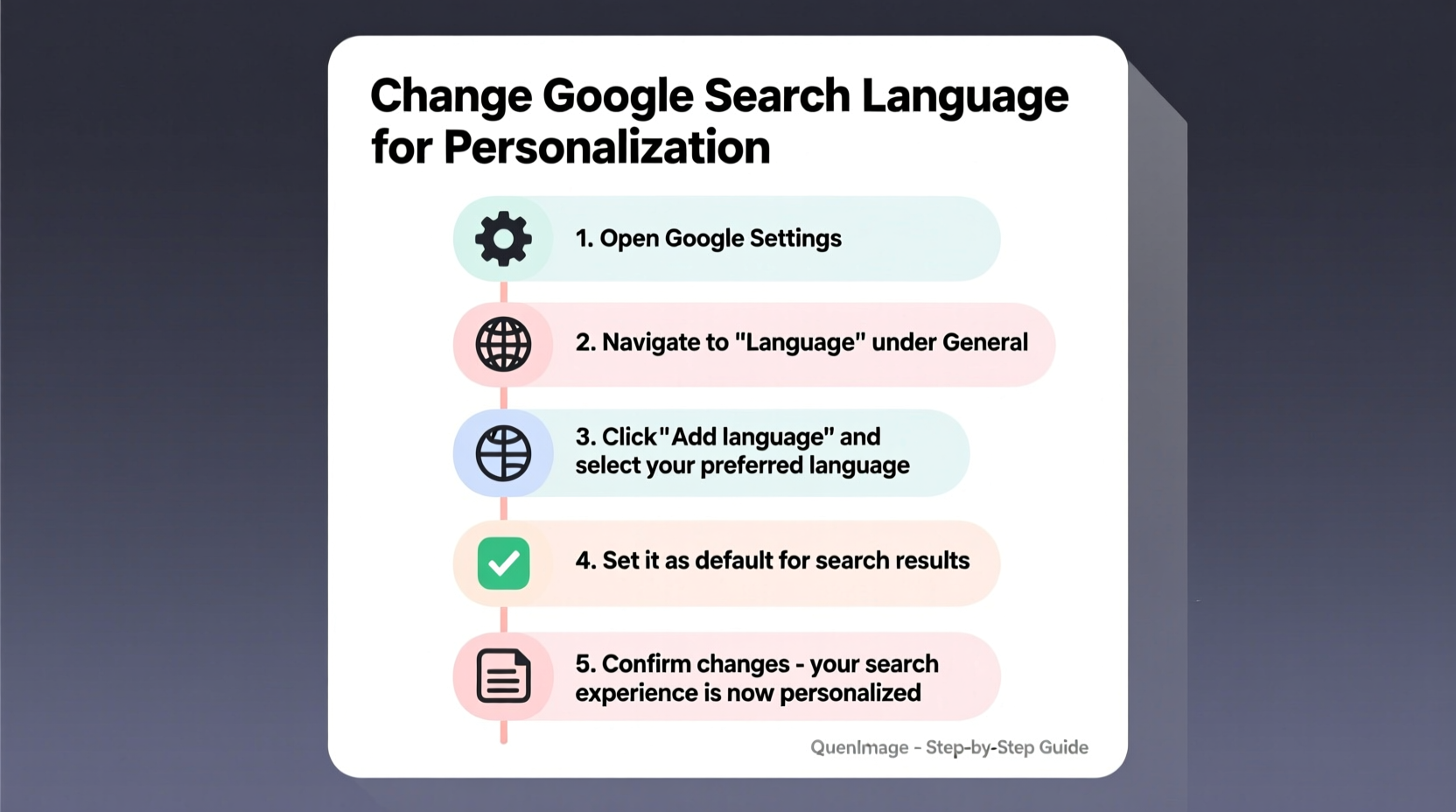
Google uses your language settings to determine which websites, news articles, and local services appear at the top of your results. Even if you're fluent in multiple languages, default settings may prioritize content from your region rather than your preferred tongue. For example, a Spanish speaker in Canada might receive predominantly English results unless their language preference is explicitly set.
Beyond convenience, accurate language settings enhance accessibility. Non-native speakers benefit from simplified terminology, while bilingual users gain access to localized information without manually searching for translated versions. Additionally, voice search, autocomplete suggestions, and AI-generated summaries adapt to your chosen language, making interactions faster and more natural.
“Language settings are one of the most underused tools for personalizing digital experiences. A small adjustment can unlock vastly more relevant information.” — Dr. Lena Park, UX Researcher at Global Interface Lab
How to Change Google Search Language on Desktop
Changing your search language on a computer is straightforward and affects all Google services tied to your account, including Search, News, and Translate. Follow these steps:
- Go to google.com and sign in using your Google account.
- Scroll to the bottom of the page and click on the current language label (e.g., “English”) next to the gear icon.
- Select “Search settings” from the dropdown menu.
- In the left sidebar, choose “Languages.”
- Click “Add a language” and select your preferred language from the list.
- Move your desired language to the top of the list using the up arrow to set it as primary.
- Ensure the box next to “Use this language for spell-check and editing tools” is checked if applicable.
- Click “Save” at the bottom of the page.
After saving, refresh Google.com. You’ll notice changes in interface labels, suggested searches, and result rankings. For instance, searching “weather” will now return forecasts from local sources in your selected language.
Adjusting Language Settings on Mobile Devices
Mobile usage often differs from desktop behavior, so Google allows independent control over language preferences via the Google app and device-level settings.
Using the Google App (Android & iOS)
- Open the Google app and tap your profile picture or initial in the top-right corner.
- Select “Settings” > “General” > “Search language.”
- Choose one or more languages. The first selected becomes the primary.
- Tap “Done” to confirm.
Through Device System Settings
On many smartphones, Google automatically adopts the system language. To adjust:
- Android: Go to Settings > System > Languages & input > Language. Reorder or add your preferred language.
- iOS: Navigate to Settings > General > Language & Region > iPhone Language. Select your preferred option.
Note: After changing the system language, restart the Google app to apply updates. Some features like Discover feed and voice search will reflect the change immediately.
Managing Multiple Languages Effectively
If you regularly use more than one language, Google supports multilingual configurations. However, prioritization is key—Google ranks languages in order of preference, influencing everything from ad targeting to video recommendations.
| Scenario | Recommended Setup | Expected Outcome |
|---|---|---|
| Bilingual user (French/English) | Set both languages; place French first | French results prioritized but English content still visible |
| Traveling temporarily | Keep primary language, add secondary temporarily | Local results appear without disrupting core settings |
| Learning a new language | Add target language below native one | Gradual exposure to foreign-language content |
To prevent confusion, avoid adding too many languages. Google works best with 1–3 defined preferences. Extra entries dilute personalization and may lead to inconsistent results.
Mini Case Study: Maria’s Multilingual Workflow
Maria, a freelance translator based in Barcelona, needed reliable access to both Catalan and German content for her clients. Initially, she struggled with irrelevant English-heavy results despite setting her browser language correctly. After discovering Google’s dedicated language panel, she added Catalan as primary, followed by German and English. Within days, her search accuracy improved dramatically—local news sources appeared in Catalan, while technical documentation surfaced in German when relevant. By fine-tuning her preferences instead of relying solely on browser settings, Maria saved an estimated 3–4 hours per week previously spent filtering unwanted content.
Troubleshooting Common Issues
Sometimes, even after updating preferences, Google continues showing results in an unexpected language. Here’s how to resolve common problems:
- Results don’t update: Clear your browser cache or restart the Google app. Also verify that no conflicting extensions (like auto-translate tools) are overriding settings.
- Ads appear in another language: Advertisers target based on IP and cookies. Use incognito mode or review Google Ads settings under “Ad Privacy” to refine targeting.
- Voice search misinterprets commands: Ensure your device microphone language matches your Google language. On Android, go to Settings > Voice > Language.
FAQ
Will changing my Google search language affect other Google services?
Yes. Adjustments typically propagate across Gmail, YouTube, Maps, and Drive. Interface text, notifications, and recommended content will shift to align with your chosen language hierarchy.
Can I set different languages for different devices?
Yes, but only if they’re not synced under the same Google account. Otherwise, changes made on one device will sync across all connected platforms. For device-specific control, disable sync temporarily or use guest profiles.
Does Google detect language automatically?
Google uses a combination of browser settings, IP geolocation, and account history to infer language. While convenient, automatic detection isn’t always accurate. Manually setting your preference ensures consistency and precision.
Final Checklist Before You Finish
- ✅ Signed into the correct Google account
- ✅ Accessed “Search settings” via Google’s footer menu
- ✅ Added and prioritized desired language(s)
- ✅ Saved changes and refreshed the browser/app
- ✅ Verified changes by performing a test search
- ✅ Reviewed mobile and desktop settings separately if needed
Conclusion: Take Control of Your Digital Experience
Your relationship with information should be seamless, intuitive, and tailored to who you are—not dictated by algorithms guessing your intent. By taking just a few minutes to adjust your Google search language, you reclaim agency over what you see, read, and interact with daily. Whether you're reconnecting with your heritage language, expanding your global awareness, or simply organizing your digital workspace, this small change delivers outsized benefits. Don’t wait for technology to adapt to you—guide it intentionally. Update your settings today and experience a web that truly speaks your language.




 浙公网安备
33010002000092号
浙公网安备
33010002000092号 浙B2-20120091-4
Comments
No comments yet. Why don't you start the discussion?