
In an age where communication defines credibility, the right phone number can influence first impressions, customer trust, and even brand perception. Whether you're launching a new business, establishing a personal identity, or managing multiple roles, selecting the ideal phone number is more than just convenience—it's strategy. From vanity numbers to regional codes, portability to privacy, the decision involves balancing functionality, professionalism, and long-term usability.
Why Your Phone Number Matters More Than You Think
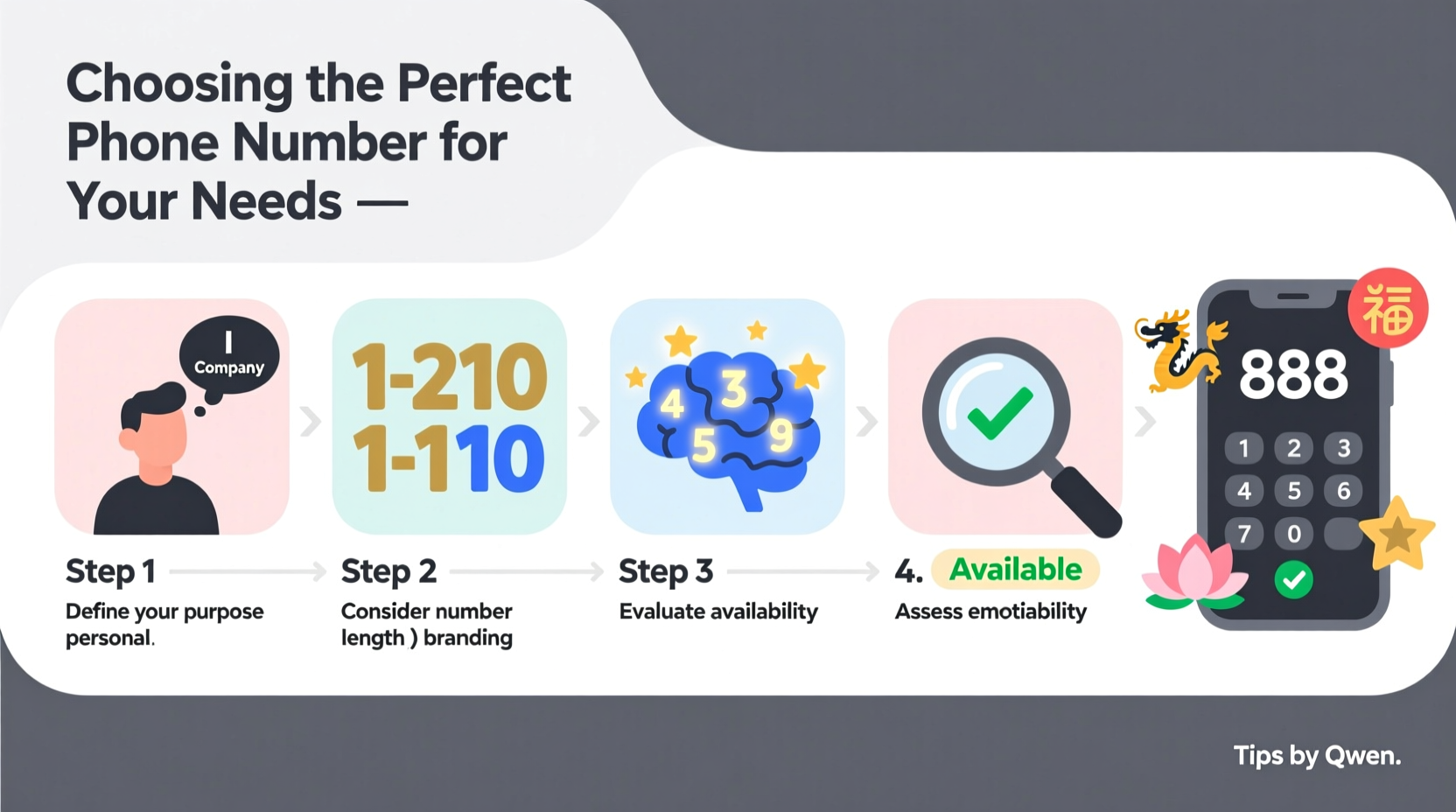
A phone number is often the first point of contact between you and the outside world. For businesses, it’s part of branding; for professionals, it reflects reliability; for individuals, it affects accessibility and safety. Studies show that customers are more likely to call local area codes, and memorable numbers increase response rates by up to 30%. A well-chosen number supports trust, recall, and seamless communication.
“Your phone number is digital real estate. Once claimed, it shapes how people perceive your presence.” — James Reed, Telecommunications Consultant at NexaLink Communications
Beyond perception, practical concerns like portability, spam exposure, and international accessibility play crucial roles. The wrong choice today could lead to missed opportunities or unwanted attention tomorrow.
Step-by-Step: How to Choose the Right Phone Number
Step 1: Define Your Purpose
Start by clarifying why you need the number. Is it for:
- Personal use (private calls, social connections)
- Freelance work or consulting
- A small business or startup
- Marketing campaigns or lead generation
- Temporary projects or online verification
Your purpose determines the features you’ll prioritize—privacy, memorability, professionalism, or scalability.
Step 2: Decide Between Mobile, Landline, or VoIP
Different technologies offer distinct advantages:
| Type | Best For | Pros | Cons |
|---|---|---|---|
| Mobile | Personal use, on-the-go professionals | Portable, widely accepted, SMS-enabled | Limited customization, harder to mask location |
| Landline | Local businesses, home offices | Perceived as trustworthy, stable | Less flexible, declining infrastructure |
| VoIP (e.g., Google Voice, Grasshopper) | Remote teams, entrepreneurs, multi-line setups | Low cost, customizable, easy to forward | Dependent on internet, variable caller ID recognition |
Step 3: Choose the Right Area Code
The area code impacts both perception and reach. Local numbers build community trust; national toll-free numbers (like 800, 888) suggest broader service availability.
- Local numbers: Ideal if serving a specific city or region. Customers are more likely to answer calls from familiar prefixes.
- Toll-free: Best for customer service lines, sales, or national brands. Enhances accessibility.
- Non-local mobile: Acceptable for remote workers, but may reduce pickup rates in some demographics.
If you operate remotely but want local appeal, consider a “local presence” number—a VoIP line with a local area code that forwards to your actual location.
Step 4: Prioritize Memorability and Professionalism
A hard-to-remember number defeats its purpose. Consider:
- Vanity numbers: Like 1-800-FLOWERS, these spell words and boost recall. Great for marketing.
- Patterned digits: Repeating (555-555-5555), sequential (123-456-7890), or palindromic numbers stand out.
- Avoid awkward combinations: Numbers that resemble obscenities or unfortunate word associations (e.g., 666) can harm credibility.
Step 5: Ensure Portability and Ownership
Always verify that you can keep (port) your number if switching carriers or services. Some free VoIP providers retain ownership, making transfers difficult. Opt for services that allow full control and exportability.
Checklist: Before You Finalize Your Number
Use this checklist to ensure your selection meets all critical criteria:
- ✅ Aligned with intended use (personal, business, etc.)
- ✅ Compatible with your preferred carrier or VoIP provider
- ✅ Area code matches target audience or location
- ✅ Easy to remember and communicate verbally
- ✅ Free from negative connotations or confusing digit patterns
- ✅ Portable across services if needed
- ✅ Supports SMS, voicemail, and call forwarding as required
- ✅ Not previously associated with spam or scams (verify via reverse lookup)
Real Example: Building Trust with a Local Number
Sophia launched a virtual accounting practice from Austin but initially used her New York mobile number. Despite excellent service, client conversion lagged. After switching to a local 512-area VoIP number, her callback rate increased by 40% within six weeks. Clients commented they felt more confident dealing with someone who “sounded local.”
This case illustrates how geography—even perceived geography—impacts trust. A simple number change aligned her digital presence with her market, improving credibility without altering service quality.
Common Mistakes to Avoid
- Prioritizing cost over functionality: Extremely cheap numbers may lack support, reliability, or features like call recording.
- Choosing overly complex vanity numbers: If it takes explanation, it’s not memorable.
- Ignoring future scalability: A single line might suffice now, but what happens when you grow?
- Using personal numbers for business: Blurs boundaries and risks privacy if the number is exposed publicly.
- Skipping background checks: Some recycled numbers have histories of being marked as spam.
“Numbers carry reputations. Always screen a new line through caller ID apps before launch.” — Lena Torres, Customer Experience Director at CallShield Analytics
Frequently Asked Questions
Can I keep my old number when switching to a VoIP service?
Yes, most reputable VoIP providers support number porting from traditional carriers. The process typically takes 24–72 hours, though delays can occur depending on the original carrier.
Are vanity numbers worth the extra cost?
For businesses focused on advertising, yes. A study by the North American Numbering Council found that vanity numbers increase call volume by 20–30% compared to random digits. However, for internal or low-visibility uses, they may not justify the premium.
How do I check if a number has a bad reputation?
Use tools like Truecaller, Hiya, or Nomorobo to perform a reverse lookup. Enter the number to see if it’s flagged for spam, scams, or robocalls. Some VoIP platforms also offer reputation screening during selection.
Final Thoughts: Make Your Number Work for You
Choosing the perfect phone number isn’t about luck—it’s about intention. By defining your needs, understanding technological options, and evaluating long-term implications, you turn a basic contact tool into a strategic asset. Whether you’re building a brand, protecting privacy, or simply staying reachable, the right number enhances clarity, credibility, and connection.




 浙公网安备
33010002000092号
浙公网安备
33010002000092号 浙B2-20120091-4
Comments
No comments yet. Why don't you start the discussion?