
Every spring, millions of people in the United States and several other countries adjust their clocks forward by one hour, ushering in Daylight Saving Time (DST). Every fall, they set them back again. This ritual has persisted for over a century, rooted in early 20th-century efforts to conserve energy and make better use of daylight. Yet, as society evolves and scientific understanding deepens, growing evidence suggests that DST may do more harm than good. From disrupted sleep patterns to increased accident rates, the costs of this biannual time shift are becoming harder to ignore. This article explores the compelling reasons behind calls to abolish daylight saving time and examines its wide-ranging impacts on health, productivity, safety, and energy consumption.
The Origins and Evolution of Daylight Saving Time
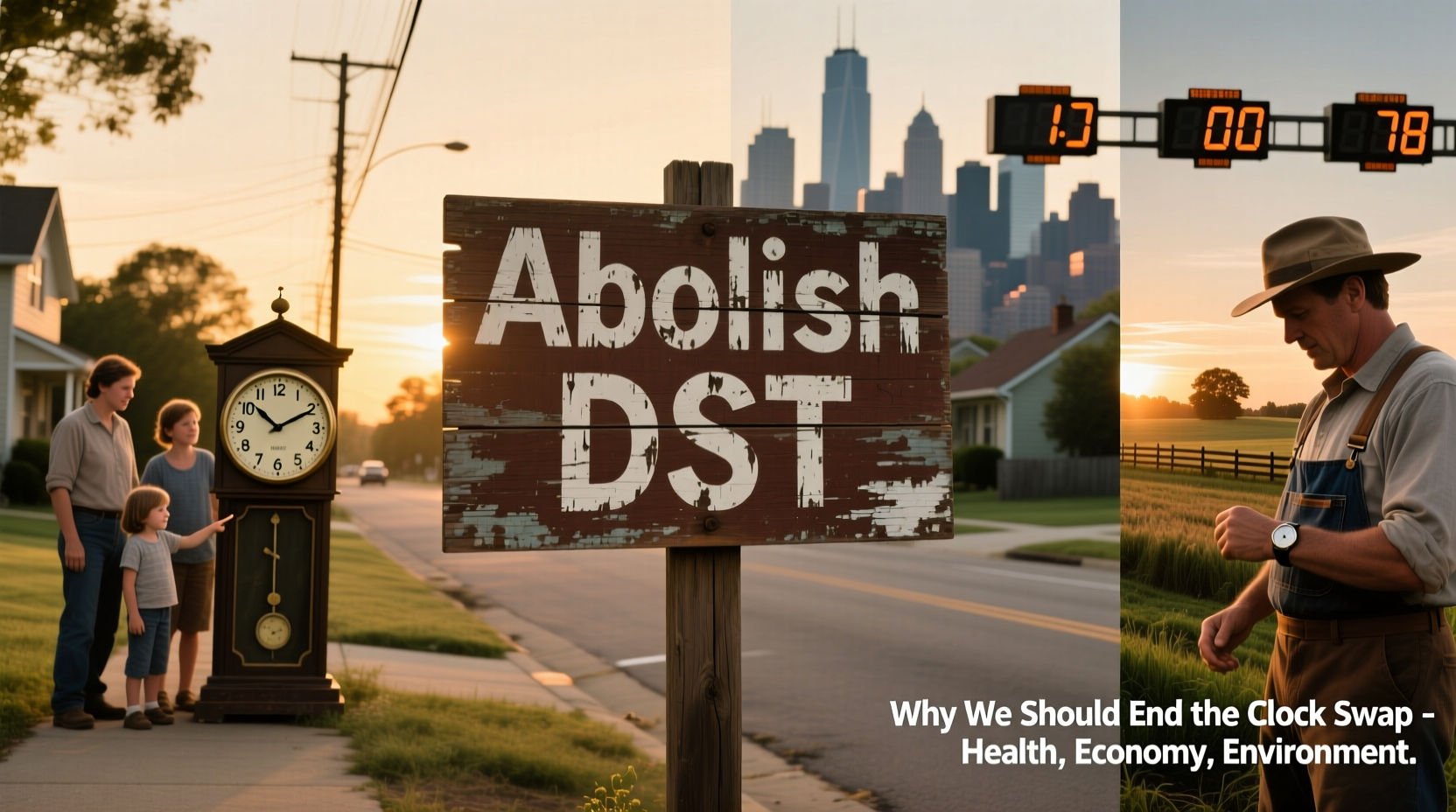
DST was first implemented during World War I as a wartime measure to reduce coal usage by extending evening daylight. Germany and Austria-Hungary were the first to adopt it in 1916, followed by the United Kingdom and later the United States in 1918. The idea resurfaced during World War II and gained broader acceptance in the postwar era. The U.S. standardized DST through the Uniform Time Act of 1966, though individual states retained the right to opt out.
Today, most of the U.S. observes DST from the second Sunday in March to the first Sunday in November. However, Arizona (except the Navajo Nation) and Hawaii remain on standard time year-round. Globally, about 70 countries still practice some form of DST, but many—especially in tropical or equatorial regions—find little benefit due to minimal variation in daylight hours.
“Daylight saving time is an outdated policy with negligible energy savings and measurable health consequences.” — Dr. Beth Malow, Neurologist and Sleep Scientist, Vanderbilt University
Health Impacts: Why Our Bodies Resist the Clock Change
The human body operates on a circadian rhythm—a 24-hour internal clock regulated by light exposure. When clocks shift abruptly, even by just one hour, this biological system is disrupted. Research consistently shows that the transition into DST leads to short-term but significant effects on sleep, mood, and physiological function.
A 2020 meta-analysis published in Current Biology found a 6% increase in fatal traffic accidents in the week following the springtime shift. Emergency room visits for heart attacks rise by approximately 24% on the Monday after clocks move forward, according to a study in the American Journal of Cardiology. These spikes are attributed to acute sleep loss and misalignment of internal rhythms.
Children and older adults appear particularly vulnerable. A 2017 study in Sleep Medicine showed that children lost an average of 32 minutes of sleep the night of the spring transition, leading to reduced physical activity and attention span the next day.
Economic and Safety Consequences of Time Shifting
Beyond health, DST affects workplace productivity, public safety, and economic output. The annual shift correlates with increased workplace injuries, reduced cognitive performance, and higher absenteeism. A study by the University of Colorado Boulder found that workers lose an average of 40 minutes of sleep after the spring transition, resulting in greater cyberloafing—non-work-related internet use—on the following Monday.
Financial markets also react negatively. Researchers at the University of California found that stock market returns tend to dip on the Monday after the spring shift, likely due to sleep-deprived traders making risk-averse or irrational decisions.
Public safety is another concern. Police departments report a spike in drowsy driving incidents in the days following DST. While extended evening light might seem beneficial, morning commutes become darker and more dangerous—especially for schoolchildren and pedestrians.
Energy Use: Does DST Still Save Power?
The original justification for DST was energy conservation. In theory, shifting daylight to the evening reduces the need for artificial lighting and electricity. However, modern lifestyles have changed dramatically since the 1970s. Air conditioning, digital devices, and round-the-clock commerce diminish any marginal gains from reduced lighting.
A comprehensive 2008 U.S. Department of Energy report concluded that DST extended in 2005 under the Energy Policy Act saved only about 0.03% of total national electricity per day—equivalent to powering 100,000 homes for a year. Meanwhile, warmer evening temperatures encourage greater AC use, potentially offsetting any lighting savings.
In Indiana, a natural experiment occurred when the state fully adopted DST in 2006 after partial observance. A subsequent study by the National Bureau of Economic Research found no reduction in residential energy use; in fact, some regions saw a slight increase due to higher cooling demands.
| Claim | Evidence | Conclusion |
|---|---|---|
| DST saves energy | Negligible lighting savings, increased AC use | Minimal to no net benefit |
| DST reduces crime | Some drop in evening robberies, but no overall crime reduction | Localized effect only |
| DST boosts retail activity | Extended daylight increases shopping in some areas | Short-term economic gain, not universal |
Moving Toward Permanent Time: What Are the Options?
As criticism grows, policymakers are reconsidering the future of DST. The most discussed solution is adopting permanent standard time or permanent daylight time. The U.S. Senate passed the Sunshine Protection Act in 2022, aiming to make DST permanent, though it stalled in the House.
Permanent standard time aligns more closely with natural circadian rhythms. Waking in sync with sunrise supports melatonin regulation and long-term health. In contrast, permanent DST means darker winter mornings, which could negatively affect schoolchildren and outdoor workers.
Several states—including Florida, California, and Oregon—have passed legislation to adopt year-round DST, pending federal approval. Internationally, the European Union voted in 2019 to end mandatory DST changes, allowing member states to choose their permanent time, though implementation has been delayed.
Step-by-Step: How to Advocate for Ending DST in Your State
- Research your state’s current stance on DST via the legislature’s website.
- Contact your state representative or senator via email or phone.
- Share scientific studies on health and safety risks linked to time changes.
- Join advocacy groups like Save Standard Time or Rethink DST.
- Encourage local media to cover the issue through letters to the editor or op-eds.
- Support bills aimed at ending seasonal clock shifts when they come to vote.
Expert Insight: The Scientific Consensus
Medical and scientific organizations increasingly oppose DST. The American Academy of Sleep Medicine (AASM) has formally recommended eliminating seasonal time changes in favor of a fixed, year-round standard time. Their position, supported by extensive research, emphasizes that circadian biology functions best when aligned with natural light-dark cycles.
“Permanent standard time is the optimal choice for human health and safety. It provides stable, predictable light exposure throughout the year.” — Dr. Phyllis Zee, Chief of Sleep Medicine, Northwestern University
Frequently Asked Questions
Why don’t all states observe daylight saving time?
Under the Uniform Time Act, states can opt out of DST but must remain on standard time year-round. Arizona and Hawaii have chosen this path due to extreme heat and minimal daylight variation. Other states may follow if federal law allows permanent DST.
Would abolishing DST eliminate time changes entirely?
Yes, if a country or state adopts permanent standard time or permanent DST, the biannual clock shift would end. The key debate is which fixed time best serves public health and societal needs.
Is daylight saving time used worldwide?
No. Most countries near the equator do not observe DST because daylight hours vary little year-round. Canada, parts of Europe, and a few Middle Eastern nations use it, but many countries—including Japan, India, and China—do not.
Conclusion: Time for Change
The tradition of changing clocks twice a year persists more from inertia than practical benefit. Modern research reveals that the costs of DST—measured in health risks, safety hazards, and negligible energy savings—far outweigh its advantages. As individuals and societies become more aware of the importance of sleep and circadian health, the push to abolish daylight saving time will likely grow stronger.




 浙公网安备
33010002000092号
浙公网安备
33010002000092号 浙B2-20120091-4
Comments
No comments yet. Why don't you start the discussion?