
Bringing a dog into your life is one of the most rewarding decisions you can make. For first-time owners, however, the choice between adopting an older dog or welcoming a puppy can feel overwhelming. Each option comes with distinct advantages and challenges that affect not just daily routines, but long-term lifestyle adjustments. While puppies are often associated with cuteness and companionship from an early age, older dogs offer stability and predictability. Understanding the real-world implications of each choice helps ensure a better match for your home, schedule, and emotional capacity.
The Emotional Appeal and Reality Check
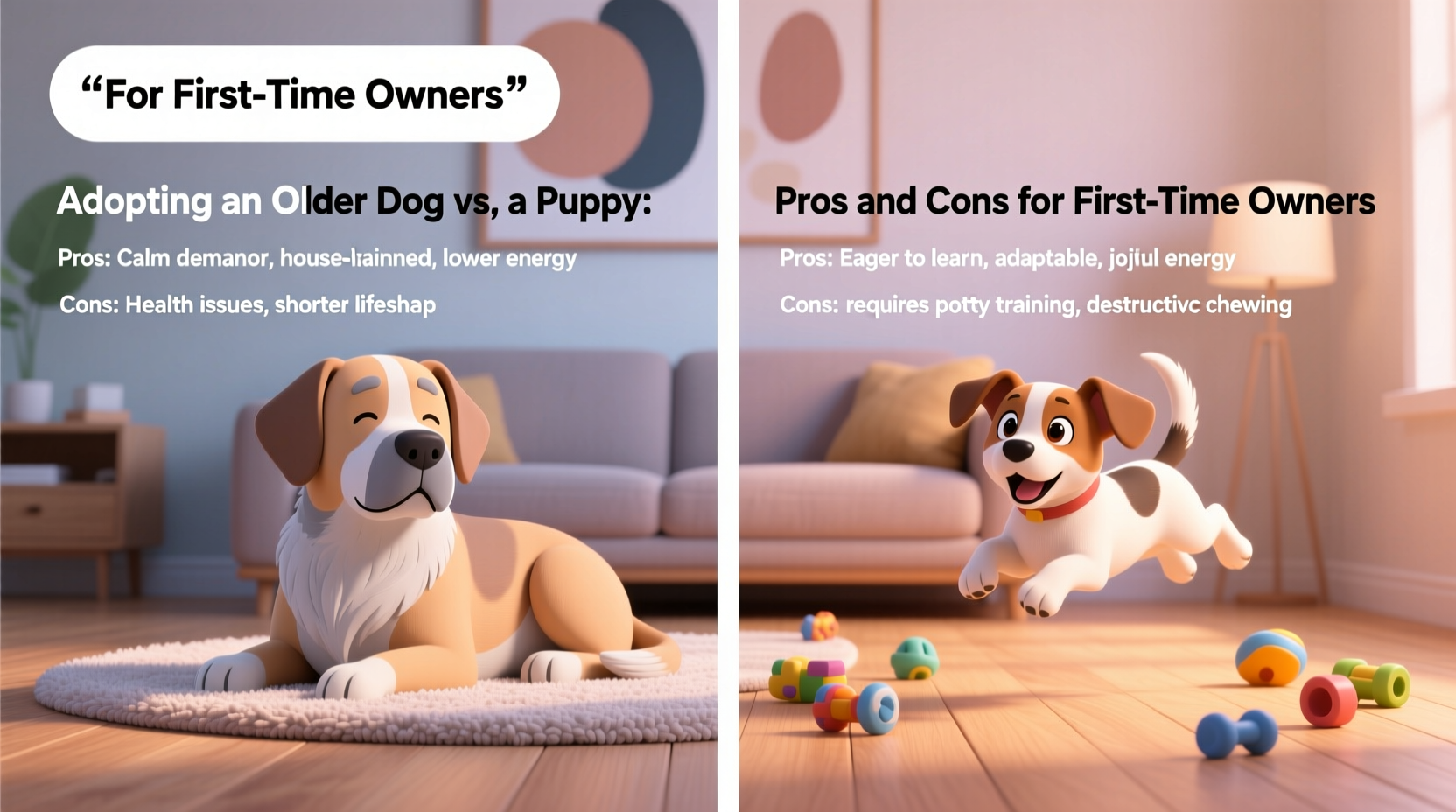
Many first-time dog owners dream of raising a puppy—watching it grow, shaping its behavior, and forming a bond from day one. This emotional draw is powerful and understandable. Puppies represent fresh beginnings, unconditional love, and the joy of training a loyal companion. But behind that excitement lies a reality few anticipate: sleepless nights, constant supervision, chewed furniture, and months of intensive training.
In contrast, older dogs—typically defined as those over three years old—are often overlooked in shelters despite being calmer, house-trained, and already socialized. These dogs may have lived in homes before and know basic commands. Yet, misconceptions about their health, trainability, or attachment potential deter many adopters.
The decision isn’t just about preference—it’s about compatibility. Your living situation, work hours, energy levels, and expectations all play crucial roles in determining which path leads to a successful, lasting relationship.
Pros and Cons at a Glance
To help clarify the trade-offs, here's a detailed comparison of adopting an older dog versus a puppy, tailored specifically for first-time owners.
| Factor | Older Dog (3+ years) | Puppy (under 1 year) |
|---|---|---|
| Training Level | Often house-trained; may know basic commands | Requires full potty training and obedience instruction |
| Energy Level | Generally lower; predictable activity needs | Very high; requires multiple play/exercise sessions daily |
| Time Commitment | Moderate; mostly walks, feeding, vet care | Extremely high; constant supervision, training, socialization |
| Cost Over Time | Lower initial costs; higher potential vet bills later | Higher upfront (vaccines, supplies); steady expenses through adolescence |
| Behavior Predictability | Known temperament and personality | Personality still developing; breed traits may not be evident yet |
| Lifespan Remaining | May have 5–8 years left, depending on breed/health | Can expect 10–15 years or more |
| Bonding Potential | Strong bonds form quickly; less dependency-driven | Deep attachment due to raising from infancy |
Why Older Dogs Are Underrated for First-Time Owners
Contrary to popular belief, older dogs can be ideal companions for new pet parents. They’ve usually outgrown destructive chewing, no longer need crate confinement around the clock, and often settle quietly beside their owners after a walk. Many are already leash-trained and respond to cues like “sit” or “stay.”
Shelters frequently label adult dogs as \"calm,\" \"gentle,\" or \"great with families\"—traits that align perfectly with households seeking a peaceful presence. Additionally, because their size and energy level are already established, there’s less guesswork involved compared to puppies, whose adult behavior can be uncertain even with responsible breeding.
One common concern is whether an older dog will bond deeply with a new owner. Experts agree this fear is largely unfounded.
“Dogs don’t measure love by age—they measure it by consistency. An older dog who has known hardship will often form an incredibly loyal bond with someone who provides safety and kindness.” — Dr. Lena Torres, Veterinary Behaviorist
Moreover, senior dogs (typically 7+) are frequently available for adoption at reduced fees, and many rescue organizations cover initial medical costs such as vaccinations, spaying/neutering, and dental work.
A Real-Life Example: Sarah’s Adoption Journey
Sarah, a 32-year-old graphic designer living alone in Austin, always wanted a dog. She initially planned to adopt a Labrador puppy until she visited her local shelter and met Max, a six-year-old mixed breed surrendered when his previous owner moved into assisted living.
Max was quiet, walked nicely on a leash, and sat politely when offered a treat. Within two weeks, he was sleeping through the night, greeting Sarah at the door after work, and joining her on weekend hikes. There were no accidents indoors, no midnight barking, and minimal furniture damage.
“I thought I’d miss watching a dog grow up,” Sarah said. “But what I gained was peace of mind. I didn’t have to worry about destroying my shoes or spending every evening on training drills. Max gave me companionship without chaos.”
Two years later, Sarah volunteers at the same shelter, advocating for adult dog adoptions.
The Hidden Demands of Puppy Ownership
Puppies demand relentless attention. From eight weeks onward, they require feeding every few hours, frequent bathroom breaks (often hourly during the day), bite inhibition training, and careful socialization with people, animals, and environments. Missed windows in social development can lead to fearfulness or aggression later in life.
First-time owners may underestimate how much time puppy rearing consumes. Training isn’t limited to sit/stay—it includes preventing resource guarding, managing separation anxiety, discouraging jumping, and stopping nuisance barking. Without consistent effort, these behaviors become ingrained habits that are far harder to correct in adulthood.
Veterinary costs also add up quickly. Core vaccines, deworming, spay/neuter surgery, microchipping, and emergency visits for swallowed objects create significant financial pressure in the first year alone. Then come ongoing expenses: crates, beds, toys, leashes, food, grooming, and possibly obedience classes.
Despite all this, many find the experience deeply fulfilling. Raising a puppy allows owners to shape a dog’s world from the beginning, instilling good habits and building trust early. The bond formed during those formative months can be uniquely strong.
Checklist: Are You Ready for a Puppy?
- Can you take time off work or arrange reliable daytime care for bathroom breaks?
- Are you prepared to spend at least 2–3 hours per day on training, play, and supervision?
- Do you have a secure yard or easy access to safe outdoor spaces?
- Is your budget ready for unexpected vet bills and recurring supply costs?
- Have you researched breed-specific needs (e.g., high-energy breeds needing intense exercise)?
- Are all household members on board with the commitment?
- Have you identified a veterinarian and nearby training resources?
When an Older Dog Might Not Be the Right Fit
While older dogs offer many benefits, they aren’t perfect for every situation. Some come with medical conditions requiring medication, special diets, or regular monitoring. Arthritis, vision loss, or cognitive decline can increase caregiving demands, especially in senior dogs.
Others may carry behavioral baggage—rescued dogs might show fear of men, react to loud noises, or guard food. While many of these issues improve with patience and professional guidance, they require emotional resilience and sometimes investment in behavior modification training.
If you're seeking a highly active companion for running, agility, or advanced sports, a younger dog may simply be more physically capable. Similarly, if you want to raise a dog with specific working abilities (like hunting or herding), starting with a puppy from a reputable breeder may be necessary.
Still, for most first-time owners looking for a loving, low-drama addition to their lives, an older dog offers a smarter entry point.
Step-by-Step Guide to Making Your Decision
- Assess your daily routine: Do you work long hours? Travel frequently? Live in a small apartment? Honest answers favor older dogs.
- Evaluate your energy level: Can you handle a teething pup that bites hands and whines at night? If not, consider a calmer adult.
- Visit shelters and meet dogs: Spend time with both puppies and older dogs. Observe behavior, ask questions, and see who connects with you.
- Consult with shelter staff: Ask about temperament tests, medical history, and any known triggers or fears.
- Consider fostering first: Many rescues offer foster-to-adopt programs. Try a short-term placement to test compatibility.
- Make your choice based on fit—not fantasy: Choose the dog that matches your real life, not the version you see on social media.
Frequently Asked Questions
Can older dogs learn new tricks?
Absolutely. While puppies are sponges for learning, adult dogs are often more focused and less easily distracted. With positive reinforcement, older dogs can master new commands, adapt to new rules, and even overcome past fears.
Will a puppy bond more strongly than an older dog?
Bond strength isn’t determined by age. Puppies form attachments through dependency, while older dogs often bond through gratitude and security. Both relationships can be profoundly deep and lasting.
Are older dogs harder to adopt due to health concerns?
Some older dogs have health issues, but so do some puppies. Shelters typically provide medical records, and many older dogs are healthier than assumed. Regular checkups and proper nutrition go a long way in extending quality of life.
Conclusion: Choosing Confidence Over Cuteness
Selecting between an older dog and a puppy isn’t about which is “better”—it’s about which is right for you. First-time owners often gravitate toward puppies, seduced by their charm and the idea of shaping a blank slate. But the truth is, many end up overwhelmed, underprepared, and sometimes returning dogs within months.
Adopting an older dog doesn’t mean settling. It means choosing clarity over uncertainty, calm over chaos, and compassion over convenience. These dogs deserve homes too—and they often give back loyalty, gratitude, and quiet joy in return.
If you’re ready to open your heart and home, do so with eyes wide open. Visit shelters, talk to rescuers, meet the dogs, and reflect honestly on what kind of companion fits your life. Whether young or mature, the right dog will change your world—for the better.




 浙公网安备
33010002000092号
浙公网安备
33010002000092号 浙B2-20120091-4
Comments
No comments yet. Why don't you start the discussion?