
Providing a safe, secure, and appropriately sized habitat is one of the most important aspects of responsible ball python care. These docile, nocturnal snakes thrive in stable environments that mimic their natural West African habitats—warm, humid, and sheltered. While many enclosures on the market can be costly or flimsy, several affordable and durable options exist that balance cost, functionality, and longevity. From budget-friendly plastic tubs to high-quality glass tanks with smart modifications, choosing the right enclosure doesn’t have to mean sacrificing quality for price.
Understanding Ball Python Enclosure Needs
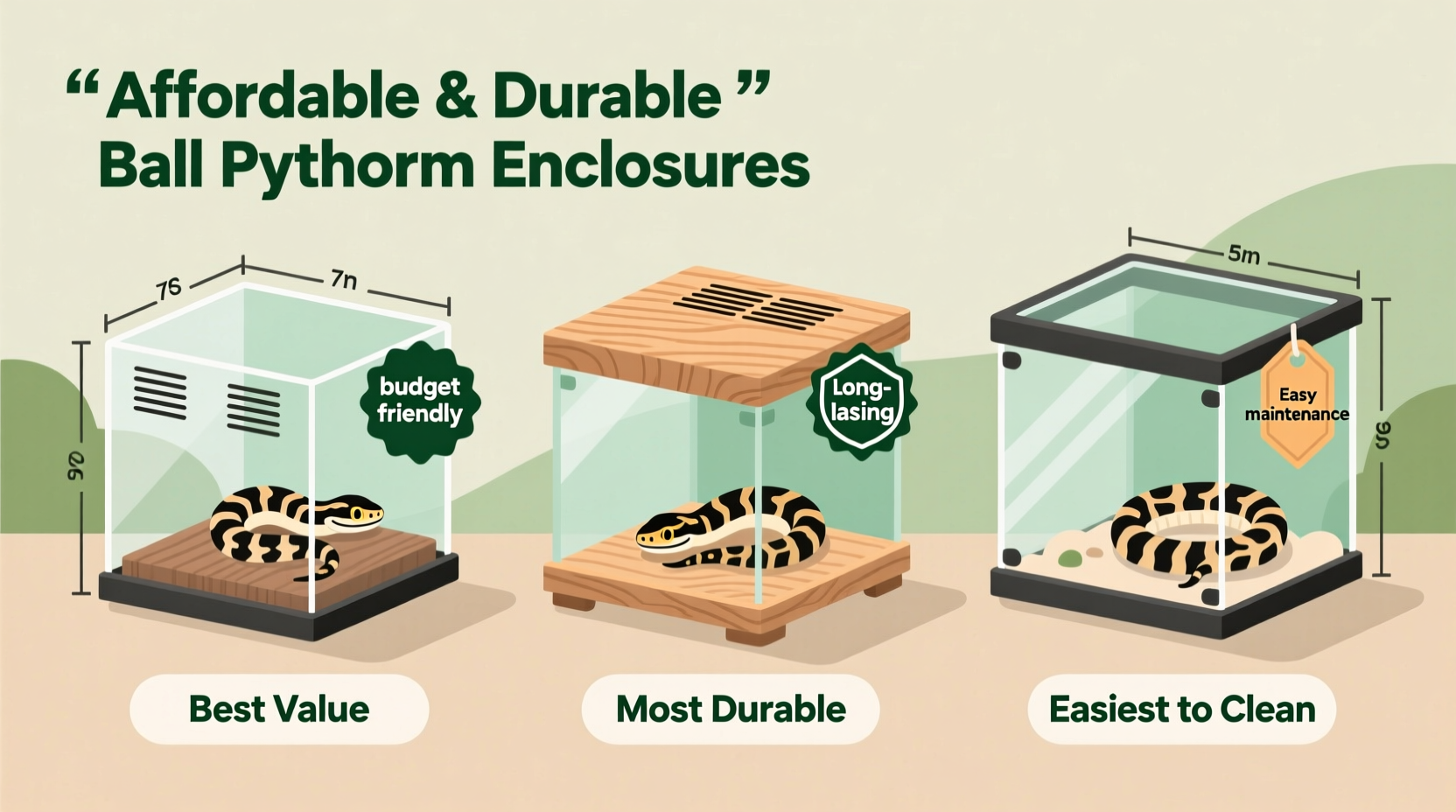
Before evaluating affordability and durability, it’s essential to understand what a ball python actually requires in an enclosure. Adult ball pythons typically reach 3–5 feet in length and need enough floor space to stretch out fully, explore, and thermoregulate. A minimum of 36” x 18” x 18” (length x width x height) is recommended for adults, while juveniles can start in smaller setups around 20” x 10” x 10”.
Key environmental needs include:
- Secure lid or top: Ball pythons are escape artists; any gaps must be sealed.
- Proper ventilation: Prevents mold and stagnant air but should not create drafts.
- Temperature gradient: A warm side (88–92°F) and cool side (78–80°F).
- Humidity control: 50–60%, rising to 70% during shedding.
- Hiding spaces: At least two—one on each thermal zone.
Durability means resistance to warping, cracking, and moisture damage over time. Affordability doesn’t mean cutting corners—it means maximizing value through smart material choices and thoughtful setup.
Top Affordable & Durable Enclosure Options
Several enclosure types stand out when balancing cost, strength, and suitability for ball pythons. Each has trade-offs, but with proper modification, all can serve as excellent long-term homes.
1. Plastic Storage Tubs (RUBS)
Often used in professional breeding facilities, Rubbermaid-type storage containers (commonly called RUBS—Really Useful Boxes) are among the most durable and cost-effective options. They’re lightweight, easy to drill for ventilation, and highly secure.
Available at hardware stores or online for $15–$35 depending on size, these polyethylene tubs resist moisture, scratches, and impacts far better than glass or acrylic. When modified correctly, they offer excellent insulation and humidity retention.
2. Glass Aquarium Tanks
Glass terrariums remain popular due to visibility and availability. Standard 40-gallon breeder tanks (36” x 18” x 17”) fit adult ball pythons well and typically cost $40–$70 secondhand or $90–$130 new.
Their main drawbacks are poor heat retention, heavy weight, and sliding-screen tops that allow too much airflow unless modified. However, adding a custom wooden background or foam insulation board can improve thermal efficiency. With a secure mesh or plexiglass lid upgrade, glass tanks become both functional and display-worthy.
3. PVC Reptile Cages
PVC enclosures, such as those from Zen Habitats or Advanced Vivaria, are built specifically for reptiles. Priced between $150–$250, they may seem expensive upfront—but their lifespan often exceeds 10 years with minimal maintenance.
These cages are waterproof, lightweight, and come pre-drilled with ventilation and cable ports. Many include front-opening doors and sleek designs ideal for indoor placement. Though higher in initial cost, their durability and energy efficiency (due to superior insulation) make them cost-effective over time.
4. Modified Plastic Critter Carriers
Brands like Sterilite or IRIS produce stackable plastic bins designed for pet transport. With some drilling for airflow and security, these can serve as temporary or permanent enclosures for juveniles or small adults.
Priced under $25, they’re extremely affordable and easy to clean. However, long-term use requires reinforcement—especially around latch points—and careful monitoring of humidity levels.
“Plastic tubs are the gold standard in biosecure, low-cost snake housing. I’ve seen colonies run successfully for decades using nothing else.” — Dr. Rebecca Tran, Herpetological Veterinarian
Comparison Table: Enclosure Types at a Glance
| Enclosure Type | Avg. Cost | Durability | Pros | Cons |
|---|---|---|---|---|
| Plastic Storage Tubs | $15–$35 | High | Inexpensive, secure, retains heat/humidity | Low visibility, requires DIY modification |
| Glass Aquarium Tanks | $40–$130 | Medium | Aesthetic appeal, widely available | Heavy, poor insulation, screen tops leak heat |
| PVC Reptile Cages | $150–$250 | Very High | Long-lasting, insulated, professional build | Higher initial cost |
| Modified Critter Carriers | $10–$25 | Low-Medium | Cheap, portable, easy to find | Less secure, prone to warping over time |
Step-by-Step Guide: Building a Budget-Friendly, Durable Enclosure
Creating a reliable, long-lasting enclosure from a plastic storage tub is one of the smartest moves for new and experienced keepers alike. Follow this process to build a secure, functional home:
- Select the right tub: Choose a clear, lidded container with dimensions matching your snake’s size (e.g., 36” x 18” x 12” for adults).
- Drill ventilation holes: Use a 1/4” drill bit to create 20–30 small holes in the upper third of two opposite sides. Avoid the bottom third to preserve humidity.
- Reinforce the lid: Secure the lid with stainless steel clips or locks to prevent escapes.
- Add substrate and hides: Use paper towels, coconut fiber, or cypress mulch. Place one hide on the warm side, one on the cool.
- Install heating: Attach a quality under-tank heater (UTH) to one side, controlled by a thermostat. Never use heat rocks.
- Monitor conditions: Use digital hygrometers and thermometers to track temperature and humidity daily for the first week.
Real-World Example: A Breeder’s Perspective
Mark Rivera runs a small-scale ball python breeding operation in central Texas. Over the past eight years, he’s housed over 40 snakes across various enclosures. Initially using glass tanks, he found they were inefficient—heating costs were high, and humidity fluctuated constantly.
After switching to 36” x 18” plastic tubs with drilled ventilation and thermostat-controlled heating pads, Mark reduced his energy bills by nearly 40%. The snakes showed fewer stress marks, shed more cleanly, and exhibited more consistent feeding behavior. “The tubs are bulletproof,” he says. “I’ve dropped them, moved them weekly, and they still look new after five years.”
Frequently Asked Questions
Can I use a fish tank for my ball python?
Yes, but only if modified properly. Standard aquariums lack secure tops and retain heat poorly. Upgrade the lid with a solid back and plexiglass front, add insulation, and monitor temperatures closely to avoid thermal stress.
How do I stop my enclosure from drying out?
Use substrates like coconut fiber or sphagnum moss, provide a large water bowl on the warm side, and reduce excessive ventilation. In dry climates, misting once every few days or using a humidifier can help maintain levels.
Are PVC cages worth the extra cost?
For long-term ownership, yes. Their superior insulation reduces heating costs, and their resistance to wear means no replacement for a decade or more. If you plan to keep your ball python for its full 20–30 year lifespan, a PVC cage pays for itself over time.
Final Checklist Before Choosing
- ✅ Is the enclosure escape-proof?
- ✅ Does it provide adequate floor space (not just height)?
- ✅ Can it maintain stable temperature and humidity?
- ✅ Is it easy to clean and disinfect?
- ✅ Will it last 5+ years with regular use?
- ✅ Does it fit within your budget without compromising safety?
Conclusion
Finding the best enclosure for a ball python doesn’t require spending hundreds of dollars. Affordable options like modified plastic tubs deliver exceptional durability, performance, and safety when set up correctly. Glass tanks remain viable with upgrades, while PVC cages offer unmatched longevity for those willing to invest upfront. What matters most is consistency—maintaining a secure, climate-stable environment where your snake can thrive.




 浙公网安备
33010002000092号
浙公网安备
33010002000092号 浙B2-20120091-4
Comments
No comments yet. Why don't you start the discussion?