
For millions of households relying on private wells, access to clean water isn’t guaranteed by municipal treatment plants. Contaminants like iron, sulfur, bacteria, nitrates, and sediment are common in untreated groundwater. While whole-house filtration systems can seem expensive, there are cost-effective solutions that offer strong performance without sacrificing quality. Choosing an affordable yet effective well water filter system requires understanding your water quality, prioritizing key contaminants, and selecting a system with long-term value—not just low upfront cost.
Understanding Your Well Water Quality
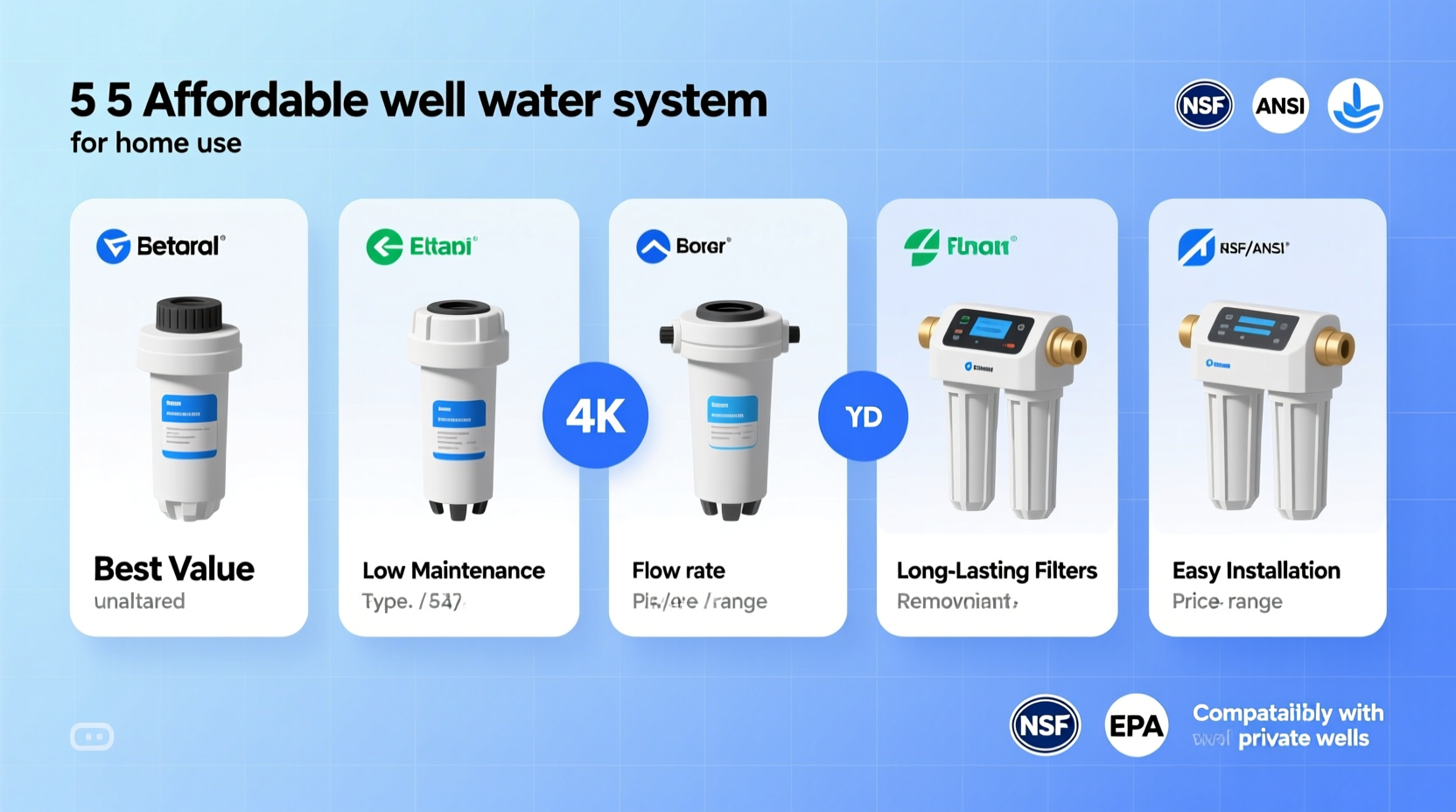
Before investing in any filtration system, it's essential to test your water. A professional lab analysis will identify specific contaminants such as:
- Iron (causes rust stains and metallic taste)
- Sulfur (produces rotten egg smell)
- Bacteria (coliform, E. coli)
- Nitrates (from agricultural runoff)
- Manganese, arsenic, or heavy metals
- Sediment and turbidity
The results determine which type of filtration technology you need. For example, high iron levels may require an oxidizing filter, while bacterial contamination calls for UV disinfection. Installing a system that doesn't address your actual issues wastes money and leaves risks unmitigated.
Top Affordable Filter Systems by Contaminant Type
Not all filters are created equal. The most budget-friendly option is one that solves your exact problem efficiently. Below is a comparison of proven, mid-range systems categorized by primary contaminant.
| Contaminant | Affordable System Type | Average Cost (Installed) | Key Features |
|---|---|---|---|
| Iron & Manganese | Air injection oxidizing filter | $1,200–$1,800 | No chemicals needed, automatic backwash, lasts 10+ years |
| Sulfur (Hydrogen Sulfide) | Catalytic carbon filter | $800–$1,500 | Effective at low concentrations, compact design |
| Bacteria & Viruses | UV purification system | $500–$900 | Kills 99.99% of pathogens, low maintenance |
| Sediment & Cloudiness | Spin-down pre-filter + cartridge filter | $200–$400 | Protects other equipment, easy to maintain |
| Hard Water + Iron | Modular dual-tank system | $1,500–$2,200 | Combines softening and iron removal |
Note: Prices reflect DIY installation or standard professional setup. More complex plumbing or electrical work may increase costs.
Step-by-Step Guide to Choosing an Affordable System
Selecting the right system involves more than price tags. Follow this sequence to ensure long-term savings and effectiveness:
- Test your water through a certified lab. Know what you're dealing with before buying anything.
- Determine flow rate needs. Calculate peak household demand (e.g., shower + washing machine + kitchen tap).
- Select the appropriate technology based on contaminants. Avoid overbuying features you don’t need.
- Compare total cost of ownership, including replacement parts, energy use, and maintenance frequency.
- Look for NSF/ANSI certifications relevant to your concern (e.g., NSF 58 for reverse osmosis, NSF 55 for UV).
- Consider modular designs that allow future upgrades if water conditions change.
- Get multiple quotes from licensed installers or purchase direct with self-installation options.
Mini Case Study: The Miller Family’s Solution
The Millers, living in rural Pennsylvania, noticed brown stains in sinks and a metallic taste in their water. Their initial $200 “whole house” carbon filter did nothing—it wasn’t designed for iron. After testing, they discovered 2.8 ppm of ferrous iron and moderate hardness.
Instead of replacing it with another generic system, they opted for a modular air-charged iron filter paired with a salt-based softener. Total installed cost: $1,750. Five years later, they’ve replaced only the media once and enjoy consistent water quality. Their lesson? Pay for precision, not promises.
Expert Insight: What Professionals Recommend
“Many homeowners overspend because they don’t start with a proper diagnosis. A $300 test can save you $2,000 in wrong equipment.” — Dr. Linda Reeves, Hydrogeologist and Water Treatment Consultant
“The cheapest system is the one that works. That means matching the technology to the contaminant—not chasing brand names or flashy marketing.” — Mark Tran, Licensed Plumbing Contractor
Tips for Maximizing Value and Reducing Long-Term Costs
- Buy in bundles: Some brands offer discounts when purchasing pre-filters, main units, and UV together.
- DIY where possible: UV systems and sediment filters are often simple enough for confident homeowners to install.
- Maintain on schedule: Clean UV sleeves annually, replace carbon every 6–12 months depending on usage.
- Use reusable components: Air injection filters regenerate using oxygen from the atmosphere—no chemicals required.
- Monitor pressure drops: A sudden decrease can indicate clogging, signaling early maintenance needs.
Frequently Asked Questions
Can I install a well water filter myself?
Yes, many systems—including UV purifiers, spin-down filters, and some iron filters—are designed for DIY installation. However, systems involving electrical connections, backwashing, or integration with pressure tanks should typically be handled by a licensed professional to ensure safety and warranty compliance.
How often do filters need replacement?
It depends on the type and water usage. Sediment prefilters may last 3–6 months. Carbon filters generally require replacement every 6–12 months. Catalytic or KDF media can last 3–5 years. UV bulbs should be changed annually regardless of use. Always follow manufacturer guidelines and monitor water quality regularly.
Are cheap online filters reliable?
Some budget-friendly online brands offer solid performance, but beware of exaggerated claims. Look for third-party certifications (NSF, WQA) and verified customer reviews. Units priced significantly below market average often cut corners on tank durability, control valves, or media quality.
Checklist: Choosing an Affordable Yet Effective System
- ✅ Conduct a comprehensive water test
- ✅ Identify primary contaminants
- ✅ Determine household flow rate requirements
- ✅ Research filter types suited to your needs
- ✅ Compare systems with NSF/ANSI certification
- ✅ Evaluate total cost of ownership (not just purchase price)
- ✅ Read independent reviews and installer feedback
- ✅ Consider scalability for future changes
- ✅ Obtain at least two installation quotes (or verify DIY feasibility)
- ✅ Schedule annual maintenance reminders
Conclusion: Smart Choices Lead to Lasting Results
Finding an affordable well water filter system doesn’t mean compromising on safety or performance. By starting with accurate water testing, focusing on targeted filtration, and considering long-term maintenance, homeowners can achieve clean, great-tasting water for under $2,000—often much less. The most economical choice isn’t always the cheapest upfront, but the one that reliably addresses your unique water profile year after year.




 浙公网安备
33010002000092号
浙公网安备
33010002000092号 浙B2-20120091-4
Comments
No comments yet. Why don't you start the discussion?