
When a new series captures public attention, it’s natural for families to consider whether it’s appropriate for younger members. “Aftersun,” while critically acclaimed for its emotional depth and cinematic beauty, carries themes and undertones that warrant careful consideration by parents. Though not a traditional teen drama or youth-oriented program, its nostalgic portrayal of adolescence and complex family dynamics can draw in teenage viewers—and sometimes even younger ones. Understanding the aftersuns rating and what lies beneath it is essential for informed viewing decisions.
The film, directed by Charlotte Wells, centers on a tender yet melancholic father-daughter relationship during a vacation in Turkey. While seemingly gentle on the surface, its narrative subtly explores mental health, isolation, and emotional ambiguity—topics that may be difficult for younger audiences to process without guidance. Parents who assume the film’s quiet tone equates to child-friendly content may overlook its psychological weight. This article breaks down why the aftersuns rating matters, what parents should know, and how to approach such media with their children.
Understanding the MPAA Rating and What It Misses
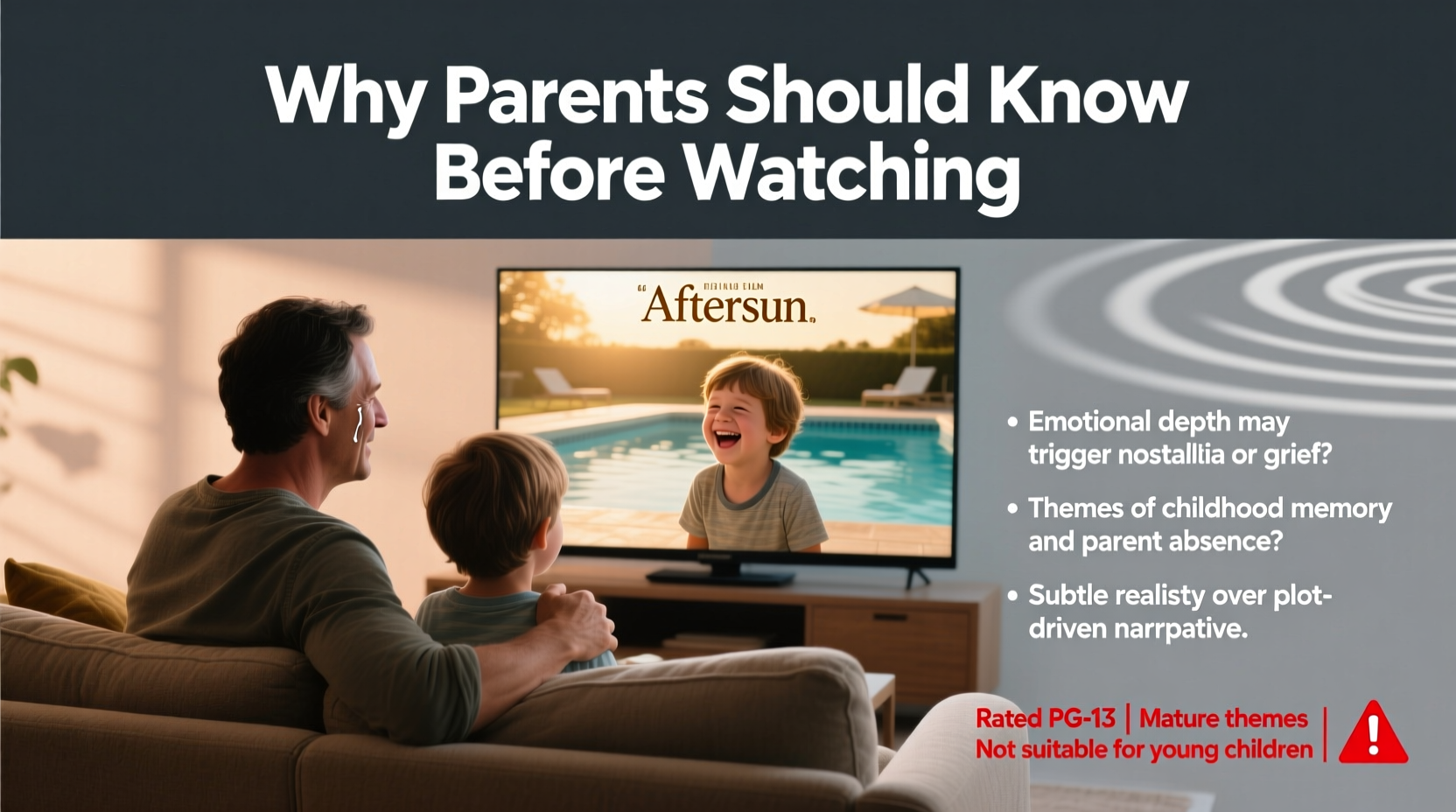
“Aftersun” is rated R by the Motion Picture Association (MPAA) for “some language.” On paper, this seems mild—certainly less alarming than ratings involving violence, nudity, or drug use. However, the R rating alone doesn’t convey the film’s emotional intensity or thematic complexity. The movie contains no explicit scenes, but its power lies in implication, silence, and subtext. For mature audiences, these elements create a poignant experience. For adolescents or sensitive viewers, they can evoke confusion, anxiety, or unresolved emotional responses.
The disconnect between official ratings and actual content is a growing concern. Ratings often focus on overt elements—swearing, physical conflict, sexual content—but rarely account for psychological depth or emotional impact. As Dr. Lena Peterson, a child psychologist specializing in media effects, explains:
“Kids don’t just react to what they see; they react to what they feel. A film like ‘Aftersun’ lingers in the emotional undercurrents. That can be powerful—and potentially unsettling—for young minds still learning to regulate emotions.” — Dr. Lena Peterson, Child Development Specialist
Key Themes That Warrant Parental Awareness
Parents should evaluate content not just by what is shown, but by what is explored. “Aftersun” delves into several themes that, while artistically handled, may require context or discussion if viewed by teens:
- Mental health struggles: The father, Calum, exhibits signs of depression and emotional withdrawal. These are portrayed realistically, without dramatization, which makes them harder for younger viewers to identify as concerning.
- Parent-child role reversal: Sophie, though a child, often appears to emotionally support her father—a dynamic that can normalize unhealthy caregiving roles in young viewers.
- Existential loneliness: The film’s atmosphere is imbued with a sense of isolation, even amidst crowded vacation settings. This mood may resonate deeply with teens experiencing similar feelings.
- Unresolved endings: The conclusion leaves many questions unanswered, which can be artistically valid but emotionally disorienting for viewers expecting closure.
Age-Appropriateness Checklist for Parents
Before allowing a teenager to watch “Aftersun,” consider the following checklist. Answer honestly based on your child’s temperament and emotional resilience:
- Has your child shown interest in or been affected by themes of mental health?
- Do they tend to internalize sadness or become preoccupied with ambiguous endings?
- Are they able to distinguish between cinematic storytelling and real-life relationships?
- Have they previously watched slow-paced, emotionally driven films with understanding?
- Are you available to discuss the film afterward, or will they watch it alone?
If you answered “no” to more than two of these, it may be wise to delay viewing or co-watch with active engagement.
Real Example: A Teen’s Reaction to “Aftersun”
Jamie, a 15-year-old high school student, watched “Aftersun” after hearing praise from classmates. His parents, assuming the lack of explicit content made it safe, allowed him to stream it one evening. The next day, his teacher noted he seemed withdrawn. At home, Jamie admitted he couldn’t stop thinking about Calum: “I kept wondering if I’d missed signs when my uncle was going through something like that last year.”
His parents hadn’t realized the film would trigger personal connections. While the experience led to a meaningful conversation about mental health, it also highlighted the risk of unguided exposure. With proper preparation—such as a brief explanation of the film’s intent and an invitation to talk afterward—the impact could have been less jarring and more constructive.
Comparing “Aftersun” to Other Coming-of-Age Films
| Film | MPAA Rating | Emotional Intensity | Recommended Minimum Age | Best Viewed With |
|---|---|---|---|---|
| Aftersun | R (language) | High (subtle, lingering) | 16+ | Parent or trusted adult |
| Boyhood | R (language, some sexual material) | Medium-High | 15+ | Discussion encouraged |
| Stand by Me | R (language, brief nudity) | Medium | 13+ | Optional |
| Call Me By Your Name | R (sexual content, nudity) | High (romantic, sensual) | 17+ | Adult guidance advised |
This comparison shows that while “Aftersun” has one of the mildest official ratings, its emotional complexity places it among the most intense films in the genre. Age recommendations should reflect emotional readiness, not just exposure to profanity or physical content.
How to Talk to Your Teen About “Aftersun”
If you decide your teen can watch the film, turn it into a shared opportunity for connection. Follow this simple timeline:
- Before viewing: Explain that the film is about memory, love, and loss. Mention that it deals with a father struggling emotionally, and that it ends without clear answers.
- During viewing: Consider watching together. Pause briefly if needed to check in: “How are you feeling about this scene?”
- After viewing: Ask open-ended questions: “What do you think really happened with Calum?” or “How did the ending make you feel?” Avoid correcting interpretations—focus on listening.
- Follow-up: Revisit the conversation a day later. Sometimes emotional reactions surface after reflection.
“Media literacy isn’t just about filtering content—it’s about building emotional scaffolding so kids can engage with complex stories safely.” — Dr. Anita Roy, Media Education Researcher
Frequently Asked Questions
Is “Aftersun” inappropriate for teens because of its R rating?
Not necessarily due to explicit content, but the R rating signals mature themes. The language is minimal, but the emotional weight is significant. Many teens aged 16 and older can handle it with guidance, but sensitivity varies.
Can “Aftersun” help start conversations about mental health?
Yes—if approached thoughtfully. The film can serve as a springboard for discussing depression, emotional availability, and how children perceive parental struggles. However, it should not be used as a standalone educational tool without context.
Is it okay for a 13-year-old to watch “Aftersun” if they’re mature?
Possibly, but with caution. Emotional maturity isn’t always predictable. Even advanced young viewers may absorb the film’s melancholy without the tools to process it. Co-viewing and discussion are strongly recommended.
Final Thoughts: Knowledge Empowers Parenting Choices
The aftersuns rating—while officially tied to minor language use—masks a far deeper layer of emotional storytelling. Parents who take the time to understand what lies beneath the surface do more than protect their children; they equip them to engage with art thoughtfully and empathetically. Media choices are not just about avoidance, but about timing, context, and connection.
Every family is different. What works for one teen may overwhelm another. The key is staying involved, asking questions, and being present when stories stir something inside. “Aftersun” is a masterpiece—but masterpieces aren’t always meant for every audience at every age.




 浙公网安备
33010002000092号
浙公网安备
33010002000092号 浙B2-20120091-4
Comments
No comments yet. Why don't you start the discussion?