
Winter brings cozy nights, warm drinks, and holiday cheer—but it also often brings a persistent dry throat that can disrupt sleep, irritate vocal cords, and make mornings uncomfortable. As indoor heating systems run constantly, the air inside homes becomes significantly drier, leading many to consider devices like air purifiers and humidifiers. But when it comes to relieving a dry throat, which is more effective: an air purifier or a humidifier?
The answer lies not in marketing claims but in understanding how each device works and what causes dry throat in the first place. While both appliances improve indoor air quality, they serve fundamentally different purposes—one removes pollutants, the other adds moisture. To determine which truly addresses dry throat symptoms, we need to explore their mechanisms, health impacts, and real-world performance during colder months.
Understanding Dry Throat in Winter
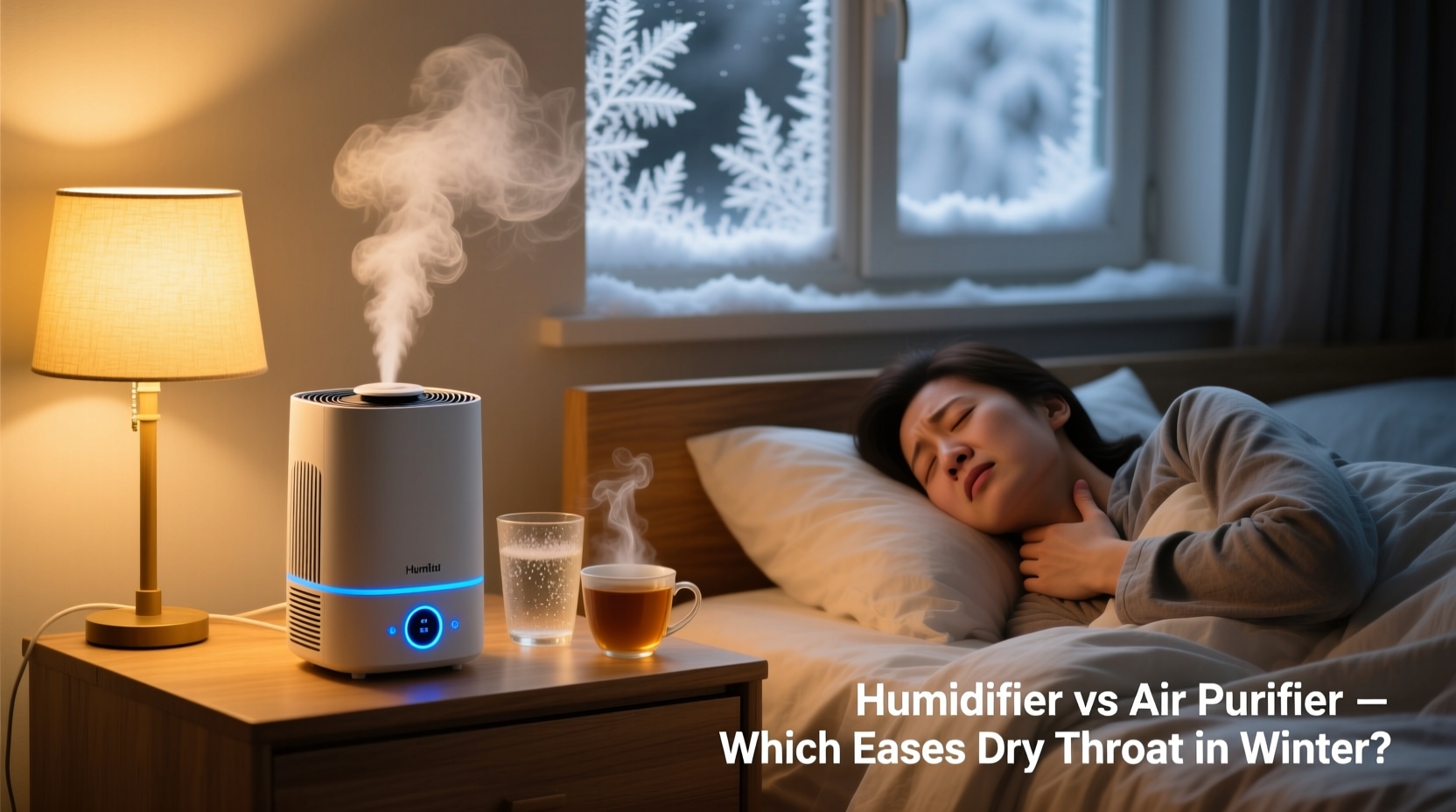
Dry throat during winter is primarily caused by low humidity levels indoors. Cold outdoor air holds less moisture, and when this air is heated inside homes, its relative humidity drops dramatically—often below 30%, well under the ideal range of 40–60% recommended by the Environmental Protection Agency (EPA).
In such conditions, the mucous membranes in your nose and throat lose moisture rapidly, leading to irritation, scratchiness, and even minor inflammation. This effect is worsened by prolonged exposure to forced-air heating systems, gas stoves, and poorly sealed windows that allow cold drafts.
It’s important to distinguish between dry throat caused by dehydration or environmental dryness versus irritation from airborne allergens or pollutants. The former calls for moisture restoration; the latter may benefit from filtration. Misdiagnosing the root cause leads many people to invest in the wrong solution.
“Low indoor humidity is the most common culprit behind winter dry throat. Adding moisture back into the air isn’t just comfortable—it supports natural immune defenses in the respiratory tract.” — Dr. Lena Patel, Pulmonary Specialist at Cleveland Clinic
How Humidifiers Work and Why They Help
A humidifier increases the moisture content of indoor air by releasing water vapor or steam. There are several types:
- Cool mist humidifiers – Use ultrasonic vibration or evaporation to disperse a fine cool mist.
- Warm mist humidifiers – Boil water and release steam, which cools slightly before entering the room.
- Evaporative humidifiers – Use a fan to blow air through a wet wick filter.
- Whole-house humidifiers – Integrated into HVAC systems for whole-home coverage.
By raising humidity levels, these devices directly combat the dry air that strips moisture from your throat lining. Clinical studies have shown that maintaining indoor humidity above 40% reduces nasal congestion, soothes irritated tissues, and decreases the survival rate of certain airborne viruses, including influenza.
For someone waking up with a parched throat every morning, a bedroom humidifier can be transformative. It mimics the natural moisture levels found in spring and fall, allowing your body to maintain hydration passively while you sleep.
What Air Purifiers Do—and Don’t Do—for Dry Throat
An air purifier improves air quality by capturing airborne particles such as dust, pollen, pet dander, mold spores, and smoke. Most models use HEPA filters, activated carbon layers, or UV-C light to trap or neutralize contaminants.
While beneficial for allergy sufferers or those sensitive to indoor pollutants, air purifiers do not add moisture to the air. In fact, some models—especially those with strong fans—can create airflow that feels drying, potentially worsening throat discomfort in already arid environments.
However, if your dry throat stems from postnasal drip due to allergies or sinus irritation triggered by dust or pet hair, then reducing those irritants with an air purifier might indirectly relieve symptoms. But this is treating a secondary cause, not the primary issue of low humidity.
In short: air purifiers clean the air; they don’t condition it. If your problem is dryness, not dirt, a purifier won't solve it.
Direct Comparison: Humidifier vs Air Purifier for Dry Throat
| Feature | Humidifier | Air Purifier |
|---|---|---|
| Mechanism | Adds moisture to the air | Removes airborne particles |
| Primary Benefit | Relieves dry skin, lips, and throat | Reduces allergens and odors |
| Effect on Dry Throat | Directly alleviates by increasing humidity | No direct impact; may worsen if airflow is excessive |
| Best For | Dry indoor climates, heated rooms, winter use | Allergies, asthma, smoke exposure |
| Maintenance | Daily cleaning required to prevent mold | Filter replacement every 6–12 months |
| Energy Use | Low to moderate (except warm mist) | Low to high depending on fan speed |
This comparison makes it clear: if your main concern is dry throat due to winter air, a humidifier is the targeted solution. An air purifier may complement it but cannot replace it.
When You Might Need Both Devices
Some households benefit from using both appliances—strategically. For example, individuals with chronic sinus issues or asthma often face a dual challenge: dry air aggravating mucous membranes and airborne triggers like dust mites or mold spores causing flare-ups.
In such cases, pairing a humidifier with an air purifier creates a balanced environment: moisture soothes the throat, while filtration prevents allergens from thriving in damp conditions. However, placement matters. Running both devices in the same small space without proper ventilation can lead to excess humidity, encouraging mold growth—especially if the humidifier isn’t cleaned regularly.
The optimal setup? Use a humidifier in the bedroom at night to support restful breathing, and run an air purifier in common areas during the day where pet dander, cooking fumes, or outdoor pollution enter the home.
Mini Case Study: Sarah’s Winter Relief Strategy
Sarah, a 38-year-old teacher from Chicago, struggled every winter with a raw, scratchy throat that made speaking painful by midday. She initially bought an air purifier after reading about indoor air pollution, hoping it would help. While she noticed fewer allergy symptoms, her throat felt no better.
After consulting her doctor, she learned her home’s humidity averaged just 28% in January. She purchased a cool-mist ultrasonic humidifier and began using it nightly. Within three days, her morning throat discomfort diminished. By week two, she no longer needed lozenges during class.
She later added a HEPA air purifier to her living room to manage dust from her two cats, creating a comprehensive system: moisture where she slept, clean air where she spent time awake.
Step-by-Step Guide to Relieving Winter Dry Throat
- Measure Indoor Humidity: Use a hygrometer (available for under $15) to check current levels. Below 40% indicates a need for humidification.
- Choose the Right Humidifier: Opt for a cool-mist model with adjustable settings and automatic shut-off for safety.
- Place It Strategically: Position near your bed but not too close to walls or furniture to ensure even dispersion.
- Use Distilled Water: Prevents white mineral dust and reduces bacterial buildup in the tank.
- Clean Daily: Empty, rinse, and dry the water tank every 24 hours. Disinfect weekly with vinegar or manufacturer-recommended solution.
- Monitor Symptoms: Track changes in throat comfort, nasal breathing, and sleep quality over one week.
- Add an Air Purifier If Needed: Only if you suspect allergens are contributing—look for signs like sneezing, itchy eyes, or congestion alongside dryness.
Common Mistakes That Worsen the Problem
- Using tap water in humidifiers: Leaves behind minerals that become airborne and can irritate lungs.
- Over-humidifying: Levels above 60% encourage mold and dust mite growth, counteracting benefits.
- Ignoring maintenance: Stagnant water breeds bacteria and fungi, which get dispersed into the air.
- Placing purifiers in bedrooms without humidity control: May reduce allergens but does nothing for dryness-induced irritation.
- Running heaters nonstop: Exacerbates dry air; use programmable thermostats to lower temps when possible.
Frequently Asked Questions
Can an air purifier cause a dry throat?
Not directly, since it doesn’t remove moisture. However, the constant airflow from its fan can create a drying sensation, especially in low-humidity environments. This effect is often mistaken for the purifier “causing” dryness, when in reality, it's amplifying an existing condition.
Is it safe to use a humidifier every night?
Yes, provided it’s cleaned regularly and humidity levels stay between 40–60%. Unclean humidifiers can emit harmful microbes, and overuse can lead to condensation on windows or walls, promoting mold. Always follow manufacturer guidelines and monitor room conditions.
Can I use an air purifier and humidifier in the same room?
Yes, but keep them separated by at least 3–4 feet. Placing them side by side can cause the purifier’s filter to absorb excess moisture, reducing its efficiency and lifespan. Also, avoid letting mist contact the purifier’s intake vents.
Expert Tips for Long-Term Respiratory Comfort
Consider integrating smart technology: Wi-Fi-enabled humidifiers can sync with weather apps to adjust output based on outdoor temperature and indoor humidity. Some even integrate with voice assistants for hands-free control.
If you have central heating, upgrading to a furnace-mounted humidifier provides consistent whole-home relief without managing multiple units. These require professional installation but offer superior convenience and performance.
Conclusion: Choose Based on Your Actual Need
When deciding between an air purifier and a humidifier for dry throat in winter, the choice should be guided by cause, not convenience. Dry throat rooted in low humidity demands added moisture—only a humidifier delivers that. Air purifiers play a valuable role in air quality management but are ineffective against dryness.
The most effective approach combines accurate diagnosis with practical tools. Measure your home’s humidity, assess your symptoms honestly, and invest in the device that targets your specific issue. For many, that means prioritizing a humidifier during winter months, possibly supplemented by an air purifier if allergies are present.




 浙公网安备
33010002000092号
浙公网安备
33010002000092号 浙B2-20120091-4
Comments
No comments yet. Why don't you start the discussion?