
As smartphones grow larger, heavier, and more expensive, protecting them from accidental drops has become a top priority. One popular solution is the use of wrist straps—either alloy chains or fabric cords—attached directly to the phone or case. While both aim to prevent drops, they differ significantly in materials, mechanics, and effectiveness. Choosing between an alloy phone chain and a fabric phone strap isn't just about style; it's a decision that can impact how well your device survives daily use.
This article examines the strengths and weaknesses of each type, evaluates real-world safety performance, and provides clear guidance on which option genuinely offers better protection for your phone.
Durability and Long-Term Reliability
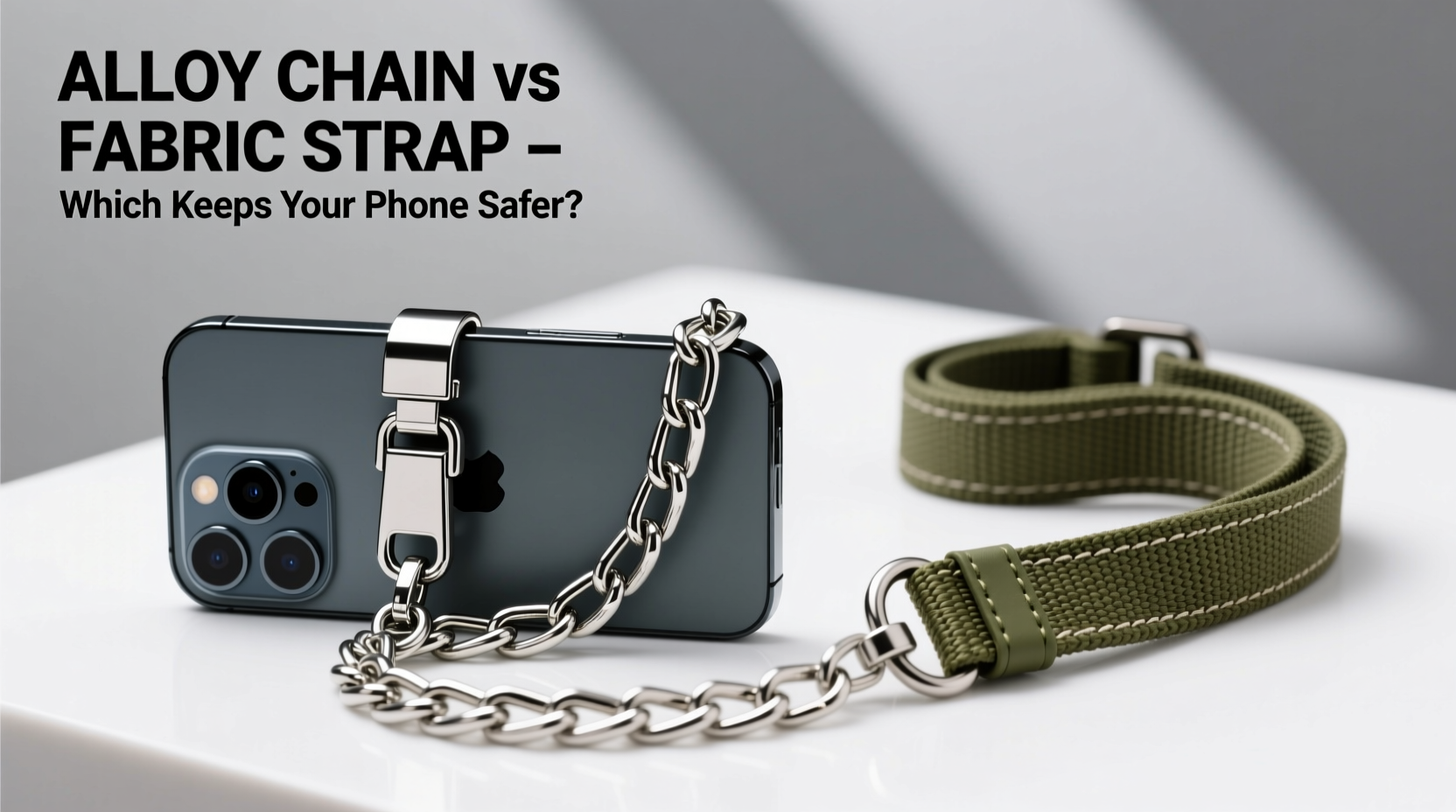
Durability plays a critical role in determining how well a phone strap performs over time. A strap that breaks after weeks of use defeats its entire purpose. Alloy chains are typically made from stainless steel or aluminum links, designed to resist stretching, fraying, and snapping under tension. These metal constructions can endure tensile forces exceeding 50 pounds, making them exceptionally strong when properly engineered.
Fabric straps, on the other hand, rely on tightly woven nylon, polyester, or Kevlar fibers. High-end versions use military-grade webbing with reinforced stitching at stress points. While modern fabrics have impressive strength-to-weight ratios, they remain vulnerable to abrasion, moisture degradation, and UV exposure. Over months of regular wear, especially near saltwater or in humid climates, fabric may weaken at connection points or fray along edges.
Drop Protection Performance
The core function of any phone strap is to stop a fall. When a phone slips from your hand, the strap must engage instantly, absorb shock, and hold firm. Here’s where design differences matter most.
Alloy chains excel in immediate tension response. Their rigid structure means zero stretch, so the moment the phone begins to fall, the chain locks into place. However, this lack of elasticity can create a jarring snap-back effect. In some cases, the sudden stop causes the phone to swing upward and strike hard surfaces like tables or countertops, potentially leading to screen cracks or camera damage.
Fabric straps offer slight dynamic give due to micro-stretch in high-tensile fibers. This small amount of flex helps dampen impact force during a fall, reducing the likelihood of secondary collisions. Some premium models even integrate elastic segments to further cushion drops. The trade-off is minimal elongation risk under extreme strain, though quality straps are rated well beyond typical human arm movement forces.
“From a biomechanics standpoint, controlled energy dissipation is key in fall mitigation. A little flexibility often prevents rebound damage.” — Dr. Lena Torres, Product Safety Engineer at MobileGuard Labs
Comfort, Usability, and Real-World Trade-offs
Safety isn’t just about surviving a fall—it also depends on consistent usage. If a strap is uncomfortable or inconvenient, users tend to remove it, negating its protective benefit.
Alloy chains have a distinct industrial aesthetic and satisfying heft, but they come with notable drawbacks. They’re heavier than fabric alternatives, adding noticeable weight to pocket carry. The metal links can snag on clothing, scratch surfaces, or produce noise when swinging. In colder environments, metal becomes uncomfortably cold against skin. Additionally, alloy chains are less forgiving during active use—running, cycling, or commuting—where uncontrolled motion increases entanglement risks.
Fabric straps are lightweight, quiet, and soft against the skin. Many feature padded wrist cuffs or adjustable lengths for personalized fit. They’re easier to pack, fold, or tuck away when not needed. Most importantly, their low-profile nature encourages continuous use, meaning the phone stays protected throughout the day rather than being strapped only occasionally.
Comparison Table: Key Features at a Glance
| Feature | Alloy Phone Chain | Fabric Phone Strap |
|---|---|---|
| Tensile Strength | Very High (50–100+ lbs) | High (30–80 lbs) |
| Shock Absorption | Low (rigid, no stretch) | Moderate (flexible fibers) |
| Weight | Heavy | Light |
| Wear Comfort | Low (can chafe, cold) | High (soft, breathable) |
| Durability | Excellent (resists cuts) | Good (vulnerable to abrasion) |
| Drop Safety | Prevents falls but risks impact rebound | Reduces secondary impact via slight give |
Real-World Scenario: Commuter’s Experience
Jamie, a graphic designer in Seattle, uses her phone heavily during transit. She initially chose a sleek titanium alloy chain for its minimalist look and robust build. Within two months, however, she noticed scratches on her desk and coffee table from the swinging phone. During a rainy morning rush, her phone slipped while texting—caught by the chain—but swung back up and cracked the screen on the edge of a subway seat.
She switched to a braided nylon strap with a silicone wrist pad. Though less flashy, it stayed comfortable through long workdays. Six months later, after three similar slip incidents, the phone remained undamaged. “The fabric doesn’t bounce,” she noted. “It just stops. And I forget it’s there—which means I never take it off.”
Actionable Checklist Before Choosing Your Strap
- ✅ Confirm compatibility with your phone case or mounting system (e.g., lanyard loop, carabiner anchor)
- ✅ Check weight: Straps over 50g may affect pocket balance
- ✅ Look for break strength ratings above 50 lbs
- ✅ Ensure secure attachment method (screw-in anchors > clip-on loops)
- ✅ Test comfort during extended wear—especially wrist contact points
- ✅ Consider environment: metal conducts cold, fabric absorbs moisture
- ✅ Prioritize models with replaceable parts or modular design
FAQ: Common Questions About Phone Straps
Can a phone strap really prevent all drops?
No single accessory guarantees 100% protection. Straps reduce the risk of ground impacts but can’t eliminate rebound collisions or entanglement hazards. They work best as part of a broader protection strategy including rugged cases and mindful handling.
Are alloy chains safe for everyday carry?
Yes, if well-made and properly attached. However, their rigidity increases the chance of damaging nearby objects—or your phone—during a swing. Use caution in tight spaces or around delicate surfaces.
Do fabric straps degrade faster than metal ones?
Under ideal conditions, alloy lasts longer. But in practice, high-quality fabric straps with UV-resistant coatings and abrasion guards can last 1–2 years with daily use. Regular inspection extends lifespan regardless of material.
Final Verdict: Which One Keeps Your Phone Safer?
When evaluating true safety—not just raw strength—the fabric phone strap holds a clear advantage. Its ability to slightly flex during a fall reduces rebound force, minimizing secondary damage. Combined with superior comfort and higher likelihood of consistent use, fabric straps provide more reliable, practical protection in real-life scenarios.
Alloy chains win on perceived toughness and longevity, but their inflexibility introduces new risks. Unless you prioritize aesthetics or operate in environments where fire resistance or cutting hazards are concerns (e.g., workshops), fabric remains the smarter choice for everyday safety.




 浙公网安备
33010002000092号
浙公网安备
33010002000092号 浙B2-20120091-4
Comments
No comments yet. Why don't you start the discussion?