
Dill weed is a delicate, aromatic herb prized for its feathery green foliage and bright, slightly sweet-anise flavor. Commonly used in Scandinavian, Eastern European, and Mediterranean cuisines, it enhances everything from pickles and dressings to fish dishes and potato salads. But when dill weed is unavailable—either fresh or dried—home cooks need reliable substitutes that preserve the integrity of the dish without compromising on taste. Understanding which herbs can stand in for dill weed requires more than just surface-level similarity; it demands knowledge of flavor chemistry, texture, and culinary context. This guide explores the most effective alternatives, offering practical guidance on when and how to use them based on scientific principles, professional kitchen experience, and real-world application.
Definition & Overview
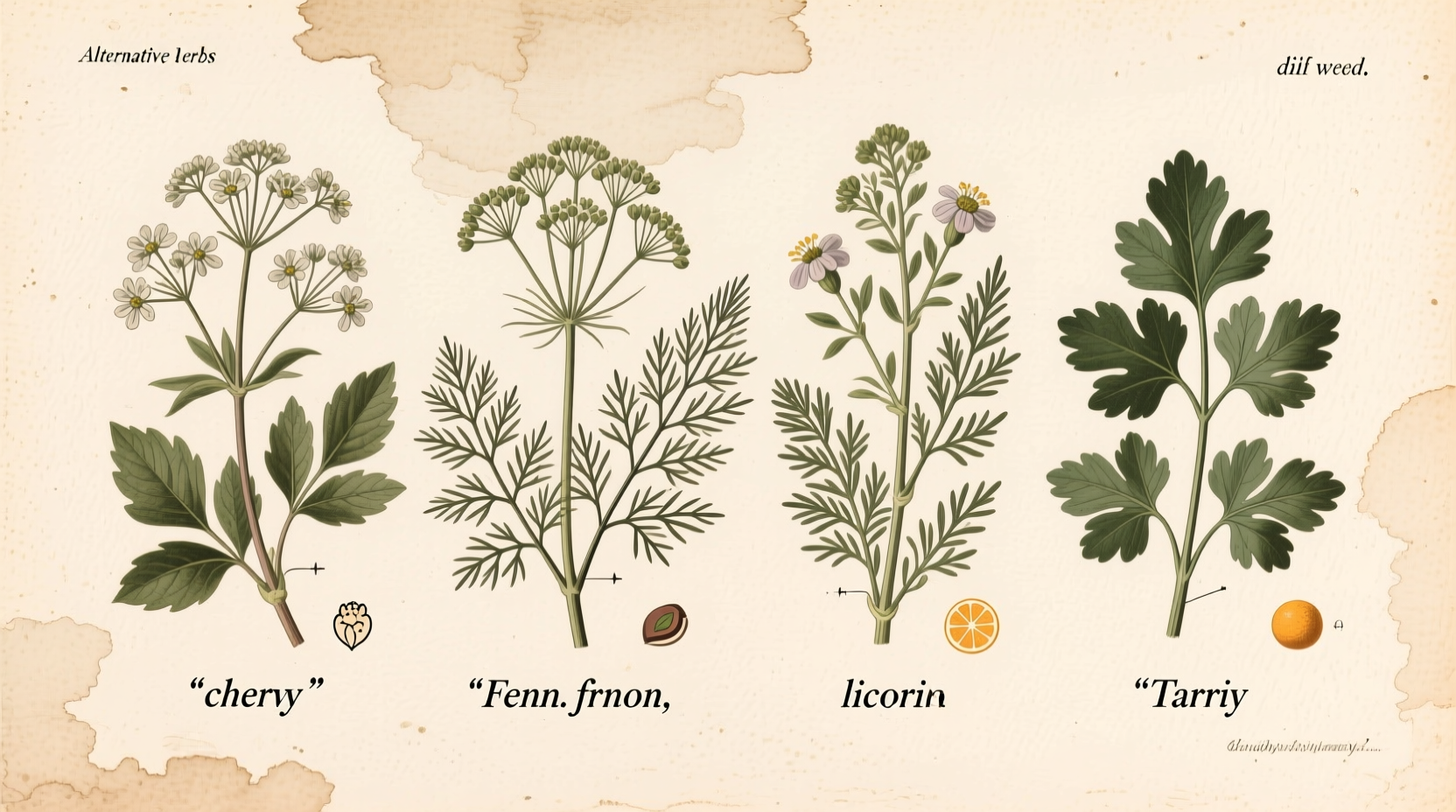
Dill weed refers to the leafy part of the Anethum graveolens plant, distinct from dill seed, which comes from the same plant but has a stronger, more pungent profile. Native to the eastern Mediterranean and western Asia, dill has been cultivated for over 5,000 years, valued historically for both culinary and medicinal uses. Its fresh leaves are tender and lacy, with a volatile essential oil content dominated by compounds like carvone and limonene, giving it a citrusy, grassy aroma with subtle licorice undertones.
In modern cooking, dill weed functions as a finishing herb—added late in the cooking process to preserve its fragile flavor—or as a raw component in cold preparations such as tzatziki, gravlax, or herb-infused oils. Because heat rapidly diminishes its aromatic complexity, substitutions must consider not only taste but also thermal stability and intended use within a recipe.
Key Characteristics of Dill Weed
| Characteristic | Description |
|---|---|
| Flavor Profile | Bright, slightly sweet, with notes of anise, citrus, and fresh grass. Mildly peppery finish. |
| Aroma | Fragrant, herbal, with dominant hints of lemon and fennel. |
| Color/Form | Delicate green fronds (fresh); dark green to olive powder (dried). |
| Heat Sensitivity | High—loses aroma quickly when exposed to prolonged heat. |
| Culinary Function | Finishing herb, garnish, flavor enhancer in cold dishes, marinades, and seafood applications. |
| Shelf Life | Fresh: 5–7 days refrigerated; Dried: 1–2 years if stored properly. |
Top Alternative Herbs to Use Instead of Dill Weed
When dill weed is absent from your pantry or market, several herbs can replicate aspects of its flavor and function. The best substitute depends on whether you're working with fresh or dried dill, the dish type, and desired outcome. Below are the most effective alternatives, ranked by fidelity to dill’s unique character.
1. Fresh Tarragon (Best Overall Substitute)
Tarragon (Artemisia dracunculus) shares dill’s prominent anise-like note due to the presence of estragole, the same compound found in tarragon that gives it a licorice edge. While slightly more intense and less citrus-forward than dill, French tarragon offers a refined elegance suitable for creamy sauces, egg dishes, and poached fish.
- Substitution Ratio: 1:1 (fresh)
- Best For: Hollandaise, chicken salad, herbed mayonnaise, seafood terrines
- Caution: Avoid excessive heat; add at the end of cooking
Pro Tip: If using tarragon as a dill replacement in tzatziki or cucumber salad, balance its intensity with a touch of lemon zest or fresh mint to mimic dill’s brightness.
2. Fennel Fronds (Closest Visual and Flavor Match)
The feathery green tops of the fennel bulb are often discarded, yet they offer one of the most accurate replacements for fresh dill weed. With a crisp, sweet-anise flavor and similar texture, fennel fronds integrate seamlessly into salads, dressings, and grilled fish dishes.
- Substitution Ratio: 1:1 (chopped fronds)
- Best For: Cold soups (e.g., vichyssoise), grain bowls, roasted vegetables, tartar sauce
- Advantage: Adds visual appeal and crunch akin to fresh dill
“Fennel fronds are my go-to when I run out of dill. They bring the same aromatic lift and look nearly identical on the plate.” — Chef Elena Moretti, Culinary Instructor, Portland School of Food Arts
3. Chervil (Delicate Gourmet Option)
Often called \"gourmet's parsley,\" chervil combines mild anise with a hint of pepper and grassiness. Though less common, it excels in fines herbes blends and pairs beautifully with eggs, butter, and light proteins where dill would normally shine.
- Substitution Ratio: 1:1 (fresh)
- Best For: Omelets, butter sauces, spring vegetable medleys
- Note: Not available dried; always use fresh and add at the last moment
4. Parsley (Neutral Base with Texture Similarity)
Flat-leaf (Italian) parsley lacks dill’s anise character but matches its fresh green quality and structural role in dishes. It won’t replicate flavor but serves well as a textural stand-in when combined with other flavor agents.
- Substitution Ratio: 1:1 (use extra lemon juice or a pinch of ground fennel seed to approximate dill’s profile)
- Best For: Garnishes, tabbouleh, meatloaf, stews needing green freshness
- Enhancement Tip: Mix parsley with a few drops of anise extract (food-grade) for closer approximation
5. Basil (Citrus-Anise Hybrid Replacement)
Sweet basil, particularly lemon or Thai varieties, provides a surprising parallel to dill through shared citrus and licorice notes. Best suited for warm-weather dishes, it works especially well in yogurt-based dips or tomato salads.
- Substitution Ratio: ¾ volume (basil is stronger)
- Best For: Cucumber-basil yogurt sauce, caprese-style salads, grilled salmon with herb crust
- Limitation: Turns black when heated; avoid boiling applications
6. Dill Seed (For Dried Dill Weed Substitution Only)
While botanically related, dill seed is far more potent and earthy than dill weed. However, when crushed or finely ground, it can replace dried dill in spice rubs, breads, or pickling brines—though not in fresh applications.
- Substitution Ratio: ½ tsp crushed dill seed = 1 tsp dried dill weed
- Best For: Pickle brine, rye bread, cabbage slaw, stew seasoning
- Warning: Never use whole seeds as a direct substitute for fresh dill
Variants & Types of Dill and Alternatives
Understanding the form of dill being replaced is critical. Fresh and dried dill differ significantly in potency and application, affecting substitution choices.
| Dill Form | Best Substitute(s) | Rationale |
|---|---|---|
| Fresh Dill Weed | Fennel fronds, tarragon, chervil | These match texture and volatile aromatics lost upon heating. |
| Dried Dill Weed | Crushed dill seed, dried marjoram + pinch of anise seed | Dried dill loses much of its brightness; substitutes should provide earthy depth. |
| Dill in Pickling | Dill seed + fennel seed blend | Seeds withstand vinegar and heat better than leaves. |
Storage Insight: To extend fresh dill’s life, store upright in a glass of water (like flowers) and cover loosely with a plastic bag. Change water every two days. Alternatively, freeze chopped dill in olive oil cubes for long-term use in cooked dishes.
Comparison with Similar Ingredients
Dill is frequently confused with other herbs due to overlapping flavor families. Clarifying distinctions ensures proper substitution.
| Herb | Similarities to Dill | Differences | Can It Substitute? |
|---|---|---|---|
| Fennel Fronds | Nearly identical appearance and anise note | Slightly sweeter, less grassy | Yes – excellent fresh substitute |
| Tarragon | Pronounced anise flavor | More medicinal, less citrusy; stronger | Yes – adjust quantity downward |
| Cilantro | Feathery texture, used raw | Soapy-lime flavor; genetically polarizing | Limited – only in non-traditional fusion contexts |
| Parsley | Common garnish, neutral base | No anise; milder overall | Yes – with flavor enhancements |
| Caraway | Used in rye and cabbage dishes | Earthy, smoky; seed-only usage | No – too strong and divergent |
Practical Tips & FAQs
Can I use dried dill weed instead of fresh?
Yes, but adjust proportions: use 1 teaspoon dried dill for every 1 tablespoon fresh. Keep in mind that dried dill lacks the vibrancy of fresh and performs best in cooked dishes like soups, casseroles, or dressings where rehydration occurs.
Is there a non-anise substitute for dill?
If you dislike licorice notes, opt for flat-leaf parsley mixed with chives and lemon zest. This combination restores freshness without the anise character, ideal for potato salad or deviled eggs.
What herb mimics dill in fish dishes?
Fennel fronds are ideal for grilled or baked fish. Their natural sweetness complements oily fish like salmon, while their structure holds up under gentle heat better than dill.
How do I make a homemade dill substitute blend?
Create a multi-use dried alternative:
- Combine 2 parts dried parsley
- 1 part dried tarragon
- ½ part ground fennel seed
- Pinch of celery seed (optional, for depth)
Store in an airtight jar. Use 1 tsp per serving as a dried dill replacer in soups, stews, or spice mixes.
Does cilantro work as a dill substitute?
Only situationally. In Latin-American or Asian-inspired dishes, cilantro can provide a similar burst of freshness, but its chemical composition (aldehyde-rich) creates a soapy perception in about 15% of the population. Avoid in traditional European recipes calling for dill.
Can I grow my own dill substitute?
Absolutely. Fennel and tarragon are perennial in many zones and thrive in full sun. Plant near tomatoes or cucumbers—they attract beneficial insects and repel aphids. Harvest fronds regularly to encourage bushy growth.
Expert Application: Case Study – Replacing Dill in Classic Tzatziki
Tzatziki, the Greek yogurt-cucumber dip, relies heavily on fresh dill for its signature brightness. When dill is unavailable, follow this tested approach:
- Problem: Missing dill’s citrus-anise lift
- Solution: Replace 1 tbsp fresh dill with 2 tsp finely chopped fennel fronds + ¼ tsp lemon zest + small pinch of ground coriander
- Result: Balanced, aromatic, visually consistent. The fennel provides texture and mild anise, lemon zest restores brightness, and coriander adds subtle warmth without overpowering.
This method preserves authenticity while adapting to ingredient constraints—a technique commonly employed in professional kitchens during off-season shortages.
Summary & Key Takeaways
Dill weed’s unique flavor—bright, grassy, and subtly anise-scented—makes it challenging to replace perfectly. However, informed substitutions using fresh herbs like fennel fronds, tarragon, or chervil can closely mirror its culinary role. Success hinges on understanding the context: fresh vs. dried, raw vs. cooked, and regional flavor expectations.
- Fennel fronds are the top choice for visual and flavor fidelity.
- Tarragon delivers strong anise notes but requires careful dosing.
- Parsley acts as a neutral base when enhanced with citrus or spices.
- Dill seed works only in dried or pickled applications—not as a fresh herb substitute.
- Always consider timing: add substitutes at the end of cooking to preserve aroma.
Final Recommendation: Stock your kitchen with fennel bulbs—they yield both crunchy stalks and edible fronds that double as dill replacements. Combine smart substitutions with proper storage techniques to ensure year-round access to fresh herbal flavors, even when dill is out of season.




 浙公网安备
33010002000092号
浙公网安备
33010002000092号 浙B2-20120091-4
Comments
No comments yet. Why don't you start the discussion?