
Zeon Zoysia is prized for its dense, dark-green turf and excellent shade tolerance compared to other warm-season grasses. Yet even this resilient variety can struggle under poor maintenance, environmental stress, or improper establishment. When once-lush patches turn thin, brown, or weedy, homeowners often wonder what went wrong—and more importantly, how to bring it back. The good news: most issues are reversible with targeted care. Understanding the root causes behind Zeon Zoysia’s decline is the first step toward recovery.
Why Zeon Zoysia Fails: Common Causes
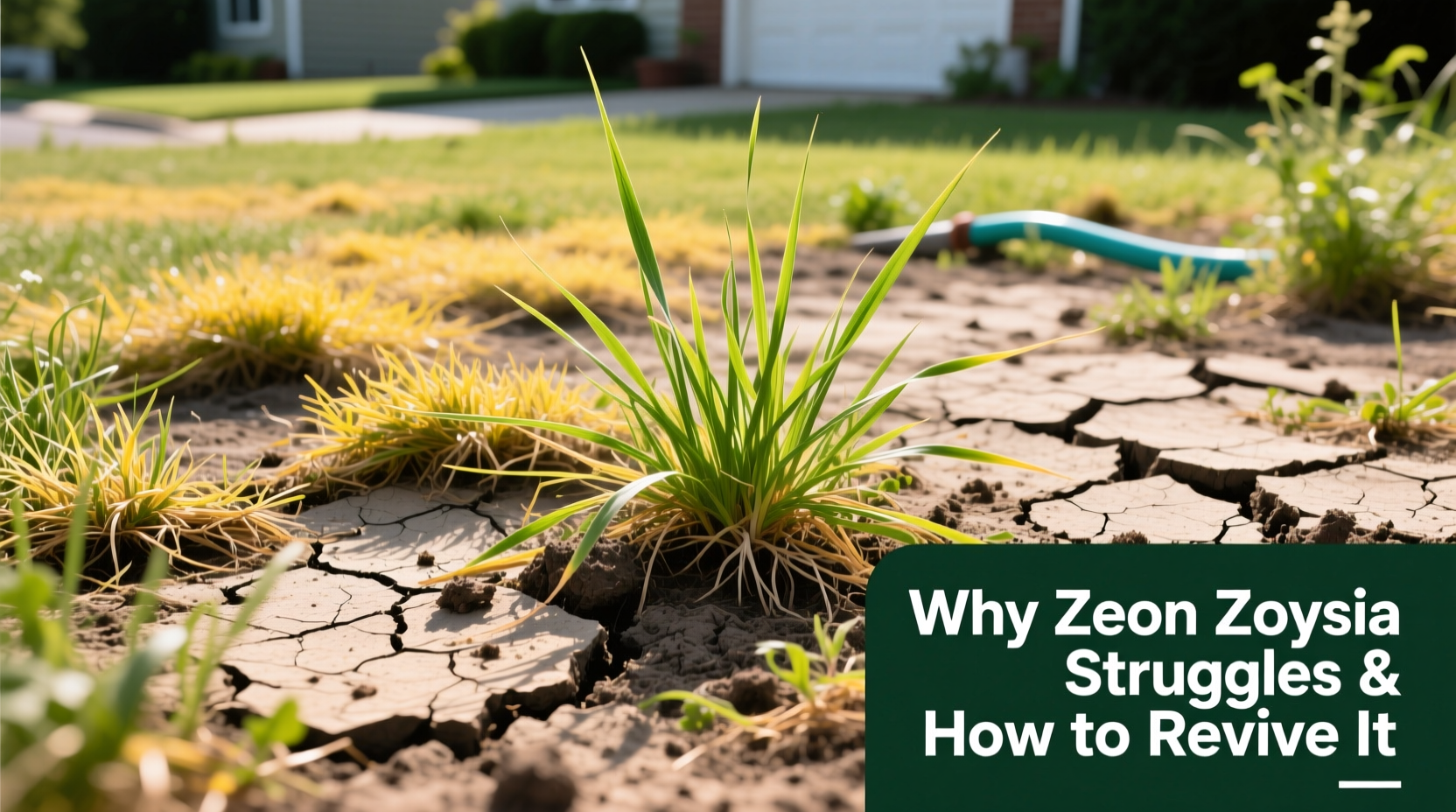
Despite its reputation for durability, Zeon Zoysia isn’t immune to problems. Several factors—many preventable—can compromise its health.
- Compacted soil: Heavy foot traffic or clay soils restrict root growth and reduce water infiltration.
- Overwatering or poor drainage: Soggy conditions promote fungal diseases like large patch and root rot.
- Excessive thatch buildup: A layer thicker than ½ inch blocks nutrients and encourages pests.
- Incorrect mowing height: Cutting too short stresses the grass and exposes stolons to sun scorch.
- Nutrient imbalances: Overuse of nitrogen leads to rapid, weak growth; lack of potassium reduces drought tolerance.
- Shade encroachment: While Zeon tolerates partial shade better than many zoysias, dense tree cover still limits photosynthesis.
- Pest infestations: Mole crickets, grubs, or chinch bugs feed on roots and stems, weakening the stand.
Diagnosing the Problem: Signs and Symptoms
Before treating your lawn, identify the underlying issue. Misdiagnosis leads to wasted effort and further decline.
| Symptom | Possible Cause | Action Step |
|---|---|---|
| Brown circular patches | Fungal disease (e.g., large patch) | Apply fungicide, improve air circulation |
| Thin, weak growth | Compaction or poor soil prep | Aerate, topdress with sand-loam mix |
| Yellowing blades | Nitrogen deficiency or iron chlorosis | Soil test, apply balanced fertilizer |
| Spongy feel underfoot | Thatch accumulation (>½ inch) | Dethatch in late spring |
| Wilting despite moisture | Root damage (grubs or nematodes) | Inspect roots, treat with appropriate insecticide |
“Many Zeon Zoysia failures stem from over-management—too much water, too much fertilizer, and cutting too low. This grass thrives on moderation.” — Dr. Lance Walley, Turfgrass Specialist, University of Georgia
Reviving Zeon Zoysia: A Step-by-Step Recovery Plan
Recovery takes time and consistency. Follow this six-phase plan to restore vigor and density.
- Assess and Test: Conduct a soil test to determine pH, nutrient levels, and organic matter. Ideal pH for Zeon Zoysia is between 6.0 and 6.5.
- Dethatch if Needed: Use a vertical mower or power rake when thatch exceeds ½ inch. Perform this in late spring during active growth.
- Aerate Compacted Areas: Core aerate annually, especially in high-traffic zones. Remove 2–3 plugs per square foot, each 2–3 inches deep.
- Adjust Irrigation: Water deeply but infrequently—about ¾ inch twice weekly during peak summer. Allow soil to dry between sessions.
- Fertilize Strategically: Apply slow-release granular fertilizer with a 15-0-15 or 16-0-8 ratio in early summer and midsummer. Avoid fall fertilization to prevent cold injury.
- Mow Correctly: Maintain a height of 1.5 to 2 inches. Never remove more than one-third of blade length at once.
Real Example: Reviving a Neglected Backyard Lawn
In Spartanburg, SC, homeowner Maria Thompson inherited a neglected yard with patchy Zeon Zoysia after moving into a five-year-old home. The grass was thin, weedy, and suffered from recurring brown spots each summer.
She began by testing the soil, which revealed a pH of 5.2 and severe potassium deficiency. After applying lime to raise pH and scheduling core aeration, she dethatched the lawn and overseeded sparse areas with fresh Zeon sod pieces. By switching to a bi-weekly deep watering schedule and applying a potassium-rich fertilizer in June and August, her lawn regained density within eight weeks. One year later, the turf was weed-free and resilient through drought.
Maria’s success underscores that even severely compromised Zeon Zoysia can rebound with science-based care.
Critical Do’s and Don’ts for Zeon Zoysia Health
| Do | Don't |
|---|---|
| Mow at 1.5–2 inches | Cut below 1 inch |
| Water deeply 1–2 times per week | Water daily or in evenings |
| Fertilize only during active growth (May–August) | Apply nitrogen in fall or winter |
| Aerate annually in late spring | Ignore compaction signs |
| Use sharp reel or rotary mowers | Mow with dull blades |
FAQ: Common Questions About Zeon Zoysia Care
Can I overseed Zeon Zoysia with ryegrass for winter color?
No. Overseeding with cool-season grasses like ryegrass creates competition in spring, stressing Zoysia during green-up. It also increases disease pressure and requires higher maintenance. For winter color, consider alternatives like dormant seeding in non-overlapping zones or accepting seasonal dormancy.
How long does it take for stressed Zeon Zoysia to recover?
With proper intervention, visible improvement typically occurs within 4–6 weeks during the growing season. Full recovery may take 2–3 months, depending on the severity of damage and consistency of care.
Is Zeon Zoysia suitable for high-traffic areas?
Yes, but only with proper maintenance. While it has moderate wear tolerance, heavy use without aeration or rest periods leads to thinning. Consider adding stepping stones or mulched paths in high-traffic zones to protect the turf.
Essential Checklist for Revival Success
- ✅ Perform a soil test
- ✅ Dethatch if layer exceeds ½ inch
- ✅ Core aerate compacted areas
- ✅ Adjust irrigation schedule to deep, infrequent watering
- ✅ Apply balanced, slow-release fertilizer in summer only
- ✅ Mow at correct height with sharp blades
- ✅ Monitor for pests and diseases monthly
- ✅ Avoid foot traffic on wet, recovering turf
Conclusion: Restore Your Lawn with Confidence
Reviving Zeon Zoysia isn’t about quick fixes—it’s about aligning your care routine with the grass’s natural strengths. This variety rewards patience, precision, and proactive management. Once you address compaction, correct irrigation habits, and adopt a measured fertilization approach, your lawn will regain its signature lushness and resilience. The transformation may not happen overnight, but every correct step builds toward a healthier, more beautiful yard.




 浙公网安备
33010002000092号
浙公网安备
33010002000092号 浙B2-20120091-4
Comments
No comments yet. Why don't you start the discussion?