
When it comes to using wireless earbuds like the Samsung Galaxy Buds, two key audio features dominate the user experience: ambient sound and noise cancelling. Both are designed to enhance listening, but they serve opposite purposes. One lets the outside world in; the other shuts it out. Choosing between them isn’t about which technology is superior—it’s about matching the right mode to your current activity. Whether you're jogging through city streets, working from a noisy café, or trying to focus in a quiet office, understanding how these features perform in real-world scenarios can significantly impact safety, productivity, and comfort.
How Ambient Sound and Noise Cancelling Work
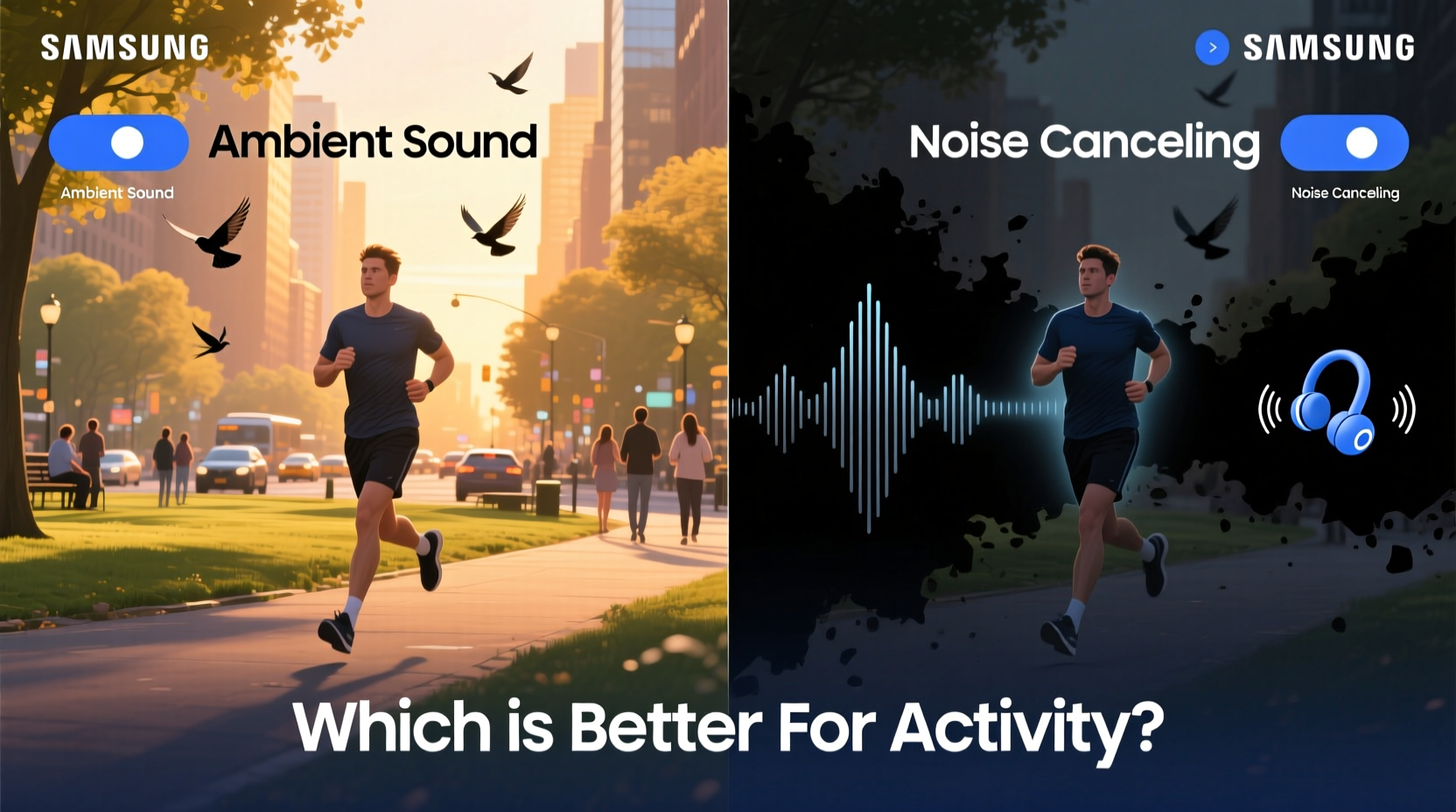
Samsung Buds use advanced microphone arrays and digital signal processing to manipulate external sound. In Active Noise Cancellation (ANC) mode, the earbuds detect ambient noise—like traffic hum, airplane engines, or office chatter—and generate inverse sound waves to cancel those frequencies. The result is a quieter environment, allowing music, podcasts, or silence to take center stage.
Ambient Sound mode flips this process. Instead of blocking noise, it amplifies it. External microphones pick up sounds from your surroundings and pipe them directly into your ears. This keeps you aware of sirens, conversations, or approaching vehicles without removing your earbuds. Some models even allow adjustable transparency levels, letting you fine-tune how much outside noise you want to hear.
The effectiveness of each mode depends heavily on context. ANC excels in controlled environments where distractions should be minimized. Ambient Sound shines when situational awareness is non-negotiable.
Matching Mode to Activity: Real-World Scenarios
No single setting works best across all activities. Your choice should align with your physical environment, movement level, and safety needs.
Running or Cycling Outdoors
For outdoor exercise, ambient sound is almost always the safer choice. Cyclists and runners need to hear traffic, horns, pedestrian warnings, and verbal cues from others. Relying solely on noise cancellation during a morning jog could lead to dangerous situations—like failing to notice an approaching vehicle or a shout from behind.
Commuting via Public Transit
On buses or subways, noise cancelling becomes highly effective. The constant low-frequency rumble of engines and rails is precisely the type of sound ANC handles well. However, switching to Ambient Sound when exiting the train or navigating stations ensures you don’t miss announcements or collide with fellow passengers.
Working in a Coffee Shop or Open Office
This is where personal preference plays a role. If you're deep in focus work, ANC helps block intermittent distractions—chattering groups, clinking cups, or loud phone calls. But if you're expecting someone to approach you, or if you’re collaborating casually, Ambient Sound prevents you from seeming disengaged or unresponsive.
Walking in Urban Areas
Pedestrians wearing fully sealed ANC earbuds are at higher risk of accidents, according to a 2022 study by the National Highway Traffic Safety Administration. Ambient Sound reduces that risk by preserving auditory cues while still delivering audio content. For urban walkers, especially near intersections or construction zones, staying acoustically connected to the environment is critical.
Performance Comparison: Key Factors
| Factor | Noise Cancelling | Ambient Sound |
|---|---|---|
| Best For | Focus, travel, quiet spaces | Safety, social interaction, movement |
| Battery Impact | High (uses more power) | Moderate |
| Sound Clarity | Excellent for music/audio | Natural but may amplify wind |
| Situational Awareness | Poor (blocks essential cues) | High (enhances surroundings) |
| Voice Call Quality | Good (reduces background noise) | Variable (may include unwanted noise) |
“Using noise cancellation in dynamic environments can create sensory blind spots. Ambient sound modes restore that balance.” — Dr. Lena Patel, Auditory Cognitive Researcher, MIT Media Lab
Step-by-Step Guide: Optimizing Your Buds for Daily Activities
Follow this practical timeline to get the most from your Samsung Buds throughout the day:
- Morning Commute (Train/Bus): Enable ANC to reduce engine noise and repetitive PA announcements.
- Walking to Office: Switch to Ambient Sound as you exit transit. Set level to “Voice” mode to prioritize human speech.
- Work Session: Activate ANC during focused tasks. Pair with calming instrumental music for maximum concentration.
- Lunch Break Walk: Re-enable Ambient Sound. Keep volume moderate so you can enjoy music while hearing crosswalk signals.
- Gym or Outdoor Run: Use Ambient Sound with wind reduction enabled to avoid distortion from airflow.
- Evening Relaxation: Return to ANC with soft background audio to decompress from daily stimuli.
Mini Case Study: Urban Runner’s Experience
Jamal, a software developer and regular runner in Chicago, used to rely on full noise cancellation during his evening jogs. After nearly being hit by a scooter while crossing the street, he reevaluated his setup. He switched to Ambient Sound at 60% and noticed immediate improvements—not just in safety, but in overall enjoyment. He could still listen to his favorite podcasts while clearly hearing bike bells, car horns, and people calling out. Over three months, he reported zero close calls and felt more engaged with his neighborhood. His only adjustment was lowering music volume slightly to prevent auditory overload.
Common Mistakes Users Make
- Using ANC exclusively: Leads to reduced spatial awareness and potential safety hazards.
- Leaving Ambient Sound too high: Can cause fatigue from amplified background noise, especially in crowded areas.
- Ignoring wind noise: Outdoor use with Ambient Sound often picks up disruptive wind interference—enable wind reduction in settings.
- Not customizing levels: Default settings may not suit your environment. Adjust sensitivity based on location and activity.
FAQ
Can I use both ambient sound and noise cancelling at the same time?
No—Samsung Buds allow only one mode active at a time. However, some newer models offer “Adaptive Sound Control,” which automatically switches between modes based on your environment and movement.
Does Ambient Sound drain the battery faster?
It uses less power than ANC, but continuous use of external mics does impact battery life. Expect about 10–15% shorter playback time when Ambient Sound is active versus off mode.
Is there a health risk to using noise cancelling for long periods?
While ANC itself isn’t harmful, prolonged isolation from environmental sounds may increase mental fatigue or cause a feeling of ear pressure in sensitive users. Taking breaks and alternating with ambient modes can reduce discomfort.
Final Recommendations by Activity Type
- Gym Workout (Indoor)
- Use ANC to block gym music and chatter. Focus on your rhythm.
- Outdoor Exercise
- Ambient Sound recommended. Prioritize safety over immersion.
- Remote Work / Study
- ANC improves concentration. Pair with task timers for optimal flow.
- Walking in Traffic
- Always use Ambient Sound. Consider disabling music entirely in high-risk zones.
- Travel (Plane/Train)
- ANC is ideal for reducing engine drone. Switch to Ambient before arrival.
Conclusion
The debate between ambient sound and noise cancelling on Samsung Buds isn’t about finding a universal winner—it’s about intelligent adaptation. Each mode has distinct strengths that align with specific activities and environments. By understanding when to isolate yourself from noise and when to stay connected to your surroundings, you gain more than audio control: you gain situational intelligence. Whether you're optimizing for safety, productivity, or peace of mind, the right setting makes all the difference. Don’t just wear your earbuds—use them wisely.




 浙公网安备
33010002000092号
浙公网安备
33010002000092号 浙B2-20120091-4
Comments
No comments yet. Why don't you start the discussion?