
Fitness tracking has evolved from simple step counting to comprehensive health monitoring. Today’s wearables can measure heart rate, sleep quality, oxygen saturation, and even stress levels. Amid this technological surge, a fundamental question persists: Is an analog watch or a digital device more reliable for fitness tracking? While analog watches exude timeless elegance, digital wearables promise data-driven precision. The answer isn’t just about accuracy—it involves usability, consistency, functionality, and long-term reliability in real-world conditions.
The Role of Timepieces in Fitness Monitoring
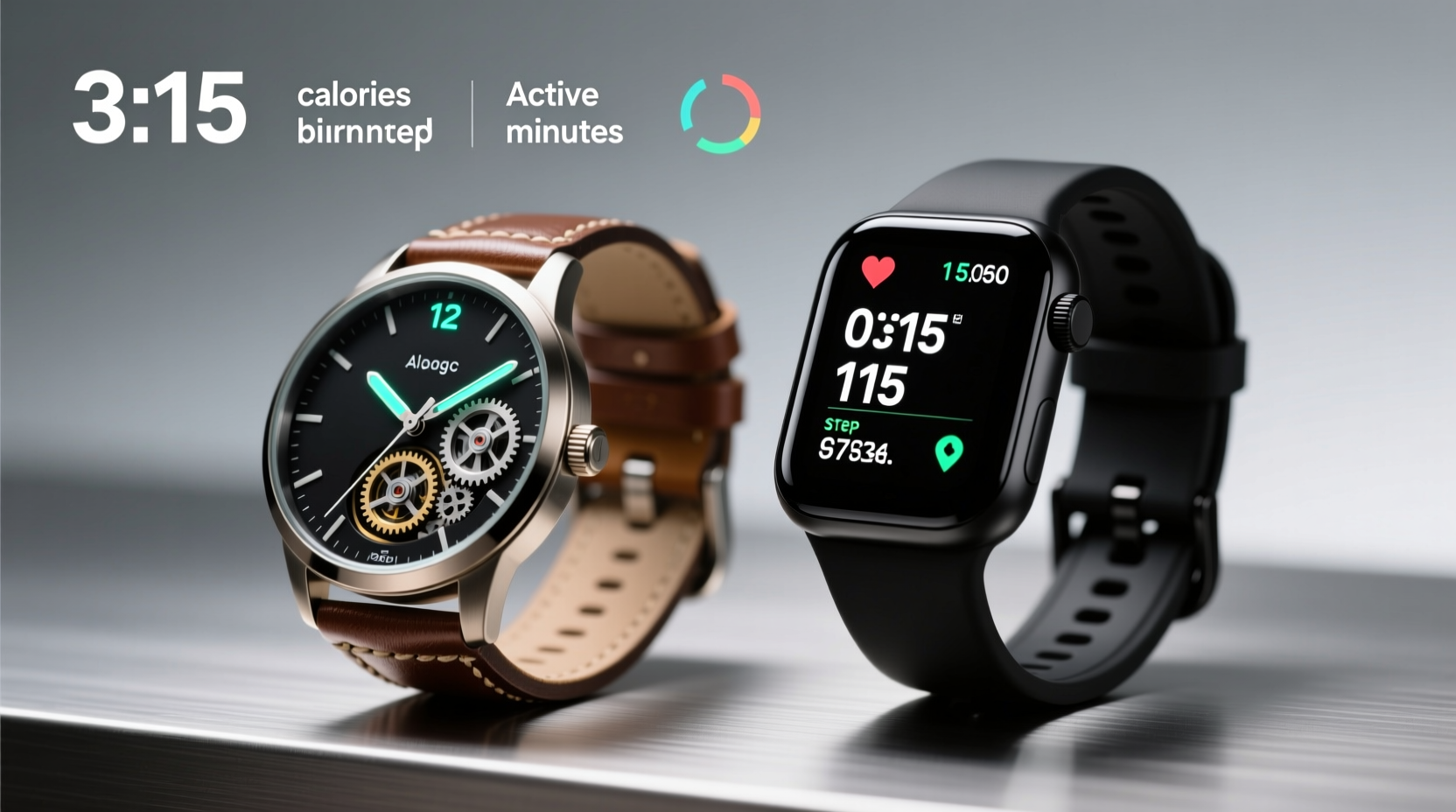
Historically, watches were tools for timekeeping. Athletes used stopwatches and chronographs to measure performance, relying on manual input and visual cues. Analog watches with stopwatch functions served runners, swimmers, and cyclists well into the late 20th century. However, modern fitness demands go beyond timing; they require continuous biometric feedback, pattern recognition, and integration with health apps.
Digital smartwatches and fitness bands emerged as natural successors, embedding sensors like accelerometers, gyroscopes, optical heart rate monitors, GPS, and barometers. These components enable automatic detection of workouts, calorie estimation, and recovery insights—features absent in traditional analog models.
Analog watches, while precise in telling time, lack the infrastructure for real-time physiological data collection. Even hybrid analog-digital watches—those with hidden sensors—often compromise on sensor placement and data frequency compared to full digital counterparts.
Accuracy and Data Reliability: A Side-by-Side Comparison
Reliability in fitness tracking hinges on three core aspects: measurement accuracy, data consistency, and contextual relevance. Let’s break down how analog and digital options compare across these dimensions.
| Feature | Analog Watch | Digital Watch |
|---|---|---|
| Step Counting | No native capability; requires external pedometer | High accuracy via built-in accelerometer |
| Heart Rate Monitoring | Not available | Continuous optical sensing with moderate clinical correlation |
| GPS Tracking | None | Precise route mapping and pace analysis |
| Sleep Tracking | Manual logging only | Automatic stages detection (light, deep, REM) |
| Battery Life | Months to years (mechanical/quartz) | 1–7 days (depending on model and usage) |
| Data Sync & App Integration | None | Seamless sync with Apple Health, Google Fit, Strava, etc. |
| Durability in Harsh Conditions | High (especially mechanical models) | Moderate to high (water-resistant models available) |
The table reveals a clear divergence: digital watches are purpose-built for fitness tracking, while analog watches excel in longevity and craftsmanship but fall short in active data gathering.
“Digital wearables have transformed personal health monitoring by making previously inaccessible metrics available to everyday users. Their reliability lies not just in individual readings but in trend analysis over time.” — Dr. Lena Patel, Biomedical Engineer and Wearable Technology Researcher
Real-World Use Case: Marathon Training with Different Watches
Consider Sarah, a recreational runner preparing for her first marathon. She owns a classic analog chronograph inherited from her father and recently purchased a mid-tier digital fitness watch. For six weeks, she alternates between them during training runs.
Using the analog watch, Sarah manually starts the chronograph at the beginning of each run. She records distance using her car’s odometer and estimates effort based on perceived exertion. After each session, she logs duration and notes in a journal. There’s no insight into her heart rate zones, pacing variability, or recovery needs.
With the digital watch, every run begins with a single button press. GPS locks within seconds, tracking her exact route. The watch alerts her when she exceeds her target heart rate zone and vibrates at each kilometer. Post-run, she reviews elevation gain, cadence, and estimated VO₂ max improvement over time. Her sleep score correlates with next-day performance, allowing adjustments to rest days.
After four weeks, Sarah notices inconsistencies in her progress logs from the analog method—missing entries, inaccurate distances, and no physiological context. In contrast, the digital device provides a complete, timestamped record. She switches entirely to the digital tracker two months before race day.
This scenario illustrates a broader truth: while analog devices support discipline through ritual, digital tools enhance it through insight.
When Analog Might Still Be the Better Choice
Despite the dominance of digital technology, there are niche scenarios where an analog watch proves more reliable—or at least more suitable—for fitness-related purposes.
- Minimalist Training Philosophy: Some athletes prefer uncluttered focus. They train by feel, using breath, terrain, and rhythm instead of numbers. An analog watch offers clean timekeeping without distractions.
- Extended Outdoor Expeditions: On multi-day hikes or remote treks, battery life becomes critical. Mechanical analog watches run indefinitely with winding, whereas digital devices may die mid-trip without solar charging or backup power.
- Allergies or Skin Sensitivity: Some individuals react to the materials in digital bands (silicone, adhesives). A stainless steel or leather-strapped analog watch may be more comfortable for continuous wear.
- Psychological Detachment: Constant notifications and performance pressure from digital trackers can increase anxiety. Removing data dependency allows mental space for intuitive movement.
Step-by-Step: Choosing the Right Tool for Your Fitness Goals
Selecting between analog and digital shouldn’t be arbitrary. Follow this decision framework to ensure alignment with your objectives.
- Define Your Primary Goal: Are you training for competition, managing weight, improving general health, or simply staying active? Competitive athletes benefit most from digital analytics.
- Evaluate Required Metrics: List what you need to track—steps, heart rate, sleep, calories, GPS routes. If more than two are essential, digital is necessary.
- Assess Tech Comfort Level: Do you enjoy syncing data, reviewing charts, and adjusting habits based on feedback? If not, a simpler tool may improve adherence.
- Consider Battery and Maintenance: Can you charge a device daily? Will you remember to do so? Analog wins in low-maintenance environments.
- Test Both Options: Wear each type for one week during regular activity. Note which feels more supportive of your routine and mindset.
- Review Long-Term Value: Factor in durability, repairability, and resale value. High-end analogs retain worth; digital devices depreciate quickly.
Checklist: What to Look for in a Reliable Fitness Tracker
If you choose digital, use this checklist to evaluate reliability:
- ✅ Validated heart rate sensor (look for studies referencing the manufacturer)
- ✅ Built-in GPS (not reliant on phone connection)
- ✅ Water resistance rated at least 5 ATM
- ✅ Accurate sleep stage detection (check independent reviews)
- ✅ Long-term software support (minimum 3-year update guarantee)
- ✅ Open API or compatibility with major health platforms
- ✅ Replaceable band and accessible battery service
For analog users who still want minimal tracking, look for:
- ✅ Chronograph function with tachymeter bezel (for speed/distance estimation)
- ✅ Luminous markers for low-light visibility
- ✅ Scratch-resistant sapphire crystal
- ✅ Lightweight case material (titanium or ceramic)
Frequently Asked Questions
Can I rely on a digital watch for medical-grade heart rate data?
Most consumer-grade digital watches provide clinically acceptable estimates under normal conditions but are not substitutes for medical devices. Studies show optical sensors can deviate by ±10–15 BPM during intense exercise. For arrhythmia screening (e.g., AFib detection), some premium models like Apple Watch and Fitbit have FDA clearance, but always confirm findings with a physician.
Are analog watches completely useless for fitness?
No. They remain excellent for time-based interval training, mindfulness practices, and as backup timers. Many elite coaches recommend “tech-free” sessions to develop internal pacing. Their reliability in pure timekeeping is unmatched—mechanical chronometers often lose less than 1 second per day.
Do digital watches become obsolete quickly?
Yes, relatively. Most manufacturers discontinue software updates after 3–5 years, leaving older models vulnerable to security issues and app incompatibility. In contrast, a well-maintained analog watch can last decades. However, rapid obsolescence is offset by faster innovation in sensor accuracy and health features.
Conclusion: Function Meets Intention
The debate between analog and digital for fitness tracking ultimately comes down to intent. If your goal is measurable progress, injury prevention, and holistic health awareness, digital devices are objectively more reliable. Their ability to capture, analyze, and contextualize data gives users a powerful advantage in optimizing performance and well-being.
That said, analog watches offer enduring value in simplicity, resilience, and psychological freedom. They remind us that fitness isn’t solely defined by numbers—it’s also shaped by consistency, presence, and personal commitment.
The most effective approach may be integration: use a digital watch during structured training phases and switch to analog during recovery, travel, or mindful movement periods. This hybrid strategy balances data intelligence with human intuition.




 浙公网安备
33010002000092号
浙公网安备
33010002000092号 浙B2-20120091-4
Comments
No comments yet. Why don't you start the discussion?