
In an age where time is always at our fingertips—on smartphones, laptops, and smartwatches—the wristwatch persists as both a functional tool and a personal statement. Yet within this enduring accessory category, a quiet but persistent debate continues: analog versus digital. Is it better to wear a timepiece that speaks of tradition, elegance, and mechanical artistry? Or should one opt for the efficiency, accuracy, and utility of digital displays? The answer isn’t just about preference—it’s about understanding how each type aligns with lifestyle, aesthetics, and practical needs.
The distinction between analog and digital watches goes beyond how time is displayed. It reflects deeper values—craftsmanship versus innovation, subtlety versus clarity, heritage versus progress. Whether you're building a watch collection, choosing a daily wear piece, or simply curious about horological culture, understanding this divide offers insight into more than just timekeeping. It reveals how we express identity through what we wear and how we interact with technology.
The Aesthetic Appeal of Analog Watches
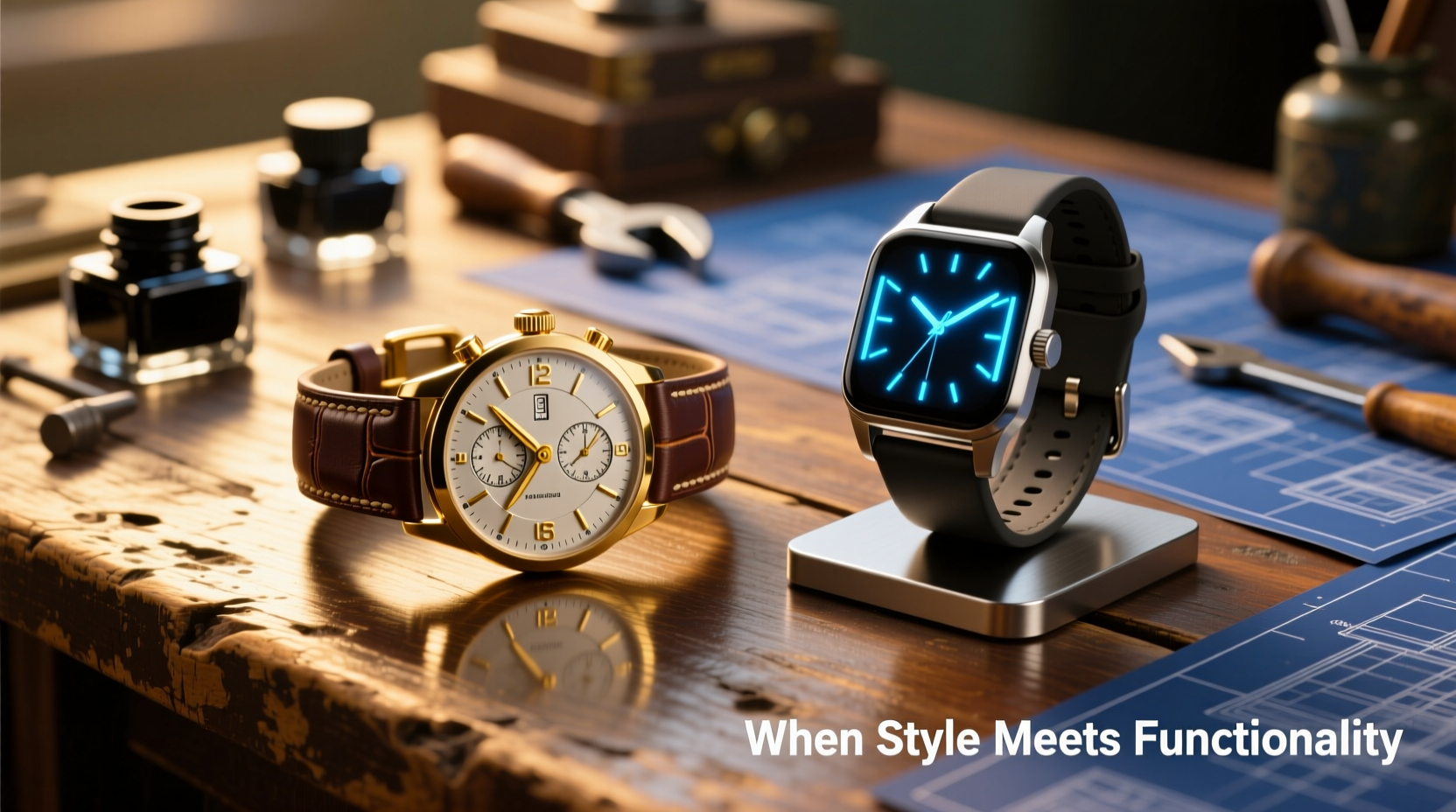
Analog watches are often celebrated for their visual elegance. With sweeping hands, intricate dials, and carefully designed indices, they transform time into a moving work of art. The craftsmanship involved—especially in mechanical and automatic models—elevates them from mere instruments to heirloom-quality objects.
Many luxury brands like Rolex, Patek Philippe, and Omega have built empires on the prestige of analog design. Their watches feature guilloché dials, sapphire case backs revealing beating movements, and hand-finished components that take hours to assemble. These details aren't just decorative; they signal dedication to precision engineering and aesthetic harmony.
Wearing an analog watch subtly communicates taste and attention to detail. In formal settings—a boardroom, a wedding, or a dinner party—an elegant dress watch conveys sophistication. Even in casual environments, a well-chosen analog piece can elevate an outfit, serving as a minimalist yet impactful accessory.
Digital Watches: Functionality First
Digital watches prioritize information delivery over ornamentation. Using LCD or LED displays, they present time in clear numerals, often accompanied by additional data such as date, stopwatch readings, alarms, battery life, and even GPS coordinates. Brands like Casio, Timex, and Garmin dominate this space, offering rugged, reliable tools built for specific purposes.
The strength of digital watches lies in their versatility. A G-Shock model might survive extreme conditions—shocks, water immersion, freezing temperatures—while maintaining atomic time sync. Fitness trackers and hybrid smartwatches extend this further, monitoring heart rate, sleep patterns, and activity goals. For athletes, adventurers, and tech enthusiasts, these capabilities make digital timepieces indispensable.
Unlike analog models, which often require manual winding or periodic servicing, most digital watches run on long-lasting batteries and demand little maintenance. Their interfaces are intuitive, especially for users accustomed to digital devices. Press a button, cycle through functions, get the data you need—all without interpretation.
“Digital watches represent the democratization of precision. You don’t need expertise to benefit from perfect timekeeping.” — Dr. Alan Reeves, Horology Historian, MIT Media Lab
Comparing Core Features: A Practical Breakdown
To truly understand the trade-offs between analog and digital watches, consider how they perform across key dimensions:
| Feature | Analog Watch | Digital Watch |
|---|---|---|
| Time Readability | Requires interpretation of hand positions; excellent in low-glare conditions | Numerical display allows instant reading, even in motion |
| Battery Life | Mechanical: none needed; Quartz: 1–3 years | Typically 2–5 years; smart models may require weekly charging |
| Additional Functions | Limited (chronograph, moon phase, GMT) | Stopwatch, alarm, backlight, fitness tracking, notifications |
| Durability | Vulnerable to shocks and magnetism; delicate internals | Often shock-resistant and waterproof (e.g., G-Shock) |
| Style & Versatility | High fashion integration; suitable for formal and smart-casual wear | Best suited for sporty, utilitarian, or tech-forward looks |
| Maintenance | Regular servicing recommended every 3–5 years | Minimal upkeep; occasional battery replacement |
This comparison shows no single winner. Instead, it highlights context. An investment banker attending client meetings will likely favor a sleek stainless steel analog chronometer. A trail runner navigating mountain terrain benefits far more from a digital multisport watch with altitude tracking and route mapping.
When Style Meets Functionality: Real-World Scenarios
Consider Sarah Lin, a product designer based in Portland. Her week includes client presentations, co-working sessions, and weekend hikes. She owns three watches: a vintage-inspired Hamilton Khaki Field Automatic for office days, a Casio F-91W for gym and errands, and a Garmin Fenix for outdoor adventures.
“I used to think I only needed one watch,” she says. “But I realized each serves a different role. My Hamilton makes me feel put-together during pitches. The Casio is my ‘don’t worry about it’ watch—I can wear it anywhere. And the Garmin literally keeps me safe on solo trails.”
Sarah’s approach exemplifies a growing trend: **purpose-driven watch ownership**. Rather than seeking a single do-it-all device, people are curating small collections tailored to specific lifestyles. This mindset dissolves the rigid analog vs digital debate. Instead of asking “which is better?” the question becomes “which is better *for this moment*?”
Another example is James Okoye, a medical resident working 80-hour weeks. He wears a simple Seiko analog field watch because its muted design doesn’t distract during surgery, and he finds checking the time via subtle glances less disruptive than pressing buttons. Meanwhile, his older brother, a drone operator for search-and-rescue missions, relies on a rugged digital Suunto with barometric pressure sensors and dive modes.
Finding Balance: Hybrid and Smartwatch Innovations
Technology has begun to blur the lines between analog and digital. Enter the hybrid smartwatch—a category that combines traditional aesthetics with modern functionality. Models like the Withings ScanWatch or Frederique Constant High Life Hybrid offer analog hands while embedding sensors for step counting, sleep monitoring, and smartphone alerts.
These watches appeal to professionals who want health tracking without sacrificing style. They typically use subtle hand movements (like a double-tap second hand) to indicate incoming calls or low activity levels. Battery life remains strong—often six months—because they lack full screens or processors.
On the other end, some digital watches now mimic analog styles through pixel-based simulations. Apple Watch faces, for instance, replicate vintage chronographs, moonphase indicators, and even animated mechanical gears. While not true analog mechanisms, these designs cater to users who appreciate classical aesthetics but depend on digital connectivity.
How to Choose Based on Your Lifestyle
Selecting the right watch shouldn’t be dictated by trends or brand names alone. It should reflect your daily routine, personal values, and long-term goals. Follow this step-by-step guide to make an informed decision:
- Assess Your Daily Activities: Do you attend formal events regularly? Work outdoors? Travel frequently? Each environment favors different features.
- Determine Your Priorities: Rank what matters most—accuracy, durability, battery life, design, or multifunctionality.
- Consider Maintenance Tolerance: Are you willing to service a mechanical watch every few years? Or do you prefer set-it-and-forget-it reliability?
- Evaluate Tech Integration Needs: Do you rely on notifications, fitness tracking, or voice assistants throughout the day?
- Test Wearability: Try on both types. Notice weight, strap comfort, and how easily you read the time at a glance.
- Set a Budget: Analog mechanical watches can range from $200 to $20,000+. Digital options often deliver high function at lower price points.
After this evaluation, you may find yourself drawn to one category—or realize that owning both makes the most sense.
FAQ: Common Questions About Analog vs Digital Watches
Can a digital watch be stylish?
Absolutely. While traditionally associated with utility, modern digital watches come in sleek designs with premium materials. The Casio Edifice series, for example, blends metallic finishes with sharp digital displays, making them appropriate for semi-formal settings. Color customization and interchangeable bands also allow for personal expression.
Are analog watches more accurate than digital ones?
No—typically the opposite. Most analog quartz watches are accurate to within ±15 seconds per month. Digital quartz watches often achieve ±10 seconds per month or better. Mechanical analog watches, while beautiful, may gain or lose several seconds daily. Atomic-synced digital watches can be perfectly aligned with global time standards.
Do digital watches last as long as analog ones?
They serve different lifespans. A well-maintained analog watch—especially mechanical—can last generations. Digital watches, however, face obsolescence due to advancing tech and limited repairability. That said, models like the Casio F-91W have remained virtually unchanged since 1989, proving that simplicity ensures longevity.
Final Thoughts: Harmony Over Hierarchy
The conversation around analog versus digital watches isn’t a zero-sum game. It’s not about declaring one superior, but recognizing that each fulfills distinct human needs. Analog watches connect us to history, craftsmanship, and the quiet rhythm of mechanical motion. Digital watches empower us with data, resilience, and immediacy in an accelerated world.
Ultimately, the best choice depends on what you value in a timepiece—and in yourself. Do you seek refinement and continuity? Or efficiency and adaptability? Perhaps, like many modern consumers, you embrace both. Owning an elegant dress watch for evenings out and a rugged digital companion for weekend expeditions isn’t indecision—it’s intentionality.
As wearable technology evolves, the boundary between analog and digital will continue to soften. But the core truth remains: a watch is more than a tool. It’s a reflection of identity, rhythm, and presence in time. Whether you admire the sweep of a second hand or the pulse of a digital backlight, what matters most is that your watch helps you live deliberately.




 浙公网安备
33010002000092号
浙公网安备
33010002000092号 浙B2-20120091-4
Comments
No comments yet. Why don't you start the discussion?