
The nativity scene has long served as a visual anchor for the Christmas season, grounding celebrations in the quiet miracle of Christ’s birth. Whether displayed in churches, homes, or public squares, these depictions vary widely—from centuries-old hand-carved figurines to high-tech animated displays with motion, sound, and synchronized lighting. As technology reshapes how we experience tradition, a question emerges: does an animated nativity scene tell the story better than its static counterpart? The answer isn’t binary. It depends on context, audience, intention, and what “better” truly means.
The Power of Stillness: What Static Nativity Figures Offer
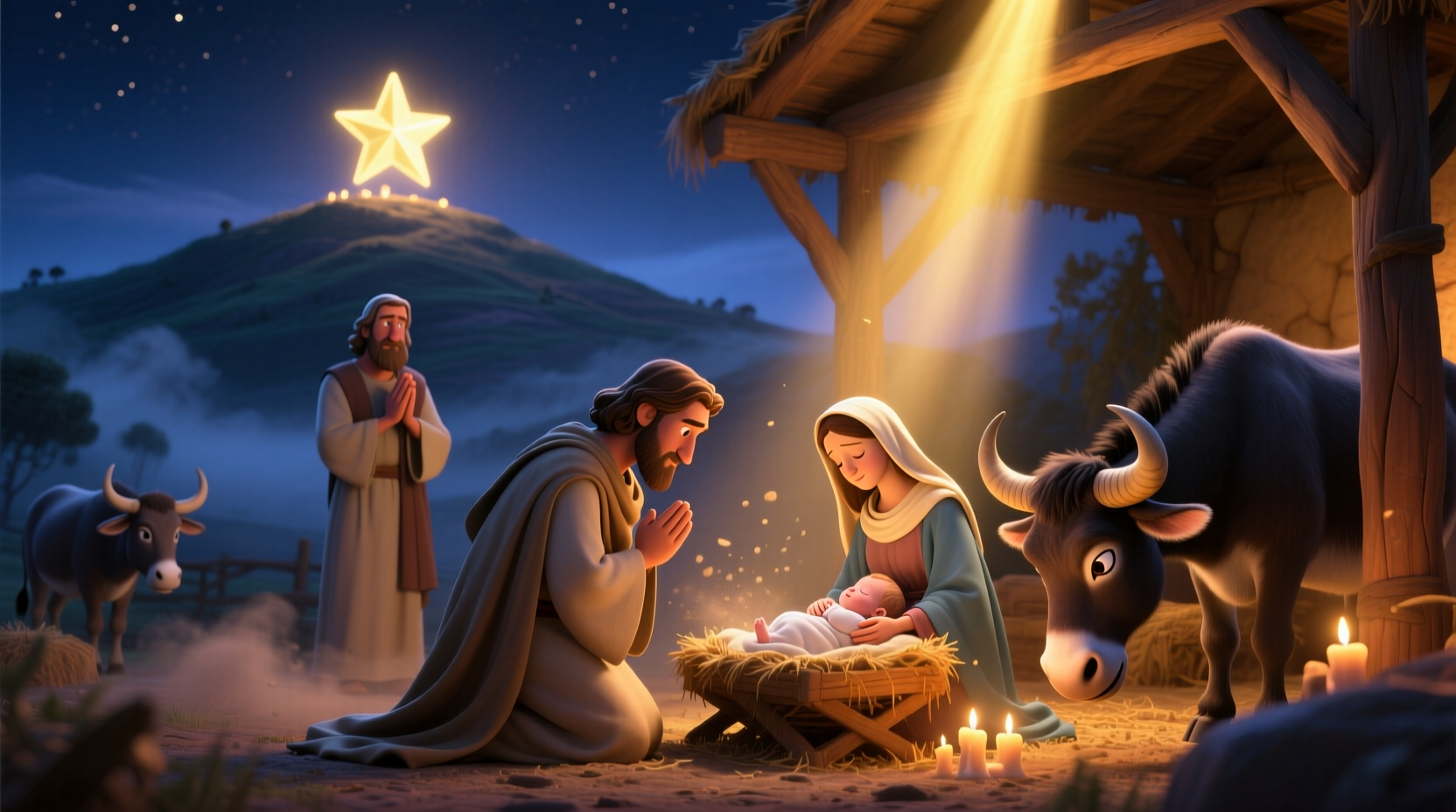
Static nativity scenes—composed of fixed figures arranged in a stable or manger setting—have been a part of Christian tradition since St. Francis of Assisi created the first living creche in 1223. Their enduring appeal lies in their simplicity, reverence, and invitation to contemplation.
Unlike dynamic displays, static scenes don’t move or speak. They require the viewer to pause, reflect, and mentally reconstruct the narrative. This stillness fosters a meditative atmosphere, allowing space for prayer, personal connection, and imagination. In many homes, assembling the nativity set each December is a ritual in itself—a moment of family bonding and spiritual preparation.
“Silence often speaks louder than movement. A static scene doesn’t distract; it invites you into the mystery.” — Dr. Lydia Bennett, Liturgical Art Historian
Traditional materials like wood, ceramic, or porcelain carry weight—both physically and symbolically. These textures evoke timelessness, craftsmanship, and heritage. For older generations and liturgical communities, the unchanging nature of the scene reinforces the constancy of faith.
Motion and Emotion: The Rise of Animated Nativity Scenes
In contrast, animated nativity scenes use mechanics, electronics, and sometimes audio narration to bring the story to life. Figures may bow, animals move, angels descend, and lights shift to simulate sunrise over Bethlehem. Some even include recorded scripture readings or carols on loop.
These displays are particularly common in public settings—shopping malls, town squares, and church lawns—where capturing attention is essential. Movement naturally draws the eye, especially among children and passersby unfamiliar with the biblical account. An animated angel waving gently above the manger can spark curiosity where a still one might go unnoticed.
Modern technology allows for storytelling layers that static sets cannot replicate. Timed sequences can show the progression from Mary and Joseph’s arrival to the shepherds’ visit and the Magi’s journey. Some advanced models sync music with action, creating a mini-drama of the Nativity.
Yet, this dynamism comes with trade-offs. Sound can feel intrusive in sacred spaces. Repetitive motions may become comical rather than reverent. And reliance on electricity and mechanics introduces fragility—both literal (broken gears) and symbolic (a sense of artificiality).
A Comparative Look: Key Differences at a Glance
| Feature | Static Nativity Scene | Animated Nativity Scene |
|---|---|---|
| Movement | None | Mechanical or motorized motion |
| Auditory Elements | Silent or ambient only | Often includes music or narration |
| Maintenance Needs | Low (dusting, storage) | High (batteries, repairs, weatherproofing) |
| Emotional Tone | Contemplative, reverent | Engaging, dramatic |
| Best Suited For | Private devotion, liturgical spaces | Public outreach, family entertainment |
When Each Format Excels: Context Matters
The question of which tells a better story hinges on purpose. There is no universal “best”—only what works best for a given setting and audience.
In a small rural church, a static wooden nativity passed down through generations may carry deep communal meaning. Its worn edges and faded paint tell a story beyond scripture—one of shared history, resilience, and continuity. Here, movement would feel disruptive, even disrespectful.
Conversely, in a bustling urban park during holiday festivities, an animated display can serve as an evangelistic tool. Children point and laugh as the camel nods; parents stop to listen to the Gospel reading. For those with little exposure to the Christmas story, animation lowers the barrier to engagement.
“A child who laughs at a moving sheep might later ask why the shepherds were watching flocks by night. That question is the beginning of understanding.” — Pastor Marcus Reed, Urban Ministry Director
Families with young children often find animated scenes more effective for teaching. Movement helps sustain attention spans, and sequenced actions make the narrative easier to follow. However, educators caution against over-reliance on spectacle. The risk is that the story becomes entertainment rather than revelation.
Real Example: Two Churches, Two Approaches
Consider two parishes in neighboring towns. Grace Fellowship, a growing suburban church, invested in a large animated nativity for their front lawn. Complete with fiber-optic stars, moving wise men, and a 15-minute nightly light-and-sound show, it attracts hundreds each weekend. Local news covered it, families bring hot cocoa, and volunteers hand out gospel tracts. Attendance at Christmas Eve services rose by 30% after its debut.
Meanwhile, St. Clare’s Episcopal Church maintains a simple ceramic nativity inside the sanctuary. No lights, no sound—just the figures beneath a single spotlight. Parishioners report spending extra time before services gazing at the scene, some kneeling in prayer. The rector notes that many cite the nativity as a source of comfort during grief.
Neither approach is objectively superior. Grace Fellowship reaches outward with joy and energy; St. Clare’s nurtures inward reflection and peace. Both communicate the essence of the Incarnation—God with us—but through different emotional languages.
How to Choose the Right Format for Your Setting
Selecting between animated and static depends on several practical and philosophical considerations. Use this checklist to guide your decision:
- Identify your primary audience: Is it congregants seeking reverence, or the general public needing introduction?
- Evaluate your space: Indoor altars favor stillness; outdoor lawns may benefit from motion to compete with distractions.
- Assess maintenance capacity: Do you have someone to repair motors, replace bulbs, or protect electronics from weather?
- Consider budget: Animated sets cost more upfront and over time due to power and repairs.
- Reflect on theological tone: Does your community value quiet meditation or joyful proclamation?
Step-by-Step Guide: Creating a Meaningful Display
- Determine the purpose – Will this be devotional, educational, or evangelistic?
- Choose location – Indoor (quiet, controlled) vs. outdoor (visible, exposed).
- Select format – Based on audience, resources, and desired tone.
- Acquire components – Purchase or commission figures; test all mechanical parts. <5> Arrange thoughtfully – Position figures to guide the eye through the narrative flow.
- Add subtle enhancements – Use lighting, backdrop, or minimal greenery to focus attention.
- Include scriptural reference – A small plaque with Luke 2:1–20 grounds the display in text.
- Maintain regularly – Dust static sets; check wiring and motion in animated ones.
- Retire with care – Store properly to preserve for future seasons.
Frequently Asked Questions
Can animated nativity scenes be used in church sanctuaries?
While possible, it's uncommon in traditional liturgical settings. Most sanctuaries prioritize reverence and silence, which animated scenes can disrupt. However, some contemporary churches use subtle animations—like flickering star lights—in seasonal decor without full motion figures.
Are static nativity sets more authentic?
Authenticity depends on context. Historically, nativity scenes have always evolved—from live actors to porcelain miniatures. While static figures align more closely with centuries-old traditions, animation is simply a modern expression of the same impulse: to make the story tangible.
Do children engage more with animated scenes?
Generally, yes. Younger audiences respond to movement, sound, and interactivity. However, pairing animation with guided discussion ensures engagement leads to understanding, not just entertainment.
Conclusion: Storytelling Is Not One-Size-Fits-All
The debate between animated and static nativity scenes ultimately reflects broader tensions in modern religious practice: tradition versus innovation, reverence versus accessibility, stillness versus spectacle. But these are not opposing forces—they are complementary tools.
A static scene excels at inviting introspection, preserving sacred space, and honoring legacy. An animated display shines in education, outreach, and capturing fleeting attention in a noisy world. The “better” storyteller is the one that fulfills its intended role with integrity and heart.
Perhaps the most powerful approach is intentional diversity—using both forms where appropriate. Let the quiet manger inside inspire prayer, while the glowing tableau outside sparks wonder. In combining stillness and motion, silence and song, we mirror the paradox of the Incarnation itself: divine mystery made visible, eternal truth unfolding in time.




 浙公网安备
33010002000092号
浙公网安备
33010002000092号 浙B2-20120091-4
Comments
No comments yet. Why don't you start the discussion?