
Choosing the right anime poster size isn’t just about aesthetics—it’s about harmony. A poster that’s too large can overwhelm a space, while one that’s too small may get lost on the wall. Whether you're decorating a bedroom, living room, office, or hallway, selecting the ideal dimensions ensures your favorite anime artwork enhances the atmosphere without disrupting balance. This guide breaks down optimal poster sizes based on room type, wall space, viewing distance, and layout dynamics, so your display feels intentional and impactful.
Understanding Standard Poster Sizes
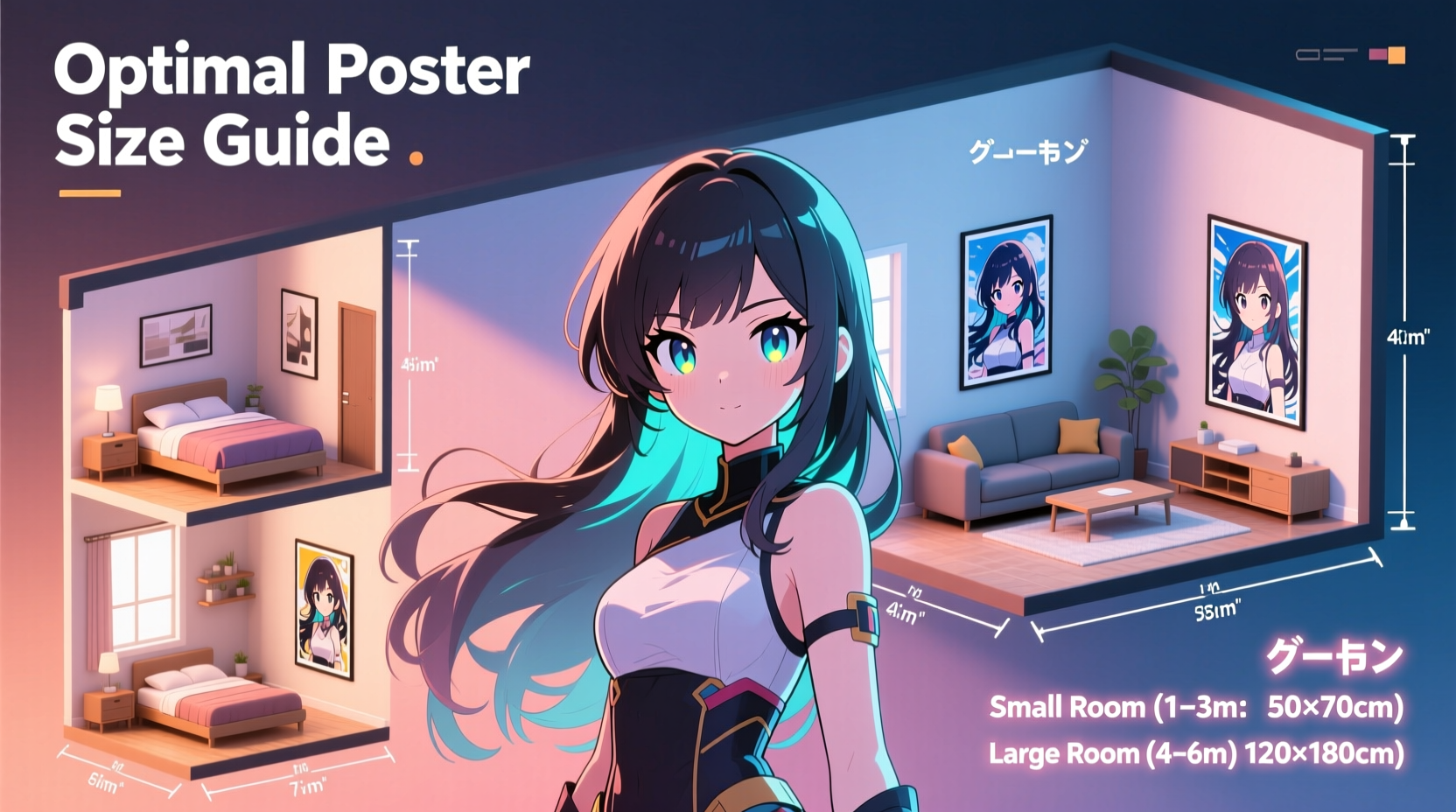
Anime posters come in a variety of standard sizes, often influenced by international printing conventions and theatrical releases. Knowing these dimensions helps you make informed decisions when shopping online or commissioning custom prints.
| Size (inches) | Metric (cm) | Common Use Case |
|---|---|---|
| 11 x 17 | 28 x 43 | Deskside accent, small bedroom walls |
| 18 x 24 | 46 x 61 | Mid-sized bedroom or study nook |
| 24 x 36 | 61 x 91 | Living room feature wall, larger bedrooms |
| 27 x 40 | 69 x 102 | Official movie posters; bold statement pieces |
| 36 x 48 | 91 x 122 | Gallery-style displays, wide walls |
The most popular size among anime collectors is 24 x 36 inches—it offers a strong presence without dominating smaller spaces. However, flexibility matters. If your wall has architectural features like windows or furniture, consider trimming down or opting for a diptych (two-part) layout using two 18 x 24 prints.
Best Anime Poster Sizes by Room Type
Bedrooms: Balancing Intimacy and Impact
The bedroom is where personal taste shines. Since this is a close-viewing environment, overly large posters can feel intrusive. For single beds or compact rooms, an 18 x 24 inch print above the headboard creates a cozy focal point. Larger master bedrooms with high ceilings can support a 24 x 36 or even 27 x 40 inch poster—especially if it's centered between nightstands.
If wall space is limited due to closets or doors, consider a vertical triptych of three 11 x 17 prints arranged in a column beside the bed. This approach adds depth without requiring horizontal clearance.
Living Rooms: Creating a Statement Wall
In open-concept homes, the living room often serves as a social hub. Here, scale matters. A single 36 x 48 inch anime poster can serve as a bold centerpiece behind the sofa, especially if the artwork aligns with modern or pop-culture themes. Alternatively, use a gallery wall format: combine four 18 x 24 prints in a symmetrical grid for a curated look.
“Wall art should complement the room’s function. In communal spaces, larger formats foster conversation.” — Lena Torres, Interior Stylist & Pop Culture Decor Specialist
Avoid cluttering the main seating area with too many anime posters. One dominant piece or a tightly grouped cluster works better than scattered individual prints.
Home Offices and Study Areas
Productivity zones benefit from motivational visuals. A medium-sized 24 x 36 inch poster of a determined anime character—like Levi from *Attack on Titan* or Tanjiro from *Demon Slayer*—can inspire focus during long work sessions. Position it within your peripheral vision but not directly in line with your screen to reduce distraction.
For narrow office walls, consider panoramic prints (e.g., 18 x 48 inches) that stretch horizontally across shelves or desks. These mimic scene stills from anime openings and add cinematic flair without overwhelming the space.
Hallways and Entryways
Narrow spaces call for vertical orientation. Tall, slim posters in 12 x 36 or 18 x 48 inch formats fit perfectly between doors or along stairwells. Choose iconic anime characters in dynamic poses—think Goku mid-transformation or Sailor Moon with her wand raised—to create a sense of movement as people walk by.
When hanging in hallways, ensure the bottom edge is at least 60 inches from the floor so taller individuals don’t risk bumping their heads.
Room Layout Considerations for Optimal Placement
Even the perfect-sized poster can fail if placed incorrectly. The key is matching the artwork’s scale to the room’s geometry and furniture arrangement.
Furniture Proportions
A poster should generally be no wider than 75% of the furniture beneath it. For example, if your bed is 60 inches wide, a 45-inch-wide poster (such as 24 x 36) is ideal. Oversized posters above narrow furniture look unbalanced, while undersized ones appear neglected.
Ceiling Height and Viewing Distance
Rooms with ceilings under 8 feet benefit from moderate-sized prints (18 x 24 or 24 x 36). Taller rooms (9+ feet) can handle oversized posters or multi-level arrangements. In spacious living areas where viewers stand 6–10 feet away, larger sizes maintain visual clarity.
Lighting and Glare
Natural light enhances colors but can cause glare on glossy finishes. If your poster faces a window, opt for matte lamination or UV-protective glass framing. Avoid placing large posters directly opposite bright lights, which washes out details—especially in dark-themed anime like *Tokyo Ghoul* or *Death Note*.
Step-by-Step Guide to Choosing Your Anime Poster Size
Follow this five-step process to select the perfect dimensions for any room:
- Measure the Wall: Use a tape measure to record width and height. Note obstructions like switches, vents, or baseboards.
- Identify Primary Furniture: Determine what the poster will anchor to (bed, desk, sofa). Measure its width for proportional guidance.
- Assess Viewing Distance: Will people see it from 3 feet (bedroom) or 8 feet (living room)? Greater distances favor larger sizes.
- Select Format Based on Aspect Ratio: Most anime posters are 2:3 (e.g., 18x24, 24x36). Wider scenes (like landscapes from *Spirited Away*) may require 16:9 panoramic prints.
- Plan Mounting Method: Decide between frames, adhesive strips, or floating shelves. Heavy frames need wall anchors; lightweight options suit rental-friendly solutions.
This method prevents guesswork and ensures your poster integrates seamlessly into the room’s design language.
Display Strategies for Multiple Posters
Many fans own several favorite anime prints. When displaying more than one, cohesion is crucial.
- Grid Layout: Use uniform frames and spacing (2–3 inches between edges) for a clean, modern look. Best for matching series like *My Hero Academia* character profiles.
- Symmetrical Pairing: Hang two identical-sized posters on either side of a mirror or doorway. Works well with contrasting duos like Naruto and Sasuke.
- Salon-Style Cluster: Mix sizes (e.g., one 24x36 center with four 11x17 surrounds) for an eclectic vibe. Ideal for anime anthology fans who love multiple series.
Stick to a consistent color theme or border style—even if the anime differ—to unify the collection. Black or wood-grain frames offer timeless appeal.
Mini Case Study: Transforming a Small Studio Apartment
Rina, a 28-year-old graphic designer in Osaka, wanted to showcase her love for *Studio Ghibli* without making her 350 sq ft studio feel cluttered. She measured her main wall—72 inches wide above a low platform bed—and chose a single 24 x 36 inch framed print of *Totoro* waiting at the bus stop.
To expand the theme subtly, she added two 11 x 17 prints of *Kiki’s Delivery Service* and *Ponyo* on an adjacent wall, spaced 10 inches apart. All used matching white wooden frames. The result? A cohesive, calming aesthetic that honored her fandom while maintaining minimalist elegance.
“I was worried it would feel childish,” Rina said. “But because the sizes were balanced and the placement intentional, it actually elevated the whole room.”
Frequently Asked Questions
What is the most versatile anime poster size?
The 24 x 36 inch size is the most versatile. It fits well in bedrooms, offices, and medium-sized living areas. Its widespread availability also means more frame and matting options.
Can I mix different poster sizes in one room?
Yes, but maintain visual order. Use a dominant central piece (e.g., 24 x 36) surrounded by smaller accents (11 x 17 or 18 x 24). Align top edges or centers to create rhythm. Avoid random scattering.
How high should I hang my anime poster?
The center of the poster should be at eye level—approximately 57 to 60 inches from the floor. Adjust slightly higher in rooms with tall ceilings or if viewed from a seated position (e.g., above a desk).
Final Checklist Before Hanging
- ✔ Measure Twice
- Confirm wall dimensions and clearances.
- ✔ Check Sun Exposure
- Avoid direct sunlight to prevent fading over time.
- ✔ Test Layout with Paper Template
- Cut kraft paper to poster size and tape it up to preview impact.
- ✔ Match Frame to Room Style
- Minimalist rooms suit thin black or natural wood frames; retro spaces allow bold metallics.
- ✔ Secure Proper Hardware
- Use drywall anchors for heavy frames; command strips for lightweight prints in rentals.
Conclusion: Elevate Your Space with Purposeful Design
The right anime poster size transforms admiration into artistry. It’s not just about showing off your favorite series—it’s about curating an environment that reflects your personality while respecting spatial harmony. From compact dorm rooms to expansive living areas, thoughtful sizing and placement turn fleeting fandom into lasting interior inspiration.




 浙公网安备
33010002000092号
浙公网安备
33010002000092号 浙B2-20120091-4
Comments
No comments yet. Why don't you start the discussion?