
For fans of vintage animation, few experiences rival revisiting the foundational works that shaped modern anime. From early 1970s mecha epics to 1990s coming-of-age dramas, classic anime holds cultural significance and nostalgic value. But with dozens of streaming platforms vying for attention, identifying which service hosts the most comprehensive catalog of older titles can be overwhelming. Not all platforms treat legacy content equally—licensing restrictions, regional availability, and shifting business models heavily influence what’s accessible. This guide cuts through the noise, comparing major anime streaming services based on depth, curation, and accessibility of their classic offerings.
Defining “Classic” Anime in the Streaming Era
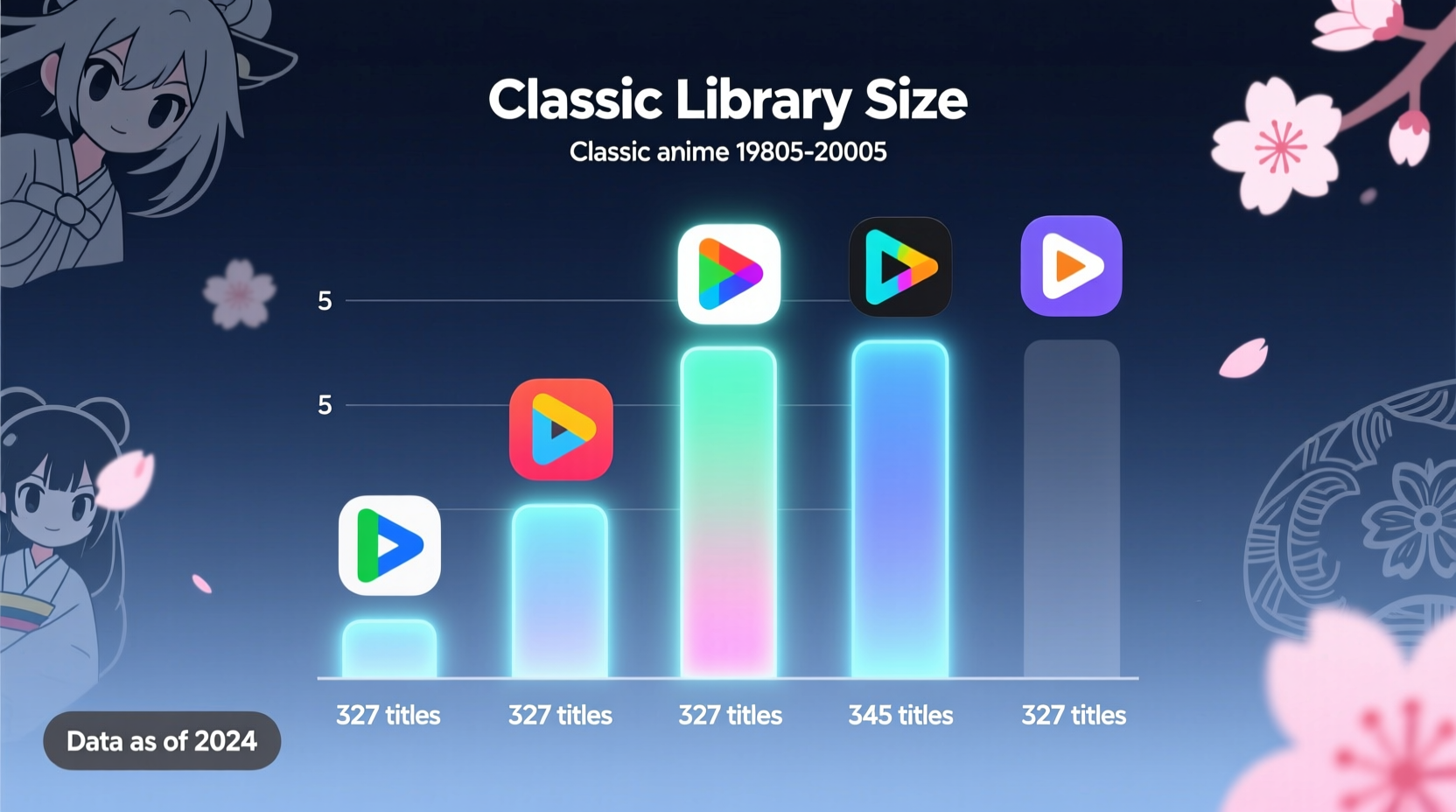
In the context of anime history, “classic” typically refers to series released between the 1960s and early 2000s. These include seminal works such as Astro Boy (1963), Cowboy Bebop (1998), Sailor Moon (1992), and Neon Genesis Evangelion (1995). These shows not only defined genres but also introduced Japanese animation to global audiences. Today, access to these titles depends on licensing agreements that vary by region and platform exclusivity deals.
Streaming services categorize content differently. Some use “retro” or “throwback” tags, while others bury classics under broad genre labels. A true classic-focused library should offer more than a handful of well-known titles—it should include deep cuts, lesser-known OVAs (Original Video Animations), and historically significant films that are often overlooked.
Top Anime Streaming Platforms Compared
The following services dominate the legal anime streaming space. Each has strengths and weaknesses when it comes to classic content availability.
Crunchyroll
As one of the largest anime-specific platforms, Crunchyroll boasts over 1,300 titles in its catalog. Its strength lies in simulcasts and modern hits, but its classic selection is surprisingly limited. While it hosts fan favorites like Dragon Ball Z, Yu Yu Hakusho, and Trigun, many pre-2000 series are either missing or region-locked. After Sony’s acquisition and the merger with Funimation, some older titles were migrated or removed due to overlapping licenses.
FUNimation (now merged into Crunchyroll)
FUNimation was historically the go-to source for dubbed classic anime, especially for Toei Animation and Bandai Namco properties. It held exclusive rights to English dubs of Dragon Ball, Sailor Moon, and Fullmetal Alchemist (2003). However, following the full integration into Crunchyroll in 2024, many FUNimation-exclusive dubs have been phased out or made unavailable outside North America. The consolidation has led to a net loss in accessible classic content for international users.
HIDIVE
Operated by Sentai Filmworks, HIDIVE specializes in niche and retro anime. It stands out for preserving hard-to-find titles such as Now and Then, Here and There, Boogiepop Phantom, and The Big O. It also streams restored versions of older series with high-quality subtitles and dubs. Unlike larger platforms, HIDIVE maintains long-term licensing for select catalogs, including ADV Films and A.D. Vision acquisitions—making it a sanctuary for pre-2000s anime enthusiasts.
Netflix
Netflix features curated anime content but focuses heavily on original productions and recent acquisitions. Its classic offerings are sparse and inconsistent across regions. While it occasionally adds remastered versions of older franchises (Cowboy Bebop, Ghost in the Shell: Stand Alone Complex), these are often temporary. Netflix prioritizes algorithm-driven content over archival preservation, meaning even iconic series may vanish after a year.
Amazon Prime Video
Prime Video hosts anime through both direct licensing and third-party channels like HiDive, RetroCrush, and Anime Strike (discontinued). This fragmented model allows access to niche retro collections via add-ons, but requires additional subscriptions. Titles like Maison Ikkoku and Ranma ½ appear intermittently, often tied to short-term licensing deals.
RetroCrush
A free, ad-supported platform from RetroCrush LLC, this service is dedicated entirely to classic anime. It streams over 200 retro titles, including obscure gems like Kimagure Orange Road, Urusei Yatsura, and Dirty Pair. Available on web and mobile apps, RetroCrush fills a critical gap for fans seeking no-cost access to vintage content. However, its interface lacks advanced search tools, and video quality varies.
“Preserving classic anime isn’t just about nostalgia—it’s about cultural continuity. Platforms that invest in restoration and long-term access are doing vital work.” — Dr. Naomi Tanaka, Media Archivist at Kyoto University of the Arts
Comparative Analysis: Classic Library Depth
To determine which service offers the largest classic library, several factors must be weighed: total number of pre-2000 titles, inclusion of rare or discontinued series, audio options (dub/sub), and video quality (remastered vs. standard definition).
| Service | Est. Pre-2000 Titles | Dub Availability | HD Remasters | Free Tier? |
|---|---|---|---|---|
| Crunchyroll | ~80 | Partial (select dubs) | Limited | No |
| HIDIVE | ~150+ | Extensive (many dual audio) | Yes (growing collection) | No |
| RetroCrush | ~200+ | Few dubs (mostly subs) | No (SD only) | Yes |
| Netflix | ~30 | Some originals | Yes (selected) | No |
| Amazon Prime Video | ~60 (varies by region) | Channel-dependent | Spotty | With subscription |
Based on volume and consistency, **RetroCrush** leads in sheer quantity of classic titles, though with trade-offs in quality and user experience. **HIDIVE** follows closely, offering fewer titles but superior presentation, including HD remasters and official dubs. For viewers prioritizing both breadth and legitimacy, HIDIVE emerges as the most reliable paid option.
Actionable Tips for Accessing Classic Anime
Even with the best platform, accessing classic anime requires strategy. Licensing changes frequently, and regional blocks remain common. The following checklist helps maximize your reach.
Anime Classic Access Checklist
- ✅ Use a DNS unblocking service if you’re outside North America and want access to region-locked content.
- ✅ Subscribe to HIDIVE for consistent access to restored retro series with dual audio.
- ✅ Bookmark RetroCrush for free, legal viewing—ideal for discovering forgotten titles.
- ✅ Check MyAnimeList’s “Streaming Sites” filter to verify where a specific classic is currently licensed.
- ✅ Support physical media releases (Blu-ray box sets) from companies like Discotek Media, which often include digital codes.
- ✅ Avoid relying solely on Netflix or Crunchyroll for classics—they rotate content aggressively.
Case Study: Reviving a Lost Gem – How Fans Saved “Samurai 7”
In 2022, fans noticed that Samurai 7—a 2004 reimagining of Akira Kurosawa’s Seven Samurai—had disappeared from all major platforms. Despite moderate popularity during its original run, it fell into obscurity after Sony stopped renewing its license. A grassroots campaign emerged on Reddit and Twitter, urging HIDIVE to acquire the rights. Petitions highlighted the show’s artistic merit and educational value in blending historical themes with sci-fi elements.
Within six months, HIDIVE announced a partnership with Sunrise to restore and stream the series in HD with both subbed and dubbed tracks. The revival demonstrated how audience demand can influence licensing decisions—even for shows considered commercially dormant. It also underscored HIDIVE’s role as a curator of underappreciated classics, willing to take risks where larger platforms retreat.
Step-by-Step Guide to Building a Personal Classic Anime Archive
Given the instability of streaming rights, building a personal archive ensures lasting access. Follow this timeline to create a sustainable collection.
- Month 1: Research & Prioritize
Make a list of must-have classics (e.g., Magic Knight Rayearth, Outlaw Star). Rank them by rarity and emotional significance. - Month 2: Stream & Sample
Use free trials (HIDIVE, Crunchyroll, RetroCrush) to preview titles. Note subtitle accuracy, audio sync, and video clarity. - Month 3: Purchase Physical Copies
Buy Blu-rays from reputable publishers like Discotek Media, Sentai, or Right Stuf. Look for editions with reversible covers and liner notes. - Month 4: Digitize Legally
Using software like HandBrake, rip purchased discs for personal backup. Store files in organized folders (e.g., /Anime/Classic/1990s/Cowboy_Bebop/). - Ongoing: Monitor Streaming Changes
Set calendar reminders every three months to check if newly restored versions are available. Update your library accordingly.
“We’ve seen a 40% increase in sales of retro anime Blu-rays since 2020. Fans want permanence in an age of disappearing content.” — Mark Thompson, CEO of Right Stuf Anime
Frequently Asked Questions
Why are so many classic anime shows missing from streaming platforms?
Licensing for older anime is complex. Many rights are held by defunct studios or split among multiple parties. Re-licensing requires costly negotiations, and platforms often prioritize newer content with broader appeal.
Is RetroCrush legal and safe to use?
Yes. RetroCrush is a licensed, ad-supported service backed by Cinedigm and officially partners with Japanese licensors. It does not host pirated content and complies with DMCA regulations.
Does HIDIVE offer a free trial?
Yes. HIDIVE regularly offers 14-day free trials. It also provides a limited free tier with ads and a rotating selection of classic titles.
Conclusion: Choose Wisely, Watch Deeply
When it comes to classic anime, availability is fleeting and platform loyalty can be misplaced. While Crunchyroll dominates the mainstream market, it falls short in preserving the past. HIDIVE and RetroCrush stand out as champions of retro content—one through premium curation, the other through open access. For serious fans, combining streaming access with physical media ownership offers the most resilient approach.
The legacy of classic anime deserves more than occasional revivals or algorithmic rediscoveries. By supporting platforms that honor animation history and taking steps to preserve favorite titles, viewers become stewards of a rich cultural tradition. Explore these services, dive into forgotten series, and keep the spirit of vintage anime alive.




 浙公网安备
33010002000092号
浙公网安备
33010002000092号 浙B2-20120091-4
Comments
No comments yet. Why don't you start the discussion?