
When it comes to footwear that balances style and function, ankle boots are a wardrobe staple for many. But within this category, two distinct heel types dominate: the block heel and the stiletto. Both offer height and elegance, but only one tends to deliver on long-term comfort. For professionals, city dwellers, or anyone who spends hours on their feet, the question isn’t just about fashion—it’s about feasibility. Can you truly walk in stilettos all day, or do block heels reign supreme in endurance?
The debate between block heel and stiletto ankle boots often centers on aesthetics versus practicality. While stilettos command attention with their sleek profile and dramatic lift, block heels provide stability and distribute weight more evenly. Understanding the biomechanics, design differences, and real-world performance of each can help you make a smarter footwear decision—especially when your day demands miles of walking, standing, or navigating uneven terrain.
Understanding Heel Structure and Weight Distribution
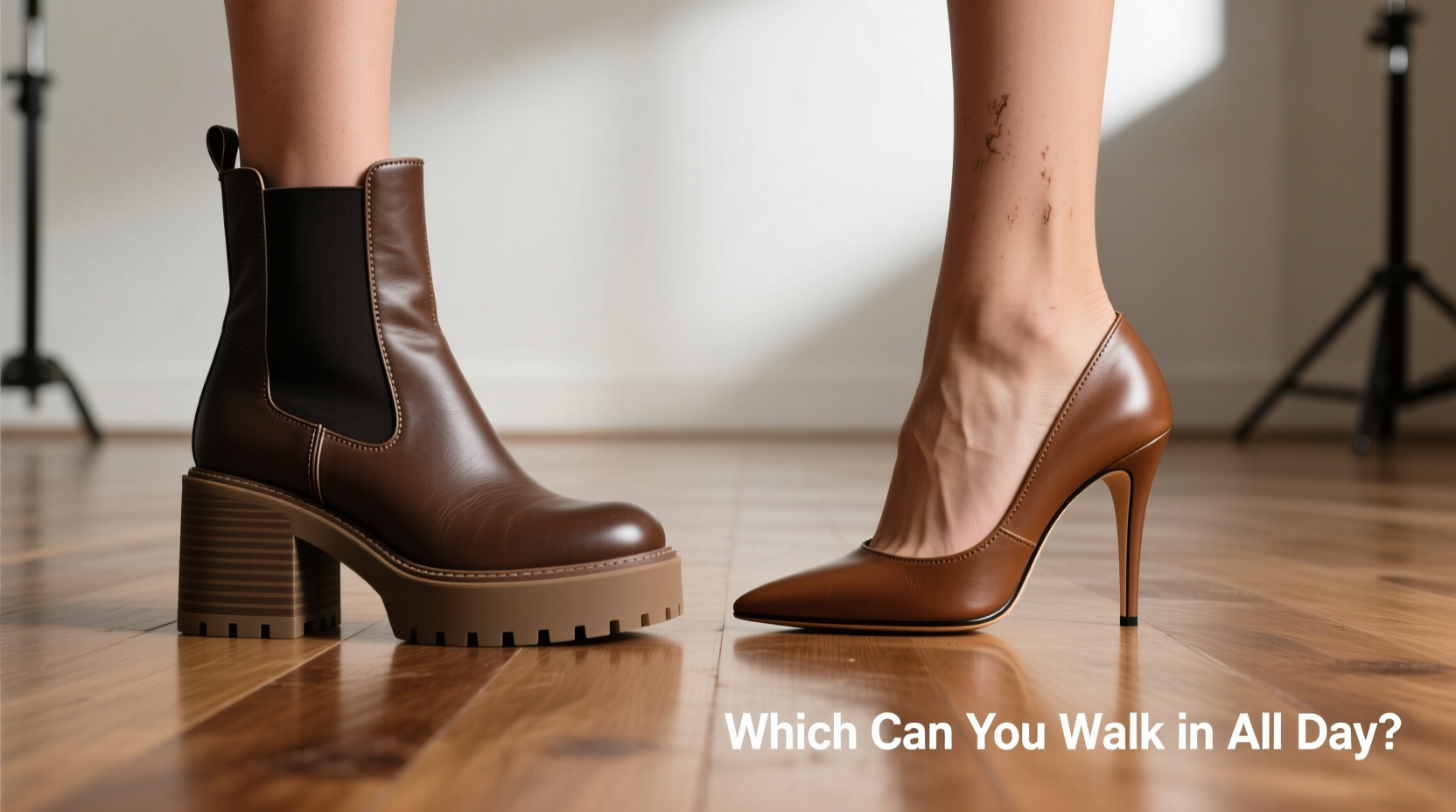
The fundamental difference between block heels and stilettos lies in surface area and structural support. A stiletto heel is narrow, typically less than an inch in diameter at the base, concentrating the wearer’s body weight onto a small point. This creates higher pressure per square inch on the foot and increases instability, especially on soft or irregular surfaces like grass, cobblestones, or carpet.
In contrast, block heels have a broader base, often rectangular or slightly tapered, providing a larger contact area with the ground. This wider footprint improves balance and reduces strain on the ball of the foot. Podiatrists frequently cite the block heel as a more ergonomic option because it mimics the natural alignment of the foot better than a stiletto.
“From a biomechanical standpoint, the block heel allows for a more even distribution of force across the foot, reducing stress on joints and tendons over time.” — Dr. Lena Torres, Podiatric Biomechanics Specialist
This structural advantage becomes increasingly significant during prolonged wear. Even a 3-inch stiletto can feel punishing after several hours due to constant micro-adjustments required to maintain balance. Block heels, especially those with a stacked wood or rubber core, absorb impact more effectively, making them far more forgiving during extended use.
Comfort Comparison: Real-World Wearability
While both heel types come in similar heights—ranging from 2 to 4 inches—the experience of wearing them couldn’t be more different. Stiletto ankle boots may look powerful in photos or during short outings, but they often fall short in endurance.
One major issue with stilettos is the forward shift of body weight. As the heel rises sharply, more pressure is transferred to the forefoot. Over time, this leads to discomfort, calluses, and even neuromas (nerve inflammation). Women who wear stilettos daily report higher instances of metatarsalgia—a painful condition affecting the balls of the feet.
Block heels, particularly those designed with a slight incline and cushioned insole, reduce this anterior pressure. Many modern block heel designs also incorporate memory foam padding, arch support, and flexible soles—features rarely found in traditional stilettos due to space constraints.
Walking Dynamics: Stability and Surface Adaptability
Stability is another critical factor when evaluating all-day wear. Try stepping off a curb in stilettos, and you’ll quickly understand the risk of ankle rolls or heel sinkage. The narrow heel is prone to getting caught in grates, cracks, or soft pavement, increasing the likelihood of injury.
Block heels, with their broader base, offer greater resistance to tipping and are less likely to get stuck. They also perform better on wet or slippery surfaces due to increased sole contact. This makes them ideal for urban environments where weather and sidewalk conditions are unpredictable.
Style Versatility and Fashion Perception
Despite their comfort advantages, some still hesitate to choose block heels, fearing they appear bulkier or less sophisticated than stilettos. However, fashion trends have evolved dramatically in recent years. Designers like Bottega Veneta, Prada, and By Far have elevated the block heel into high-fashion territory with sculptural shapes, rich textures, and minimalist silhouettes.
Modern block heel ankle boots often feature clean lines, pointed toes, and premium materials such as suede, polished leather, or patent finishes—blending elegance with functionality. In contrast, stiletto ankle boots remain a symbol of classic glamour, favored in formal settings or evening wear.
The perception gap is narrowing. Today, a well-designed block heel is no longer seen as “practical” at the expense of style—it’s recognized as a smart fusion of both. Meanwhile, stilettos continue to signal boldness and confidence, but their association with discomfort remains a cultural talking point.
“I used to think block heels were boring until I wore them through a full conference day. Now I won’t leave home without them.” — Maya Reynolds, Marketing Executive
Fashion Context: When Each Heel Type Shines
- Block Heels Are Ideal For: Office wear, travel, outdoor events, commuting, and any scenario requiring extended standing or walking.
- Stilettos Are Best Suited For: Evening events, client dinners, photo shoots, or occasions where visual impact outweighs mobility needs.
Detailed Comparison: Block Heel vs Stiletto Ankle Boots
| Feature | Block Heel Ankle Boots | Stiletto Ankle Boots |
|---|---|---|
| Weight Distribution | Evenly distributed across heel and forefoot | Concentrated on a single narrow point |
| Balance & Stability | High – resistant to tipping | Low – prone to ankle rolls |
| Surface Compatibility | Excellent on pavement, gravel, grass | Poor on uneven or soft surfaces |
| All-Day Comfort | Generally high, especially with cushioning | Limited beyond 2–3 hours for most wearers |
| Fashion Image | Modern, chic, functional elegance | Classic, glamorous, assertive |
| Maintenance & Durability | Heel less likely to break or sink into surfaces | Heel tips wear faster; vulnerable to damage |
| Price Range (Average) | $80–$300+ | $90–$400+ |
Mini Case Study: A Week in the Life of Two Heels
Sophie, a project manager in Chicago, tested both styles during a busy workweek. Monday and Tuesday, she wore her favorite black stiletto ankle boots (3.5 inches) to client meetings and office presentations. By midday on both days, she reported numbness in her toes, increasing arch pain, and a need to remove her shoes during lunch breaks. On Wednesday, she switched to a pair of taupe block heel ankle boots (3 inches) with a cushioned insole.
The difference was immediate. She walked from her apartment to the train station, stood during a site visit, and attended a networking event—all without discomfort. “I didn’t even think about my feet until I got home,” she said. “With the stilettos, I was counting down the minutes until I could sit.”
By Friday, Sophie had donated her stiletto boots to a friend, keeping only one pair for special occasions. Her takeaway? “Style shouldn’t mean suffering. The block heels looked just as polished, and I actually enjoyed wearing them.”
Step-by-Step Guide to Choosing Walkable Ankle Boots
Selecting the right ankle boot for all-day wear involves more than just heel type. Follow these steps to ensure lasting comfort and durability:
- Evaluate Your Daily Routine: How much walking or standing will you do? If it’s more than three hours, prioritize stability and cushioning.
- Check the Heel Base: Measure the heel width. A block heel should be at least 1.5 inches wide at the bottom for optimal support.
- Inspect the Insole: Press your thumb into the footbed. It should resist indentation slightly but still feel soft. Memory foam or gel inserts are a plus.
- Test the Arch Support: Ensure the boot supports your natural arch. Flat insoles increase fatigue over time.
- Walk on Different Surfaces: Try the boots on tile, carpet, and pavement. Listen for squeaking or slipping, which indicates poor sole quality.
- Consider Shaft Fit: The boot should hug the ankle snugly without pinching. Too tight restricts circulation; too loose causes blisters.
- Break Them In Gradually: Wear new boots for 1–2 hours at home before full-day use to prevent soreness.
Frequently Asked Questions
Can stiletto ankle boots ever be comfortable for long periods?
Some brands now offer stilettos with improved ergonomics, including padded insoles, platform soles (which reduce effective heel height), and flexible shanks. While these enhancements help, they don’t eliminate the inherent instability of a narrow heel. For most people, stilettos remain unsuitable for continuous wear beyond a few hours.
Are lower stilettos more walkable than higher ones?
Yes, a 2-inch stiletto is generally easier to walk in than a 4-inch version. However, even low stilettos concentrate pressure on a small area, leading to fatigue faster than a block heel of the same height. Height reduction helps, but the narrow base remains a limiting factor.
Do block heels look unprofessional compared to stilettos?
Not at all. In fact, many corporate environments now favor practical, polished footwear. A sleek block heel in black or dark brown leather conveys professionalism without compromising safety or comfort. Modern designs are refined enough for boardrooms and client visits.
Final Verdict: Which Should You Choose?
If your priority is walking in comfort all day, the answer is clear: ankle boots with block heels outperform stilettos in every measurable way—stability, pressure distribution, durability, and long-term wearability. Advances in design have eliminated the outdated notion that block heels are dowdy or unfashionable. Today, they represent intelligent style: elegant, enduring, and engineered for real life.
Stiletto ankle boots still have their place—moments when presence matters more than practicality. But for daily wear, especially in dynamic urban settings, the block heel is the superior choice. It doesn’t sacrifice height or sophistication; it simply delivers them sustainably.
Conclusion
Your footwear should empower you, not exhaust you. Choosing ankle boots with block heels over stilettos for all-day wear isn’t settling—it’s upgrading to a smarter standard of comfort and functionality. With the right pair, you can stride confidently through meetings, commutes, and city streets without paying the price in foot pain.




 浙公网安备
33010002000092号
浙公网安备
33010002000092号 浙B2-20120091-4
Comments
No comments yet. Why don't you start the discussion?