
Jewelry has long served as more than mere decoration. It communicates identity, status, belief, and aesthetic preference. Among the most enduring accessories are bracelets and anklets—simple bands worn on wrists and ankles, respectively. Yet a growing number of people are asking: does it actually matter which one goes where? Can a bracelet be worn as an anklet, or vice versa? And beyond function, what do these choices say about culture, fashion norms, and personal freedom?
The short answer is yes—context matters. But the deeper truth is more nuanced. While tradition, symbolism, and design differences separate the two, modern style increasingly treats location as a matter of expression rather than rule.
Cultural Roots and Symbolic Meanings
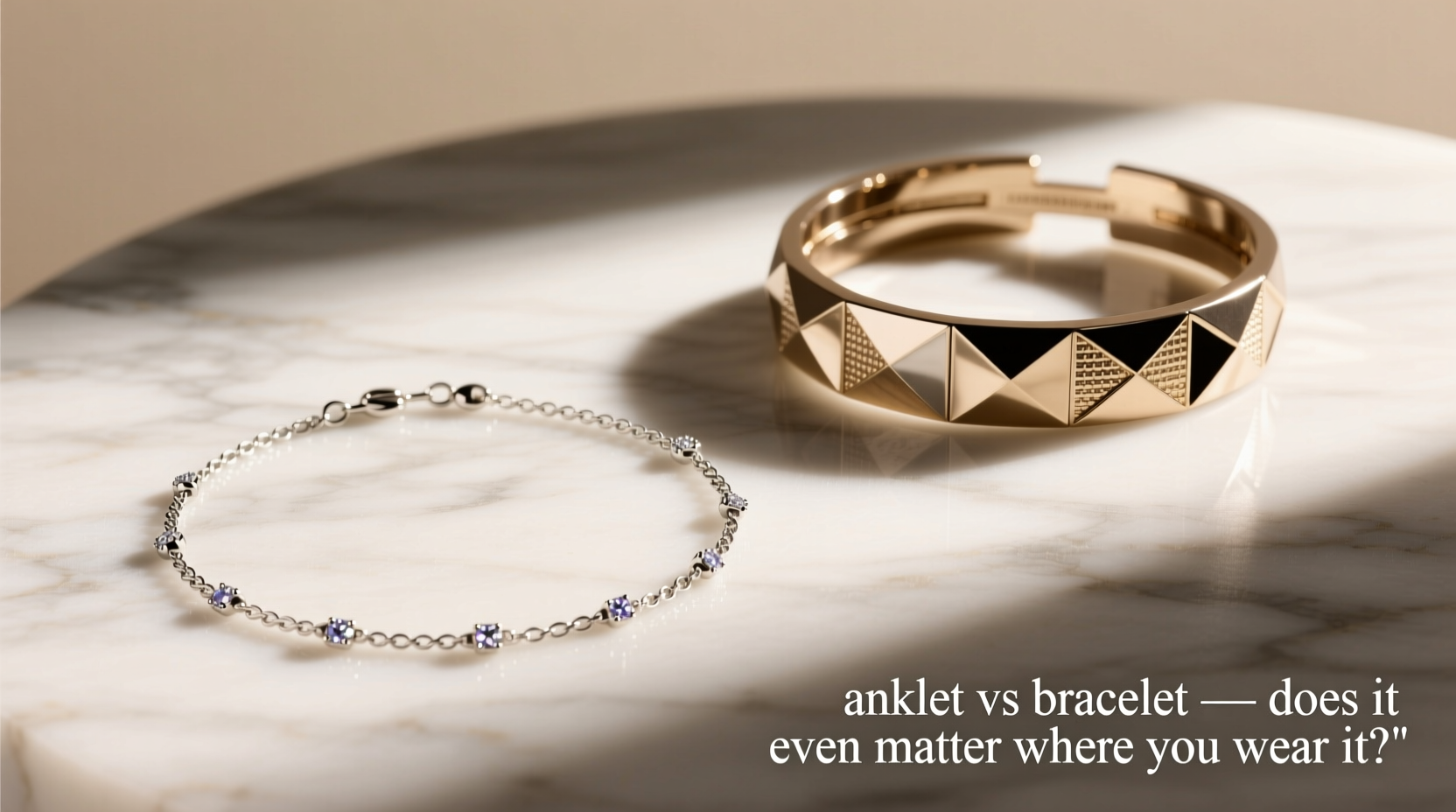
Anklets and bracelets carry rich histories across civilizations. In ancient Egypt, both were worn by men and women, often made from gold and lapis lazuli, symbolizing wealth and divine protection. In India, silver anklets (known as *payal*) have been part of bridal attire for centuries, their jingling sound believed to ward off evil and signal a woman’s presence.
In contrast, bracelets have served varied roles—from protective amulets in Celtic tribes to markers of social rank in imperial China. Hawaiian leis, though not metal, function similarly as wrist or neck adornments with deep ceremonial meaning.
These traditions established early expectations: bracelets belong on the wrist; anklets, on the ankle. But globalization and digital fashion communities have blurred those lines. Today, wearing a delicate chain meant for the wrist around the ankle isn’t rebellion—it’s reinterpretation.
“Jewelry is no longer bound by rigid placement. The body is a canvas, and every choice is intentional.” — Lena Torres, Cultural Anthropologist & Jewelry Historian
Design Differences: Form Follows Function
Despite stylistic overlap, anklets and bracelets differ in construction due to anatomical and environmental factors.
- Material durability: Anklets often use sturdier metals like stainless steel or coated alloys to resist abrasion from shoes, sand, and pavement.
- Chain thickness: Bracelets can afford finer links since they’re less exposed to friction. Anklets typically feature slightly heavier chains or woven threads for resilience.
- Closure types: Magnetic clasps are common in bracelets but rare in anklets, where lobster claws or toggle closures provide greater security during movement.
- Sizing: Ankles tend to be narrower than wrists, so standard anklets range from 9” to 10”, while bracelets average 7.5” to 8.5”.
Still, many designs are interchangeable. A slim gold chain bracelet might look elegant wrapped twice around the ankle. Conversely, a lightweight anklet could serve as a minimalist wrist accessory—especially when layered with other bangles.
Anklet vs Bracelet: A Practical Comparison
| Feature | Bracelet | Anklet |
|---|---|---|
| Typical Length | 7–9 inches | 9–10 inches |
| Exposure to Elements | Moderate (water, soap, occasional impact) | High (dirt, moisture, constant rubbing) |
| Common Materials | Gold, silver, leather, beads | Sterling silver, stainless steel, nylon thread |
| Fashion Pairings | Watches, rings, formal attire | Bare feet, sandals, beachwear |
| Symbolic Associations | Friendship, commitment, healing (e.g., charm bracelets) | Sensuality, independence, spiritual grounding |
This comparison shows that while functional distinctions exist, they don’t prohibit crossover. In fact, blending the two can create unique looks—such as stacking a thin anklet-style chain with a leather wrap bracelet for bohemian flair.
When Placement Sends a Message
In some subcultures, wearing jewelry on specific limbs carries coded meaning. For example:
- In parts of the LGBTQ+ community, a left-side bracelet historically signaled same-sex attraction.
- In certain African diasporic traditions, red string bracelets tied on the right wrist offer spiritual protection.
- In modern Western trends, multiple anklets suggest free-spiritedness, while stacked bracelets denote curated elegance.
Similarly, wearing a traditionally feminine anklet on the wrist may challenge gender norms or simply reflect individual taste. Context determines whether the act is symbolic, ironic, or purely aesthetic.
Mini Case Study: Maya’s Summer Style Shift
Maya, a 28-year-old graphic designer from Portland, inherited her grandmother’s vintage charm bracelet—a delicate rose-gold piece with tiny enamel flowers. Too sentimental to leave in a box, but too dainty for daily wear with her active lifestyle, she struggled to integrate it into her wardrobe.
One summer, inspired by a friend’s layered ankle chains, she tried fastening the bracelet around her ankle. Paired with linen shorts and flat sandals, it caught sunlight beautifully and avoided the wear-and-tear typical of wrist movement. Friends complimented the “unexpected twist,” and Maya began styling other wrist pieces as anklets—proving that emotional value can transcend traditional placement.
How to Choose: A Step-by-Step Guide
If you're considering switching up your jewelry placement—or building a new look from scratch—follow this simple process:
- Assess the piece: Is it fragile? Water-resistant? Does it have sharp edges?
- Consider your lifestyle: Will it interfere with work, exercise, or sleep?
- Think about visibility: Do you want it seen (wrist) or subtly noticed (ankle)?
- Test comfort: Wear it temporarily in the intended location. Walk, sit, wash hands—observe how it behaves.
- Evaluate aesthetics: Does it harmonize with your clothing and other accessories?
- Reflect on meaning: Are you honoring tradition, breaking rules, or expressing identity?
This method ensures your decision is thoughtful—not just trendy.
Checklist: Can This Piece Work in a New Spot?
- ✅ Is the length adjustable or close to ideal?
- ✅ Is the material resistant to sweat, water, and friction?
- ✅ Does the clasp stay secure during movement?
- ✅ Does it complement the skin tone and shape of the limb?
- ✅ Am I comfortable with potential social interpretations?
- ✅ Does it bring me joy in its new position?
If you answered “yes” to most, go ahead—redefine where it belongs.
Frequently Asked Questions
Can I wear a bracelet on my ankle every day?
Yes, provided it’s durable enough. Avoid delicate chains or stones prone to chipping. Opt for pieces with secure closures and consider adding a safety chain for extra hold.
Are there cultural taboos around swapping jewelry locations?
In some cultures, yes. For instance, in conservative regions, visible ankle jewelry on women may be associated with sensuality or lower social standing. Always be mindful when traveling or engaging with different communities.
Does mixing bracelets and anklets in styling look uncoordinated?
Not at all—when done intentionally. Matching metals or repeating motifs (like stars or moons) creates cohesion. The key is balance: if your wrists are heavily accessorized, keep ankles minimal, or vice versa.
Conclusion: Redefining Rules Through Personal Expression
In the end, does it matter where you wear an anklet or bracelet? Technically, yes—design and durability play real roles. Culturally, sometimes. But personally? Only as much as you decide.
Fashion evolves because people challenge conventions. What was once unthinkable—men wearing earrings, women in suits, pearl necklaces with sneakers—is now commonplace. The same shift is happening with jewelry placement. Whether you’re honoring heritage, making a statement, or simply loving how a piece looks on your ankle instead of your wrist, your choice holds weight.
Jewelry isn’t about rigid rules. It’s about resonance—how a piece makes you feel when you put it on. If a bracelet brings you peace on your ankle, let it stay. If an anklet glimmers perfectly against your wristbone, wear it proudly. Your body, your story, your rules.




 浙公网安备
33010002000092号
浙公网安备
33010002000092号 浙B2-20120091-4
Comments
No comments yet. Why don't you start the discussion?