
At first glance, ants may seem like uniform insects scurrying across sidewalks or kitchen counters. But look closer, and you'll notice a striking variation in size—even within a single colony. Some ants are tiny, barely visible specks, while others are robust, nearly ten times their size. This variation isn't random. It's the result of millions of years of evolutionary refinement, shaped by genetics, social structure, and environmental pressures. Understanding why some ants are bigger than others reveals fascinating insights into insect biology, colony efficiency, and survival strategies.
The Role of Caste Systems in Ant Colonies
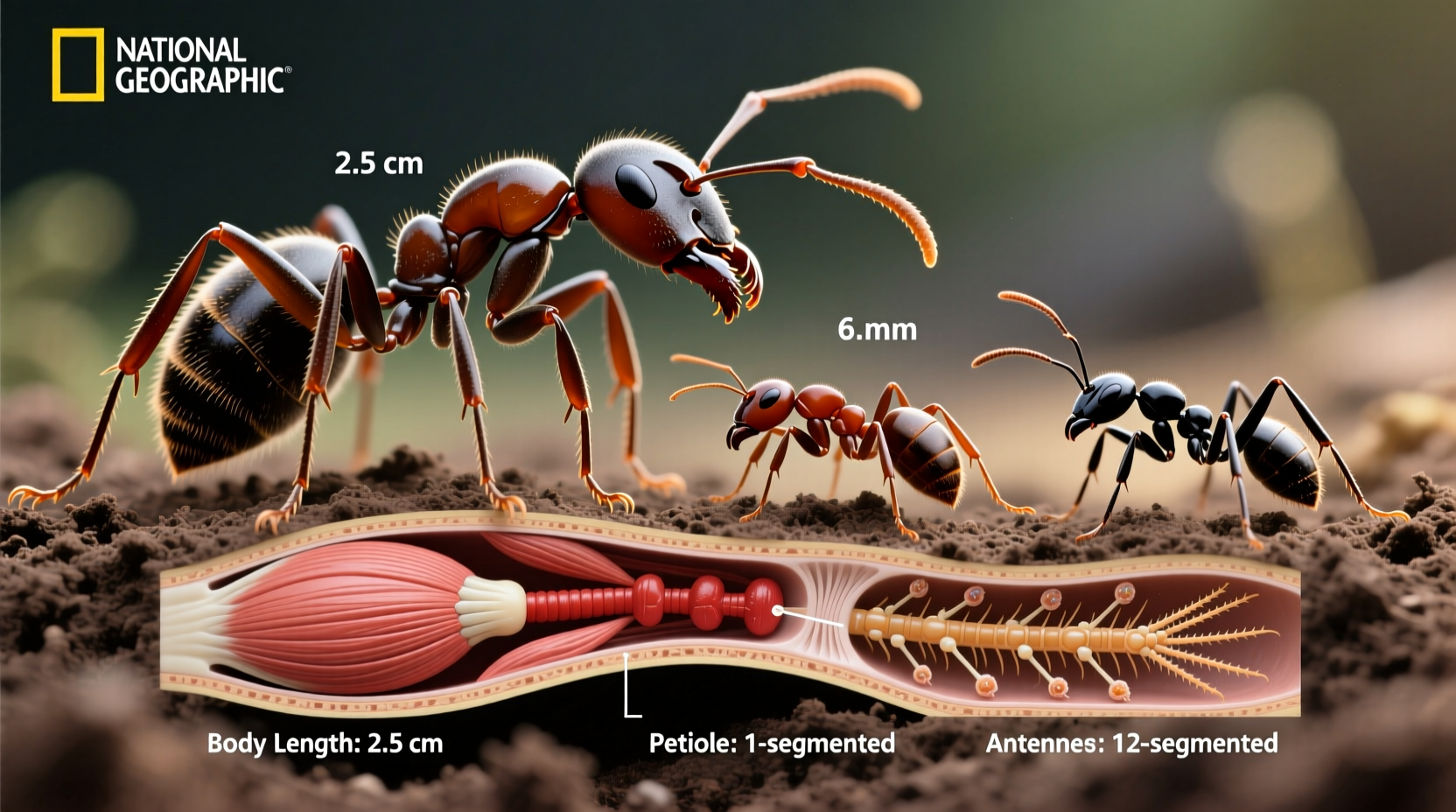
One of the primary reasons for size variation among ants is their highly organized caste system. Most ant colonies operate under a division of labor where individuals are born into specific roles—each with distinct physical traits, including body size. The three main castes are queens, workers, and males, each serving unique functions.
- Queens: Typically the largest ants in a colony, queens are responsible for reproduction. Their larger size accommodates developed ovaries and fat reserves necessary for founding a new colony and laying thousands of eggs.
- Workers: These sterile females perform tasks like foraging, nest maintenance, and caring for larvae. Worker ants often exhibit size polymorphism—meaning they come in multiple sizes even within the same colony.
- Males: Smaller than queens but often similar in size to workers, males exist primarily to mate with queens. They usually have wings and die shortly after mating flights.
In species like the Florida carpenter ant (*Camponotus floridanus*), worker ants are divided into \"minors\" (small foragers) and \"majors\" (large-headed soldiers). Majors use their oversized heads and mandibles to defend the nest or crush hard seeds, while minors handle more agile tasks like tending to brood or scouting for food.
Size Polymorphism and Task Efficiency
Polymorphism—the occurrence of multiple distinct forms within a species—is a key adaptation in many ant societies. Size-based task allocation increases efficiency. Larger workers may be stronger but slower, while smaller ones are faster and more maneuverable.
For example, in leafcutter ants (*Atta spp.*), four distinct worker subcastes exist:
- Minims: Tiny ants that ride on leaf fragments to protect against parasitic flies.
- Minors: Patrol the foraging trails and remove debris.
- Mediae: The main foragers who cut and carry leaf pieces.
- Majors: Also called \"soldiers,\" they guard the colony and defend against large predators.
This hierarchical system ensures that each ant’s body size matches its role, minimizing wasted energy and maximizing survival. Evolution has fine-tuned this distribution so that colonies produce just enough of each type to maintain balance.
Environmental and Nutritional Influences on Growth
While genetics set the baseline for potential size, environmental conditions significantly influence how large an individual ant grows. Larval nutrition is one of the most critical factors.
Ant larvae destined to become queens are typically fed a richer diet—often more protein and secretions from worker ants—compared to future workers. This nutritional boost triggers hormonal changes that lead to larger body size and reproductive development.
Colony age and resource availability also play roles. In young or stressed colonies with limited food, workers tend to be smaller. As the colony matures and gathers more resources, subsequent generations of workers—and especially new queens—can grow larger.
“Nutrition during the larval stage is the switch that determines whether an ant becomes a small worker or a massive soldier.” — Dr. Deborah Gordon, Professor of Biology, Stanford University
Species-Level Differences in Ant Size
Beyond caste and environment, sheer species diversity explains much of the size variation seen in ants worldwide. Over 15,000 known species range dramatically in size:
| Species | Average Worker Length | Notable Traits |
|---|---|---|
| Myrmecia brevinoda (Giant Bull Ant) | 25 mm (1 inch) | Large eyes, powerful sting, solitary hunting |
| Pheidole megacephala (Big-Headed Ant) | Minor: 2 mm, Major: 3.5 mm | Extreme head size in soldiers |
| Solenopsis invicta (Red Imported Fire Ant) | 2–6 mm | Highly polymorphic, aggressive |
| Monomorium pharaonis (Pharaoh Ant) | 1.5–2 mm | Tiny, nests indoors, hard to control |
| Dinoponera quadriceps (Giant Amazonian Ant) | 30 mm | No queen; reproductive workers |
Some species evolved larger bodies to dominate ecological niches—like hunting other insects or breaking through tough plant material. Others remain small to exploit narrow crevices or avoid detection.
Mini Case Study: The Evolution of Soldier Ants in Pheidole
The genus Pheidole includes over 1,000 species, nearly all of which feature two worker subcastes: small-bodied minors and large-headed majors. A study conducted in the Sonoran Desert observed how Pheidole rhea colonies adjust soldier production based on threat levels.
When researchers introduced competing ant species near nests, the Pheidole colonies responded by increasing the proportion of soldier ants in the next generation. This shift was not genetic but developmental—workers fed certain larvae more richly to produce more majors. Within weeks, the colony had reinforced its defenses without changing its DNA.
This case illustrates how flexible size regulation allows ant societies to adapt rapidly to environmental challenges—balancing growth, defense, and resource use in real time.
Checklist: Factors That Influence Ant Size
To summarize the key determinants of ant size, here’s a practical checklist:
- ✅ Caste: Queens are largest; males and workers vary by role.
- ✅ Subcaste specialization: Soldiers, foragers, nurses—size matches function.
- ✅ Larval nutrition: Better-fed larvae develop into larger adults.
- ✅ Colony health: Mature, well-fed colonies produce larger individuals.
- ✅ Species genetics: Some ants are naturally larger due to evolutionary history.
- ✅ Environmental stress: Drought, heat, or food scarcity reduce average size.
- ✅ Geographic location: Populations in resource-rich areas often grow larger.
Frequently Asked Questions
Why do some worker ants have such big heads?
Large heads in worker ants—especially in species like Pheidole—house powerful jaw muscles used for crushing seeds, defending the nest, or blocking tunnel entrances. These \"soldier\" ants are a specialized subcaste evolved for strength over speed.
Can worker ants become queens if the queen dies?
In most species, no. Workers are sterile and lack the reproductive organs to lay fertilized eggs. However, in some primitive species like Dinoponera, certain workers can become reproductive \"gamergates\" and take over egg-laying duties.
Do bigger ants live longer?
Generally, yes. Larger ants, particularly queens, live significantly longer. While minor workers may survive only a few weeks, queens of species like *Lasius niger* can live up to 30 years in captivity. Size correlates with fat storage, metabolic efficiency, and reduced predation risk.
Conclusion: Embracing the Diversity of Ant Sizes
The variation in ant size is far from arbitrary—it’s a finely tuned response to ecological demands, social organization, and evolutionary history. From the minuscule Pharaoh ant to the inch-long bulldog ant, each size serves a purpose. Whether it's a major worker guarding the nest with its armored head or a tiny minim grooming larvae deep underground, every ant contributes to the resilience of the colony.
Next time you see ants marching in a line, take a moment to observe their sizes. You’re not just seeing insects—you’re witnessing a complex, self-organized system where body size is a strategic tool. Nature doesn’t waste energy on uniformity when specialization leads to survival.




 浙公网安备
33010002000092号
浙公网安备
33010002000092号 浙B2-20120091-4
Comments
No comments yet. Why don't you start the discussion?