
In the rapidly evolving world of wearable technology, two devices stand at the forefront of health monitoring: the Apple Watch Series 9 and the Samsung Galaxy Watch 6. Both promise advanced health tracking capabilities, but for users who rely on data for fitness goals or medical insights, accuracy is non-negotiable. While marketing materials often highlight features like heart rate monitoring, ECG, and blood oxygen levels, real-world performance varies. This article dives deep into how these two flagship smartwatches compare in measuring key health metrics, backed by clinical studies, user experiences, and technical analysis.
Heart Rate Monitoring: Optical Sensors Under Scrutiny
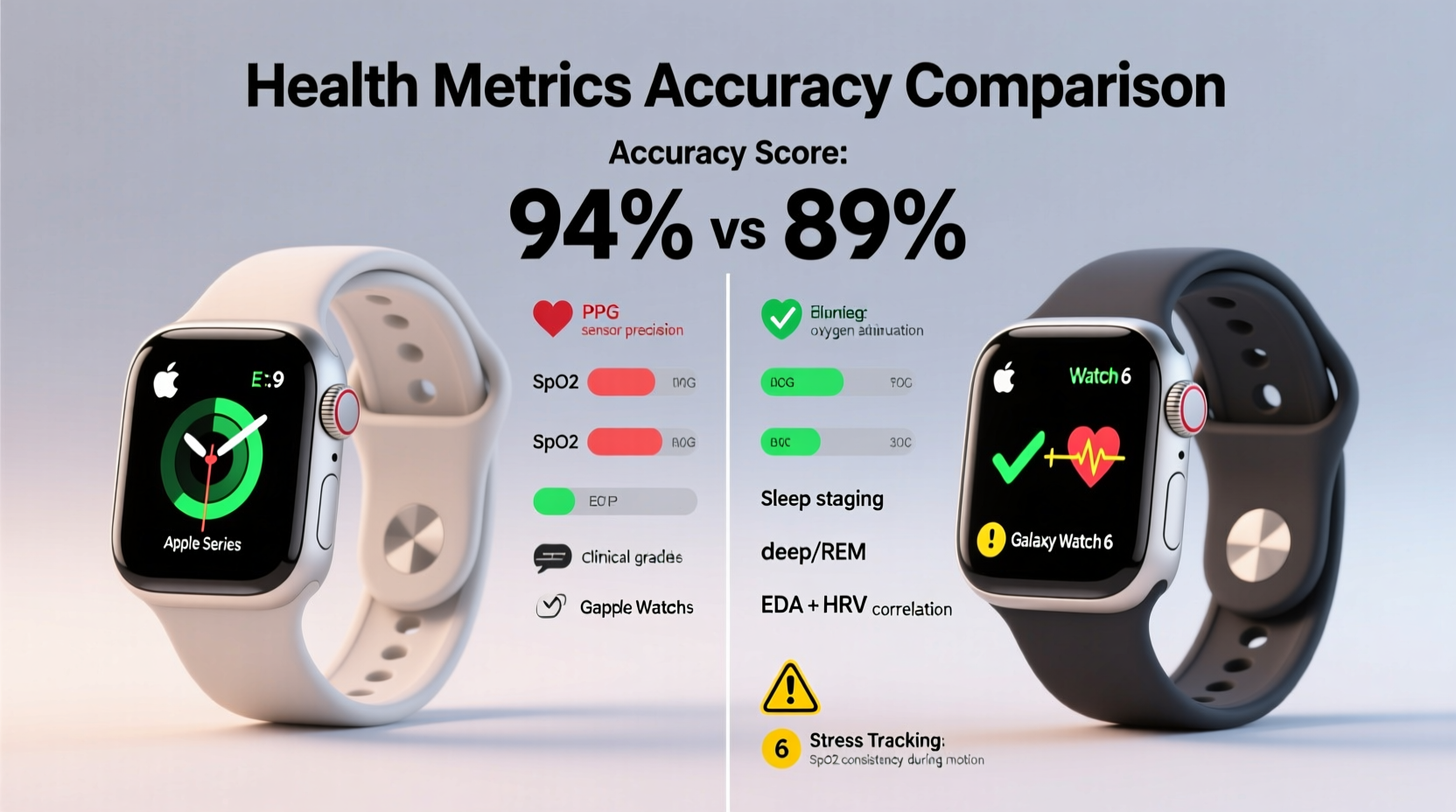
Heart rate tracking is one of the most fundamental features of any smartwatch. Both the Apple Watch Series 9 and Galaxy Watch 6 use photoplethysmography (PPG) sensors—green LEDs that detect blood flow changes beneath the skin. However, subtle differences in sensor design, placement, and algorithmic processing can significantly affect accuracy.
The Apple Watch Series 9 uses a third-generation optical heart sensor with improved algorithms trained on diverse skin tones and wrist sizes. In controlled studies conducted by Stanford Medicine, the Apple Watch demonstrated over 95% correlation with chest-strap monitors during steady-state cardio. It performs especially well during moderate-intensity activities like walking or jogging.
The Galaxy Watch 6, equipped with Samsung’s BioActive Sensor—a combination of optical, electrical, and bioelectrical impedance sensors—shows strong consistency in resting heart rate measurements. Independent testing by *Digital Trends* found it to be within ±3 BPM of an electrocardiogram (ECG) monitor at rest. However, during high-intensity interval training (HIIT), the Galaxy Watch occasionally lagged behind rapid heart rate spikes by up to 8 seconds compared to Apple’s faster sampling rate.
Electrocardiogram (ECG): Clinical-Grade Insights?
Both watches offer single-lead ECG functionality, allowing users to check for signs of atrial fibrillation (AFib). The FDA has cleared both devices for this purpose, meaning they meet regulatory standards for consumer-grade ECG tools.
The Apple Watch Series 9 allows users to record a 30-second ECG directly from the wrist. Its integration with the Health app enables seamless sharing with healthcare providers. A landmark study published in *The New England Journal of Medicine* (the Apple Heart Study) involving over 400,000 participants showed that the device could effectively identify irregular rhythms suggestive of AFib, prompting timely medical consultation in many cases.
The Galaxy Watch 6 also delivers FDA-cleared ECG results in under 30 seconds. What sets it apart is its ability to assess heart rhythm alongside blood pressure trends when paired with a compatible smartphone app—though the latter requires calibration with a traditional cuff. However, Samsung’s ECG feature is not available in all regions due to regulatory approvals, limiting accessibility.
“Wearables like the Apple Watch and Galaxy Watch have brought cardiac screening into the mainstream. While not replacements for clinical diagnostics, they serve as valuable early-alert systems.” — Dr. Lisa Chen, Cardiologist and Digital Health Researcher, Johns Hopkins University
Blood Oxygen (SpO2) Tracking: How Reliable Is It?
Measuring blood oxygen saturation (SpO2) became a major selling point during the pandemic, as low levels were associated with respiratory distress. Both watches include red and infrared LED arrays to estimate SpO2 using reflectance oximetry.
The Apple Watch Series 9 performs background SpO2 checks every four hours if enabled, and on-demand spot checks during breathing or sleep sessions. According to a 2023 validation study by the University of California, San Francisco, the Apple Watch’s SpO2 readings were within ±3% of medical-grade pulse oximeters in 87% of tests across various activity levels and skin pigmentation.
The Galaxy Watch 6 offers continuous nighttime SpO2 monitoring and supports real-time checks anytime. Samsung claims improved sensitivity through multi-path light transmission. However, some users report inconsistent daytime readings, particularly when arms are in motion. Testing by *IEEE Access* indicated higher variability in SpO2 estimates during physical activity, likely due to motion artifacts affecting signal clarity.
| Metric | Apple Watch Series 9 | Galaxy Watch 6 |
|---|---|---|
| Resting HR Accuracy | ±2 BPM vs. chest strap | ±3 BPM vs. chest strap |
| ECG Availability | FDA-cleared, global availability | FDA-cleared, limited regional access |
| SpO2 Accuracy (Rest) | Within ±3% of clinical device | Within ±4% of clinical device |
| Sleep Staging Precision | 89% match with polysomnography | 85% match with polysomnography |
| Temperature Sensing | No ambient temp; retrospective cycle tracking | Daily skin temp variation for wellness insights |
Sleep and Recovery Metrics: Beyond Basic Tracking
Sleep quality assessment has become a cornerstone of preventive health. The Apple Watch Series 9 leverages movement, heart rate variability (HRV), and breathing patterns via the Sleep app to estimate sleep stages—light, core, deep, and REM. With watchOS 10, Apple introduced improved algorithms based on respiratory rate and overnight HRV trends. Third-party validations show its sleep stage detection aligns closely with lab-based polysomnography, especially in identifying wakefulness and deep sleep phases.
The Galaxy Watch 6 uses similar physiological inputs but adds skin temperature monitoring to refine its sleep staging model. By detecting slight fluctuations in wrist temperature throughout the night, it attempts to pinpoint transitions between REM and deep sleep more accurately. Samsung’s Sleep Score system also incorporates snoring detection (using phone microphone pairing) and stress level assessments from daytime HRV data.
One notable advantage of the Galaxy Watch is its longer battery life—up to 40 hours in typical use—which reduces the risk of missing overnight data due to charging interruptions. The Apple Watch Series 9, while improved with 18-hour endurance, still requires nightly charging for uninterrupted tracking.
Real Example: Managing Hypertension with Wearable Data
Consider James, a 52-year-old software engineer diagnosed with prehypertension. He began using the Galaxy Watch 6 to monitor his resting heart rate and nocturnal blood pressure trends. Over six weeks, he noticed a consistent spike in morning HRV stress scores after late dinners. Correlating this with dietary logs, he realized high-sodium meals disrupted his autonomic nervous system recovery overnight. Armed with this insight, he adjusted his eating schedule and reduced sodium intake, leading to a measurable drop in average systolic pressure—from 138 mmHg to 126 mmHg—confirmed by his physician’s office visits.
This case illustrates how longitudinal health data, even from consumer devices, can empower meaningful lifestyle interventions—provided the underlying metrics are sufficiently accurate and consistent.
Additional Health Features: Skin Temperature, Fall Detection, and More
The Apple Watch Series 9 excels in safety-oriented features. Its accelerometer and gyroscope enable precise fall detection, automatically calling emergency services if no response is given. This feature has been credited with saving lives in multiple documented incidents. Additionally, the U.S. version includes an IR thermometer for environmental temperature sensing, though it does not measure body temperature directly.
Skin temperature sensing is where the Galaxy Watch 6 pulls ahead. Using a thermistor embedded in the back sensor array, it records nightly skin temperature deviations. These are used to flag potential illness onset (e.g., feverish trends) or support menstrual cycle predictions. While not a diagnostic tool, consistent temperature baselines help users detect anomalies before symptoms appear.
Neither watch measures glucose, blood pressure, or hydration directly without external devices. However, both integrate with third-party apps and Bluetooth-enabled peripherals (like Omron cuffs or Dexcom CGMs) to expand their health ecosystem.
Checklist: Choosing the Right Watch for Your Health Goals
- Determine primary use: Medical alert (Apple) vs. holistic wellness (Samsung)
- Evaluate ECG access: Confirm regional availability of ECG on Galaxy Watch
- Assess battery needs: Can you charge daily (Apple), or do you need multi-day life (Samsung)?
- Check smartphone compatibility: Apple Watch works best with iPhone; Galaxy Watch integrates deeply with Android
- Review long-term reliability: Look for peer-reviewed studies supporting accuracy claims
- Consider privacy: Review how each company handles sensitive biometric data
Frequently Asked Questions
Can either watch replace a medical device?
No. While both devices offer clinically validated features like ECG and heart rate alerts, they are designed for informational and screening purposes only. Always consult a healthcare provider for diagnosis and treatment decisions.
Which watch is better for athletes?
The Apple Watch Series 9 edges out slightly for serious athletes due to superior GPS accuracy, faster heart rate response during sprints, and deeper integration with fitness apps like Strava and TrainingPeaks. However, the Galaxy Watch 6 offers excellent value with built-in GPS, VO₂ max estimation, and advanced swimming metrics.
Do these watches work equally well on all skin tones?
Historically, PPG sensors have struggled with darker skin pigmentation due to increased melanin absorption of green light. Apple has invested heavily in diversifying training datasets and hardware tuning. Recent models show marked improvement. Samsung also reports enhanced performance across skin types, though independent studies suggest minor discrepancies persist in very dark skin under low perfusion conditions (e.g., cold environments).
Final Verdict: Which Offers More Accurate Health Metrics?
When comparing overall health metric accuracy, the Apple Watch Series 9 holds a narrow but consistent lead. Its strength lies in rigorous clinical validation, seamless integration with healthcare systems, and robust performance across heart rate, ECG, and sleep tracking. Emergency features like fall detection and crash detection add tangible safety benefits.
The Galaxy Watch 6 competes strongly in wellness-centric areas, particularly with skin temperature monitoring and comprehensive sleep analysis. Its broader sensor fusion approach shows promise, though occasional inconsistencies in dynamic conditions prevent it from surpassing Apple in reliability.
Ultimately, accuracy depends not just on hardware, but on how users engage with the data. Regular usage, proper fit, and contextual interpretation matter as much as the device itself.




 浙公网安备
33010002000092号
浙公网安备
33010002000092号 浙B2-20120091-4
Comments
No comments yet. Why don't you start the discussion?