
Bamboo utensils have surged in popularity over the past decade, celebrated as eco-friendly alternatives to plastic and metal cutlery. Found in kitchens, lunchboxes, and even high-end restaurants, they promise sustainability and aesthetic appeal. But behind the sleek finish and green marketing lies a practical question: are these utensils truly built to last through daily meals, or are they more style than substance? The answer isn’t simple. While bamboo offers undeniable environmental benefits, its durability under everyday conditions depends on material quality, design, and how users treat them. This article dives into the science of bamboo strength, compares it with traditional materials, shares real-life usage patterns, and provides clear guidance on whether bamboo utensils are a worthwhile long-term investment.
The Science Behind Bamboo’s Strength
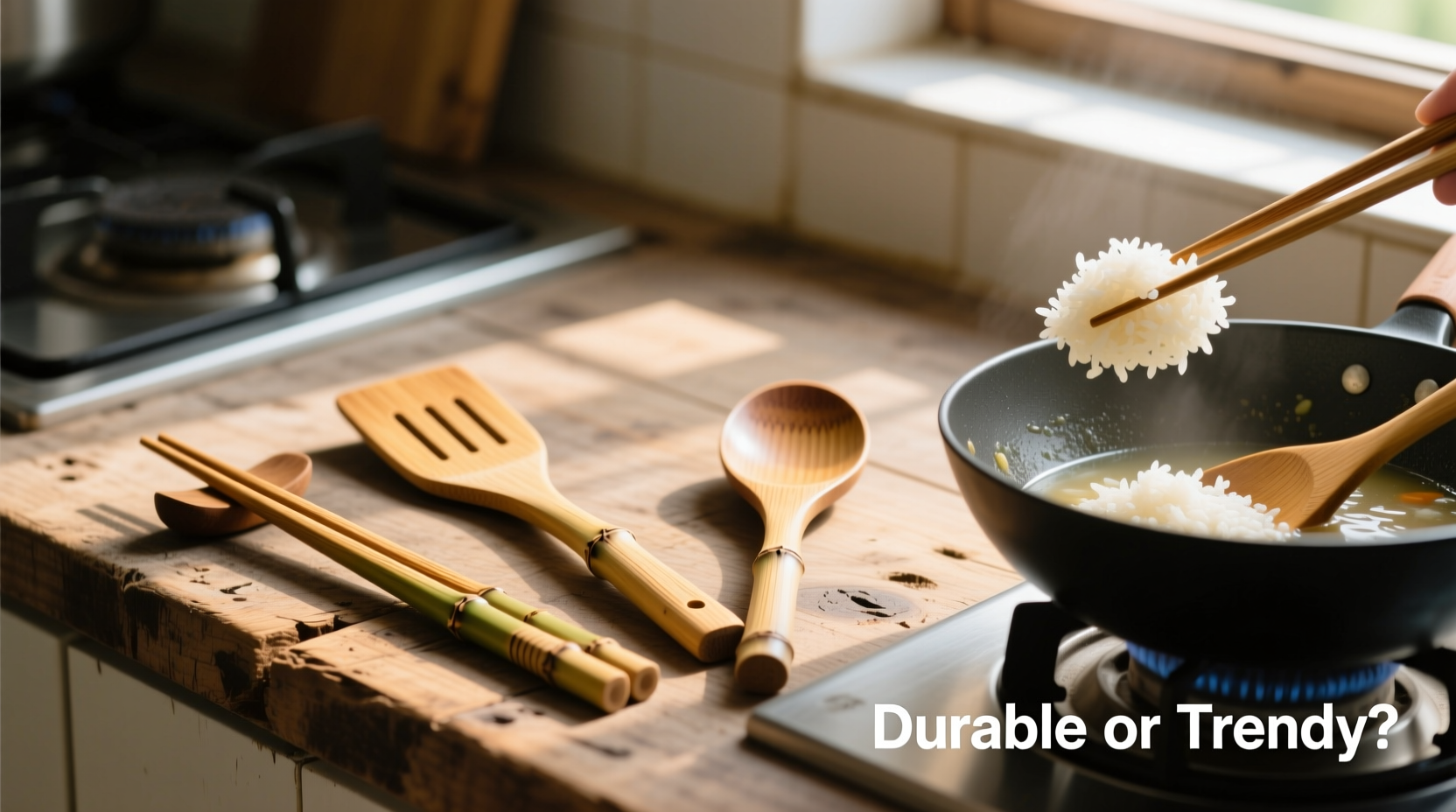
Bamboo is not wood—it's a grass, but one with remarkable mechanical properties. Some species of bamboo have tensile strength comparable to steel and compressive strength rivaling concrete. When processed correctly, bamboo fibers form a dense, interlocking structure that resists cracking and warping. For utensils, manufacturers typically use mature bamboo stalks harvested between 3–5 years of age, which offer optimal hardness and stability.
High-quality bamboo utensils are made by slicing the stalk into strips, boiling them to remove starches and sugars (which attract pests), then laminating them under heat and pressure. This process creates a solid block from which spoons, forks, and spatulas are carved. The resulting product is lightweight, naturally antimicrobial, and resistant to moisture absorption—key traits for kitchen tools.
“Bamboo’s fiber alignment gives it exceptional resilience when properly processed. It’s not inherently fragile—it’s often the finishing and user habits that determine lifespan.” — Dr. Lin Zhao, Materials Scientist at GreenTech Sustainable Labs
However, not all bamboo utensils are created equal. Lower-cost versions may use immature bamboo, insufficient drying, or weak adhesives, leading to delamination, splintering, or mold growth over time. The key to durability lies in both raw material selection and manufacturing integrity.
Comparing Bamboo to Plastic, Metal, and Wood
To assess whether bamboo holds up in daily use, it’s essential to compare it directly with common alternatives. Each material has strengths and weaknesses depending on function, maintenance, and environmental impact.
| Material | Durability (Daily Use) | Maintenance Needs | Eco-Impact | Heat Resistance |
|---|---|---|---|---|
| Bamboo | Moderate to High (if well-made) | Hand wash only, occasional oiling | Low – biodegradable, fast-growing | Moderate – safe up to ~200°C (392°F) |
| Plastic | Low – degrades with heat and use | Easy to clean, dishwasher-safe | High – non-biodegradable, microplastics | Poor – melts or leaches chemicals |
| Stainless Steel | Very High – nearly indestructible | Dishwasher-safe, minimal upkeep | Moderate – energy-intensive production | Excellent – handles high heat |
| Hardwood (e.g., maple) | Moderate – prone to cracking if dried poorly | Hand wash, regular oiling | Low to Moderate – renewable but slow-growing | Good – but can scorch |
This comparison shows that bamboo strikes a balance between performance and sustainability. It outperforms plastic in durability and environmental safety, though it doesn’t match stainless steel’s longevity. Where bamboo excels is in gentle cooking tasks—stirring sauces, flipping pancakes, serving salads—where metal might scratch pans or conduct heat too aggressively.
Real-World Performance: A Case Study
Sarah Kim, a home cook and zero-waste advocate from Portland, Oregon, replaced all her plastic and metal cooking utensils with bamboo two years ago. Her kitchen sees heavy use—she prepares three meals daily for a family of four and frequently hosts dinner parties.
Initially enthusiastic, Sarah noticed that her first set of bamboo spoons began showing wear after six months: fine cracks near the bowl of the spoon, slight darkening from oil absorption, and one handle that started to split after being left in a sink full of water overnight. She switched to a higher-end brand with carbonized bamboo and food-grade resin sealant. These have lasted 18 months with no structural damage.
Her routine includes hand washing with mild soap, immediate drying, and monthly conditioning with mineral oil. “I learned the hard way,” she says. “Cheap bamboo won’t survive daily scraping against cast iron. But the better ones? They’re reliable, feel great in hand, and haven’t warped.”
Sarah’s experience reflects a broader pattern: bamboo utensils can endure daily use, but only when treated with care and sourced responsibly. Misuse—such as dishwashing, soaking, or using sharp-edged tools on rough surfaces—accelerates degradation.
Maximizing Longevity: A Step-by-Step Care Guide
Durability isn’t just about material—it’s also about maintenance. Even the best bamboo utensils will fail prematurely without proper care. Follow this timeline to extend their life:
- After Each Use: Rinse immediately with warm water and mild detergent. Avoid abrasive sponges. Dry thoroughly with a soft towel—never air-dry on a damp counter.
- Weekly: Inspect for signs of wear—rough edges, discoloration, or tiny cracks. Lightly sand any rough spots with fine-grit paper (220+ grit) to prevent splinters.
- Monthly: Apply a thin coat of food-safe mineral oil or beeswax conditioner. Let it absorb for 1–2 hours, then wipe off excess. This replenishes natural oils lost during washing.
- Every 3–6 Months: Rotate utensils if you have multiples. This prevents overuse of a single tool and spreads wear evenly.
- When Storing: Keep in a dry, ventilated drawer or utensil holder. Avoid sealed plastic containers where moisture can accumulate.
Avoid exposing bamboo to extreme temperatures. Don’t use it for prolonged stirring in boiling soups or deep frying, and never place it under a broiler or in an oven. While bamboo is heat-resistant to a point, sustained high heat breaks down lignin, the natural polymer that binds fibers together.
Common Myths and Misconceptions
Several myths cloud public perception of bamboo utensils, often leading to misuse or premature replacement.
- Myth: Bamboo is completely waterproof. False. While it resists moisture better than untreated wood, it’s still porous. Sealing helps, but immersion should be avoided.
- Myth: All bamboo is sustainable. Not necessarily. Poor harvesting practices and long shipping distances can offset environmental benefits. Look for FSC-certified or locally processed options.
- Myth: Bamboo utensils are unbreakable. No material is. Dropping a bamboo spoon on tile or using it to pry stuck food can cause chipping or splitting.
- Myth: They don’t need maintenance. Like wooden cutting boards, bamboo utensils require periodic oiling to stay resilient.
Understanding these realities helps users set realistic expectations. Bamboo isn’t a “set and forget” tool. It demands respect and routine attention—much like cast iron or leather goods.
Checklist: Choosing Durable Bamboo Utensils
Not all products labeled “bamboo” deliver equal performance. Use this checklist before purchasing:
- ✅ Made from mature, carbonized bamboo (darker color indicates heat treatment for added durability)
- ✅ Laminated construction (multiple layers pressed together for strength)
- ✅ Finished with food-safe, non-toxic sealant (look for certifications like FDA-approved or LFGB)
- ✅ Smooth, seamless grain with no visible gaps or bubbles
- ✅ Brand provides care instructions and warranty (indicates confidence in product)
- ❌ Avoid: Ultra-cheap sets from unknown brands, especially those sold in multipacks with no material details
Price is often a proxy for quality. Well-made bamboo utensils typically range from $8–$15 per piece. Sets under $10 for five or more pieces often cut corners in processing.
Frequently Asked Questions
Can I put bamboo utensils in the dishwasher?
No. Dishwashers expose bamboo to excessive heat, steam, and prolonged moisture, causing warping, cracking, and delamination. Always hand wash and dry immediately.
How long do bamboo utensils last with daily use?
With proper care, high-quality bamboo utensils last 1–3 years. Some users report 4+ years with meticulous maintenance. Cheaper versions may degrade within 6–8 months.
Are bamboo utensils safe for nonstick cookware?
Yes—this is one of their greatest advantages. Unlike metal, bamboo won’t scratch Teflon or ceramic coatings. They’re ideal for delicate surfaces.
Conclusion: Practical, Purposeful, and Worthwhile
Bamboo utensils are more than a fleeting trend—they represent a thoughtful shift toward sustainable kitchen tools. While they aren’t indestructible like steel, they offer a compelling middle ground: durable enough for daily cooking tasks, gentle on cookware, and environmentally responsible. Their longevity hinges on informed choices and consistent care. When users select well-crafted pieces and follow basic maintenance routines, bamboo proves itself as a reliable companion in the kitchen.
The real test of any tool isn’t whether it lasts forever, but whether it performs its purpose well and aligns with your values. For those seeking to reduce plastic waste without sacrificing functionality, bamboo utensils pass that test. They’re not perfect, but they’re purposeful.




 浙公网安备
33010002000092号
浙公网安备
33010002000092号 浙B2-20120091-4
Comments
No comments yet. Why don't you start the discussion?