
When it comes to collecting or playing with military-themed figures, two dominant formats stand out: building block soldiers—like those from LEGO-style brands—and diecast metal military models. Each has its loyal following, but which is truly better for children or adult collectors? The answer depends on priorities: playability, detail, cost, durability, and creative engagement. This in-depth comparison explores both sides to help you make an informed decision.
Creative Engagement and Play Value
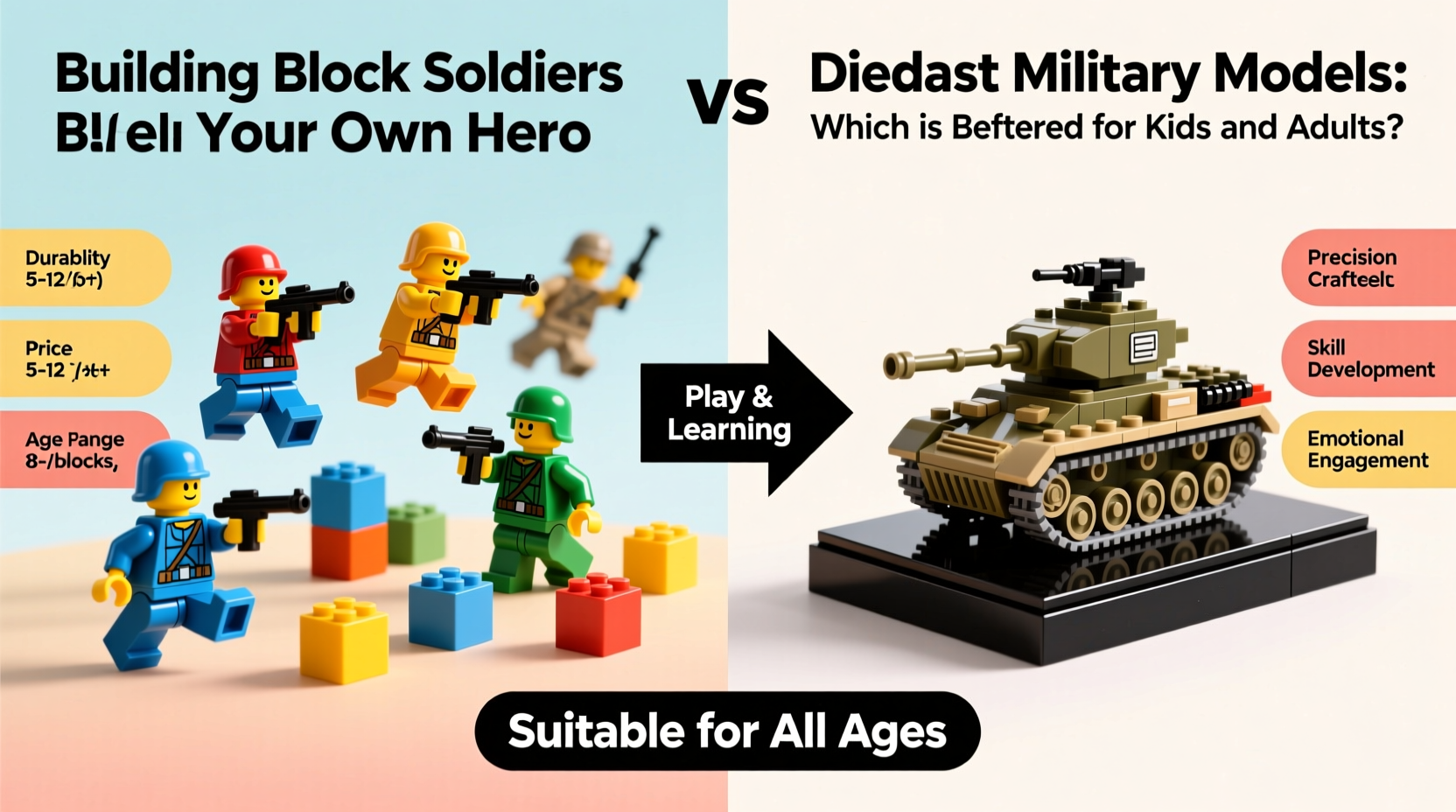
Building block soldiers excel in open-ended play. Their modular design allows kids—and even adults—to disassemble, rebuild, and customize units into tanks, command centers, or fictional battle scenarios. This flexibility fosters imagination, spatial reasoning, and problem-solving skills. Unlike static models, building blocks invite interaction that evolves over time.
In contrast, diecast military models are typically pre-assembled and non-articulated. While highly detailed, they serve more as display pieces than toys. Children may enjoy them briefly, but their fragility and lack of interactivity often limit long-term engagement. For younger users, this can lead to frustration or accidental damage during active play.
Durability and Longevity
Durability varies significantly between the two formats. Diecast models, while made of metal, are prone to chipping, paint wear, and breakage if dropped. Their intricate details—such as antennae, guns, or treads—are fragile and not designed for rough handling. These models are best suited for shelves behind glass or high surfaces away from active environments.
Building block soldiers, usually made from impact-resistant ABS plastic, are engineered for repeated assembly and disassembly. They withstand drops, spills, and enthusiastic play. Though individual pieces can be lost, replacements are often available, and sets can be expanded over time. For households with children, this resilience makes building blocks a far more practical investment.
Detail, Realism, and Collectibility
Diecast military models shine in realism. Manufacturers like Corgi, Greenlight, or Maisto invest heavily in accurate proportions, authentic markings, and fine surface textures. Many include opening hatches, rolling wheels, and realistic weathering effects. Adult collectors appreciate these nuances, especially when curating historical or themed displays such as World War II campaigns or modern armored divisions.
Building block versions, while improving in accuracy, prioritize stylization over precision. Proportions are often exaggerated for compatibility with minifigure designs, and camouflage patterns may be simplified. However, some third-party brands now offer highly detailed military sets that rival traditional models in visual appeal—especially when customized by advanced builders.
“While diecast models capture history in miniature, building blocks capture the spirit of innovation and imagination.” — Dr. Alan Reeves, Toy Design Historian
Cost and Expandability Comparison
Initial cost is a major differentiator. Entry-level diecast military vehicles range from $15 to $50, with premium collectibles exceeding $100. These are one-off purchases with no expansion potential beyond acquiring more models.
Building block systems operate on a cumulative economy. An initial set might cost $20–$40, but includes reusable components. Additional sets enhance versatility, allowing users to mix parts across themes. Over time, this creates greater value per dollar spent, particularly for families investing in long-term play resources.
| Feature | Building Block Soldiers | Diecast Military Models |
|---|---|---|
| Average Price (per unit) | $10–$40 | $15–$100+ |
| Reusability | High – fully disassemblable | None – fixed structure |
| Customization Potential | Extensive | Minimal |
| Suitable for Ages | 4+ | 14+ (recommended) |
| Display vs. Play Focus | Play-first, display-second | Display-first, limited play |
Educational Benefits for Children
Building block soldiers offer layered learning opportunities. Assembling them reinforces fine motor skills and hand-eye coordination. Following instruction manuals introduces early reading comprehension and sequential logic. More advanced users can explore engineering concepts by designing functional vehicles or defensive structures.
Some educators incorporate building block military sets into history lessons, using them to recreate battles or explain geopolitical conflicts in age-appropriate ways. Teachers report increased student engagement when tactile tools supplement textbooks.
Diecast models, while less interactive, support observational learning. Children can study vehicle types, insignias, and technological evolution across eras. However, without supplementary activities, their educational impact remains passive.
Mini Case Study: Classroom Use in Grade 5 Social Studies
In a suburban elementary school, a teacher introduced a Cold War unit using both formats. One group used building block NATO and Warsaw Pact troops to simulate border tensions and negotiate peace deals. Another group analyzed diecast replicas of tanks and aircraft, labeling them on a timeline.
Post-unit assessments showed both groups gained factual knowledge, but the building block group demonstrated stronger understanding of cause-and-effect dynamics and expressed higher enthusiasm. The teacher noted, “The act of building and moving pieces helped students internalize abstract concepts like deterrence and escalation.”
For Adult Collectors: Display, Nostalgia, and Investment
Adults approach military models differently than children. For many, collecting diecast pieces is a nostalgic pursuit tied to personal or family military service. Limited-edition runs, serial numbering, and manufacturer certifications add collectible value. Some vintage diecast models have appreciated significantly at auction.
Yet a growing number of adult fans of building blocks—known as AFOLs (Adult Fans of LEGO)—have embraced military-themed builds. Online communities share custom MOCs (My Own Creations), including historically accurate dioramas and sci-fi battlefields. These creations often rival professional models in craftsmanship and are shared digitally, extending their reach beyond physical ownership.
Step-by-Step Guide: Choosing the Right Option for Your Needs
- Define your primary goal: Is it play, education, display, or collection?
- Consider the user’s age: Under 10? Building blocks are safer and more engaging.
- Assess space and storage: Do you have a protected display case or a shared playroom?
- Budget for long-term use: Can you reuse components or must each piece be bought separately?
- Evaluate customization interest: Will the user enjoy building and modifying, or prefer ready-made aesthetics?
- Decide on theme depth: Historical accuracy favors diecast; imaginative warfare suits building blocks.
Frequently Asked Questions
Can building block soldiers be as detailed as diecast models?
While mass-produced sets may lack fine detail, custom building block creations—especially those using specialized parts and paint techniques—can achieve remarkable realism. Third-party kits and aftermarket decals further close the gap.
Are diecast models safe for young children?
Generally, no. Small parts, sharp edges, and heavy metal construction pose choking and injury risks. Most manufacturers recommend diecast models for ages 14 and up. Always supervise younger children if displaying these near play areas.
Do building block military sets encourage violent play?
Context matters more than the toy itself. Research shows children use military-themed toys to process stories, power dynamics, and hero narratives—not necessarily to promote aggression. Guided play that emphasizes strategy, teamwork, or rescue missions can redirect focus constructively.
Final Thoughts and Recommendation
The choice between building block soldiers and diecast military models isn’t about which is universally better—it’s about alignment with purpose. For children, families, and those who value creativity, reusability, and hands-on engagement, building block soldiers are the superior option. They grow with the user, support developmental skills, and adapt to evolving interests.
For adult collectors focused on historical authenticity, craftsmanship, and display prestige, diecast models remain unmatched. Their weight, finish, and attention to detail offer a tactile satisfaction that plastic cannot replicate.
Ultimately, the most rewarding experiences come from combining both. Use diecast models as anchors of realism and building blocks as canvases for imagination. In doing so, you honor both the past and the future of military modeling—one brick and one casting at a time.




 浙公网安备
33010002000092号
浙公网安备
33010002000092号 浙B2-20120091-4
Comments
No comments yet. Why don't you start the discussion?