
For millions of people, nighttime doesn’t bring rest—it brings rumination, racing thoughts, and a body that refuses to relax. Anxiety often intensifies in the quiet hours when distractions fade and the mind turns inward. A well-designed bedtime routine isn’t just about falling asleep faster; it’s about creating a psychological transition from the stress of the day to a state of safety and calm. Unlike generic sleep hygiene tips, an anxiety-reducing routine targets the nervous system directly, signaling that it’s safe to let go. This article outlines how to build a personalized, effective bedtime ritual grounded in neuroscience, psychology, and real-world application.
Why Standard Sleep Advice Falls Short for Anxiety
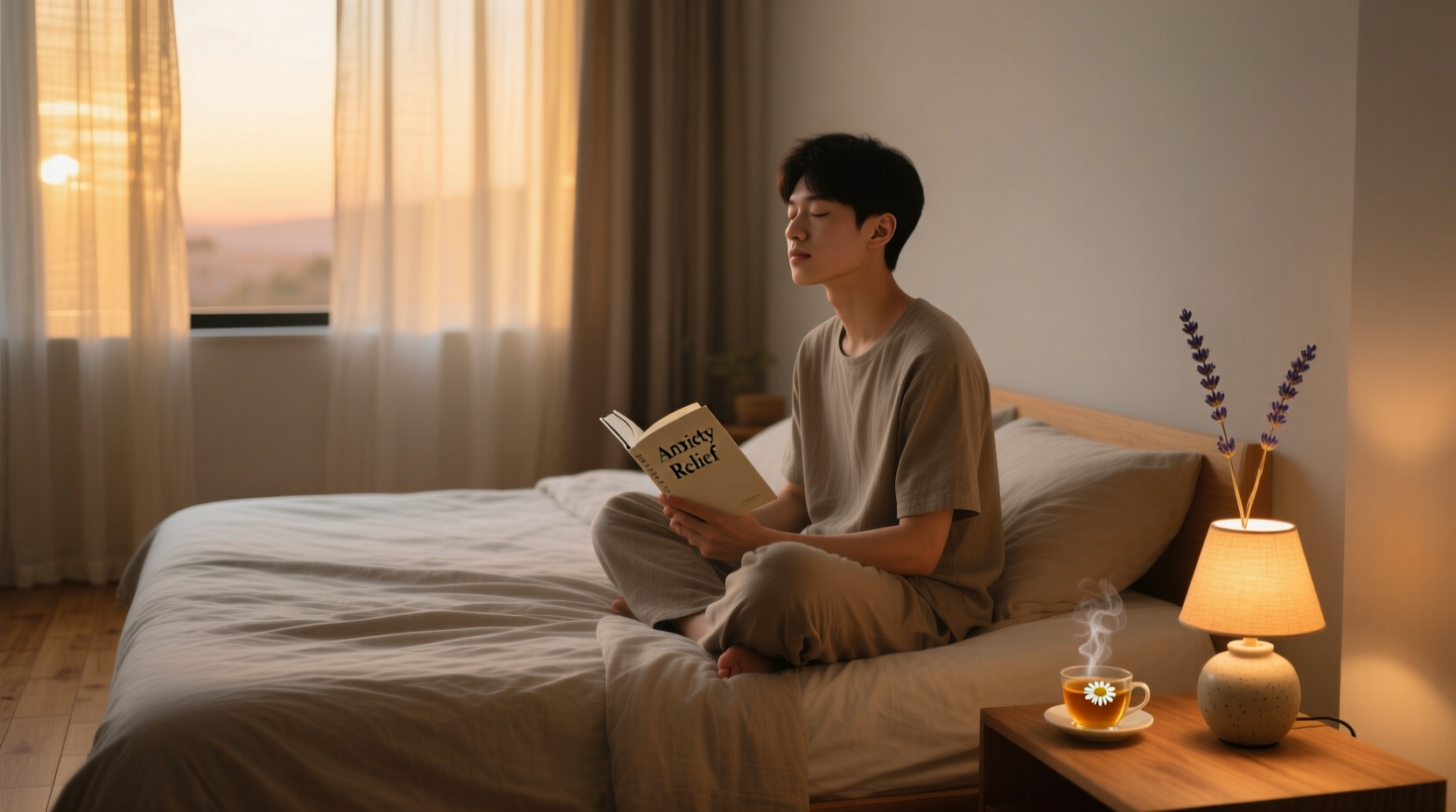
Most sleep advice focuses on external factors: avoid screens, keep your room cool, stick to a schedule. While helpful, these tips often miss the internal experience of someone whose mind won’t shut down. Anxiety is not simply poor sleep hygiene—it’s a physiological state of hyperarousal. The body remains in fight-or-flight mode long after the threat has passed. Telling someone with anxiety to “just relax” is like asking a car stuck in gear to coast downhill without releasing the clutch.
The key difference in managing anxiety at bedtime is addressing both the cognitive and somatic components. Cognitive strategies help reframe intrusive thoughts, while somatic practices regulate the nervous system. A truly effective routine integrates both, using predictable rituals to condition the brain to associate bedtime with safety rather than dread.
“Sleep onset anxiety isn’t laziness or poor discipline—it’s a conditioned response. The goal isn’t to eliminate thoughts, but to change the relationship with them.” — Dr. Lena Torres, Clinical Psychologist & Sleep Specialist
The Science of Transition: How Routines Calm the Nervous System
The human brain thrives on predictability. When activities are repeated in sequence, the brain begins to anticipate what comes next, reducing uncertainty—the primary fuel of anxiety. A consistent bedtime routine acts as a neural cue, triggering the parasympathetic nervous system, which governs rest, digestion, and recovery.
Neurologically, this process involves the suprachiasmatic nucleus (SCN), the brain’s master clock. While light is its primary regulator, behavioral cues—like brushing teeth, dimming lights, or practicing breathwork—also reinforce circadian rhythms. Over time, these cues become conditioned stimuli, prompting the release of melatonin and lowering cortisol levels even before actual sleep begins.
A 2021 study published in Behavioral Sleep Medicine found that participants who followed a 45-minute pre-sleep routine including mindfulness and environmental adjustments reported a 37% reduction in nighttime anxiety symptoms within three weeks. The most effective routines shared common features: they were consistent, multisensory, and intentionally disengaged from daytime stressors.
Step-by-Step Guide: Building Your Anxiety-Reducing Bedtime Routine
An effective routine isn’t one-size-fits-all. It must be tailored to your lifestyle, triggers, and nervous system sensitivity. Below is a flexible, evidence-based framework you can adapt over time.
- Set a wind-down anchor (60–90 minutes before bed)
Choose a fixed activity that signals the start of your transition. This could be brewing herbal tea, changing into sleepwear, or closing your work laptop. The act itself matters less than its consistency. Over time, your brain will link this action with the upcoming relaxation phase. - Disengage from digital stimulation (45 minutes before bed)
Blue light suppresses melatonin, but the greater issue is cognitive activation. Scrolling through news or social media keeps the mind in problem-solving mode. Replace screen time with low-stimulus activities: light reading (fiction or poetry), gentle stretching, or listening to ambient music. - Practice a somatic reset (30 minutes before bed)
Use breath or movement to shift out of sympathetic dominance. Try one of the following:- Box breathing: Inhale for 4 counts, hold for 4, exhale for 4, hold for 4. Repeat for 5 minutes.
- Progressive muscle relaxation: Tense and release muscle groups from feet to head.
- Yoga nidra or guided body scan meditation.
- Process the day (20 minutes before bed)
Unresolved thoughts fuel anxiety. Instead of ruminating in bed, designate time to “download” your mind. Write down:- Three things you’re grateful for
- One unresolved concern (and one small next step)
- A brief reflection: “What did today ask of me?”
- Create a sensory sanctuary (10 minutes before bed)
Optimize your environment to support surrender:- Dim overhead lights; use warm-toned lamps or candles.
- Lower room temperature to 65–68°F (18–20°C).
- Use white noise or nature sounds if silence feels jarring.
- Spray lavender essential oil on your pillow (studies show it reduces heart rate).
- Bedtime ritual (in bed, lights out)
Once under covers, avoid checking the time—a major trigger for sleep performance anxiety. Instead, focus on slow breathing or repeat a calming phrase: “I am safe. I am allowed to rest.” If thoughts arise, acknowledge them without judgment: “That’s a worry. It can wait until morning.”
Common Pitfalls and How to Avoid Them
Even with good intentions, many people unintentionally sabotage their progress. Awareness of these traps can prevent frustration and abandonment of the routine.
| Pitfall | Why It Happens | How to Fix It |
|---|---|---|
| Trying to do too much too soon | Overwhelms the nervous system and leads to burnout | Start with 1–2 simple habits. Add only when they feel automatic. |
| Using the routine as a performance metric | Creates pressure to “get sleep right,” increasing anxiety | Focus on the process, not outcomes. Success = showing up, not falling asleep fast. |
| Skipping the routine when tired | Fatigue feels like justification to cut corners | Shorten the routine, but don’t skip it. Even 10 minutes of consistency builds trust. |
| Staying in bed when anxious | Reinforces association between bed and distress | If awake for more than 20 minutes, get up and do a quiet activity until drowsy. |
Real Example: How Sarah Transformed Her Nightly Struggles
Sarah, a 34-year-old project manager, spent years lying awake replaying meetings and worrying about deadlines. She tried melatonin, blackout curtains, and sleep apps—but nothing addressed her core fear: that she hadn’t done enough. After working with a sleep coach, she implemented a modified version of the routine above.
She began by setting a hard stop at 8:30 PM for work emails. At 9:00 PM, she lit a candle and wrote in a small notebook: two things she’d completed that day and one thing she was letting go of. Then, she practiced five minutes of diaphragmatic breathing. Initially, her mind resisted. But within two weeks, she noticed a subtle shift: the candle flame became a signal to her nervous system that the day was over.
After six weeks, Sarah’s average time to fall asleep dropped from 90 to 30 minutes. More importantly, she stopped fearing bedtime. “It’s not perfect every night,” she says, “but now I have a way back to calm, even when my mind races.”
Checklist: Your 7-Day Starter Routine
Use this checklist to build momentum without overwhelm. Complete each day’s task before moving to the next.
- Day 1: Choose your wind-down anchor (e.g., putting on pajamas at 9:00 PM).
- Day 2: Eliminate screens 45 minutes before bed. Replace with reading or quiet music.
- Day 3: Add 5 minutes of box breathing after your anchor.
- Day 4: Write down one thing you’re grateful for before bed.
- Day 5: Dim the lights in your home 60 minutes before sleep.
- Day 6: Practice progressive muscle relaxation in bed.
- Day 7: Review what worked and refine your routine for sustainability.
Frequently Asked Questions
What if I work late and can’t start a routine until 11 PM?
Timing matters less than consistency. Even a 20-minute routine starting at 11 PM can be effective. Focus on disengagement: close your laptop, change clothes, and perform two calming actions (e.g., drink chamomile tea and breathe deeply). The key is creating a boundary between work and rest.
Can this routine help with panic attacks at night?
While not a substitute for clinical treatment, a structured routine can reduce the frequency of nocturnal panic by lowering baseline anxiety. Include grounding techniques like the 5-4-3-2-1 method (name 5 things you see, 4 you feel, etc.) during your wind-down. If panic attacks persist, consult a mental health professional.
How long before I see results?
Most people notice subtle changes within 3–5 days—easier relaxation, fewer intrusive thoughts. Significant improvements in sleep latency and nighttime anxiety typically emerge within 2–4 weeks. Trust the process: neural conditioning takes repetition, not instant mastery.
Conclusion: Reclaiming Nighttime as Sacred Space
Building a bedtime routine that reduces anxiety isn’t about rigid rules or achieving perfect sleep. It’s about reclaiming nighttime as a space of restoration, not reckoning. Each small ritual—brushing your teeth by candlelight, writing one line of gratitude, taking three slow breaths—is a quiet rebellion against the culture of constant doing. You are not broken because your mind races at night. You are human, and your nervous system is asking for care, not correction.
Start where you are. Use what you have. Do what you can. The most powerful routines grow not from perfection, but from persistence. Tonight, choose one step. Tomorrow, take another. Over time, you’ll build more than a habit—you’ll build a sanctuary.




 浙公网安备
33010002000092号
浙公网安备
33010002000092号 浙B2-20120091-4
Comments
No comments yet. Why don't you start the discussion?