
At first glance, cheese slippers—those oddly shaped foam footwear items resembling a wedge of Swiss cheese—seem like a joke. Their porous design, exaggerated arch cutouts, and internet-born popularity make them feel like pure satire. But millions have bought them. Thousands swear by their comfort. And some podiatrists even recommend them. So what’s really going on? Are cheese slippers just another fleeting meme, or is there legitimate ergonomic value behind their bizarre appearance? The answer lies somewhere between viral humor and biomechanical innovation.
The Rise of the Cheese Slipper: From Meme to Mainstream
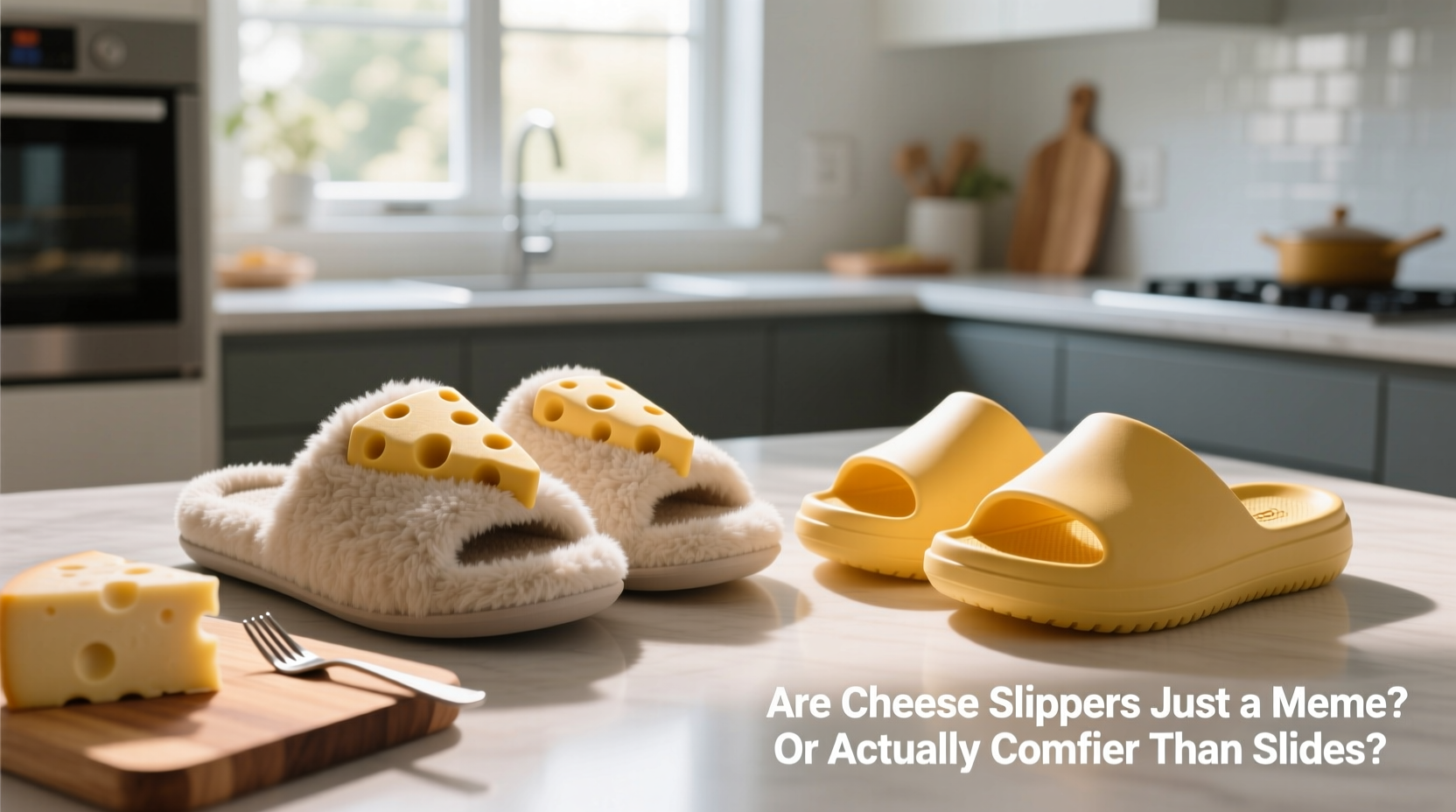
Cheese slippers gained traction on social media platforms like TikTok and Instagram around 2022, primarily due to their absurd look. Users posted videos joking about walking on “holes,” comparing them to actual cheese wheels, and mocking their unconventional silhouette. Yet, beneath the irony, a surprising number of people began reporting genuine comfort—especially after long days on their feet.
Brands like Crocs capitalized on the trend with limited-edition perforated designs, but independent manufacturers also emerged, producing similar styles under names like “aerated clogs” or “breathable recovery shoes.” What started as parody evolved into a functional niche product embraced by nurses, teachers, and remote workers alike.
“Sometimes the most effective designs come from places we least expect—even internet jokes. If a shoe reduces foot fatigue and promotes airflow, its origin doesn’t matter.” — Dr. Lena Torres, Podiatrist & Footwear Ergonomics Researcher
Anatomy of Comfort: Why Design Matters More Than Looks
To understand whether cheese slippers are truly comfortable, it helps to examine the key components of supportive footwear:
- Arch support: Proper alignment prevents strain on the plantar fascia.
- Cushioning: Absorbs impact during standing or walking.
- Breathability: Reduces moisture buildup and odor.
- Weight: Lighter materials reduce leg fatigue over time.
- Flexibility: Allows natural foot movement without restriction.
Cheese slippers typically score high on breathability and weight thanks to their open-cell foam construction and numerous perforations. While traditional slides often feature solid footbeds, cheese slippers use strategic voids that allow air circulation while maintaining structural integrity. This isn’t just aesthetic—it mimics engineering principles used in athletic insoles and orthopedic inserts.
Comparative Analysis: Cheese Slippers vs. Traditional Slides
| Feature | Cheese Slippers | Traditional Slides |
|---|---|---|
| Airflow & Ventilation | ★★★★★ (High due to multiple perforations) | ★★☆☆☆ (Limited unless mesh-lined) |
| Foot Support | ★★★★☆ (Contoured, often with mild arch support) | ★★★☆☆ (Varies; many lack structured support) |
| Cushioning | ★★★★☆ (EVA or memory foam base) | ★★★☆☆ (Depends on brand and thickness) |
| Durability | ★★★☆☆ (Foam may degrade faster with heavy outdoor use) | ★★★★☆ (More robust soles in premium models) |
| Indoor Suitability | ★★★★★ (Ideal for home, post-shower, recovery) | ★★★★☆ (Good, but can trap heat) |
| Fashion Perception | ★★☆☆☆ (Polarizing; seen as quirky or ironic) | ★★★★☆ (Widely accepted, especially minimalist styles) |
The data shows that cheese slippers excel in environments where ventilation and lightweight support are priorities—such as homes, hospitals, or post-workout recovery. However, they lag slightly in durability and public fashion appeal compared to sleeker slide alternatives.
Real-World Use: A Day in the Life of a Nurse Wearing Cheese Slippers
Sarah Kim, a registered nurse working 12-hour shifts in a Chicago hospital, switched to cheese slippers six months ago after seeing a colleague wear them. Skeptical at first, she decided to try a pair during flu season when foot sweat and odor became unbearable in standard clogs.
“I wore them for my entire shift—walking nonstop from 7 a.m. to 7 p.m.,” Sarah said. “My feet didn’t feel sweaty, which never happens. The holes actually helped dry my socks when I spilled water. And honestly? My lower back pain decreased. I think it’s because the cushioning absorbs shock better than my old shoes.”
She now owns three pairs: one for work, one for home, and a colorful one she wears ironically—but comfortably—at parties. Her experience reflects a growing trend: utility disguised as absurdity.
Expert-Backed Benefits of Perforated Footwear
While no peer-reviewed study specifically analyzes “cheese slippers,” research supports the advantages of breathable, contoured foam footwear. A 2021 study published in the Journal of Foot and Ankle Research found that open-cell EVA foam reduced skin temperature by an average of 2.3°C compared to solid rubber soles, significantly lowering discomfort during prolonged wear.
Additionally, podiatrists note that moderate perforation does not compromise structural support if the remaining material is strategically reinforced. In fact, removing excess foam can reduce pressure points and improve flexibility.
“The human foot generates heat and moisture. Any design that facilitates evaporation while supporting natural gait mechanics has therapeutic potential—even if it looks silly.” — Dr. Rajiv Mehta, Clinical Biomechanics Specialist
Step-by-Step Guide: How to Choose the Right Cheese Slipper (If You’re Serious About Comfort)
- Determine your primary use: Will you wear them indoors, at work, or casually outdoors?
- Check for contoured footbeds: Look for models with built-in arch support and heel cups, not flat foam.
- Evaluate material quality: High-density EVA foam lasts longer and resists compression.
- Assess hole placement: Avoid designs with perforations directly under the ball of the foot or heel.
- Try them on late in the day: Feet swell after activity; this ensures accurate fit testing.
- Walk on different surfaces: Test on tile, carpet, and hardwood to gauge stability and grip.
- Monitor break-in comfort: Minor stiffness is normal, but sharp pressure points are a red flag.
Common Misconceptions About Cheese Slippers
- They’re just Crocs with holes: While inspired by Crocs’ success, many cheese slippers use different foam densities and ergonomic shaping.
- More holes = less support: Not necessarily. Engineering can redistribute support around voids effectively.
- Only good for memes: Their viral fame overshadows real user satisfaction across diverse demographics.
- Unhygienic because of gaps: Actually, debris is easier to rinse out, and airflow inhibits bacterial growth.
FAQ
Can cheese slippers be worn outside?
Yes, but selectively. They perform well on clean, flat surfaces like sidewalks or patios. Avoid muddy or rocky terrain, as debris can get trapped in the holes and reduce traction.
Do they help with plantar fasciitis?
Some users report relief due to cushioning and mild arch support, but they are not medical devices. For diagnosed conditions, consult a podiatrist before relying solely on any casual footwear.
How do you clean cheese slippers?
Rinse under lukewarm water and scrub gently with a soft brush and mild soap. Let air dry completely—never expose to direct heat. The open design makes drying faster than traditional shoes.
Final Verdict: More Than Just a Meme
Cheese slippers began as a joke, but their staying power reveals something deeper: people prioritize comfort and function, even when wrapped in absurd packaging. While they may never replace athletic shoes or formal footwear, they occupy a legitimate space in the world of recovery, indoor mobility, and breathable design.
Their perforated structure isn’t random—it follows principles of thermal regulation, weight reduction, and pressure distribution. When compared directly to conventional slides, cheese slippers often win in ventilation and subjective comfort, though they trade off some durability and aesthetic neutrality.
In the end, calling them “just a meme” undersells their practical value. Like noise-canceling headphones once mocked for their bulky look, or oversized sneakers ridiculed for their proportions, cheese slippers challenge our assumptions about what functional design should look like.




 浙公网安备
33010002000092号
浙公网安备
33010002000092号 浙B2-20120091-4
Comments
No comments yet. Why don't you start the discussion?