
The quest for youthful, supple skin has fueled a booming market in anti-aging supplements—none more prominent than collagen. Found in powders, capsules, and even beauty drinks, collagen supplements are marketed as a simple solution to sagging skin, fine lines, and loss of firmness. But behind the glossy packaging and influencer endorsements, what does science actually say? Is there credible evidence that ingesting collagen improves skin elasticity, or is it just another wellness trend with little substance?
This article examines the scientific research on oral collagen supplementation, focusing specifically on its impact on skin elasticity—the skin’s ability to stretch and snap back. We’ll explore how collagen works in the body, review key clinical studies, evaluate the quality of available products, and offer practical guidance based on current dermatological understanding.
Understanding Collagen and Skin Aging
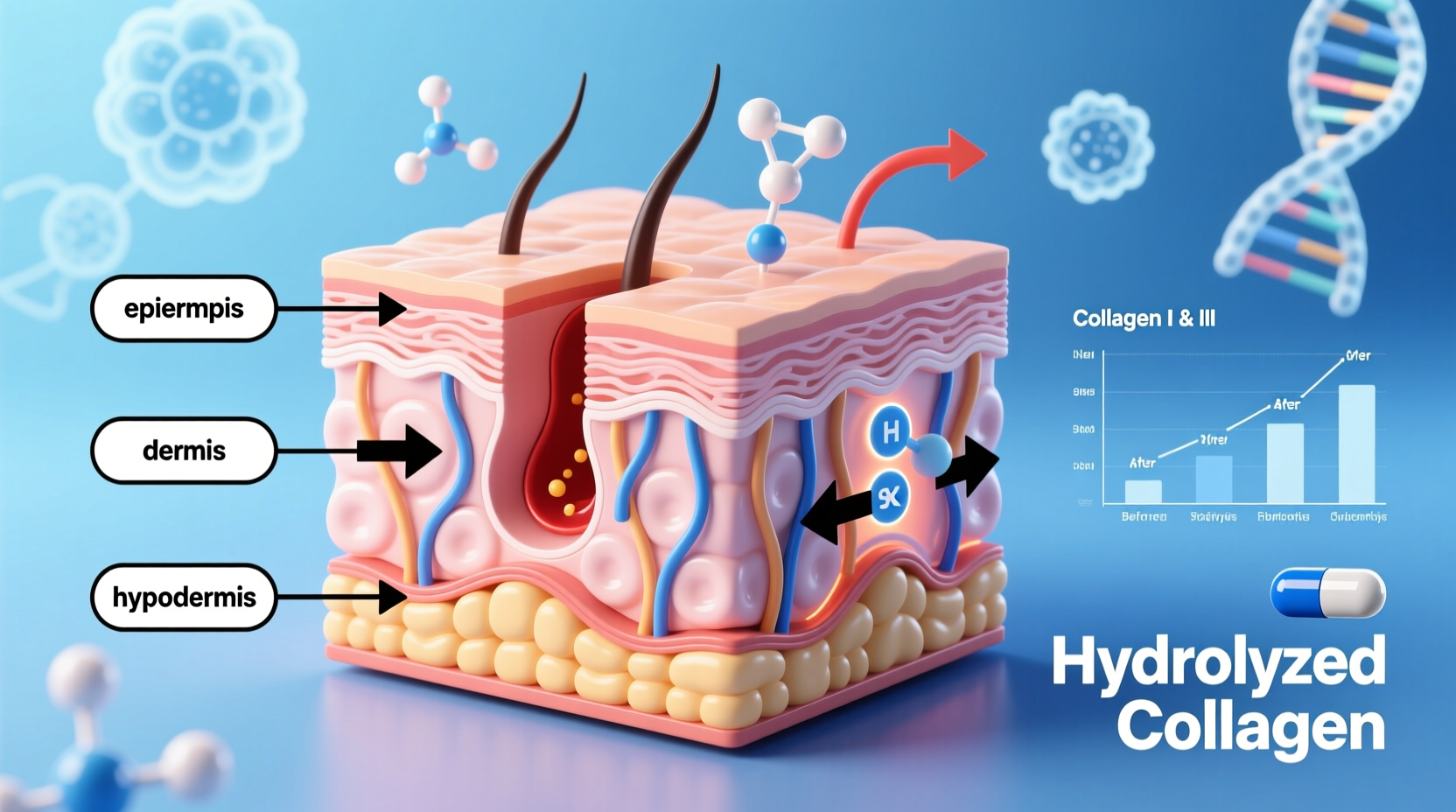
Collagen is the most abundant protein in the human body, making up about 75% of the skin’s dry weight. It forms a fibrous network in the dermis that provides structural support, strength, and resilience. There are at least 28 types of collagen, but Types I, II, and III are the most prevalent, with Type I being dominant in the skin.
Natural collagen production begins to decline around age 25, decreasing by approximately 1% per year. This reduction accelerates during menopause due to hormonal changes, particularly the drop in estrogen. As collagen depletes, the skin becomes thinner, less elastic, and more prone to wrinkles and sagging.
External factors like UV exposure, pollution, smoking, and poor nutrition further degrade existing collagen through oxidative stress and inflammation. The result is a visible loss of skin firmness and bounce—hallmarks of aging skin.
The theory behind collagen supplements is straightforward: by consuming hydrolyzed collagen peptides (smaller, more digestible fragments), the body can use these building blocks to repair and regenerate skin tissue, thereby improving elasticity and overall appearance.
What Does the Scientific Evidence Say?
To assess efficacy, we must turn to peer-reviewed clinical trials. Over the past decade, dozens of studies have investigated whether oral collagen supplementation leads to measurable improvements in skin health.
A 2019 meta-analysis published in Aesthetic Plastic Surgery reviewed 11 randomized controlled trials involving over 800 participants. The researchers concluded that daily intake of hydrolyzed collagen significantly improved skin elasticity, hydration, and dermal collagen density compared to placebo groups. Most studies used dosages between 2.5 and 10 grams per day over 8–12 weeks.
One frequently cited double-blind, placebo-controlled trial from 2014 involved 69 women aged 35–55 who took either 2.5 grams of collagen peptides or a placebo daily for 8 weeks. The collagen group showed a 7% average improvement in skin elasticity, along with increased hydration and reduced wrinkle depth. Notably, benefits were observed across all age groups within the study cohort.
Another 2021 study in Journal of Cosmetic Dermatology followed 120 women taking 5 grams of marine collagen daily for 12 weeks. Researchers reported a 15% increase in skin elasticity and a 20% improvement in moisture levels, verified using non-invasive biophysical instruments like cutometers and corneometers.
While many of these studies are funded by supplement companies, independent research supports similar outcomes. A 2022 review in Nutrients highlighted that collagen peptides are absorbed in the gut, enter systemic circulation, and accumulate in the skin, where they stimulate fibroblasts—the cells responsible for producing new collagen, elastin, and hyaluronic acid.
“Oral collagen supplementation appears to modulate skin metabolism by promoting endogenous collagen synthesis. It’s not just replacing lost protein—it’s signaling the skin to rebuild.” — Dr. Sarah Mitchell, PhD, Clinical Dermatologist and Nutritional Biochemist
How Collagen Supplements Work: Mechanism of Action
Unlike topical creams, which struggle to penetrate deeply into the dermis, oral collagen works systemically. Once ingested, hydrolyzed collagen is broken down into di- and tri-peptides—small chains of amino acids such as proline, glycine, and hydroxyproline.
These peptides are absorbed in the small intestine and transported via the bloodstream to various tissues, including the skin. Research suggests they act as biochemical signals, triggering fibroblast activity and upregulating genes involved in collagen production. This process is known as “collagen neosynthesis.”
In addition to stimulating new collagen, some studies indicate that collagen peptides may inhibit matrix metalloproteinases (MMPs)—enzymes that break down collagen in response to UV damage and aging. By reducing collagen degradation while boosting production, supplements create a favorable environment for improved skin integrity.
It's important to note that not all collagen is created equal. Efficacy depends heavily on the source (bovine, marine, chicken), molecular weight (lower is better for absorption), and degree of hydrolysis. High-quality supplements use low-molecular-weight peptides (<3 kDa) for optimal bioavailability.
Comparing Collagen Sources and Product Quality
With hundreds of collagen products on the market, choosing an effective one requires careful evaluation. Below is a comparison of common collagen types based on research-backed effectiveness, sustainability, and allergenic potential.
| Type | Source | Skin Elasticity Support | Key Amino Acids | Considerations |
|---|---|---|---|---|
| Marine Collagen | Fish (usually wild-caught) | High – rich in Type I collagen | Glycine, Proline, Hydroxyproline | Easily absorbed; sustainable sourcing varies |
| Bovine Collagen | Beef (hide or bones) | High – contains Types I & III | Same as above + glutamine | Potential allergen; check for grass-fed sourcing |
| Chicken Collagen | Chicken sternum | Moderate – higher in Type II | Hydroxylysine-rich | Better for joints than skin |
| Plant-Based \"Collagen\" | No animal source – amino acid blends | Indirect – supports synthesis | Vitamin C, silica, amino acid precursors | Does not contain actual collagen; relies on body’s production |
For skin elasticity, marine and bovine sources are best supported by clinical data. Marine collagen, in particular, has shown superior bioavailability due to its smaller peptide size.
Real-World Results: A Mini Case Study
Consider the experience of Maria T., a 48-year-old marketing executive from Portland, Oregon. After noticing her skin felt looser and less responsive following sun exposure and stress-related sleep loss, she began taking 5 grams of marine collagen daily, mixed into her morning smoothie.
She chose a third-party tested brand with verified low molecular weight peptides and added vitamin C to enhance absorption. She maintained consistent use for 12 weeks, paired with daily sunscreen and a hydrating moisturizer.
Using a home skin elasticity device (cutometer-style), she recorded a 12% improvement in cheek firmness by week 10. Colleagues commented on her “glow,” and she reported fewer fine lines around her eyes. While lifestyle changes contributed, she attributed the most noticeable shift to the collagen regimen.
Maria’s case aligns with clinical findings: consistent use over 8–12 weeks yields measurable improvements, especially when combined with supportive habits.
Best Practices for Using Collagen Supplements
Not all users will see results—and often, the difference lies in how the supplement is used. To maximize effectiveness, follow this step-by-step guide:
- Determine dosage: Start with 2.5–5 grams per day. Some studies show diminishing returns above 10 grams.
- Choose the right type: Opt for hydrolyzed marine or bovine collagen for skin-specific benefits.
- Take consistently: Daily intake is crucial. Effects typically appear after 8–12 weeks.
- Pair with co-factors: Vitamin C is essential for collagen synthesis. Consider combining with your supplement or eating citrus fruits, bell peppers, or kiwi.
- Time your intake: Collagen can be taken any time, but some prefer it on an empty stomach or with breakfast for routine adherence.
- Support with lifestyle: Protect your investment—use sunscreen, avoid smoking, stay hydrated, and prioritize sleep.
Common Myths and Misconceptions
- Myth: “Eating collagen directly rebuilds skin collagen.”
Reality: Dietary collagen is broken down into amino acids. Its benefit comes from signaling fibroblasts, not direct replacement.
- Myth: “All collagen supplements work the same.”
Reality: Molecular weight, source, and hydrolysis level significantly affect absorption and efficacy.
- Myth: “You’ll see results in a week.”
Reality: Skin turnover takes ~28 days. Most studies show changes only after 8+ weeks of daily use.
- Myth: “Plant-based collagen is equivalent.”
Reality: These are collagen boosters, not collagen itself. They may help, but lack direct peptide delivery.
FAQ: Your Questions Answered
Can vegetarians benefit from collagen supplements?
True collagen is animal-derived, so strict vegetarians and vegans cannot consume it. However, plant-based “collagen builders” containing vitamin C, lysine, proline, and silica may support the body’s natural collagen production. Evidence for their effectiveness is weaker than for hydrolyzed animal collagen.
Are there side effects to taking collagen supplements?
Collagen is generally well-tolerated. Some users report mild digestive discomfort, especially with high doses. People with fish or beef allergies should avoid marine or bovine collagen, respectively. Always consult a healthcare provider if you have kidney issues or are pregnant.
Do topical collagen creams work?
Most topical collagen products have limited efficacy because collagen molecules are too large to penetrate the skin barrier. While they may provide temporary hydration, they don’t improve elasticity like oral supplements. Look instead for ingredients like retinoids, peptides, and hyaluronic acid in skincare.
Conclusion: What You Should Do Now
The scientific consensus is clear: hydrolyzed collagen supplements can improve skin elasticity when used correctly. Multiple randomized trials confirm that daily intake of 2.5–10 grams over 8–12 weeks leads to statistically significant enhancements in skin firmness, hydration, and texture. The mechanism—stimulating fibroblasts and supporting natural collagen synthesis—is both plausible and increasingly well-documented.
However, supplements are not magic. Their success depends on product quality, consistency of use, and integration with broader skin-supportive habits like sun protection and proper nutrition. They work best as part of a holistic approach, not as standalone fixes.
If you’re considering collagen for better skin elasticity, start with a reputable brand offering marine or bovine hydrolyzed peptides. Commit to at least two months of daily use, pair it with vitamin C, and track changes objectively—through photos, touch, or tools if available.




 浙公网安备
33010002000092号
浙公网安备
33010002000092号 浙B2-20120091-4
Comments
No comments yet. Why don't you start the discussion?