
Collagen has become a buzzword in wellness circles—found in powders, capsules, and even skincare products. Marketed as a fountain of youth for skin, joints, and hair, collagen supplements have exploded in popularity. But with prices climbing and scientific claims multiplying, a critical question emerges: Are these supplements truly effective, or are they just overpriced placebos dressed up in lab coats?
To answer this, we need to separate marketing hype from clinical evidence. The reality is more nuanced than a simple yes or no. Collagen supplements do show measurable benefits in specific areas—but only under certain conditions, with consistent use, and not for everyone.
The Science Behind Collagen Supplementation
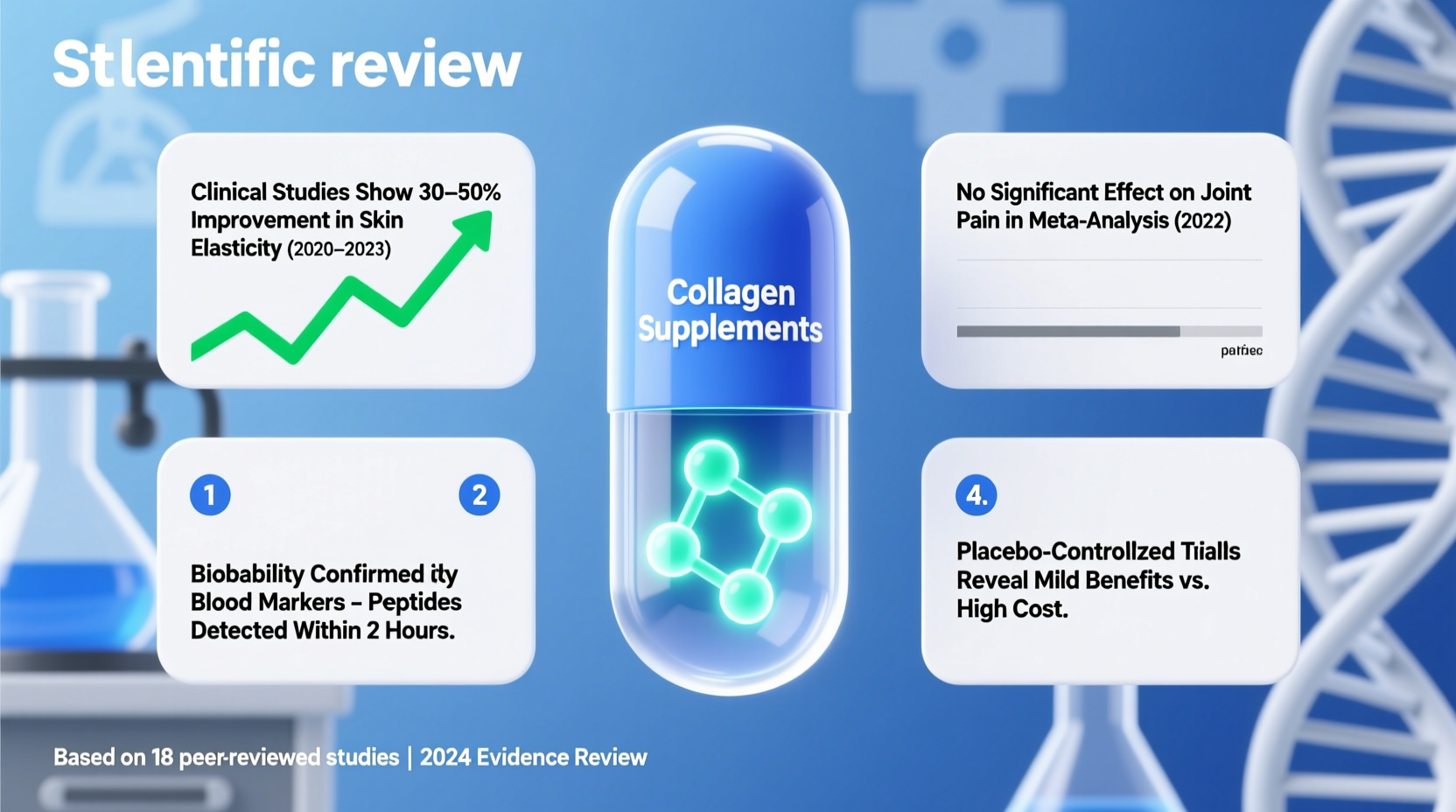
Collagen is the most abundant protein in the human body, making up about 30% of total protein content. It’s the structural scaffolding of skin, tendons, ligaments, bones, and cartilage. As we age, our natural collagen production declines—starting as early as our mid-20s. This decline contributes to wrinkles, joint stiffness, and weaker connective tissues.
Supplements typically contain hydrolyzed collagen, also known as collagen peptides. These are broken-down forms of collagen that are easier for the body to absorb. Most commercial products use types I, II, or III collagen derived from bovine (cow), marine (fish), or chicken sources.
The theory behind supplementation is straightforward: ingest collagen peptides → they enter the bloodstream → stimulate fibroblasts (skin cells) and chondrocytes (cartilage cells) → increase collagen synthesis in tissues.
But does this process actually work?
A growing body of research supports targeted benefits. A 2019 meta-analysis published in *Skin Pharmacology and Physiology* reviewed 19 studies and found that oral collagen supplementation significantly improved skin elasticity, hydration, and dermal collagen density after 8–12 weeks. Another study in the *Journal of the International Society of Sports Nutrition* showed that athletes taking 5 grams of collagen daily experienced reduced joint pain during activity.
“Oral collagen peptides can modulate extracellular matrix metabolism. They’re not magic, but they’re far from inert.” — Dr. Nicholas A. DiFiori, Chief of Sports Medicine at Cedars-Sinai Kerlan-Jobe Institute
Where Collagen Supplements Show Real Results
Not all claims about collagen hold up under scrutiny. However, several areas demonstrate consistent, science-backed improvements:
Skin Health and Anti-Aging
This is where the strongest evidence lies. Multiple randomized, placebo-controlled trials confirm that hydrolyzed collagen improves skin appearance. One notable 2014 German study gave women aged 40–60 either 2.5 grams of collagen or a placebo daily for 8 weeks. The collagen group saw a 20% average increase in skin moisture and a significant reduction in wrinkle depth around the eyes.
The mechanism? Collagen peptides appear to trigger fibroblast activity, prompting the skin to produce more collagen, elastin, and hyaluronic acid—key components of youthful skin.
Joints and Connective Tissue Support
For people with osteoarthritis or active lifestyles involving repetitive joint stress, collagen may offer relief. Type II collagen supplements, particularly undenatured type II (UC-II), have shown promise in reducing inflammation and improving joint mobility.
In a 2017 trial, participants with knee osteoarthritis who took 40 mg of UC-II daily reported significantly greater improvement in joint function compared to those on glucosamine or placebo after 180 days.
Bone Density Maintenance
Preliminary evidence suggests collagen may support bone health. Since bone matrix is 90% collagen by protein content, maintaining its integrity is crucial. A 2018 study in postmenopausal women found that combining collagen peptides with resistance training led to increased levels of procollagen type I, a marker of new collagen formation in bone tissue.
Limitations and Common Misconceptions
Despite promising results, collagen supplements aren’t a cure-all. Several misconceptions cloud public understanding:
- “More is better” – Studies show benefits plateau around 10 grams per day. Taking 20+ grams offers no additional advantage.
- “All collagen types are the same” – Type I supports skin and bones; Type II supports cartilage; Type III often accompanies Type I. Choosing the right type matters.
- “Results are immediate” – Visible changes in skin or joints typically take 8–12 weeks of daily use.
- “Plant-based collagen exists” – Plants don’t produce collagen. “Vegan collagen” refers to ingredients that support the body’s own collagen production, not actual collagen.
Additionally, regulatory oversight is limited. The FDA doesn’t evaluate supplements for efficacy before they hit shelves. A 2020 investigation by *ConsumerLab.com* found some collagen products contained less protein than advertised or were contaminated with heavy metals like lead.
What to Look for in a Quality Collagen Supplement
Given the variability in product quality, choosing wisely is essential. Not all powders or pills deliver what they promise. Use the following checklist when selecting a brand:
📋 Collagen Supplement Selection Checklist- Choose hydrolyzed collagen (collagen peptides) for better absorption.
- Verify third-party testing (look for NSF, USP, or Informed Choice seals).
- Check the source: marine (for skin), bovine (for skin and joints), or chicken (for cartilage).
- Avoid added sugars, artificial flavors, or unnecessary fillers.
- Ensure it contains vitamin C or pair it with a vitamin C source.
- Confirm dosage aligns with research: 2.5–10 grams per day.
| Factor | Recommended | Avoid |
|---|---|---|
| Form | Hydrolyzed collagen (peptides) | Non-hydrolyzed, gelatin-only |
| Daily Dose | 5–10g | >15g without medical reason |
| Source | Grass-fed bovine, wild-caught marine | Unspecified origin, factory-farmed |
| Additives | None or minimal (e.g., natural flavor) | Sugar, maltodextrin, artificial dyes |
| Testing | Third-party verified | No certification or transparency |
Real-World Example: A Case Study in Consistency
Sarah, a 47-year-old yoga instructor, began noticing deeper lines around her mouth and increased knee discomfort after long classes. Skeptical but curious, she started taking 8 grams of marine collagen daily, mixed into her morning smoothie with a squeeze of lemon. She committed to three months without changing other aspects of her diet or routine.
After eight weeks, her skin felt firmer and appeared more radiant. By week 12, her dermatologist noted improved epidermal thickness on imaging. Her knee pain during deep lunges decreased noticeably. While lifestyle factors like hydration and sleep played a role, Sarah attributes the turning point to collagen—especially since she’d tried other joint supplements without similar results.
Her experience mirrors clinical findings: modest but meaningful improvements with consistency and time.
Step-by-Step Guide to Using Collagen Effectively
To maximize potential benefits, follow this evidence-based timeline:
- Week 1–2: Choose your product – Select a reputable brand with third-party testing and the appropriate collagen type for your goals.
- Week 3: Establish routine – Take your dose daily, ideally on an empty stomach or with vitamin C. Morning is ideal for consistency.
- Week 4–8: Monitor subtle changes – Track skin texture, joint comfort, and nail strength. Use photos or a journal.
- Week 9–12: Evaluate results – Assess whether you’ve noticed improvements. If not, consider adjusting dosage or discontinuing.
- Ongoing: Maintain or rotate – Some users cycle collagen (e.g., 3 months on, 1 month off); others continue indefinitely. Listen to your body.
Note: Pregnant or breastfeeding individuals, those with allergies (especially to fish or beef), or people with kidney disease should consult a healthcare provider before starting.
Frequently Asked Questions
Can your body even absorb ingested collagen?
Yes. Hydrolyzed collagen is broken into small peptides that are absorbed in the intestines and distributed to tissues. Studies using labeled collagen peptides confirm their presence in skin and joint tissues within hours of ingestion.
Is there a difference between collagen powder and pills?
Not in effectiveness, but in practicality. Powders allow for higher doses and easy mixing with drinks. Capsules are convenient but may require multiple pills to reach effective dosing (typically 5–10g).
Do topical collagen creams work?
Largely, no. Collagen molecules in creams are too large to penetrate the skin barrier. Topical products may moisturize, but they don’t rebuild collagen like oral supplements can. Ingredients like retinoids or peptides are more effective for topical anti-aging.
The Verdict: Effective Tool, Not a Miracle Cure
Collagen supplements are neither miracle elixirs nor complete placebos. The science supports their role in improving skin health, supporting joint function, and potentially aiding bone metabolism—when used correctly.
They work best as part of a holistic approach: combined with adequate protein intake, sun protection, regular movement, and good sleep. Expect gradual, subtle improvements rather than overnight transformations.
And while they aren’t cheap—ranging from $30 to $60 per month—they compare favorably to many cosmetic procedures or prescription treatments with similar goals. For those seeking a low-risk, evidence-supported way to support aging tissues, collagen supplementation can be a worthwhile investment.
The key is managing expectations. Collagen won’t reverse aging, but it can slow visible signs and improve comfort in ways that matter. If you decide to try it, give it at least 8–12 weeks, choose quality over marketing, and pair it with supportive habits.




 浙公网安备
33010002000092号
浙公网安备
33010002000092号 浙B2-20120091-4
Comments
No comments yet. Why don't you start the discussion?