
Few beauty tools have captured the imagination of skincare enthusiasts quite like the facial roller. From jade to rose quartz, these cool, smooth stones glide across cheeks and foreheads in viral routines promising glowing skin, reduced puffiness, and a lifted appearance. But beneath the aesthetic appeal and influencer endorsements lies a critical question: Are facial rollers genuinely enhancing blood flow and skin health, or are their benefits mostly psychological—rooted more in ritual than in physiology?
To answer this, we need to look beyond the social media glow and examine what dermatologists, physiologists, and clinical studies say about microcirculation, lymphatic drainage, and the measurable impact of manual facial manipulation.
The Science Behind Facial Circulation
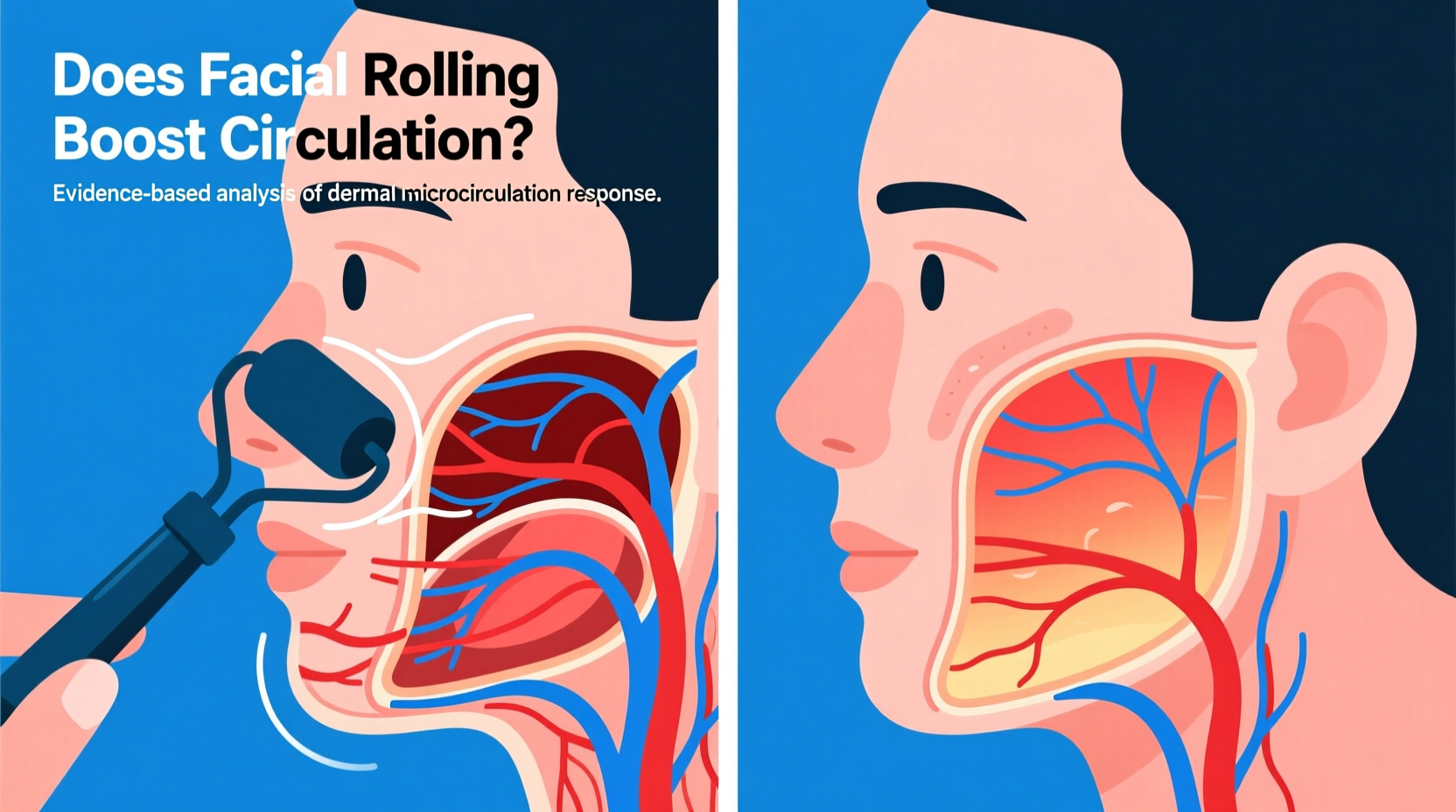
Blood circulation is essential for healthy skin. Oxygen and nutrients delivered via capillaries support cell turnover, collagen production, and repair mechanisms. When circulation slows—due to aging, stress, or lifestyle factors—the complexion can appear dull, tired, or congested.
Facial rollers claim to stimulate circulation through gentle mechanical pressure. The theory is simple: rolling the face applies mild force that dilates capillaries, encouraging fresh blood flow. This increased perfusion may temporarily improve skin tone and radiance.
A 2019 study published in *Skin Research and Technology* observed that manual facial massage led to a measurable increase in superficial blood flow, detectable via laser Doppler imaging. While the study didn’t focus exclusively on rollers, it supports the idea that physical manipulation can influence microcirculation—even if only transiently.
“Any form of targeted massage can lead to short-term vasodilation. That flush you see post-rolling? That’s likely real—but fleeting.” — Dr. Lena Torres, Board-Certified Dermatologist
However, “short-term” is the operative phrase. The same study noted that effects typically subside within 30–60 minutes unless combined with other interventions like active ingredients or consistent technique.
Lymphatic Drainage: Myth or Mechanism?
One of the most frequently cited benefits of facial rolling is lymphatic drainage. Unlike blood vessels, the lymphatic system lacks a pump; instead, it relies on muscle movement and external pressure to clear waste, excess fluid, and toxins from tissues.
Facial puffiness—especially around the eyes and jawline—is often due to fluid retention. Advocates argue that upward and outward rolling motions mimic professional lymphatic drainage techniques used by estheticians, helping reduce swelling and define contours.
In clinical settings, manual lymphatic drainage (MLD) is a well-established therapy, particularly after surgery or for managing edema. However, at-home tools like rollers apply less precise pressure and lack standardized protocols.
Still, anecdotal evidence is strong. Many users report reduced morning puffiness after nightly rolling. While rigorous long-term studies are lacking, the physiological basis is plausible: rhythmic pressure can assist lymph movement, even if subtly.
Placebo Effect: Why It Still Matters
Even if the physiological changes are modest, dismissing facial rollers as mere placebo oversimplifies human psychology and self-care. Rituals matter. The deliberate act of pausing, focusing on the breath, and massaging the face can lower cortisol levels, reduce tension, and improve mood—all of which indirectly benefit skin health.
Stress is a known trigger for acne, rosacea, and premature aging. A nightly 5-minute rolling session might not dramatically boost circulation, but it could interrupt a cycle of stress-induced inflammation simply by promoting mindfulness.
Moreover, the placebo effect isn’t “fake.” It’s a documented neurobiological response. When people believe a treatment works, their bodies sometimes respond accordingly—releasing endorphins, improving sleep quality, or enhancing immune function. In skincare, perception influences behavior: someone who feels their routine is effective is more likely to stick with it consistently.
So while the roller itself may not be a miracle tool, the ritual it enables could be the real catalyst for change.
What the Tools Can—and Can’t—Do
To separate fact from fiction, here’s a breakdown of common claims versus what research and experts confirm:
| Claim | Evidence Status | Expert Verdict |
|---|---|---|
| Boosts blood circulation | Partially supported | Temporary increase possible; no long-term vascular change proven |
| Reduces facial puffiness | Anecdotal + plausible mechanism | Likely minor improvement via lymph assistance |
| Lifts and tightens skin | Unproven | No structural change to collagen or elastin from rolling alone |
| Improves product absorption | Moderately supported | Gentle massage may enhance penetration of serums and oils |
| Reduces wrinkles over time | No direct evidence | Indirect benefit possible via improved hydration and relaxation |
The takeaway? Facial rollers aren’t magic wands, but they’re not useless either. Their value lies in subtle, supportive roles—not transformative outcomes.
How to Use a Facial Roller Effectively: A Step-by-Step Guide
If you’re using a facial roller, technique matters. Random gliding won’t maximize potential benefits. Follow this clinically informed sequence for optimal results:
- Cleanse first: Start with a clean face to prevent pushing dirt into pores.
- Apply a serum or oil: Use a slip-friendly medium like facial oil or water-based serum to minimize friction.
- Begin at the center: Start under the chin and roll outward along the jawline toward the lymph nodes near the ears. Repeat 3–5 times per side.
- Move to the cheeks: Starting at the nose, roll diagonally upward and outward toward the temples. Avoid dragging skin downward.
- Tackle the forehead: Begin at the center of the brow and roll upward toward the hairline, then out toward the temples.
- Finish under the eyes: Use the smaller end to gently roll from the inner corner of the eye outward. Be extremely light—this skin is delicate.
- Finish with neck: Roll downward from the jaw to the collarbone to encourage lymph flow away from the face.
- Sanitize after use: Wipe with a soft cloth and mild soap weekly to prevent bacterial buildup.
Duration: Aim for 3–5 minutes daily. Morning use may help depuff; evening use promotes relaxation.
Real User Experience: A Mini Case Study
Sarah, a 34-year-old graphic designer in Portland, struggled with chronic facial puffiness and stress-related breakouts. After seeing influencers use jade rollers, she purchased one on a whim. Skeptical at first, she committed to a nightly routine: cleansing, applying hyaluronic acid, and rolling for five minutes while listening to calming music.
After two weeks, she noticed her morning puffiness had decreased. Her skin felt smoother, though not dramatically clearer. What surprised her most was how much she looked forward to the ritual. “It became my wind-down moment,” she said. “I stopped scrolling and just focused on my face. My sleep improved, and oddly, so did my skin.”
Was it the roller? Possibly. But more likely, it was the combination of gentle stimulation, consistent product application, and reduced screen time before bed. The roller acted as a behavioral anchor—a tactile cue for self-care.
Expert Insights: What Professionals Say
We spoke with Dr. Rajiv Mehta, a cosmetic physician specializing in non-invasive facial therapies, about the role of tools like rollers in modern skincare.
“The placebo effect gets a bad rap, but in dermatology, it’s part of the toolkit. If a patient feels better using a roller and sticks to their regimen, that’s a win. But I wouldn’t prescribe it as a medical intervention. It’s adjunctive at best.” — Dr. Rajiv Mehta, MD, Cosmetic Physician
He emphasized that while tools like Gua Sha or rollers may offer minor circulatory boosts, they should complement—not replace—evidence-based treatments like retinoids, sunscreen, and professional procedures.
Similarly, licensed esthetician Maria Chen warns against overestimating mechanical tools: “Clients come in thinking rolling will erase their double chin. It won’t. But if it helps them stay consistent with skincare and feel grounded? That’s valuable too.”
Checklist: Maximizing Your Facial Roller Routine
- ✅ Choose a high-quality roller made from natural stone or medical-grade metal
- ✅ Use with a facial oil or serum for smooth gliding
- ✅ Roll in upward and outward motions only
- ✅ Focus on areas prone to puffiness: under eyes, jawline, cheeks
- ✅ Clean your roller weekly with mild soap and water
- ✅ Combine with deep breathing or meditation for added stress relief
- ❌ Don’t press too hard—gentle pressure is sufficient
- ❌ Avoid rolling over active acne or broken skin
- ❌ Don’t expect dramatic lifting or anti-aging results
Frequently Asked Questions
Can facial rollers really increase blood flow?
Yes, but temporarily. Studies show manual massage can cause short-term vasodilation, leading to a brief increase in surface circulation. This may result in a healthy glow, but the effect lasts only minutes to an hour. There’s no evidence of long-term vascular improvement from rolling alone.
Is there a difference between jade and rose quartz rollers?
Not scientifically. Both are natural stones with similar thermal properties. Jade is slightly harder and may retain coolness longer; rose quartz is often praised for its aesthetic appeal. The choice comes down to personal preference and durability, not efficacy.
Should I refrigerate my facial roller?
It can help. Cold rollers provide mild vasoconstriction, which may reduce puffiness and soothe inflammation. Just avoid freezing, as extreme temperatures could damage the stone or irritate sensitive skin. Ten to twenty minutes in the fridge is sufficient.
Conclusion: Rolling Forward with Realistic Expectations
Facial rollers sit at the intersection of tradition, trend, and tactile therapy. While they may not deliver the dramatic circulation boost some claim, they do offer measurable, if modest, physiological benefits—particularly in reducing temporary puffiness and supporting product absorption. More importantly, they foster a mindful skincare ritual that many find grounding in a fast-paced world.
The truth is, skincare isn’t just about molecules and microcirculation. It’s also about moments of pause, touch, and intention. A facial roller won’t reverse aging or replace medical treatments, but when used wisely, it can become a meaningful part of a holistic approach to skin wellness.




 浙公网安备
33010002000092号
浙公网安备
33010002000092号 浙B2-20120091-4
Comments
No comments yet. Why don't you start the discussion?