
Creating the right atmosphere in a home, restaurant, or event space hinges on lighting. Among the most popular tools for setting a warm, inviting tone are flameless candles and string lights. Both offer soft illumination without the hazards of open flames, but they serve different aesthetic and functional purposes. Choosing between them isn’t just about preference—it’s about understanding how each affects mood, safety, energy use, and overall design cohesion.
This guide examines the strengths and limitations of flameless candles and string lights, comparing their visual impact, ease of use, safety profiles, and suitability across various settings. Whether you're styling a bedroom, hosting a wedding, or designing a cozy reading nook, knowing when to choose one over the other can elevate your ambiance from pleasant to unforgettable.
Understanding Ambiance: What Makes a Space Feel Inviting?
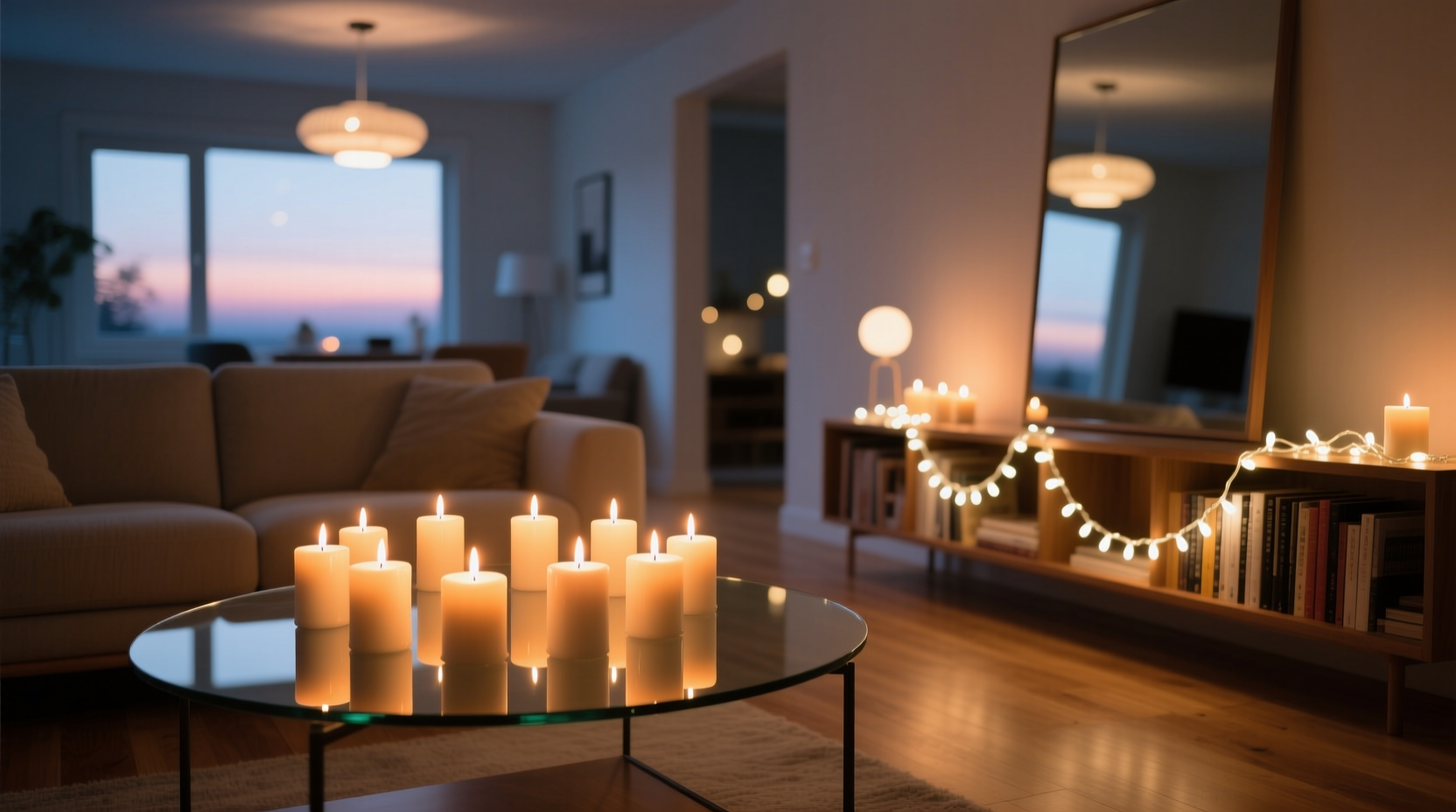
Ambiance is more than brightness—it's the emotional resonance of a space. It’s shaped by color temperature, light distribution, movement, and even scent. Warm lighting (between 2700K and 3000K) typically creates comfort, while flickering effects mimic firelight and evoke relaxation. The placement and type of lighting fixtures influence perception: overhead lights feel institutional; ambient sources like candles and string lights feel personal.
Flameless candles replicate the gentle, localized glow of real wax candles, often with flicker simulations powered by LEDs. String lights—also known as fairy or twinkle lights—consist of small bulbs spaced evenly along a wire, designed to illuminate larger areas with diffuse sparkle.
The question isn’t which is “better” universally, but rather which performs better under specific conditions. A dining table may benefit from the intimacy of candlelight, while a patio might thrive with the expansive charm of draped string lights.
Visual Impact and Mood: Flicker vs. Glow
The psychological effect of lighting plays a critical role in ambiance. Flameless candles excel at producing a focused, intimate atmosphere. Their single-point emission mimics natural flame behavior, casting soft shadows and drawing attention inward. This makes them ideal for spaces meant for conversation, romance, or contemplation—like dinner tables, bathtubs, or bedside shelves.
String lights, by contrast, spread light across surfaces. When hung along walls, ceilings, or railings, they add dimension and whimsy. They’re excellent for festive occasions—think holiday decor, weddings, or garden parties—where the goal is enchantment rather than intimacy.
However, not all string lights are equal. Warm white LEDs (2700K–3000K) enhance coziness, while cool whites (4000K+) can feel clinical. Similarly, larger bulb spacing reduces continuity, making the light appear fragmented. Miniature incandescent-style bulbs tend to feel cozier than modern LED strips with rigid spacing.
“Flickering light has been shown to reduce stress hormones and increase feelings of safety. That’s why candle-like sources feel inherently calming.” — Dr. Lena Torres, Environmental Psychologist
Safety and Practicality: Why Risk Matters
Safety is a decisive factor, especially in homes with children, pets, or flammable materials. Real candles pose fire risks and emit soot, but flameless versions eliminate these concerns entirely. Powered by batteries or USB, they generate no heat and can be left unattended safely. Many models include timers and remote controls, enhancing convenience.
String lights, while generally safe, can overheat if poorly made or covered by fabric. Cheaply manufactured sets may have exposed wiring or non-UL-certified components. Overloading circuits with multiple strands also increases risk. However, high-quality, low-voltage LED string lights used within specifications are very safe.
For long-term installations—such as in a nursery, closet, or near curtains—flameless candles are often the wiser choice due to zero heat output and minimal electrical load. String lights work best when mounted securely away from combustibles and turned off when not needed.
| Feature | Flameless Candles | String Lights |
|---|---|---|
| Heat Emission | Negligible | Low (LED), Moderate (incandescent) |
| Fire Risk | None | Low (if certified and maintained) |
| Battery Life | Up to 500 hours (varies) | Depends on strand length and power source |
| Indoor/Outdoor Use | Limited (unless rated) | Many models weather-resistant |
| Maintenance | Replace batteries occasionally | Check connections, avoid tangling |
Versatility Across Spaces and Occasions
The adaptability of each lighting option depends on context. Flameless candles shine in controlled environments where focus and subtlety matter. They blend seamlessly into traditional, minimalist, or rustic interiors. Tapered versions fit candelabras; pillar styles anchor centerpieces; tea lights float in bowls or line mantels.
String lights dominate in expansive or decorative applications. They transform blank walls into features, outline windows, drape over pergolas, or coil inside glass jars for DIY lanterns. Their strength lies in coverage—they turn entire rooms or outdoor zones into immersive experiences.
Consider a real-world example: A small urban café wanted to boost evening appeal. Initially, they added string lights above tables, but customers reported glare and distraction. After switching to flameless candles on each table and using string lights only along the ceiling perimeter, reservations increased by 30% in two months. Patrons cited the “warmer, quieter” environment as a key reason for returning.
When to Choose Flameless Candles
- Dining areas needing intimate focus
- Bathrooms or bedrooms where safety is paramount
- Spaces with limited electrical access (battery-powered models)
- Minimalist interiors that favor clean lines and subtle detail
- Areas requiring continuous, unattended lighting
When to Choose String Lights
- Outdoor patios, balconies, or gardens
- Event spaces like weddings or parties
- Children’s rooms or play areas (with supervision)
- Loft ceilings or large living rooms needing visual interest
- Festive seasonal displays
Energy Efficiency and Long-Term Value
Both options are energy-efficient compared to incandescent bulbs, but differences exist. Most flameless candles use micro-LEDs drawing less than 0.5 watts per unit. A set of six running eight hours nightly consumes roughly 8.76 kWh annually—negligible on an electricity bill.
String lights vary widely. A 50-bulb LED strand uses about 4 watts; left on 12 hours daily, it adds around 17.5 kWh per year. Incandescent versions can use ten times more. While neither will spike utility costs significantly, flameless candles offer lower consumption per lumens delivered in targeted areas.
In terms of lifespan, quality flameless candles last 25,000+ hours. String lights range from 15,000 to 50,000 hours depending on build. However, string lights face higher physical wear—tangling, connector damage, exposure to elements—reducing effective longevity.
Initial cost favors string lights for broad coverage, but flameless candles provide better value when ambiance requires realism and precision.
Step-by-Step: How to Layer Lighting for Maximum Ambiance
Instead of choosing one over the other, many designers combine both for layered lighting. Follow this sequence to create a balanced, mood-enhancing environment:
- Assess the room’s purpose: Is it for relaxation, dining, entertaining, or display? Prioritize warmth and directionality accordingly.
- Start with base lighting: Use dimmable overheads or floor lamps to provide general illumination at 30–50% brightness.
- Add accent lighting: Place flameless candles on tables, shelves, or window sills to draw attention to textures and objects.
- Introduce ambient strings: Install warm-white string lights along edges—ceilings, mirrors, railings—to expand perceived space.
- Test and adjust: Turn off main lights at night. Walk through the space. Are there dark corners? Is any area too bright? Refine placement.
- Incorporate controls: Use timers or smart plugs to automate on/off cycles, ensuring consistency and saving energy.
This method ensures no single source dominates, creating a dynamic yet harmonious atmosphere.
Mini Case Study: A Bedroom Transformation
Sarah, a graphic designer in Portland, struggled with insomnia. Her bedroom had harsh recessed lighting and no secondary sources. She replaced overheads with dimmable LEDs and introduced three elements:
- Two flameless taper candles on her nightstand (with flicker mode)
- A curtain of warm-white string lights behind the headboard
- A motion-sensor path light near the bathroom door
Within a week, she reported falling asleep faster and waking less frequently. The flickering candlelight triggered relaxation cues, while the soft backlighting eliminated disorienting darkness. By combining both lighting types strategically, she achieved both function and mood.
FAQ
Can flameless candles look realistic?
Yes—high-end models use holographic inserts, multi-directional LEDs, and advanced flicker algorithms to mimic real flames. Look for brands that specify \"realistic flicker\" or \"3D flame effect.\" Avoid cheap plastic versions with steady glows.
Are string lights suitable for everyday home use?
Absolutely, if chosen carefully. Opt for warm-white, low-lumen LED sets with durable wiring. Install them permanently in areas like alcoves, behind furniture, or along staircases. Avoid temporary clips or adhesive mounts for long-term setups.
Which is better for a wedding?
Use both. Flameless candles on tables create romantic intimacy during dinner. String lights suspended above guests enhance photo opportunities and general cheer. Together, they deliver a fully immersive experience without fire risk.
Checklist: Choosing the Right Option for Your Needs
- ✅ Define the primary purpose: intimacy, decoration, or utility?
- ✅ Measure the space: Do you need wide coverage or pinpoint glow?
- ✅ Check safety requirements: Children, pets, or flammable materials nearby?
- ✅ Consider installation: Permanent or temporary? Access to outlets?
- ✅ Evaluate maintenance: Can you replace batteries? Will cords be visible?
- ✅ Test color temperature: Always choose warm white (2700K–3000K) for ambiance.
- ✅ Think long-term: Will this fit future decor changes?
Conclusion: Harmony Over Hierarchy
The debate between flameless candles and string lights isn’t about superiority—it’s about alignment with intent. Flameless candles offer unmatched intimacy, safety, and realism for close-proximity settings. String lights provide scale, magic, and flexibility for larger or more decorative applications.
Ultimately, the most compelling ambiances arise not from choosing one, but from integrating both thoughtfully. A dining room with flickering faux candles gains depth from softly glowing string lights above. A bedroom feels sanctuary-like when bedside warmth meets overhead starlight.
Lighting shapes how we feel in our spaces. By understanding the unique strengths of each option, you gain the power to craft environments that soothe, inspire, and welcome.




 浙公网安备
33010002000092号
浙公网安备
33010002000092号 浙B2-20120091-4
Comments
No comments yet. Why don't you start the discussion?