
Coasters are one of those small household items that often go unnoticed—until a water ring ruins your favorite wooden table. While they seem simple, not all coasters perform equally. Many people assume any coaster will do, but the truth is, flimsy options may offer little more than decoration. On the other hand, thick, well-made coasters can significantly extend the life of your furniture. The real question isn’t just about thickness—it’s about matching the right coaster to the right situation.
Why Thickness Matters: The Science Behind Protection
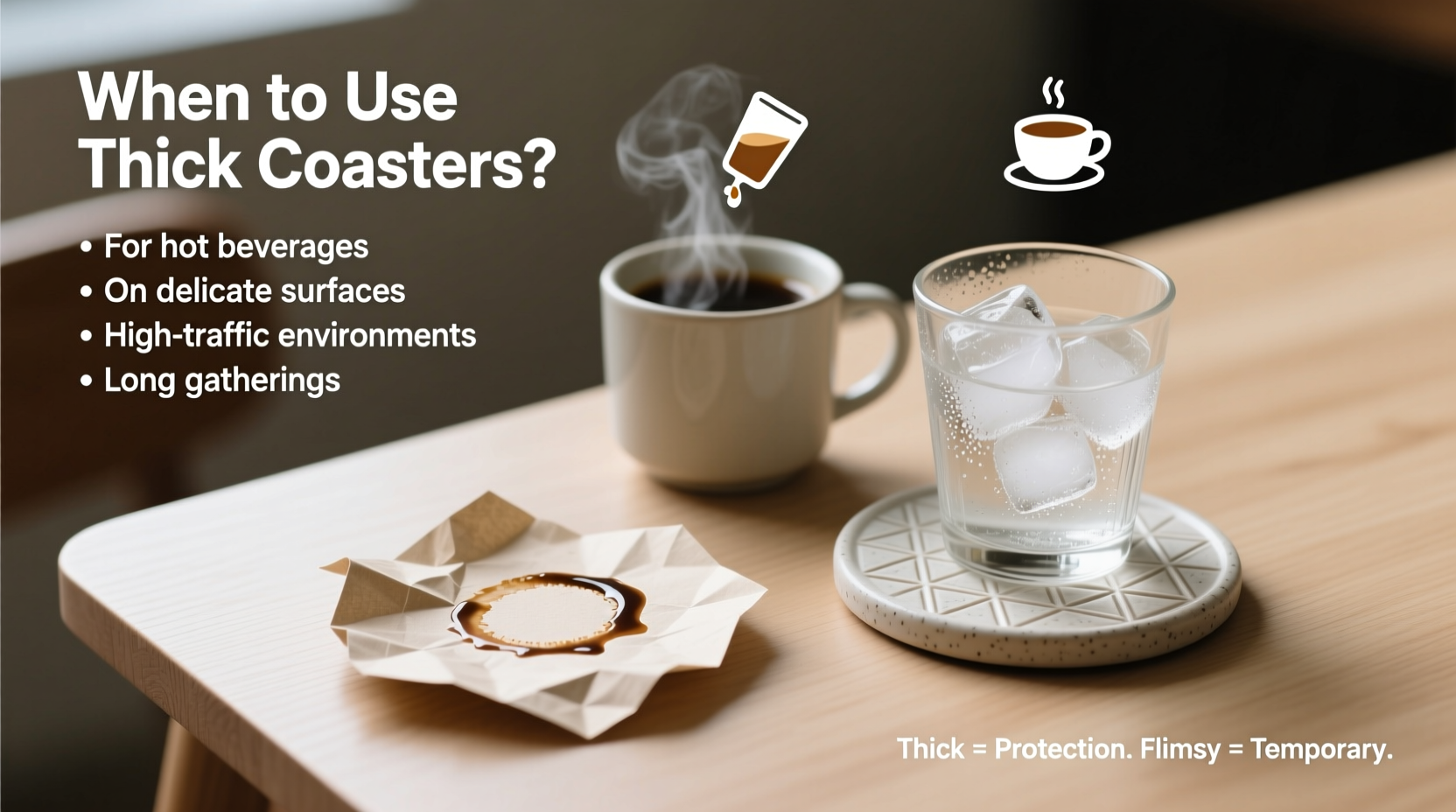
At their core, coasters serve two primary functions: absorb moisture and insulate surfaces from temperature changes. Thin or flimsy coasters often fail at both. A coaster with minimal thickness lacks sufficient material to wick away condensation effectively. When a cold glass sits on a thin paper or plastic coaster, moisture quickly seeps through, especially if the coaster isn’t designed with absorbent layers.
Thicker coasters, particularly those made from cork, felt, stone, or layered composites, provide better insulation. They create a physical buffer between the glass and the surface, reducing thermal transfer. This prevents wood from warping due to rapid temperature shifts and minimizes the risk of condensation pooling under the glass.
“Most damage from drinkware comes not from spills, but from repeated exposure to moisture and heat. A 2mm cork coaster simply can’t compete with a 6mm composite in terms of long-term protection.” — Daniel Reeves, Furniture Preservation Specialist
When Flimsy Coasters Are Acceptable (Yes, Really)
Despite their limitations, flimsy coasters aren’t entirely without merit. There are specific scenarios where they make sense:
- Short-term use: If you’re hosting a party and need disposable coasters for quick turnover, paper or thin cardboard options are practical and cost-effective.
- Decorative purposes: In low-traffic areas or during photo shoots, aesthetic appeal might outweigh function. Printed or embossed paper coasters add flair without needing durability.
- Travel or portability: Lightweight silicone or foldable fabric coasters are ideal for picnics or outdoor use where bulkiness is a drawback.
- Non-porous surfaces: On sealed granite, tile, or metal tables, moisture absorption is less of a concern, making thinner options viable.
Where Thick Coasters Deliver Real Value
In high-use or high-risk environments, investing in thick, durable coasters pays off. Consider these situations:
- Dining rooms with wooden tables: Solid wood is highly susceptible to water rings and heat marks. A 5–8mm cork or felt-bottomed coaster provides the necessary barrier.
- Living room side tables: Often made of lacquered wood or veneer, these surfaces degrade faster under repeated moisture exposure. Dense materials like travertine or ceramic coasters offer superior protection.
- Home bars or entertainment centers: Frequent use means constant exposure to condensation. Stackable, heavy-duty coasters ensure consistent defense.
- Households with children or frequent guests: Spills and forgotten glasses are inevitable. Thicker coasters are more forgiving and easier to clean.
Material Comparison: What Works Best?
| Material | Typical Thickness | Marks Against | Best For |
|---|---|---|---|
| Paper/Cardboard | 0.5–1.5mm | Moisture, Reuse | Parties, Short-term Use |
| Silicone | 2–4mm | Heat Retention | Outdoor Use, Travel |
| Cork | 4–8mm | Staining, Long Soaks | Wooden Tables, Daily Use |
| Felt (with backing) | 3–6mm | Wear Over Time | Delicate Finishes, Heat Protection |
| Stone (Travertine, Marble) | 6–10mm | Weight, Cost | Permanent Placement, High-End Furniture |
Mini Case Study: The Weekend Guest Disaster
Julia hosted a dinner party in her newly furnished dining room, proud of her reclaimed oak table. She used decorative paper coasters she’d ordered online—thin, stylish, and inexpensive. By the end of the night, three guests had left full wine glasses unattended for over an hour. The next morning, Julia discovered four distinct white rings on the wood surface. A furniture restorer later confirmed the damage was caused by prolonged moisture seepage through the inadequate coasters. “They looked nice,” she admitted, “but they didn’t do anything.” After replacing the coasters with 6mm natural cork versions, she hasn’t had a single incident in over a year—even during weekly family dinners.
Step-by-Step Guide: Choosing the Right Coaster for Your Needs
Selecting the ideal coaster isn’t just about thickness—it’s about alignment with your lifestyle and environment. Follow this process:
- Assess your furniture type: Is it porous wood, sealed laminate, or stone? Porous materials demand higher protection.
- Evaluate frequency of use: Daily dining tables need durability; accent tables may only require occasional coverage.
- Consider drink types: Iced beverages produce more condensation; hot drinks require heat resistance.
- Check maintenance preferences: Stone coasters last longer but are harder to clean. Cork needs occasional wiping but is naturally antimicrobial.
- Budget accordingly: Spend more on coasters for high-value furniture. A $20 set can prevent hundreds in refinishing costs.
Common Myths About Coasters Debunked
- Myth: Any coaster stops water damage. Reality: Thin materials saturate quickly. Once soaked, they transfer moisture directly to the surface.
- Myth: All cork is the same. Reality: Higher-density cork resists compression and absorbs better. Cheap cork crumbles after months of use.
- Myth: You don’t need coasters on modern finishes. Reality: Even polyurethane-coated wood can develop hazing or cloudiness from trapped moisture over time.
FAQ
Do coasters really make a difference on wood tables?
Yes. Studies show that consistent use of effective coasters reduces visible surface damage by up to 70% over a two-year period. The key is using coasters thick enough to absorb and insulate, not just sit decoratively.
Can I reuse flimsy coasters?
Rarely. Paper and thin plastic coasters lose integrity after one use. Once damp, they become breeding grounds for mildew and are prone to tearing. For sustainability, opt for washable silicone or cork instead.
How thick should a coaster be for daily use?
For reliable protection on wooden furniture, aim for at least 4mm. Ideal range is 5–8mm, depending on material. Below 3mm, effectiveness drops sharply, especially with cold or sweating drinks.
Final Checklist: Are Your Coasters Up to the Task?
- ✅ At least 4mm thick for regular indoor use
- ✅ Made from absorbent or insulating material (cork, felt, stone)
- ✅ Sized appropriately (minimum 3.5 inches in diameter)
- ✅ Easy to clean or replace
- ✅ Used consistently—not just for guests
Conclusion
Flimsy coasters aren’t inherently pointless—they have niche applications where convenience or aesthetics take priority. But when it comes to preserving your furniture, especially valuable or frequently used pieces, thickness and material quality are non-negotiable. Thick coasters act as a first line of defense against everyday wear, preventing costly refinishing or replacement down the line. The small investment in durable, functional coasters pays dividends in longevity and peace of mind.




 浙公网安备
33010002000092号
浙公网安备
33010002000092号 浙B2-20120091-4
Comments
No comments yet. Why don't you start the discussion?