
Jade face rollers have become a staple in modern skincare routines, gracing bathroom counters and Instagram feeds alike. Marketed as tools for reducing puffiness, improving circulation, and enhancing product absorption, their popularity has surged over the past decade. But behind the glossy aesthetics and celebrity endorsements lies a critical question: Are these cool stone rollers truly effective, or are their benefits little more than a placebo effect amplified by savvy marketing?
To answer this, we need to separate anecdotal claims from clinical evidence, understand the mechanisms they claim to influence, and assess whether there's real dermatological merit behind the ritual.
The Origins and Claims of Jade Face Rollers
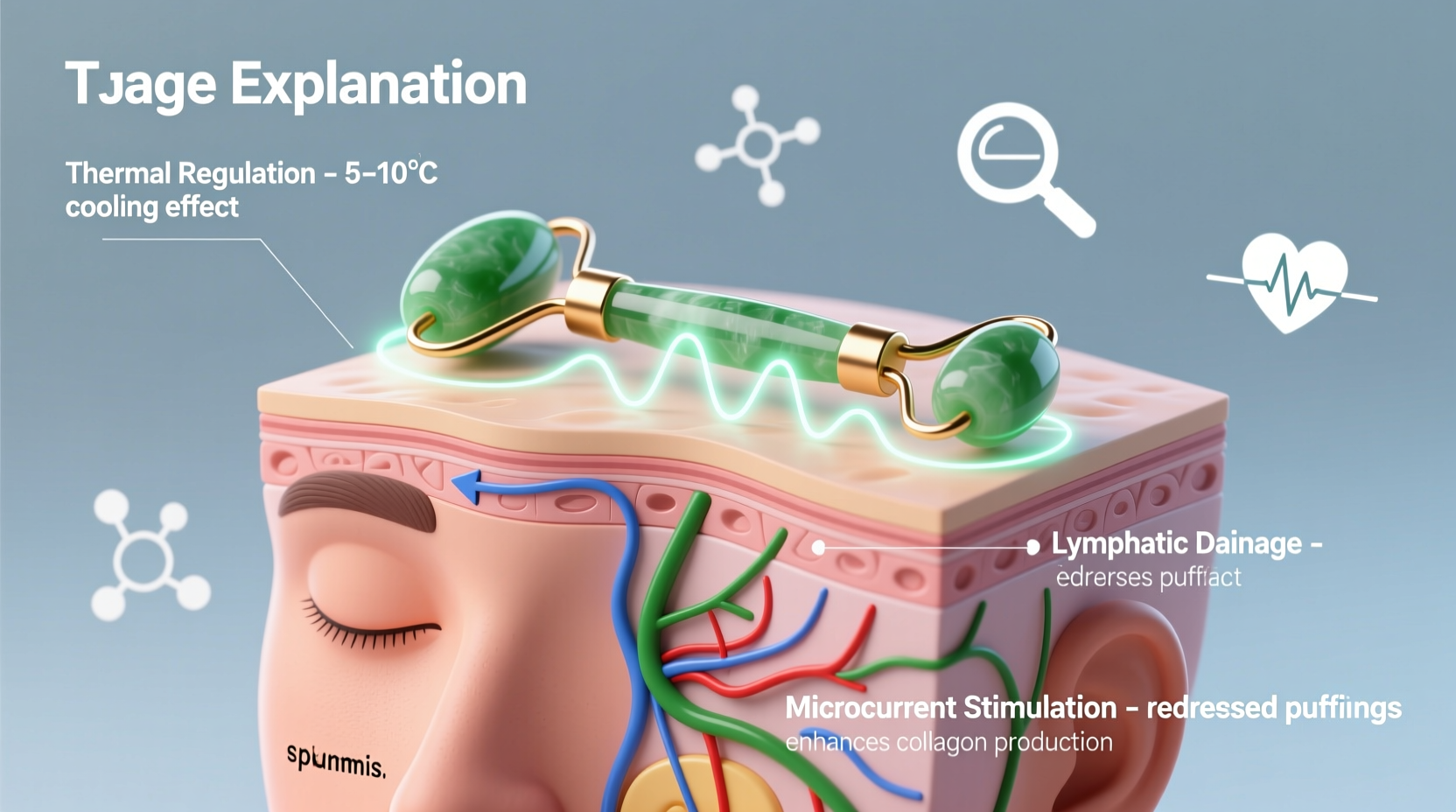
Jade face rollers trace their roots to traditional Chinese medicine (TCM), where jade has long been associated with healing, balance, and longevity. Historically, jade was believed to carry protective and restorative energy, and facial rolling was thought to promote the flow of \"qi\" (life force) through the body’s meridians. While TCM principles are not always testable by Western scientific standards, modern users often cite more tangible benefits such as reduced facial swelling, improved skin tone, and relaxation.
Today’s marketed benefits include:
- Reducing under-eye puffiness and morning facial swelling
- Improving lymphatic drainage
- Enhancing blood circulation for a “glow”
- Aiding in deeper absorption of serums and moisturizers
- Toning facial muscles and minimizing fine lines
- Providing a calming, meditative self-care experience
These claims sound promising, but how many hold up under scientific scrutiny?
What Does the Science Say?
Direct, peer-reviewed studies on jade face rollers specifically are nearly nonexistent. However, research into related concepts—such as facial massage, lymphatic drainage, and microcirculation—can offer insight.
A 2018 study published in *Journal of Cosmetic Dermatology* found that manual facial massage significantly reduced facial edema (swelling) and improved skin elasticity after four weeks of daily use. Another small-scale trial noted temporary improvements in facial contour and reduced under-eye bags following consistent lymphatic drainage techniques. These findings suggest that the mechanical action of rolling—not necessarily the material of the roller—may contribute to visible short-term effects.
Lymphatic drainage, one of the most cited benefits, involves gently stimulating the lymph system to remove excess fluid and toxins. The face contains a dense network of lymph vessels, particularly around the eyes, jawline, and neck. When pressure is applied correctly, fluid can be redirected toward lymph nodes, potentially reducing puffiness. This process is well-documented in medical settings for post-surgical recovery, though cosmetic applications remain less rigorously studied.
“While there’s no magic in the jade itself, the physical act of facial rolling can stimulate circulation and lymph flow, which may temporarily improve appearance.” — Dr. Lena Patel, Board-Certified Dermatologist
However, no clinical trials have demonstrated that jade outperforms other materials like stainless steel, rose quartz, or even silicone when used for the same purpose. The cooling sensation often attributed to jade is simply due to its high thermal mass—it retains room temperature longer than skin, creating a brief firming effect similar to pressing a cold spoon under the eyes.
Placebo vs. Physiological Effects: Where’s the Line?
The placebo effect plays a significant role in skincare. When a ritual feels indulgent, looks elegant, and is endorsed by influencers, users are more likely to perceive improvements—even if objective changes are minimal.
That said, perception isn’t irrelevant. The psychological benefits of a consistent, mindful skincare routine are well documented. Taking time each day to engage in self-care can reduce stress, lower cortisol levels, and indirectly benefit skin health. In this context, the jade roller may function as a psychological anchor—a tactile cue that signals relaxation and personal attention.
Still, it’s important to distinguish between subjective feelings (“my skin looks brighter”) and measurable outcomes (“reduced wrinkle depth” or “improved barrier function”). A 2020 review in *Clinical, Cosmetic and Investigational Dermatology* concluded that while facial tools may enhance user compliance with skincare regimens, they do not independently reverse aging or treat dermatological conditions.
Comparative Analysis: Jade vs. Other Materials and Tools
Not all facial rollers are made equal—nor are they made of the same materials. Below is a comparison of common roller types based on functionality, durability, and scientific backing.
| Material | Cooling Effect | Durability | Scientific Support | Cost Range |
|---|---|---|---|---|
| Jade | Moderate (retains coolness) | Low-Medium (prone to cracking) | Low (no unique benefits) | $15–$60 |
| Rose Quartz | Moderate | Medium | Low (same mechanism as jade) | $20–$70 |
| Stainless Steel | High (conducts temperature well) | High | Medium (used in professional lymphatic therapy) | $30–$100 |
| Silicone (electric) | Low (unless refrigerated) | Medium | Medium-High (some FDA-cleared devices) | $50–$200 |
As the table shows, metal rollers—particularly those used in clinical facial massage—have stronger support due to their precision and ability to maintain temperature. Some dermatologists even recommend chilled stainless steel tools for post-procedure care to minimize inflammation.
A Real-World Example: One Month of Consistent Use
Sophia, a 34-year-old graphic designer from Portland, began using a jade roller every morning after noticing persistent puffiness around her eyes. She followed a standard protocol: cleansing her face, applying a hydrating serum, and rolling upward from her collarbones to her forehead for five minutes.
After four weeks, she reported reduced morning swelling and a firmer feel to her skin. Her partner also noticed she “looked more awake.” However, when she paused use during a two-week vacation, the puffiness returned—though not worse than before.
When shown photos taken before and after by a dermatologist, no structural changes were detected. The doctor noted mild improvement in skin tautness, likely due to increased circulation, but emphasized that results were temporary and required ongoing use. Sophia concluded that while the roller wasn’t a miracle tool, it added value to her routine through consistency and mindfulness.
How to Use a Jade Roller Effectively: A Step-by-Step Guide
If you choose to incorporate a jade roller into your regimen, technique matters more than the tool itself. Follow this evidence-informed sequence for optimal results:
- Start with clean skin – Remove makeup and cleanse thoroughly to prevent pushing dirt into pores.
- Apply a slippery base – Use a serum, oil, or gel to reduce friction. Hyaluronic acid or facial oils work best.
- Begin at the center of the face – Start under the chin and roll outward along the jawline toward the lymph nodes near the ears.
- Move upward along the cheeks – Use gentle pressure from the nose to the ears, repeating 3–5 times per side.
- Tackle under-eye area carefully – Use the smaller end and glide from the inner corner outward. Avoid pulling delicate skin.
- Finish on the forehead – Roll from the center outward, then upward from eyebrows to hairline.
- Clean the roller after each use – Wipe with a soft cloth and mild soap; avoid soaking to prevent cracking.
Common Misconceptions and Myths
Despite their popularity, several myths persist about jade rollers:
- Myth: Jade emits healing energy. There is no scientific evidence that minerals like jade influence skin biology through “energy vibrations.” Any benefit comes from physical stimulation, not metaphysical properties.
- Myth: They replace professional treatments. Jade rollers cannot substitute for procedures like microneedling, radiofrequency, or injectables. At best, they complement them.
- Myth: Results are permanent. Any de-puffing or glow is transient, lasting only hours. Long-term changes require lifestyle factors like hydration, sleep, and sun protection.
- Myth: All rollers are created equal. Poorly balanced or hollow rollers may apply uneven pressure, reducing effectiveness and risking irritation.
Frequently Asked Questions
Can jade rollers really reduce wrinkles?
No credible evidence supports that jade rollers reduce wrinkles or reverse aging. While improved circulation may give a temporary plump appearance, they do not stimulate collagen production like retinoids or laser treatments. Any anti-aging benefit is indirect and minor.
How often should I use a jade roller?
Daily use is safe and potentially beneficial, especially in the morning to combat fluid retention. Two to five minutes per session is sufficient. Overuse or excessive pressure can irritate the skin or damage capillaries.
Are there any risks involved?
Risks are minimal but include skin irritation from unclean rollers or aggressive rolling. Those with active acne, rosacea, or broken capillaries should use caution. Always sanitize your roller and avoid pressing hard on inflamed areas.
Final Verdict: Science or Placebo?
The truth lies somewhere in between. Jade face rollers are not magical elixirs carved from mystical stone, nor are they entirely without merit. The physiological effects—primarily temporary reduction in puffiness and mild increase in circulation—are supported by limited but plausible evidence. The method of action (facial massage) has documented benefits, even if the material (jade) does not add unique value.
In essence, the roller is a delivery mechanism for a beneficial practice. You could achieve similar results with your fingertips, a chilled spoon, or a medically designed tool—often at lower cost and with greater durability.
Yet, dismissing jade rollers as “pure placebo” overlooks their role in promoting consistent self-care. For many, the ritual fosters mindfulness, improves skincare adherence, and provides a moment of calm in a hectic day. These psychological benefits, while intangible, are still meaningful.
Conclusion: Use It Wisely, Not Wonderfully
Jade face rollers aren’t a scam, but they’re also not a cure-all. Their power lies not in the stone, but in the practice. If you enjoy using one and notice your skin looks refreshed afterward, continue—but keep expectations realistic. Pair it with proven skincare fundamentals: sunscreen, antioxidants, proper hydration, and a healthy lifestyle.
Whether you keep your jade roller on the vanity or pass on the trend, remember that glowing skin comes from consistent habits, not trendy tools. But if rolling brings you joy, relaxation, and a few extra seconds of presence each day, that might be worth its weight in stone.




 浙公网安备
33010002000092号
浙公网安备
33010002000092号 浙B2-20120091-4
Comments
No comments yet. Why don't you start the discussion?