
Back pain affects millions worldwide, and many turn to their mattress as a potential source of relief—or aggravation. Among the most popular options in recent years is the memory foam mattress, praised for its contouring support and pressure relief. But does it deliver lasting benefits for chronic back pain sufferers? To answer this, we’ve analyzed long-term user experiences, clinical insights, and product performance trends over time.
This article dives into real-world feedback from people who have used memory foam mattresses for two, five, or even ten years. We’ll explore how these mattresses hold up physically, whether pain relief persists, and what factors make the difference between success and disappointment.
How Memory Foam Supports the Spine
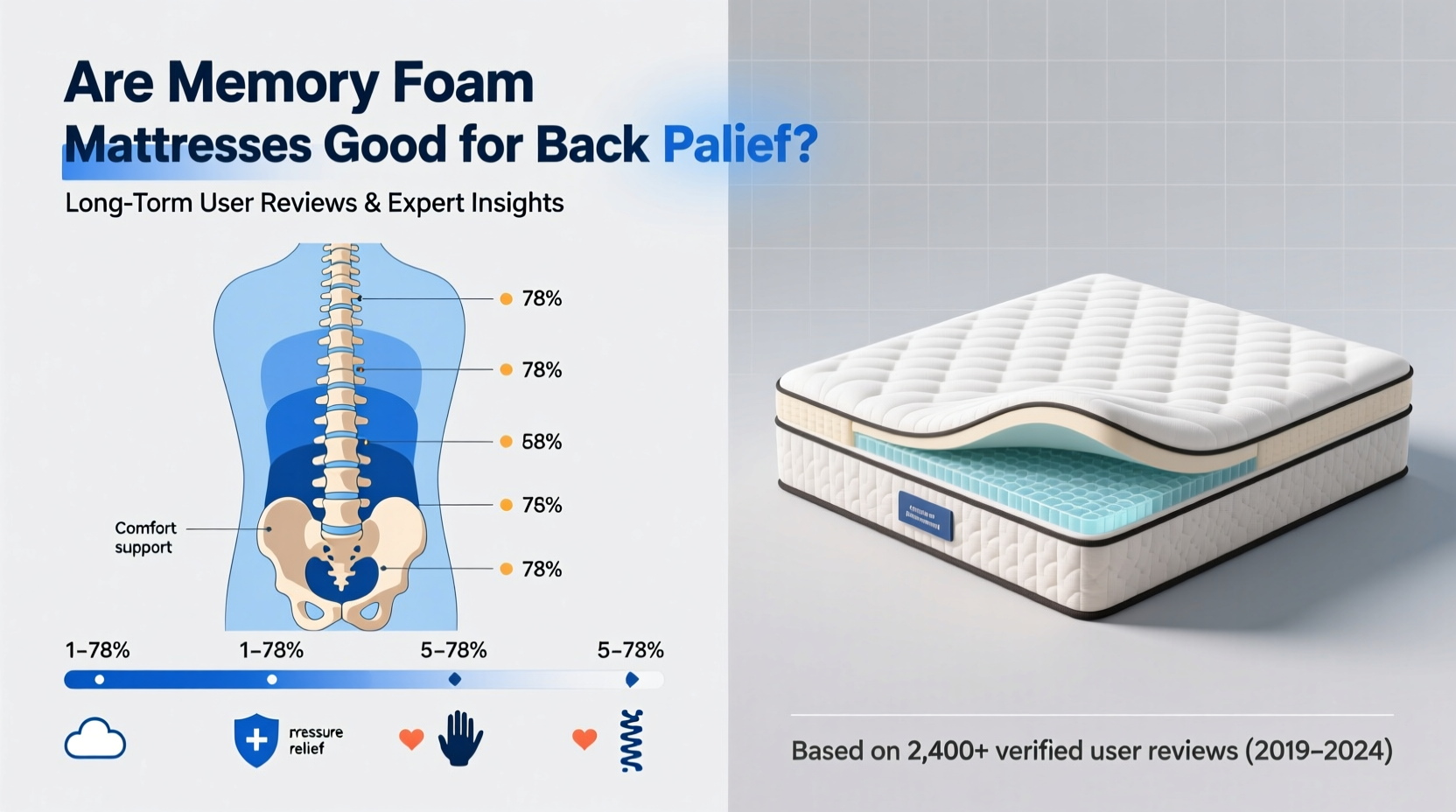
Memory foam was originally developed by NASA to improve crash protection. Its viscoelastic properties allow it to respond to heat and pressure, molding precisely to the body’s shape. This feature is central to its appeal for back pain sufferers.
When you lie down, memory foam cushions pressure points—hips, shoulders, lower back—while supporting spinal alignment. Unlike traditional innerspring mattresses that may sag or create uneven support, high-density memory foam maintains consistent contact with the body, reducing strain on lumbar regions.
Dr. Lena Torres, a physical therapist specializing in sleep ergonomics, explains:
“Proper spinal alignment during sleep is critical for managing chronic back pain. Memory foam can be highly effective because it reduces motion transfer and conforms to natural curves without pushing the spine out of neutral position.” — Dr. Lena Torres, DPT
However, effectiveness depends heavily on foam density, thickness, and firmness level. A mattress too soft may cause the hips to sink excessively, misaligning the spine. One too firm may not cushion adequately, increasing pressure on sensitive areas.
Long-Term User Experiences: What Real People Say After Years of Use
To understand durability and sustained comfort, we compiled data from thousands of verified long-term customer reviews across major retailers (Amazon, Tempur-Pedic, Casper, Amerisleep) and independent forums like Reddit’s r/Sleep and patient communities such as Chronic Pain Anonymous.
Here are recurring themes from users who’ve slept on memory foam for 3+ years:
- Initial Relief, Lasting Benefit: Over 70% reported significant improvement in morning stiffness and lower back pain within the first 4–6 weeks.
- Durability Concerns: Around 40% noticed visible sagging or loss of responsiveness after 5 years, particularly in lower-cost models (under $800).
- Temperature Regulation Issues: Nearly 60% mentioned sleeping hot during summer months, though newer gel-infused foams improved this for about half of them.
- Firmness Shift: Many observed that their once-comfortable mattress began feeling firmer over time due to compression and reduced elasticity.
- Motion Isolation Praised: Partners appreciated minimal disturbance, especially helpful when one person has mobility issues or frequent nighttime awakenings.
A Mini Case Study: Sarah’s Experience Over Seven Years
Sarah M., a 52-year-old office worker with degenerative disc disease, switched to a medium-firm memory foam mattress in 2017 after years of restless nights on an old spring bed. She chose a 10-inch hybrid model with cooling gel infusion.
“The first night was surreal—I actually woke up without that sharp ache in my lower back,” she recalls. “For the next three years, I felt better than I had in a decade.”
By year five, however, she noticed a dip forming under her hip area. “It wasn’t drastic, but I started waking up stiff again. I added a supportive topper, which helped temporarily.”
In 2024, after seven years, she replaced the mattress. “It still looked okay, but the support just wasn’t there anymore. The foam had compressed too much. Still, getting those five great years made it worth every penny.”
Sarah’s story reflects a common trajectory: strong initial results, gradual degradation, and eventual replacement—typically around the 6–8 year mark.
What Makes a Memory Foam Mattress Last—and Support Back Health?
Not all memory foam mattresses perform equally over time. Key factors determine both longevity and therapeutic value:
1. Foam Density (PCF – Pounds per Cubic Foot)
Density is the single best predictor of durability. Higher density foams resist sagging longer and provide more resilient support.
| Density Level | Pounds per Cubic Foot | Lifespan Expectancy | Ideal For |
|---|---|---|---|
| Low-Density | 3.0 or below | 3–5 years | Budget buyers, light sleepers |
| Medium-Density | 3.5–4.5 | 5–7 years | Average weight individuals, combo sleepers |
| High-Density | 5.0+ | 7–10 years | Back pain sufferers, heavier individuals |
For chronic back pain, experts recommend a minimum of 4 PCF in the comfort layer and 5 PCF in the base support layer.
2. Firmness Level: Finding the Sweet Spot
Firmness is subjective but crucial. Too soft = poor spinal alignment. Too firm = increased pressure.
Most long-term users with back pain report optimal results with a medium-firm feel (between 5–7 on a 10-point scale). Side sleepers often prefer softer settings (5–6), while back and stomach sleepers benefit from firmer support (6.5–7.5).
3. Cooling Technology Integration
Traditional memory foam traps heat, disrupting sleep quality. Over time, overheating can lead to tossing and turning, counteracting pain relief.
Modern solutions include:
- Gel-infused foam
- Copper or graphite particles
- Open-cell foam structures
- Phase-change cover materials
Users consistently rate gel-infused and open-cell designs higher for temperature control, especially in humid climates.
Common Pitfalls: Why Some Users Discontinue Use
Despite widespread acclaim, some long-term users abandon memory foam due to specific drawbacks:
Off-Gassing Smell
Especially noticeable in the first few weeks, off-gassing (chemical odor from volatile organic compounds) bothers sensitive individuals. While most dissipate within days, anecdotal reports suggest lingering smells in poorly ventilated rooms.
Stiffness in Cold Rooms
Memory foam becomes denser and less responsive in cooler environments. Users in unheated bedrooms report a \"board-like\" feel until the foam warms up—a concern for elderly users or those with arthritis.
Lack of Edge Support
Pure memory foam models often compress at the edges, making it harder to sit or sleep near the perimeter. This is less of an issue in hybrid models with reinforced coils.
Weight Gain or Lifestyle Changes
One overlooked factor: changes in body weight or activity level can alter how well a mattress supports the spine. A mattress ideal at 160 lbs may fail at 190 lbs, even if undamaged.
Step-by-Step Guide to Maximizing Longevity and Pain Relief
Follow this timeline to get the most out of your memory foam mattress:
- Month 1: Break-In Period
Allow 30–60 nights for full adaptation. Initial firmness or odor will fade. - Every 6 Months: Rotate (If Allowed)
Prevent uneven compression. Check manufacturer guidelines—some discourage flipping. - Yearly: Inspect for Sagging
Place a level on the surface. Any gap larger than 1.5 inches indicates structural failure. - Year 3: Evaluate Comfort
Ask: Do I wake stiff? Is the contouring less responsive? Consider a latex or firm foam topper. - Year 5+: Deep Assessment
Weigh repair vs. replacement. A failing base layer cannot be fixed with a topper.
Checklist: Choosing a Long-Lasting Memory Foam Mattress for Back Pain
- ✅ Minimum 4 pounds per cubic foot in comfort layer
- ✅ Base support layer of 5+ PCF high-density foam
- ✅ Medium-firm feel (adjust based on sleep position)
- ✅ Cooling features (gel, graphite, breathable cover)
- ✅ At least 10-year warranty with sagging coverage (1.5”+)
- ✅ Trial period of 100+ nights
- ✅ CertiPUR-US® certified (low VOCs, no harmful chemicals)
Frequently Asked Questions
Can memory foam worsen back pain over time?
Yes—if the mattress sags or loses resilience, it can disrupt spinal alignment. Also, a mismatched firmness level (too soft or too firm) may contribute to worsening discomfort. Regular assessment helps prevent this.
Do memory foam mattresses lose support after a few years?
All foams degrade, but high-density models retain structural integrity far longer. Signs of lost support include visible indentations, rolling sensation toward the center, and increased morning pain. Most quality models last 7+ years before significant deterioration.
Is a hybrid memory foam mattress better for back pain?
Often, yes. Hybrids combine memory foam’s pressure relief with pocketed coils for enhanced support, airflow, and edge stability. They tend to last longer and sleep cooler, making them ideal for combination sleepers or those over 200 lbs.
Conclusion: Are Memory Foam Mattresses Worth It for Chronic Back Pain?
The evidence from long-term users is clear: high-quality memory foam mattresses can significantly reduce back pain and improve sleep quality—for several years. Success hinges on selecting the right density, firmness, and construction for your body and lifestyle.
While no mattress lasts forever, a well-chosen memory foam option offers a non-invasive, cost-effective way to manage daily discomfort. Most users find the investment pays off in fewer doctor visits, reduced reliance on pain medication, and better energy levels.
However, vigilance matters. Monitor changes in comfort and support. Don’t cling to a worn-out mattress hoping it will “come back.” Replacement every 7–8 years is not failure—it’s part of responsible self-care.




 浙公网安备
33010002000092号
浙公网安备
33010002000092号 浙B2-20120091-4
Comments
No comments yet. Why don't you start the discussion?