
For millions of workers—from retail staff and nurses to chefs and factory employees—spending long hours on their feet is part of the daily routine. The right footwear can make the difference between ending the day with manageable fatigue or debilitating foot and joint pain. Memory foam slippers have gained popularity in recent years as a go-to option for home comfort, but can they truly support someone who stands for 8, 10, or even 12 hours straight? This article dives deep into the science, ergonomics, and real-world performance of memory foam slippers in demanding work environments.
The Science Behind Memory Foam
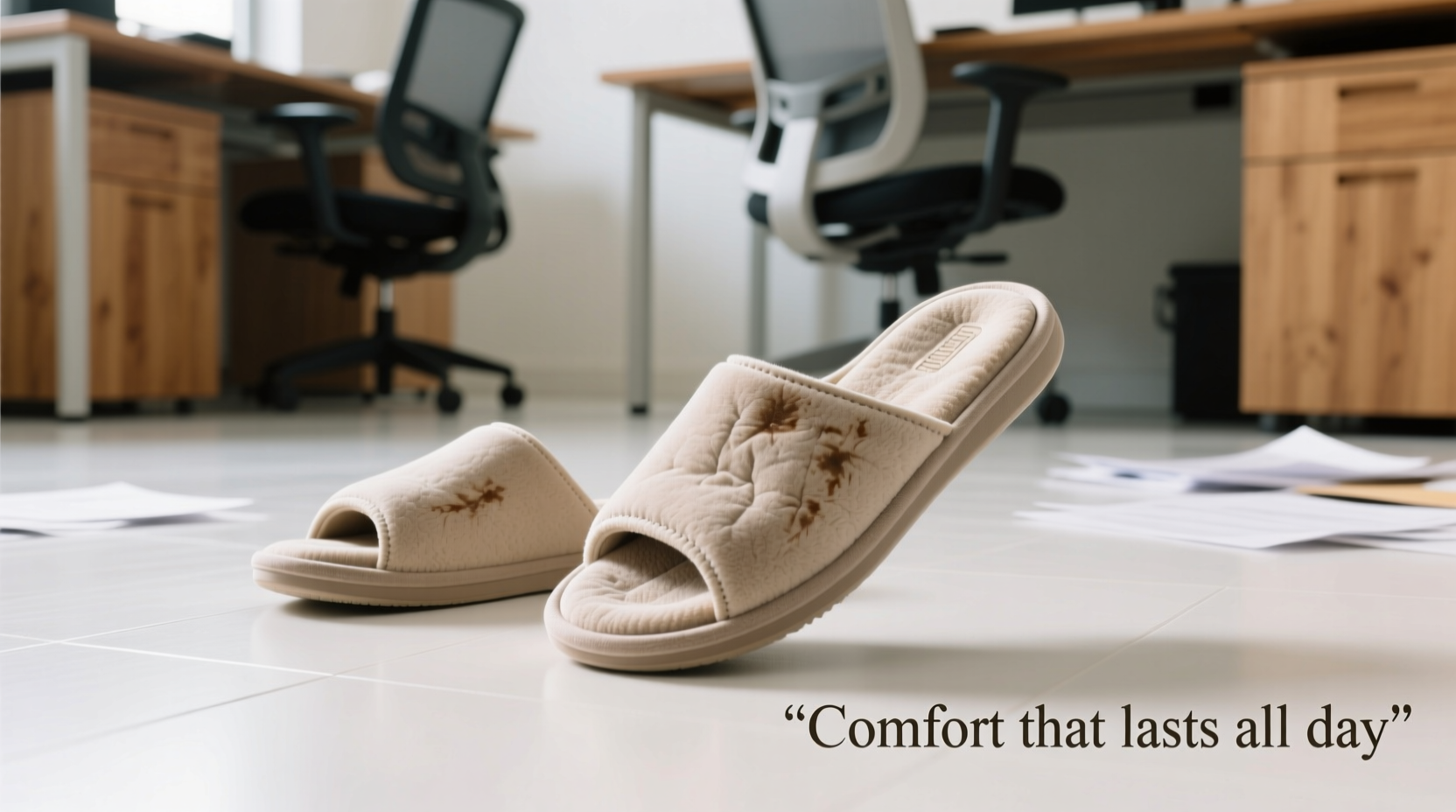
Memory foam, originally developed by NASA in the 1970s to improve crash protection for aircraft seats, is known for its viscoelastic properties—meaning it responds to both pressure and heat. When weight is applied, the material softens and conforms precisely to the shape of the body, distributing pressure evenly across the contact surface. This reduces localized stress points, particularly in high-pressure zones like the heel and ball of the foot.
In slippers, memory foam is typically layered within the insole or midsole. As you stand or walk, the foam molds to your foot’s unique contours, offering personalized cushioning. However, this responsiveness comes with trade-offs. While memory foam excels at shock absorption, it may lack the structural support required for prolonged standing, especially on hard surfaces like concrete or tile.
One key limitation: memory foam tends to compress over time, particularly under continuous load. Unlike EVA (ethylene-vinyl acetate) or polyurethane foams used in athletic shoes, which rebound quickly, memory foam returns to its original shape more slowly. During extended wear, this delayed recovery can lead to a \"sinking\" sensation, reducing energy return and potentially increasing leg fatigue.
“While memory foam provides excellent initial comfort, it's not inherently designed for high-load, long-duration use. For all-day standing, look for hybrid constructions that pair memory foam with firmer support layers.” — Dr. Lena Peterson, Podiatrist and Foot Biomechanics Specialist
Benefits of Memory Foam Slippers for Standing Work
Despite limitations, memory foam slippers offer several advantages that make them appealing—even viable—for certain types of standing work:
- Immediate Comfort: The plush feel of memory foam offers instant relief from hard flooring, making it ideal for quick shifts or light-duty roles.
- Pressure Relief: By conforming to the foot, memory foam reduces pressure on sensitive areas such as the metatarsal heads and heels, which can help prevent calluses and plantar discomfort.
- Temperature Responsiveness: Because memory foam softens with body heat, it adapts throughout the day, enhancing comfort as circulation increases.
- Lightweight Design: Most memory foam slippers are significantly lighter than traditional work shoes, reducing overall foot strain.
- Easy Transition: For healthcare workers or others moving between sterile and non-sterile zones, slip-on memory foam models allow for quick changes without laces or buckles.
Critical Limitations for All-Day Use
Comfort alone doesn’t equate to suitability for occupational standing. Several structural and functional drawbacks limit the effectiveness of standard memory foam slippers in high-demand settings:
Lack of Arch Support: Most memory foam slippers are flat or minimally contoured. Without proper arch support, the foot tends to pronate (roll inward), leading to overuse of ligaments and tendons. Over time, this can contribute to conditions like plantar fasciitis or posterior tibial tendon dysfunction.
Poor Outsole Durability: Many memory foam slippers feature thin rubber or fabric outsoles not designed for abrasion resistance. On industrial or commercial floors, these wear down quickly, increasing slip risk and reducing stability.
Inadequate Heel Stability: A soft, unstructured heel cup fails to lock the foot in place, causing micro-movements that increase muscle fatigue and reduce balance—especially dangerous in wet or cluttered workspaces.
Heat Retention: Memory foam traps heat, which can cause excessive sweating and bacterial growth during long shifts. This is particularly problematic in environments where hygiene is critical.
When Memory Foam Falls Short: A Real Example
Sarah, a nurse at a regional hospital, switched to memory foam slippers during her 12-hour night shifts after experiencing discomfort from her rigid clogs. Initially, she loved the softness. But by week three, she began noticing sharp heel pain upon waking. A podiatrist diagnosed early-stage plantar fasciitis linked to inadequate arch support and excessive foot motion inside the slipper. Sarah returned to supportive nursing shoes and now uses memory foam slippers only during breaks or post-shift recovery.
Choosing the Right Memory Foam Slipper for Work
Not all memory foam slippers are created equal. Some premium models integrate features that bridge the gap between comfort and functionality. Here’s what to look for when selecting a pair suitable for extended standing:
- Dual-Layer Construction: Look for slippers that combine memory foam with a firmer base layer (such as EVA or latex) to prevent bottoming out and maintain shape over time.
- Contoured Insoles: True ergonomic design includes built-in arches, heel cups, and metatarsal pads—not just flat foam padding.
- Non-Slip Outsoles: Rubber soles with deep treads or slip-resistant ratings (e.g., ASTM F2913) are essential for safety in clinical, kitchen, or industrial environments.
- Breathable Uppers: Mesh panels or moisture-wicking fabrics help regulate temperature and reduce odor buildup.
- Rigid Heel Counters: A firm back stabilizes the heel and improves gait efficiency, reducing calf and lower back strain.
| Feature | Good for All-Day Standing | Avoid for Long Shifts |
|---|---|---|
| Arch Support | Yes – molded or removable orthotic-grade insole | No – flat foam only |
| Outsole Material | Rubber with slip-resistant tread | Fabric or thin foam |
| Foam Density | Medium-high (4–5 lb/cu ft) | Low-density (below 3 lb/cu ft) |
| Heel Structure | Enclosed with internal counter | Open-back or flimsy |
| Upper Material | Breathable knit or mesh | Non-porous synthetic |
Step-by-Step Guide: Evaluating Memory Foam Slippers for Work Use
Before committing to memory foam slippers for your job, follow this practical evaluation process:
- Assess Your Work Environment: Identify floor type (concrete, tile, carpet), shift length, and movement patterns (standing vs. walking).
- Measure Your Feet Accurately: Use a Brannock device or trace method to determine both length and width. Many slippers run narrow.
- Check for Medical Needs: If you have flat feet, high arches, or previous injuries, consult a podiatrist before relying on any casual footwear.
- Test Walk for 20 Minutes: Simulate work conditions at home—walk on hard floors, squat, and stand still to gauge support and stability.
- Evaluate After 48 Hours: Wear the slippers for two short sessions. Note any discomfort, hot spots, or signs of compression loss.
- Inspect Wear Patterns: After testing, examine the sole and insole for uneven wear, which indicates poor alignment or instability.
Expert-Recommended Alternatives and Hybrids
For those seeking memory foam-level comfort without sacrificing support, consider hybrid options:
- Medical Clogs with Memory Foam Inlays: Brands like Dansko and Crocs offer professional footwear with memory foam cushioning and rigid soles.
- Orthopedic Slippers: Models from Propet or Apex integrate memory foam with adjustable straps and deep heel cups.
- Workplace-Approved Sandals: Teva and Chaco produce sandals with EVA footbeds infused with memory foam elements and aggressive tread.
“I often recommend patients use memory foam slippers during breaks or immediately after shifts to offload fatigued tissues. But for active standing, I emphasize structured footwear with biomechanical integrity.” — Dr. Marcus Tran, Physical Therapist and Ergonomics Consultant
FAQ: Common Questions About Memory Foam Slippers at Work
Can I wear memory foam slippers in a hospital or clinic?
Only if they meet facility footwear policies. Most healthcare institutions require closed-toe, non-slip, easily sanitized shoes. Standard memory foam slippers rarely comply. However, some hospitals allow supportive slippers in administrative or break areas.
How long do memory foam slippers last when worn daily?
With moderate use (4–6 hours per day), expect 6–9 months before noticeable compression. Daily 8+ hour shifts may degrade the foam in 3–5 months. Replace them when indentations remain visible after removal.
Do memory foam slippers help with plantar fasciitis?
They can provide temporary relief due to cushioning, but they don't address the root cause—lack of arch support. For chronic cases, custom orthotics or prescribed footwear are more effective.
Final Checklist Before Buying
Use this checklist to ensure your memory foam slippers are up to the task:
- ✅ Contoured footbed with defined arch and heel cup
- ✅ Non-slip, durable rubber outsole
- ✅ Medium to high-density foam (check product specs)
- ✅ Breathable upper material
- ✅ Enclosed heel design
- ✅ Meets workplace safety standards (if applicable)
- ✅ Room for orthotics (if used)
Conclusion: Making an Informed Choice
Memory foam slippers can be a valuable tool in managing foot fatigue, but they are not universally suitable for all-day standing at work. Their strength lies in comfort and pressure distribution, not in structural support or durability. For light-duty roles or intermittent standing, well-designed models may suffice. However, for demanding jobs involving long shifts on hard surfaces, a hybrid or professional-grade alternative is often a safer, more sustainable investment.
The key is matching footwear to function. Just as you wouldn’t use running shoes for rock climbing, choosing slippers should align with your specific occupational demands. Evaluate your needs honestly, prioritize support over softness, and don’t hesitate to upgrade when comfort begins to compromise health.




 浙公网安备
33010002000092号
浙公网安备
33010002000092号 浙B2-20120091-4
Comments
No comments yet. Why don't you start the discussion?