
Phone accessories have evolved beyond protection—they’re now statements of style, convenience, and personal identity. Among the latest trends are chain cases, which attach a stylish metal or leather strap to your phone for easy carrying and theft prevention. But with universal cases already dominating the market, many users wonder: are chain cases actually better, or just a fashion fad? More importantly, what might you be overlooking when choosing between them?
The answer isn’t straightforward. While chain cases offer undeniable flair and functional benefits, they also come with trade-offs that aren’t always obvious at first glance. To make an informed decision, it’s essential to compare durability, compatibility, security, usability, and long-term value.
Design and Functionality: Beyond Aesthetics
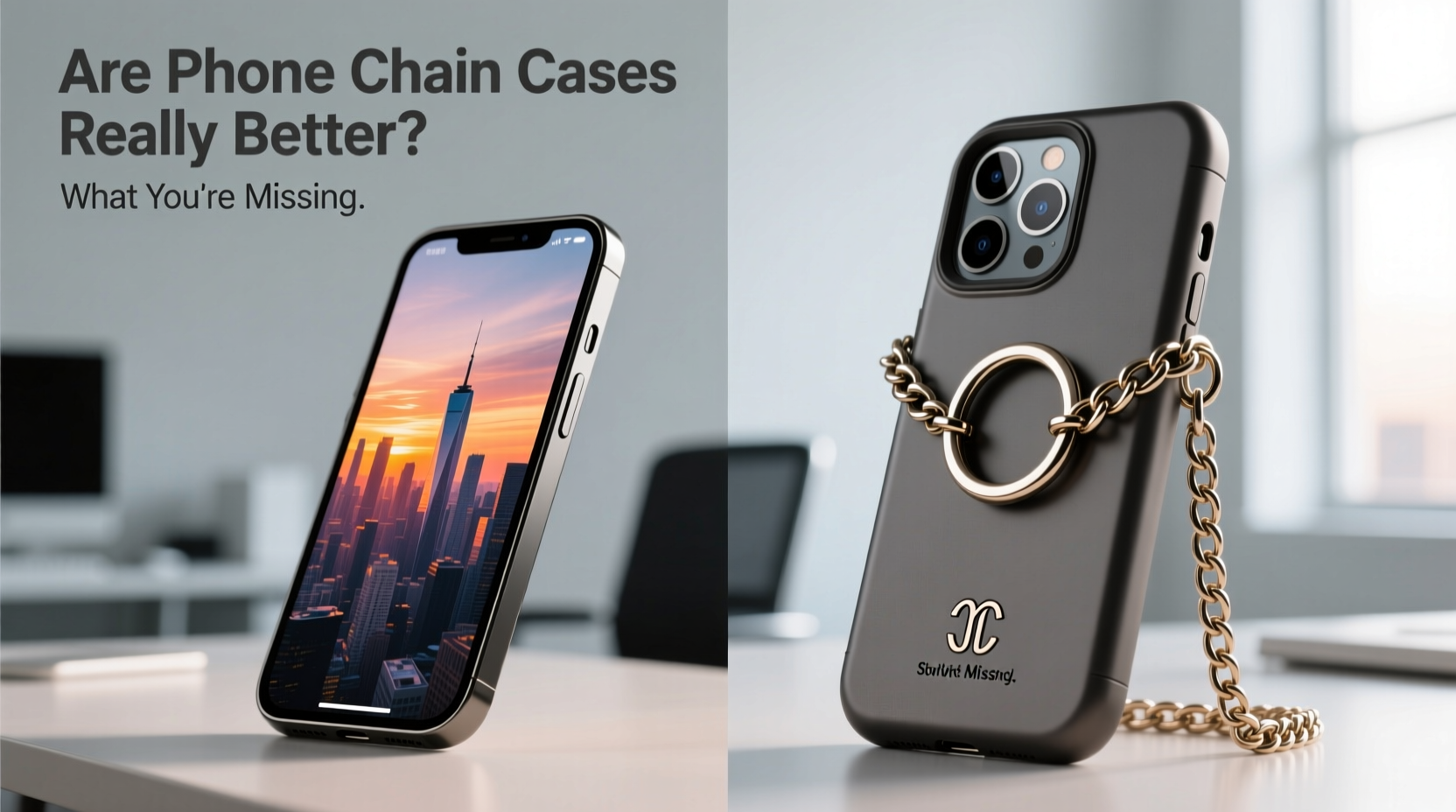
Chain cases integrate a detachable or fixed strap—often made of metal links, braided fabric, or vegan leather—directly into the phone case. This design allows users to wear their phone like a crossbody bag, slip it over their wrist, or hang it from a hook. The appeal is clear: reduced risk of dropping, hands-free convenience, and a bold fashion statement.
In contrast, universal cases prioritize protection and fit. They’re engineered for shock absorption, raised bezels, precise cutouts, and compatibility across brands and models. Most don’t include built-in attachment points for straps, though some third-party solutions use adhesive loops or clip-on adapters.
The key difference lies in intent. Chain cases are designed as lifestyle accessories first, protective gear second. Universal cases focus on safeguarding your device above all else. If you frequently walk in crowded areas or carry your phone while multitasking, a chain case may prevent accidental drops. However, if you're prone to dropping your phone from height, a rugged universal case with reinforced corners will likely offer superior impact resistance.
Compatibility and Long-Term Usability
One major limitation of chain cases is model specificity. Because the strap must align precisely with the case’s structure, manufacturers produce chain cases only for popular devices like the iPhone 15, Samsung Galaxy S24, or Google Pixel 8. This makes them less flexible when upgrading phones.
Universal cases, by definition, are designed to fit multiple models or use adjustable frames. Some even offer modular designs where you can swap inner trays when switching devices. This adaptability means you won’t need to buy a new case every time you upgrade—potentially saving money over time.
Additionally, chain attachments often rely on proprietary mounting systems. If the hinge breaks or the loop wears out, replacement parts may not be available, rendering the entire case useless. With universal cases, repairs or replacements are simpler, and third-party accessories are more widely supported.
Chain Cases vs. Universal Cases: Feature Comparison
| Feature | Chain Cases | Universal Cases |
|---|---|---|
| Style & Fashion Appeal | High – often designer collaborations, trendy materials | Low to Moderate – functional over fashionable |
| Durability (Drop Protection) | Moderate – slim profiles, limited shock absorption | High – often feature TPU bumpers, air cushions |
| Compatibility Across Devices | Low – model-specific only | High – adaptable to various sizes |
| Theft Deterrence | High – physical tether reduces snatch-and-run risk | None – unless modified with add-ons |
| Lifespan & Repairability | Low – integrated design limits part replacement | High – modular, replaceable components |
| Cost Over Time | Higher – new case needed per device change | Lower – reusable with upgrades |
What Most People Overlook
When drawn to the elegance of a chain case, consumers often miss critical practical concerns:
- Weight distribution: A heavy phone on a thin chain can dig into your neck or shoulder during extended wear.
- Magnetic interference: Metal chains near credit cards or medical devices (like pacemakers) can cause issues.
- Security false confidence: While a chain deters quick theft, it doesn’t prevent digital hacking or unauthorized access.
- Charging inconvenience: Many chain cases require removing the phone for wireless charging, breaking the seamless experience.
“Fashion-forward phone accessories often sacrifice ergonomics for aesthetics. Users should assess how they actually use their phones before committing.” — Lena Torres, Product Design Analyst at Mobile Insights Group
Real-World Example: Commuter vs. Office Worker
Consider two users: Maya, a city commuter who walks through busy subway stations daily, and David, an office worker who mostly uses his phone at his desk.
Maya benefits significantly from a chain case. She moves through crowds, carries groceries, and worries about pickpockets. Wearing her phone across her body keeps it secure and accessible without digging into her bag. The chain acts as both a deterrent and a convenience tool.
David, however, rarely leaves his phone unattended. He charges it overnight, uses it during meetings, and stores it in a drawer. For him, a chain adds no value—it just takes up space and risks getting tangled in his chair. A slim universal case with MagSafe compatibility serves him better.
This contrast highlights a crucial point: the “better” case depends entirely on usage patterns, not general superiority.
How to Choose the Right Option for You
Instead of asking whether chain cases are universally better, ask yourself these questions:
- Do I frequently move through crowded areas where my phone could be snatched?
- Do I often carry other items (purse, grocery bags) and need hands-free access?
- Am I comfortable with the added weight around my neck or wrist?
- Do I upgrade my phone frequently, making model-specific cases less cost-effective?
- Is drop protection more important than style for my daily routine?
Quick Checklist: Before Buying a Chain Case
- ✅ Confirm compatibility with your exact phone model
- ✅ Check for breakaway safety features
- ✅ Verify material quality (e.g., stainless steel vs. plated alloy)
- ✅ Ensure the case supports wireless charging without removal
- ✅ Read reviews about long-term hinge durability
Frequently Asked Questions
Can I add a strap to a universal case?
Yes—many universal cases have lanyard holes or support adhesive strap anchors. Third-party silicone bands with loops or MagSafe-compatible strap holders also work well. However, these solutions may not be as sleek or secure as integrated chain cases.
Are chain cases bad for my phone’s finish?
Potentially. If the chain rubs against the phone surface over time, especially with sand or grit present, it can cause micro-scratches. High-quality cases include padding at contact points to prevent this. Avoid letting the chain dangle freely against the screen or camera lens.
Do chain cases affect signal or GPS?
No—unless they incorporate thick metallic shielding around the device, which is rare. Most modern chain cases use non-conductive materials or position metal elements away from antennas.
Final Thoughts: Balance Style, Security, and Practicality
Chain cases aren’t inherently better than universal ones—they serve different needs. They excel in urban environments, social settings, or situations where keeping your phone physically close matters. But they fall short in protection, longevity, and flexibility compared to purpose-built universal cases.
The real insight lies in understanding your own habits. If you value peace of mind in crowded spaces and enjoy expressing your style, a well-made chain case is a smart investment. But if you prioritize durability, ease of upgrade, and maximum protection, a high-quality universal case remains the more practical choice.




 浙公网安备
33010002000092号
浙公网安备
33010002000092号 浙B2-20120091-4
Comments
No comments yet. Why don't you start the discussion?