
In recent years, puffer vests have surged in popularity—appearing on city streets, ski slopes, and fashion runways alike. Sleek, lightweight, and often paired with everything from flannel shirts to tailored blazers, they’ve become a wardrobe staple for many. But beneath the aesthetic appeal lies a practical question: Are puffer vests actually effective in cold weather, or are they merely a fashionable trend with little functional value?
The answer isn’t as simple as yes or no. While puffer vests don’t offer full-body insulation like a jacket, their strategic design targets one of the body’s core heat zones—the torso—making them surprisingly useful in specific conditions. To understand whether they’re worth including in your winter wardrobe, it’s essential to examine how they work, when they perform well, and where they fall short.
How Puffer Vests Work: The Science of Core Insulation
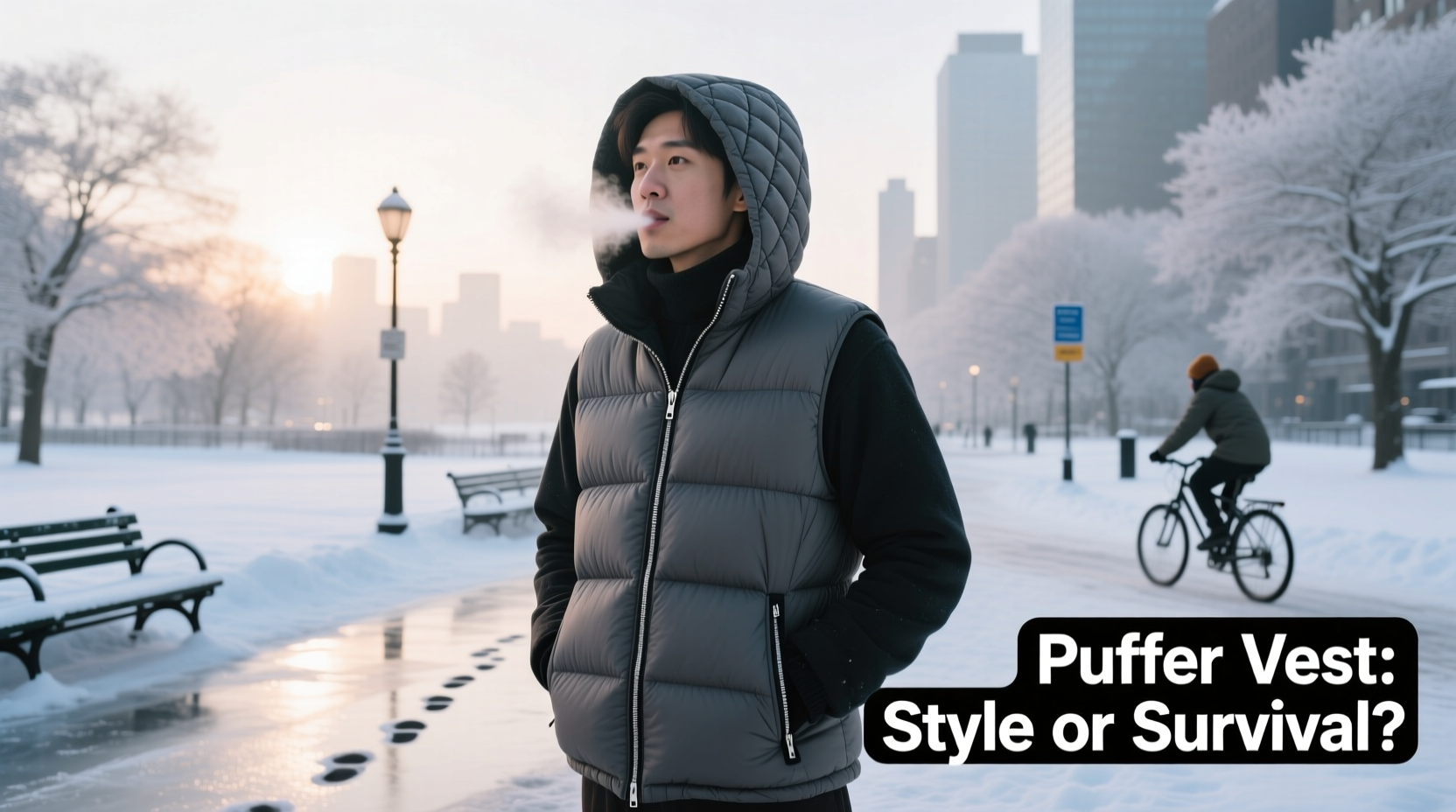
Puffer vests are designed to insulate the torso without covering the arms. This design leverages a key principle in thermoregulation: maintaining core body temperature is critical to overall warmth. When your chest, back, and abdomen stay warm, your body can more efficiently circulate heated blood to extremities like hands and feet.
Most puffer vests use synthetic insulation (like polyester) or down feathers, both of which trap air effectively. The quilted “puffer” construction creates small chambers that hold warm air close to the body, reducing heat loss through convection and radiation. Because the vest doesn’t extend over the shoulders or arms, it allows for greater freedom of movement and reduces overheating during activity.
This makes puffer vests particularly effective during dynamic outdoor activities such as hiking, skiing, or urban commuting—situations where you alternate between exertion and rest. During movement, you generate heat; during pauses, you need insulation. A vest provides warmth precisely where it’s needed most, without restricting arm motion or causing excess sweat buildup.
“Core insulation is 70% of thermal efficiency in active cold-weather scenarios. A well-designed vest can outperform a bulky jacket in variable conditions.” — Dr. Lena Torres, Outdoor Apparel Researcher, University of Colorado
When Puffer Vests Shine: Practical Use Cases
Puffer vests aren’t meant to replace heavy winter coats, but they excel in several real-world situations:
- Layering under outerwear: Worn beneath a windproof shell or trench coat, a puffer vest adds substantial warmth without bulk, making it ideal for layering systems.
- Mild to moderately cold weather: In temperatures between 30°F and 50°F (-1°C to 10°C), a vest paired with a long-sleeve shirt or sweater offers balanced comfort.
- Active lifestyles: Runners, cyclists, and hikers benefit from the unrestricted arm movement and targeted warmth.
- Urban environments: For walking between heated buildings or public transit, a vest provides quick warmth without requiring removal indoors.
Limitations: Where Puffer Vests Fall Short
Despite their advantages, puffer vests have clear limitations in extreme cold or static conditions. Without arm coverage, they leave shoulders and upper arms exposed—areas that lose heat quickly in windy or sub-freezing environments. In temperatures below 20°F (-6°C), especially with wind chill, a vest alone is insufficient for prolonged exposure.
Additionally, people who are sedentary for long periods—such as those waiting for a bus, sitting outdoors, or working in unheated spaces—may find vests inadequate. The lack of sleeves means arms cool rapidly, and once peripheral circulation drops, the body redirects blood flow inward, increasing the risk of discomfort or even mild hypothermia over time.
Another concern is quality variance. Not all puffer vests are created equal. Thin, low-fill vests marketed purely as fashion items may offer minimal insulation—sometimes less than a standard sweater. Consumers should check fill power (for down) or weight/thickness (for synthetic) to assess actual thermal performance.
Puffer Vest vs. Full Jacket: A Comparative Overview
| Feature | Puffer Vest | Full Puffer Jacket |
|---|---|---|
| Core Insulation | Excellent | Excellent |
| Arm & Shoulder Coverage | Poor | Excellent |
| Mobility & Range of Motion | Superior | Good |
| Suitable for Sub-Freezing Weather | Limited (unless layered) | Yes |
| Versatility in Layering | High | Moderate |
| Fashion Integration | Very High | Moderate to High |
| Best For | Active use, layering, transitional seasons | Static exposure, extreme cold |
Real-World Example: A Commuter’s Winter Strategy
Consider Mark, a software developer in Chicago who walks 20 minutes to work each morning. During winter, temperatures often hover around 25°F (-4°C) with wind chill dropping it lower. He used to wear a heavy parka, but found himself overheating by the time he reached the office, leading to damp clothes and discomfort.
Last year, he switched to a layered approach: a merino wool base layer, a midweight fleece, and a high-fill down puffer vest. He tops it off with a lightweight windbreaker only on the windiest days. The result? He stays warm during his walk, avoids excessive sweating, and easily removes the outer layer indoors without needing to carry a bulky coat.
Mark’s experience illustrates a growing trend: using puffer vests not as standalone outerwear, but as intelligent components of a broader thermal strategy. His system balances warmth, breathability, and convenience—something a traditional jacket alone couldn’t provide.
Choosing the Right Puffer Vest: A Buyer’s Checklist
If you’re considering adding a puffer vest to your cold-weather wardrobe, use this checklist to ensure you select one that delivers both function and longevity:
- ✅ Check the insulation type: Down offers superior warmth-to-weight ratio but loses effectiveness when wet. Synthetic insulation (e.g., PrimaLoft) performs better in damp conditions.
- ✅ Assess fill power (for down): Look for 600-fill or higher for meaningful warmth. Premium models range from 700–900 fill.
- ✅ Evaluate weight and packability: Lightweight vests are easier to layer and store, but ultra-thin versions may lack sufficient insulation.
- ✅ Look for wind-resistant fabric: A durable water-repellent (DWR) finish and tightly woven shell improve performance in breezy conditions.
- ✅ Consider fit and layering compatibility: Choose a slightly looser fit if you plan to wear it over sweaters or hoodies.
- ✅ Check for functional details: Zippered pockets, adjustable hems, and interior liners add practical value.
- ✅ Avoid overly fashion-focused designs: Decorative stitching, oversized silhouettes, or non-insulated panels may compromise warmth.
Expert Tips for Maximizing Warmth with a Puffer Vest
To get the most out of your puffer vest in cold weather, follow these proven strategies:
- Use it as part of a layering system: Combine with a thermal base layer and a mid-layer like a fleece or sweater. Add a windproof shell in harsh conditions.
- Wear long sleeves underneath: Opt for materials like merino wool or thermal synthetics that retain warmth even when damp.
- Add arm warmers or gloves: In very cold weather, compensate for lack of sleeve coverage with accessories.
- Store it properly: Keep your vest uncompressed when not in use to maintain loft. Avoid stuffing it into tight bags for extended periods.
- Clean it according to care instructions: Down vests require special detergents and drying methods to preserve insulation integrity.
Frequently Asked Questions
Can a puffer vest keep me warm in freezing temperatures?
Not on its own. Below 32°F (0°C), a puffer vest should be part of a layered outfit. Pair it with insulated sleeves, a windproof outer layer, and proper head and hand protection for full cold-weather readiness.
Is a down puffer vest better than synthetic?
It depends on your needs. Down offers better warmth-to-weight ratio and compressibility, but synthetic insulation retains warmth when wet and is often more affordable. For wet climates or high-moisture activities, synthetic is usually the better choice.
Are puffer vests suitable for women and men equally?
Yes. Many brands now offer gender-specific fits—women’s vests often feature narrower shoulders and contoured shaping—but the functional benefits are identical across genders. Focus on fit, insulation, and intended use rather than styling.
Final Verdict: Style and Function Can Coexist
Puffer vests are not just a passing fashion trend—they represent a thoughtful evolution in cold-weather apparel. While they shouldn’t be relied upon as sole protection in extreme cold, their ability to insulate the core while allowing mobility makes them highly functional in a wide range of everyday scenarios.
The key is understanding their role: they are not replacements for full jackets, but smart additions to a versatile wardrobe. When chosen wisely and worn appropriately, puffer vests offer a rare balance of style, comfort, and utility. They bridge the gap between urban fashion and outdoor practicality, proving that what looks good can also perform well.
For anyone seeking adaptable warmth without sacrificing movement or aesthetics, a quality puffer vest is absolutely worth wearing—even in cold weather.




 浙公网安备
33010002000092号
浙公网安备
33010002000092号 浙B2-20120091-4
Comments
No comments yet. Why don't you start the discussion?