
When it comes to weekly skincare rituals, face masks are a popular choice for boosting radiance, refining texture, and addressing specific concerns. Among the most widely used options are sheet masks and clay masks—two products that serve very different purposes. While both can enhance your regimen, their benefits vary significantly depending on skin type, goals, and lifestyle. The question isn't necessarily which is “better,” but rather which aligns more effectively with your individual needs.
Understanding how each type works, what ingredients they contain, and how often they should be used is essential for making an informed decision. This article breaks down the science, benefits, limitations, and real-world applications of both sheet and clay masks to help you determine the optimal choice for your weekly routine.
How Sheet Masks Work: Hydration and Delivery
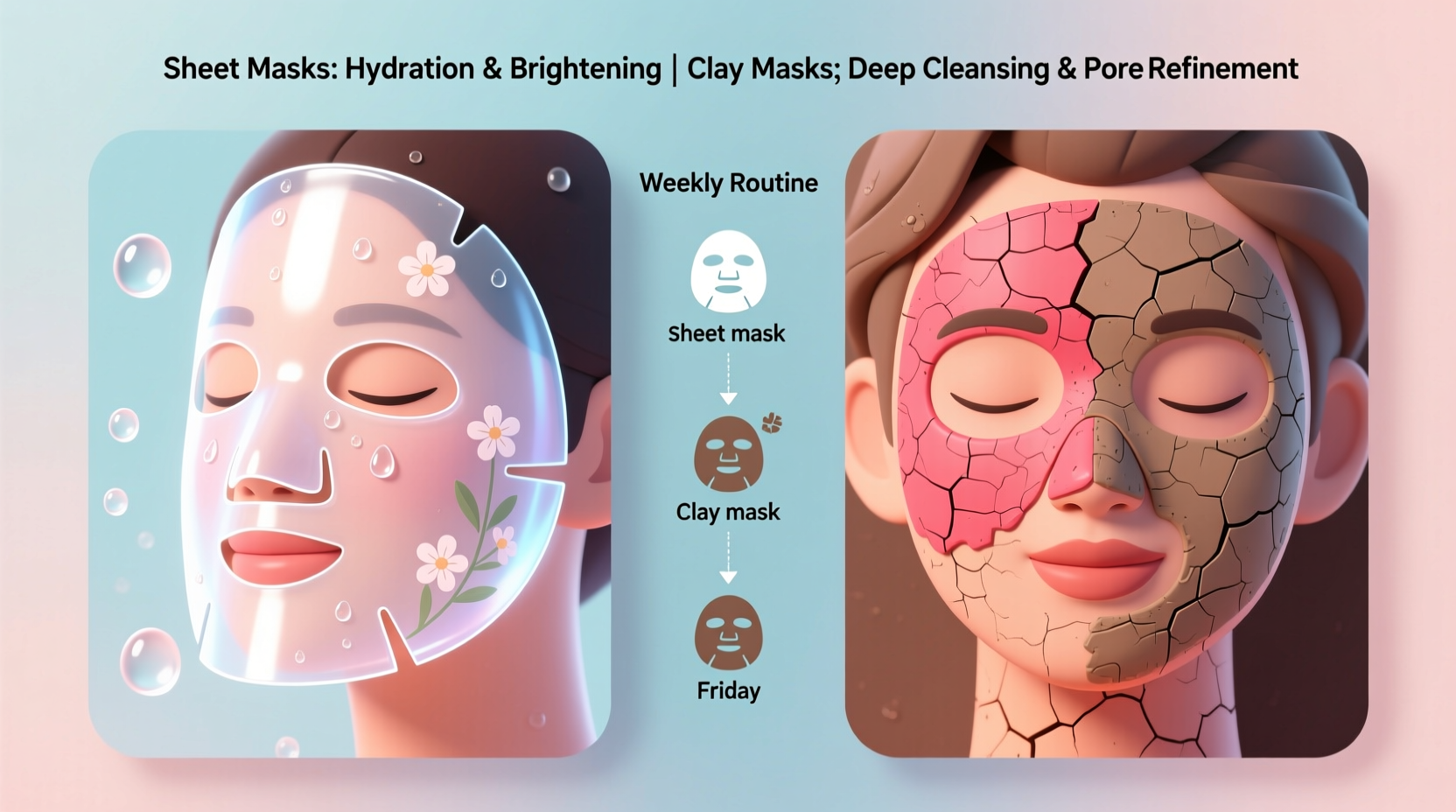
Sheet masks are thin, fabric or cellulose-based sheets soaked in a concentrated serum blend. They are designed to sit flush against the skin, creating a temporary occlusive barrier that enhances ingredient penetration. Commonly infused with hyaluronic acid, niacinamide, vitamin C, peptides, and botanical extracts, sheet masks primarily focus on delivering hydration, brightening, soothing, or anti-aging benefits.
The physical barrier prevents evaporation of active ingredients, allowing them to remain in contact with the skin longer than traditional serums. Most users apply sheet masks for 15–20 minutes, after which any remaining serum is gently patted into the skin. Because they are non-exfoliating and generally gentle, sheet masks are suitable for sensitive skin and can even be used multiple times per week by some individuals.
Clay Masks: Deep Cleansing and Oil Control
Unlike sheet masks, clay masks are formulated to draw out impurities, absorb excess oil, and unclog pores. Typically made from natural minerals like kaolin, bentonite, or French green clay, these masks work through adsorption—the process by which substances bind to the surface of the clay particles as the mask dries.
As the mask hardens, it lifts away sebum, dead skin cells, and environmental debris. This makes clay masks particularly effective for oily, acne-prone, or combination skin types. Some formulations also include salicylic acid, tea tree oil, or charcoal to enhance clarifying effects.
However, because clay can be drying, overuse may compromise the skin’s moisture barrier. Most dermatologists recommend limiting clay mask usage to once or twice a week, especially for those with dry or sensitive skin.
“Clay masks are excellent for controlling sebum and minimizing congestion, but they’re not a one-size-fits-all solution. Overuse can lead to rebound oiliness or irritation.” — Dr. Lena Patel, Board-Certified Dermatologist
Comparative Analysis: Key Differences at a Glance
| Feature | Sheet Masks | Clay Masks |
|---|---|---|
| Primary Function | Hydration, brightening, soothing | Oil control, deep cleansing, pore refinement |
| Skin Types Best Suited | All (especially dry, sensitive, tired skin) | Oily, combination, acne-prone |
| Frequency of Use | 1–3 times per week (some daily-safe formulas) | 1–2 times per week max |
| Active Ingredients | Hyaluronic acid, glycerin, antioxidants, peptides | Kaolin, bentonite, salicylic acid, charcoal |
| Potential Side Effects | Minimal; rare allergic reactions | Dryness, tightness, irritation if overused |
| Post-Mask Routine | No rinse; follow with moisturizer | Rinse with lukewarm water; follow with hydrating toner and moisturizer |
Choosing Based on Skin Type and Concerns
The decision between sheet and clay masks should be driven by your skin type and primary concerns. Here’s a breakdown of how each performs across common skin profiles:
- Dry or Dehydrated Skin: Sheet masks are ideal. Their high humectant content pulls moisture into the skin and helps restore the lipid barrier. Clay masks may exacerbate dryness unless specially formulated with moisturizing agents.
- Oily or Acne-Prone Skin: Clay masks excel here by regulating sebum and preventing clogged pores. However, pairing them with hydrating sheet masks on alternate days can prevent over-drying and maintain balance.
- Combination Skin: A hybrid approach works best. Use clay masks on the T-zone (forehead, nose, chin) and sheet masks on the cheeks to target different zones appropriately.
- Sensitive Skin: Opt for fragrance-free, alcohol-free sheet masks with calming ingredients like centella asiatica or allantoin. Avoid clay masks with harsh exfoliants or essential oils.
- Mature Skin: Sheet masks with peptides, ceramides, and antioxidants support elasticity and reduce fine lines. Clay masks offer little benefit unless used sparingly to improve product absorption.
Real-World Example: A Balanced Weekly Routine
Consider Maya, a 29-year-old with combination skin living in a humid urban environment. Her skin tends to get oily in the T-zone by midday but feels tight on her cheeks after cleansing. She struggled with occasional breakouts and dullness.
After consulting a skincare specialist, she adopted a two-mask weekly strategy:
- Wednesday Evening: Applied a bentonite and charcoal clay mask only on her forehead, nose, and chin. Left it on for 10 minutes, then rinsed thoroughly. Followed with a lightweight, non-comedogenic moisturizer.
- Sunday Night: Used a hydrogel sheet mask infused with hyaluronic acid and licorice root extract. Wore it for 20 minutes while relaxing, then massaged the leftover essence into her neck and décolletage.
Within four weeks, Maya noticed fewer midday shine episodes, reduced blackheads, and a more even, plump complexion. Her skin felt balanced—not stripped, not greasy. This case illustrates that using both mask types strategically can yield superior results compared to relying on just one.
Step-by-Step Guide: How to Incorporate Either Mask Into Your Weekly Routine
Whether you choose sheet masks, clay masks, or both, consistency and proper technique matter. Follow this sequence for optimal results:
- Cleanse Thoroughly: Start with a gentle cleanser to remove makeup, dirt, and excess oil. This ensures maximum efficacy.
- Exfoliate (Optional): If using a clay mask, consider light chemical exfoliation (e.g., PHA or low-concentration lactic acid) the night before to enhance penetration. Avoid physical scrubs immediately before masking.
- Apply the Mask:
- For sheet masks: Unfold and align with facial features. Press gently to eliminate air pockets. Relax for 15–20 minutes.
- For clay masks: Use clean fingers or a brush to apply an even layer (avoiding eyes and lips). Do not let it fully dry if your skin is sensitive—rinse when slightly damp.
- Rinse or Remove: Rinse clay masks with lukewarm water and soft cloth. Gently peel off sheet masks and press residual serum into skin—do not rinse.
- Follow With Skincare: Immediately apply toner, serum, and moisturizer to lock in benefits. At night, consider adding facial oil for extra nourishment.
- Frequency Check: Reassess every month. If skin feels tight, flaky, or reactive, reduce frequency. If no improvement in concerns, consider switching formulas or consulting a professional.
Expert Insight: What Dermatologists Recommend
Board-certified dermatologists emphasize customization over trends. According to Dr. Alicia Monroe, “There’s no universal ‘best’ mask. I see patients who swear by sheet masks for glow, while others rely on clays to manage hormonal breakouts. The key is understanding your skin’s behavior across seasons and stress levels.”
She adds, “I often recommend rotating mask types based on monthly cycles—clay masks during peak oil production days (often pre-menstrual), and hydrating sheet masks during drier phases.”
“The most effective skincare isn’t about using the most expensive mask—it’s about using the right mask at the right time.” — Dr. Alicia Monroe, Clinical Dermatology Consultant
Frequently Asked Questions
Can I use a sheet mask after a clay mask?
Yes, but not on the same day. Wait at least 24 hours to avoid overwhelming the skin. Using a hydrating sheet mask the next day can help restore moisture lost during clay treatment.
Do sheet masks really do anything, or is it just marketing?
They do work—but within limits. While they won’t replace medical treatments, clinical studies show that occlusion from sheet masks increases transdermal delivery of actives by up to 50% compared to applying serum alone. The key is choosing well-formulated products with proven ingredients.
Are clay masks safe for sensitive skin?
Some are. Look for gentler clays like kaolin instead of bentonite, and formulas enriched with aloe vera, colloidal oatmeal, or panthenol. Always patch test and limit wear time to 5–7 minutes initially.
Checklist: Choosing the Right Mask for Your Weekly Routine
- ✔ Identify your primary skin concern (dryness, oiliness, dullness, breakouts)
- ✔ Determine your skin type (oily, dry, combination, sensitive, normal)
- ✔ Review ingredient lists for irritants (alcohol, fragrance, essential oils)
- ✔ Decide on frequency: once weekly? Twice? Alternating?
- ✔ Patch test new masks behind the ear or on the jawline
- ✔ Monitor skin response over 2–4 weeks
- ✔ Adjust based on seasonal changes or lifestyle shifts (e.g., travel, stress)
Conclusion: It’s Not About Better—It’s About Balance
The idea that sheet masks are inherently better than clay masks—or vice versa—misses the point of personalized skincare. Each has distinct strengths: sheet masks deliver targeted hydration and renewal, while clay masks provide deep purification and sebum regulation. The most effective weekly routine doesn’t rely on one type alone but adapts to your skin’s evolving needs.
Rather than chasing trends, take time to observe how your skin responds. Keep a simple journal noting texture, clarity, and comfort after each use. Over time, you’ll develop an intuitive sense of when your skin craves a drink of hydration or a deep cleanse.




 浙公网安备
33010002000092号
浙公网安备
33010002000092号 浙B2-20120091-4
Comments
No comments yet. Why don't you start the discussion?