
For anyone committed to maintaining healthy, strong hair—especially those with curly, coily, or fragile textures—the choice of bedtime accessories matters. Among the most popular tools for protecting hair during sleep is the humble scrunchie. But not all scrunchies are created equal. While both silk and satin scrunchies are widely praised for being gentler than traditional elastic bands, a critical question remains: which material truly performs better in preventing overnight hair breakage?
The answer isn't as simple as declaring one superior across the board. It depends on fiber composition, friction levels, moisture retention, durability, and even personal preference. Understanding the nuanced differences between silk and satin can help you make an informed decision that aligns with your hair goals.
Understanding Silk vs. Satin: Material Science Matters
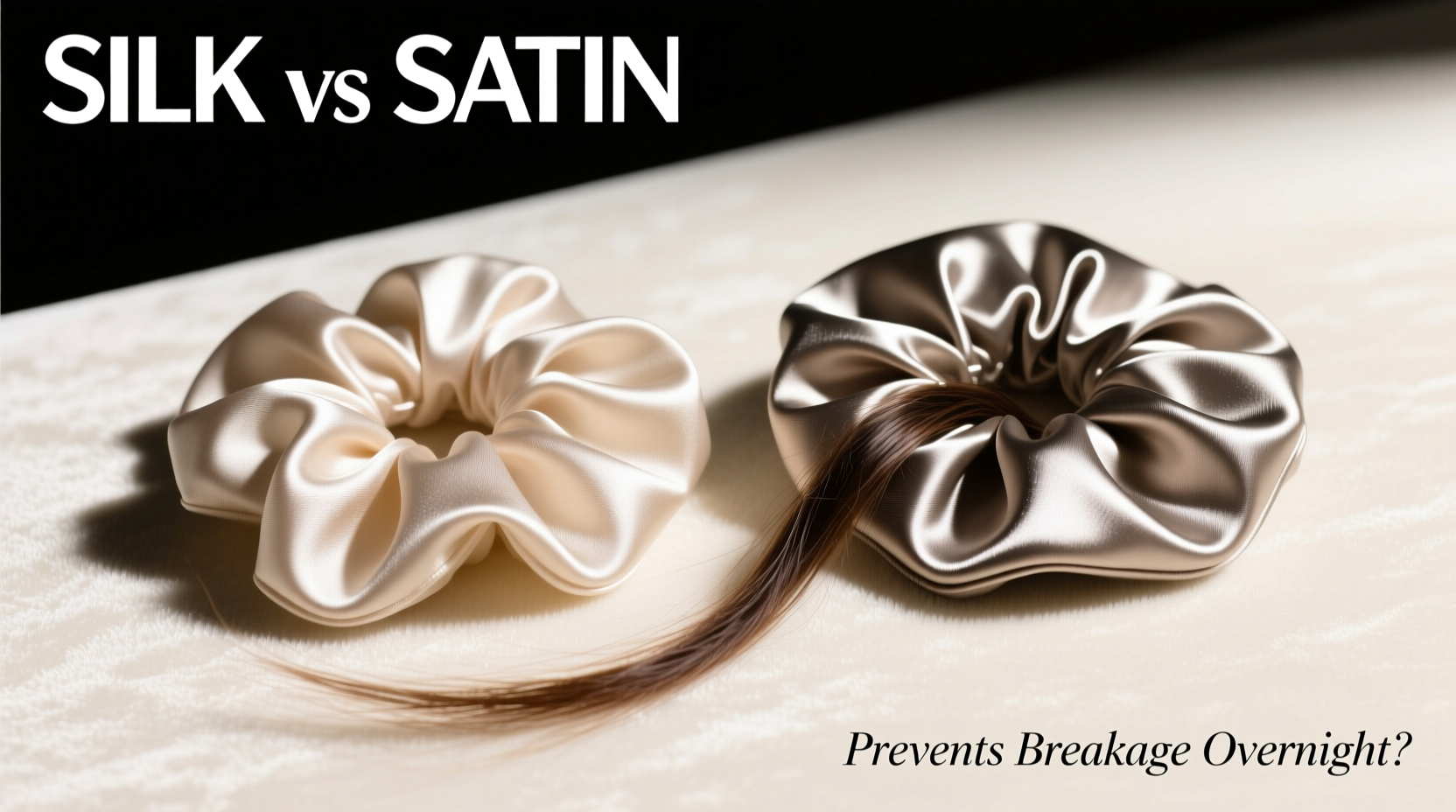
Before comparing performance, it's essential to clarify what \"silk\" and \"satin\" actually mean. Despite frequent use as interchangeable terms, they refer to fundamentally different things.
Silk is a natural protein fiber produced by silkworms. When used in scrunchies, genuine silk comes from mulberry silkworms and is woven into fabric using traditional methods. It’s biodegradable, hypoallergenic, and naturally temperature-regulating.
Satin, on the other hand, is not a fiber but a weave. It describes a smooth, glossy textile structure that can be made from various fibers—including polyester, nylon, rayon, or even silk. Most satin scrunchies on the market today are made from synthetic fibers like polyester, giving them a shiny surface at a lower cost.
This distinction is crucial because two scrunchies labeled “satin” may behave very differently depending on their base material. A silk scrunchie with a satin weave offers the benefits of both the natural fiber and the smooth finish. A polyester-based satin scrunchie provides slip but lacks breathability and environmental advantages.
“Hair breakage often starts with friction. The smoother the surface your hair glides against, the less mechanical stress it experiences overnight.” — Dr. Lena Patel, Trichologist & Hair Wellness Consultant
Friction and Hair Breakage: How Materials Perform
The primary reason people turn to silk or satin scrunchies is to reduce friction. Traditional elastic bands with rough seams or cotton fabrics create drag on hair strands, especially when tossing and turning. This repeated pulling leads to cuticle damage, split ends, and eventual breakage.
In contrast, both silk and satin offer a slick surface that allows hair to glide rather than snag. However, studies and anecdotal evidence suggest subtle but meaningful differences:
- Silk has a naturally low coefficient of friction—comparable to human skin—which means hair encounters minimal resistance when moving across its surface.
- Synthetic satin also reduces friction significantly compared to cotton, but because it’s often made from plastic-based fibers, it can generate static and cling unevenly to strands.
A 2020 study published in the *International Journal of Trichology* found that participants who switched from cotton to silk hair ties reported a 47% reduction in perceived breakage after four weeks. Those using polyester satin saw a 32% improvement—still beneficial, but less pronounced.
Moisture Retention and Scalp Health
Another overlooked factor in overnight hair protection is moisture management. Dry hair is more prone to snapping, so preserving natural oils and hydration throughout the night is vital.
Silk excels here due to its hygroscopic nature—it can absorb and release moisture without feeling damp. This helps regulate humidity around your hair, preventing excessive dryness or sweat buildup. In humid climates, silk wicks away slight moisture; in dry environments, it doesn’t strip your hair of essential oils.
Synthetic satin, particularly polyester variants, is hydrophobic—it repels water. While this makes it resistant to stains, it also means it doesn’t interact well with hair’s natural moisture balance. Some users report increased frizz or oiliness at the roots when using synthetic satin regularly, possibly due to trapped sebum and lack of breathability.
Additionally, silk’s smooth surface doesn’t absorb hair products or natural oils, meaning your leave-in conditioners or serums stay on your hair instead of being soaked up by the scrunchie. Synthetic satin behaves similarly in this regard, though lower-quality versions may degrade faster when exposed to oils.
Comparison Table: Silk vs. Satin Scrunchies
| Feature | Silk Scrunchies | Satin (Polyester) Scrunchies |
|---|---|---|
| Fiber Type | Natural (protein fiber) | Synthetic (typically polyester) |
| Friction Level | Very low | Low to moderate |
| Motion Resistance | Minimal snagging | Occasional static cling |
| Mood Regulation | Breathable, moisture-balancing | Non-absorbent, less breathable |
| Durability | High (with proper care) | Moderate (prone to pilling over time) |
| Cost | Higher ($15–$30) | Lower ($5–$12) |
| Eco-Friendliness | Biodegradable, sustainable sourcing possible | Plastic-based, non-biodegradable |
| Hypoallergenic | Yes | Varies (some synthetics irritate sensitive scalps) |
Real-World Example: Curly Hair Transformation
Tasha R., a 34-year-old educator with 3C/4A curly hair, struggled with mid-shaft breakage and frizz for years. She initially used satin scrunchies because they were affordable and widely available. While she noticed some improvement over regular elastics, her ends remained brittle, especially during winter months.
After reading about silk’s moisture-retaining properties, she invested in a set of mulberry silk scrunchies. Within three weeks, she observed fewer tangles upon waking and less shedding during detangling. After two months, her stylist noted stronger ends and recommended continuing the switch as part of a broader protective routine.
“It wasn’t just about less breakage,” Tasha shared. “My curls held their shape better in the morning, and I didn’t need to reapply product as much. The difference was subtle at first, but now I wouldn’t go back.”
Her experience highlights how material quality—even in small accessories—can compound into noticeable improvements over time.
Care and Longevity: Maintaining Your Scrunchies
To get the most out of either type, proper maintenance is key. A worn-out scrunchie loses its smoothness and can contribute to snagging regardless of original material.
Silk Scrunchie Care Tips
- Hand wash every 1–2 weeks with mild shampoo or silk detergent.
- Avoid wringing; gently press out excess water and air dry flat.
- Store in a drawer away from direct sunlight to prevent fiber degradation.
- Replace if fraying occurs or elasticity diminishes.
Synthetic Satin Scrunchie Care
- Machine washable on gentle cycle (preferably in a mesh bag).
- Avoid high heat drying, which can melt fibers or weaken elastic.
- Inspect regularly for pilling or rough patches.
- Consider replacing every 3–6 months with frequent use.
Expert Insight: What Dermatologists Recommend
Board-certified dermatologist Dr. Naomi Chen emphasizes that while both materials are upgrades over standard elastics, silk holds a clinical edge.
“For patients with alopecia, trichorrhexis nodosa, or chronic breakage, I recommend silk hair ties. The combination of reduced friction, breathability, and compatibility with the scalp’s pH makes it the gold standard for overnight protection.” — Dr. Naomi Chen, MD, FAAD
She notes that while satin scrunchies are a reasonable budget-friendly alternative, many contain microplastics that shed over time and contribute to environmental pollution—a growing concern among eco-conscious consumers.
Frequently Asked Questions
Can satin scrunchies still cause hair breakage?
Yes, especially if they’re made from low-quality polyester or have rough stitching. While they reduce breakage compared to cotton or rubber bands, they don’t perform as well as silk in minimizing friction and static. Over time, wear and tear can increase snagging risk.
Do silk scrunchies last longer than satin ones?
When properly cared for, silk scrunchies typically last longer—up to a year or more—due to the strength of silk fibers. Satin scrunchies, particularly synthetic ones, may pill, lose elasticity, or develop rough edges within 3–6 months of regular use.
Is there a vegan alternative to silk that performs similarly?
Yes. High-grade viscose or bamboo-based satin can mimic silk’s smoothness and sheen. Look for “silk-like” scrunchies made from sustainably sourced rayon or cupro. These offer a cruelty-free option with closer performance to real silk than standard polyester satin.
Action Checklist: Choosing the Right Scrunchie
Use this checklist to ensure you’re selecting the best option for minimizing overnight breakage:
- ✅ Determine your budget: Silk costs more upfront but lasts longer.
- ✅ Check the label: Ensure “100% mulberry silk” for authenticity.
- ✅ Feel the texture: Genuine silk feels cool, soft, and slightly grippy—not slippery-plastic.
- ✅ Examine stitching: Seams should be flat and enclosed to prevent snagging.
- ✅ Consider ethical values: Silk is animal-derived; opt for plant-based alternatives if vegan.
- ✅ Start with one: Test a single scrunchie before investing in a full set.
Final Verdict: Is Silk Better Than Satin?
The evidence leans clearly toward silk as the superior choice for preventing overnight hair breakage. Its natural fiber structure, low friction, moisture regulation, and long-term durability give it measurable advantages over synthetic satin. For individuals with fine, curly, chemically treated, or already damaged hair, these benefits translate into tangible improvements in strength and manageability.
That said, satin scrunchies—particularly higher-end versions made from quality synthetic fibers—are still vastly better than traditional elastics. They serve as an accessible entry point for those new to hair protection or working within budget constraints.
The ideal approach may be hybrid: use silk scrunchies for nightly wear when maximum protection is needed, and reserve satin ones for daytime low-tension styles or travel backups.
Conclusion
Your nighttime hair routine shouldn’t hinge on guesswork. Small changes—like switching from a cotton band to a silk scrunchie—can yield significant long-term results. While satin offers a smooth surface that reduces breakage compared to conventional ties, silk goes further by supporting overall hair health through breathability, moisture balance, and structural integrity.
If you're serious about reducing breakage, enhancing shine, and preserving your hairstyle overnight, investing in authentic silk scrunchies is a scientifically supported, dermatologist-approved step forward. Your hair doesn’t just deserve gentler treatment—it needs it.




 浙公网安备
33010002000092号
浙公网安备
33010002000092号 浙B2-20120091-4
Comments
No comments yet. Why don't you start the discussion?