
As holiday traditions blend with modern technology, smart Christmas lights have become a popular way to add flair, automation, and color to seasonal décor. With voice control, app-based scheduling, and synchronized music modes, these lights offer convenience and creativity. But as with any internet-connected device, they also introduce potential security risks. The question isn’t whether smart devices are convenient—it’s whether they’re safe. Could your festive display be an entry point for hackers? The answer is more nuanced than a simple yes or no.
Smart Christmas lights connect to your home Wi-Fi network, often through a mobile app or cloud service. This connectivity allows remote control but also exposes them to vulnerabilities if not properly secured. While large-scale attacks specifically targeting holiday lights remain rare, the underlying technology shares the same weaknesses as other IoT (Internet of Things) devices: weak passwords, outdated firmware, and insecure network configurations. Understanding these risks—and how to mitigate them—is key to enjoying a joyful, secure holiday season.
How Smart Christmas Lights Work—and Where They’re Exposed
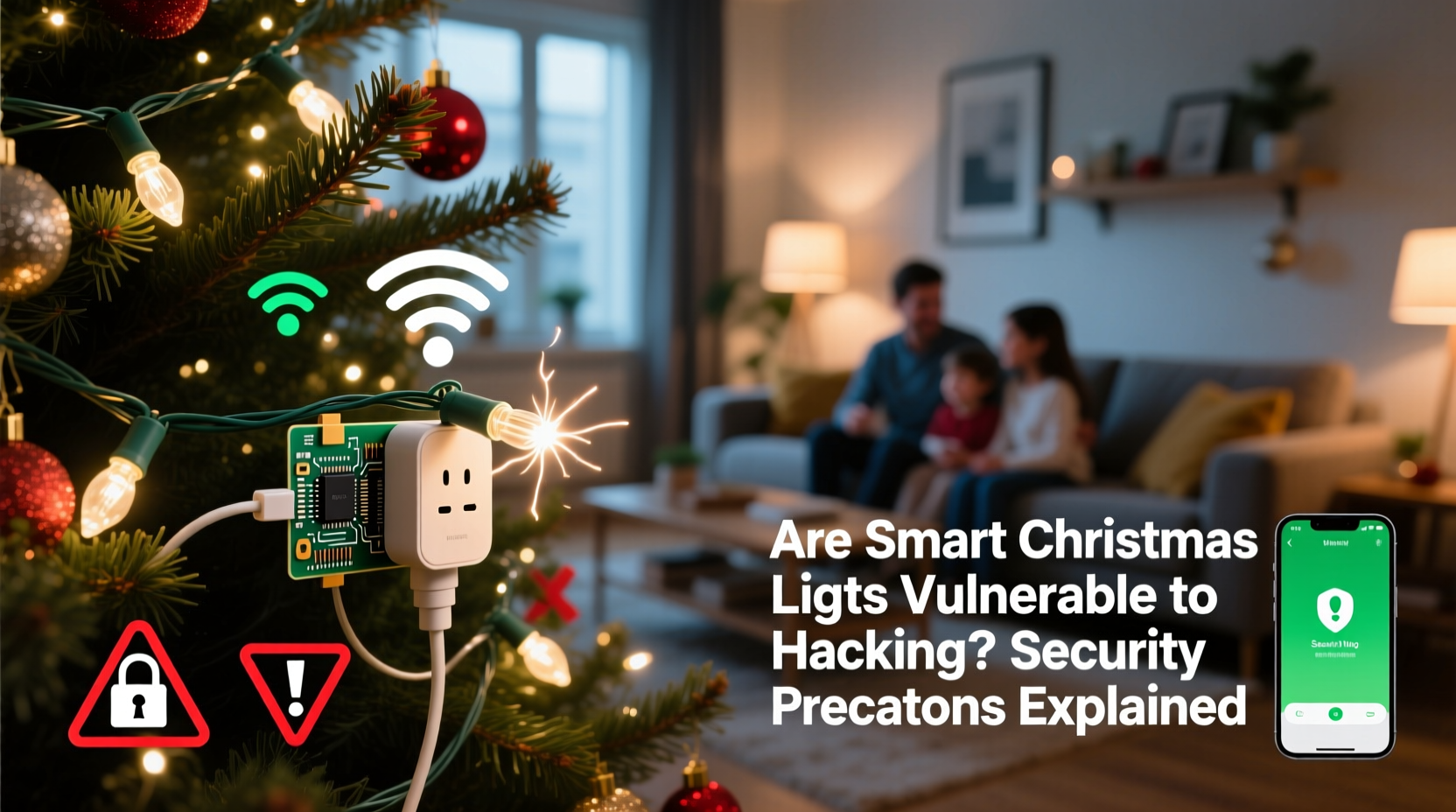
Most smart Christmas lights operate by connecting to a central hub or directly to your home Wi-Fi. Once connected, they communicate with a smartphone app that lets you adjust brightness, colors, patterns, and schedules. Some models integrate with Amazon Alexa, Google Assistant, or Apple HomeKit, enabling voice commands. Behind the scenes, data flows between the lights, your router, and sometimes external servers hosted by the manufacturer.
This chain of communication creates several potential points of exposure:
- Wi-Fi Network Access: Any device on your network can potentially be used as a gateway to others. If smart lights aren’t properly segmented, a compromised light could give access to computers, phones, or smart home systems.
- Mobile App Vulnerabilities: Poorly coded apps may store login credentials insecurely or transmit data without encryption.
- Firmware Flaws: Many manufacturers release devices with outdated or unpatched software, leaving known security holes open.
- Default Credentials: Some systems ship with default usernames and passwords that users never change—making them easy targets.
In 2017, a widely publicized incident involving a casino’s high-roller database being breached through a smart thermometer in a fish tank highlighted how seemingly harmless IoT devices can serve as backdoors. While Christmas lights haven’t made headlines in such breaches, the principle remains: any connected device can become a liability if not managed carefully.
“People don’t think about their holiday lights as computers—but that’s exactly what they are. And anything that computes can be hacked.” — Dr. Lisa Nguyen, Cybersecurity Researcher at MIT Lincoln Laboratory
Real Risks vs. Media Hype: What’s Actually Possible?
It’s important to distinguish between theoretical vulnerabilities and realistic threats. Hackers targeting individual homes through Christmas lights are uncommon—not because it’s impossible, but because it’s inefficient compared to phishing scams or ransomware campaigns. However, this doesn’t mean the risk is zero.
Potential attack scenarios include:
- Network Reconnaissance: A hacker gains access to your guest network where smart lights are connected, then scans for other devices like laptops or NAS drives.
- Denial-of-Service via Device Overload: Malicious actors could theoretically flood the device with commands, causing it to malfunction or consume excessive bandwidth.
- Data Interception: Unencrypted communications between the app and lights could expose network details or user behavior patterns.
- Botnet Recruitment: Compromised IoT devices are often recruited into botnets used for distributed denial-of-service (DDoS) attacks. Though rare for seasonal devices, inactive lights left connected year-round could still pose a risk.
A mini case study illustrates the plausibility: In 2021, a homeowner in Colorado reported unusual network lag during the holidays. After investigation, their router logs revealed repeated connection attempts from an unknown IP address, traced back to a third-party smart lighting app using outdated SSL certificates. Though no data was stolen, the vulnerability allowed passive monitoring of device activity. The issue was resolved only after updating the app and isolating the lights on a separate network segment.
Essential Security Precautions for Smart Holiday Lighting
You don’t need to abandon smart lights to stay safe. With proactive measures, you can enjoy their benefits while minimizing exposure. Follow these best practices to protect your network and personal data.
1. Isolate Devices on a Guest Network
Most modern routers support a guest network feature, which creates a separate Wi-Fi zone isolated from your primary devices. Connect all smart holiday lights to this network to prevent lateral movement in case of compromise.
2. Keep Firmware and Apps Updated
Manufacturers often release patches for known vulnerabilities. Enable automatic updates when available, or manually check for updates monthly during the holiday season.
3. Use Strong, Unique Passwords
Never use “admin/admin” or “123456” as login credentials. Create strong passwords (12+ characters, mix of letters, numbers, symbols) and avoid reusing them across accounts.
4. Disable Remote Access When Not Needed
If you only control lights from within your home, disable cloud connectivity or remote access features in the app settings. This reduces the attack surface significantly.
5. Review App Permissions
Check what data the companion app requests. Does it need access to your contacts, location, or camera? Revoke unnecessary permissions through your phone’s settings.
6. Power Down After the Holidays
Unplug or disconnect smart lights once the season ends. This eliminates lingering risks and conserves energy. For permanent outdoor installations, ensure they remain updated even in storage mode.
“The weakest link in home security is rarely the device itself—it’s the human behavior around it. One forgotten update or reused password can undo months of protection.” — Marcus Reed, Senior Threat Analyst at Palo Alto Networks
Comparison: Secure vs. Risky Smart Light Setups
| Security Practice | Risky Setup | Secure Setup |
|---|---|---|
| Network Connection | Lights on main home Wi-Fi with shared access to PCs and phones | Lights on isolated guest network with no access to internal devices |
| Passwords | Default credentials or reused passwords | Unique, complex password stored in a password manager |
| Firmware Updates | Never checked; device running original software | Automatic updates enabled or manual checks monthly |
| Remote Access | Cloud control always on, accessible globally | Remote access disabled; local-only control enabled |
| Post-Holiday Handling | Lights unplugged but account remains active; app installed | Lights disconnected, app uninstalled, device reset to factory settings |
Step-by-Step Guide to Securing Your Smart Christmas Lights
Follow this practical timeline to deploy and manage your smart lights securely—from setup to takedown.
- Before Setup (1 Week Prior):
Research your specific model for known vulnerabilities. Check sites like CVE Details or the National Vulnerability Database. Ensure the manufacturer provides regular firmware updates. - Initial Configuration (Day of Installation):
Connect the lights to your guest network, not your primary one. During app setup, create a new account with a unique email and strong password. Avoid linking to social media profiles. - First Month of Use:
Test all functions locally. Disable remote access unless absolutely necessary. Review app permissions and revoke any non-essential access. - Ongoing Maintenance (Weekly):
Monitor your router’s connected devices list. Look for unfamiliar names or unexpected spikes in data usage. Check for app or firmware updates at least once a week. - Takedown & Reset (After January 6):
Unplug the lights. In the app, remove the device from your account. Uninstall the app or log out completely. For reusable systems, reset the lights to factory settings before storing.
Frequently Asked Questions
Can hackers really control my Christmas lights remotely?
Yes, if the device has remote access enabled and is protected by weak security (e.g., default passwords or outdated firmware). There are documented cases of researchers demonstrating remote control over poorly secured smart lights, though widespread malicious use remains limited.
Do I need antivirus software for smart lights?
No—antivirus software runs on computers and phones, not on IoT devices. However, securing the network and devices that interact with your lights (like your phone or router) is equally important. Use endpoint protection on those systems.
Are some brands safer than others?
Yes. Brands like Philips Hue, LIFX, and Nanoleaf generally prioritize security with regular updates, end-to-end encryption, and transparent privacy policies. Cheaper, lesser-known brands sold on marketplaces like Amazon or Wish may lack ongoing support or proper testing.
Final Checklist: Secure Your Smart Lights in 7 Steps
- ✅ Confirm your router supports a guest network and enable it
- ✅ Connect smart lights to the guest network, not your main Wi-Fi
- ✅ Create a unique, strong password for the lighting app
- ✅ Disable remote/cloud access unless required
- ✅ Enable automatic firmware updates or schedule monthly checks
- ✅ Review and restrict app permissions on your smartphone
- ✅ After the holidays, reset devices and uninstall apps
Conclusion: Celebrate Safely, Stay Secure
Smart Christmas lights bring magic to the season, but they also reflect a broader truth about modern living: convenience comes with responsibility. Every connected device expands your digital footprint, and each one deserves thoughtful attention. By taking a few deliberate steps—segmenting networks, updating software, and managing access—you can enjoy dazzling displays without compromising your home’s security.
The goal isn’t to fear technology, but to use it wisely. As smart home ecosystems grow, so must our awareness. This holiday season, let your lights shine brightly—not just in color and pattern, but in confidence that they’re protected.




 浙公网安备
33010002000092号
浙公网安备
33010002000092号 浙B2-20120091-4
Comments
No comments yet. Why don't you start the discussion?