
In a world where personal accessories have become extensions of identity, even the smallest items carry meaning. The humble keychain—once a purely functional tool—is now a subtle statement piece. But as fashion cycles accelerate and minimalist aesthetics clash with maximalist expressions, a quiet debate has emerged: Are solid color keychains losing their relevance? Or have patterned keychains crossed the line into being too loud?
This isn’t just about aesthetics. It’s about intention, context, and how we communicate through everyday objects. Whether you’re tossing your keys into a café bowl or slipping them into a tailored jacket pocket, your keychain speaks before you do. Understanding this balance helps you stay authentic without clashing with your environment.
The Rise and Resilience of Solid Color Keychains
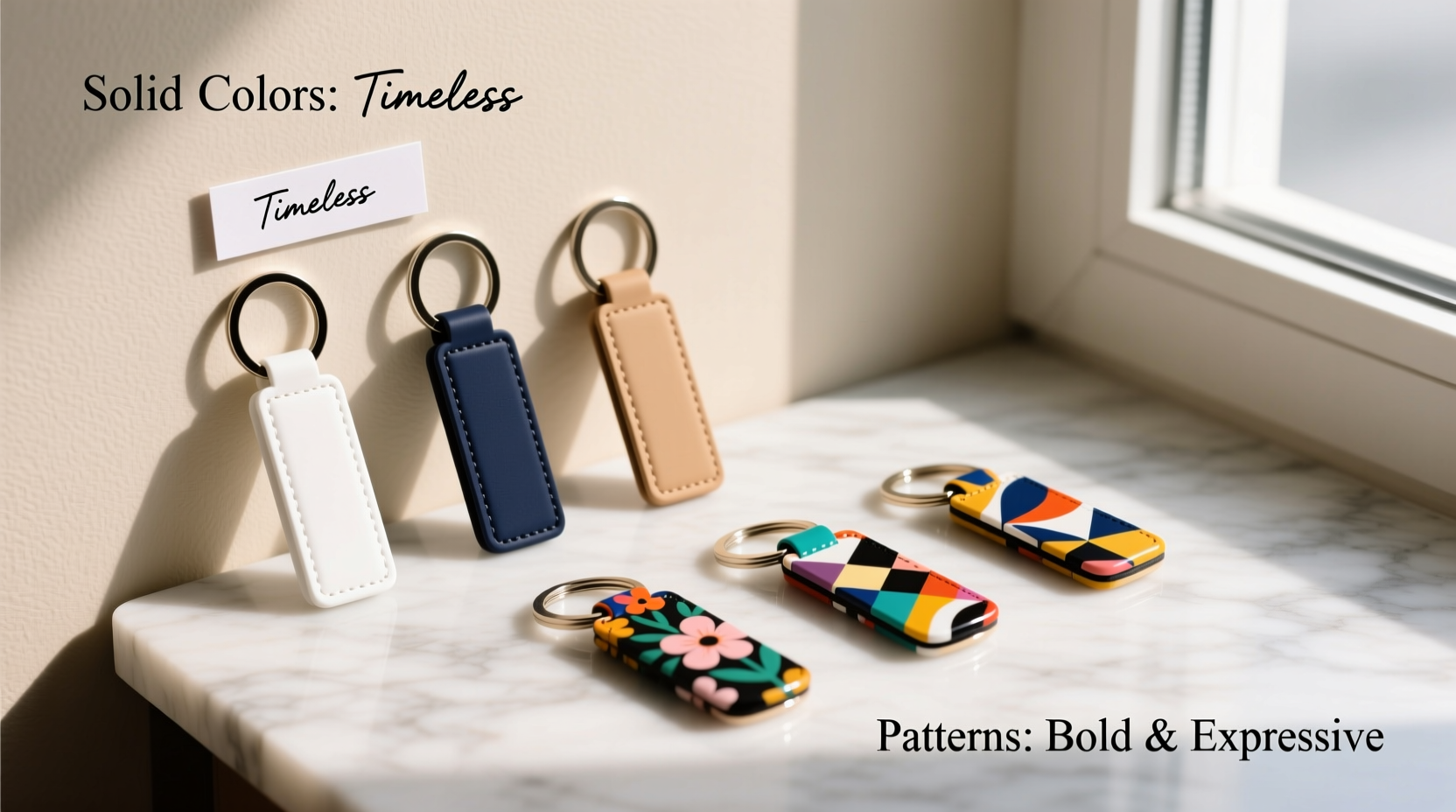
Solid color keychains have long been the default choice for those who value subtlety. Their appeal lies in consistency, versatility, and timelessness. A matte black metal ring, a brushed silver fob, or a deep navy leather tag blends seamlessly into both professional and casual settings.
Designers like Dieter Rams and brands such as MUJI have championed the idea that “less is more.” This philosophy extends to accessories. In corporate environments, government offices, or high-end hospitality roles, a sleek, single-tone keychain signals professionalism and attention to detail without distraction.
Moreover, solid colors age gracefully. Scratches on a black enamel charm are less noticeable than frayed patterns on a fabric tassel. They’re easier to clean, maintain, and replace when needed. For people who prioritize function over flair, solid options remain not only relevant but often preferred.
When Patterns Speak Louder Than Words
On the flip side, patterned keychains have surged in popularity, especially among younger demographics and creative industries. From geometric laser engravings to vibrant resin swirls and embroidered motifs, these designs celebrate individuality.
Take the rise of custom keychains featuring anime characters, national flags, or LGBTQ+ pride colors. These aren’t random choices—they’re declarations of belonging, passion, or advocacy. In social settings, festivals, or artistic communities, a bold keychain can spark conversation, signal shared values, or even serve as a low-key networking tool.
However, the criticism stands: some designs are simply too loud. Oversized charms with jangling pendants, neon graffiti prints, or cartoonish shapes can feel out of place in formal contexts. The same keychain that feels empowering at a music festival might seem unprofessional during a job interview.
“Accessories should reflect who you are—but also consider where you’re going. A keychain isn’t just an object; it’s part of your social script.” — Lena Park, Lifestyle Stylist & Brand Consultant
Comparing Style Philosophies: A Practical Breakdown
| Aspect | Solid Color Keychains | Patterned Keychains |
|---|---|---|
| Best For | Professional settings, minimalists, durability-focused users | Casual use, self-expression, creative fields |
| Lifespan | Longer (resists visual wear) | Moderate (patterns may fade or chip) |
| Versatility | High (matches any outfit or bag) | Low to moderate (context-dependent) |
| Cost Range | $5–$50 (premium metals, leathers) | $3–$30 (mass-produced designs common) |
| Social Perception | Understated, reliable, mature | Playful, expressive, youthful |
A Real-World Scenario: Choosing the Right Chain for the Moment
Consider Marcus, a 29-year-old graphic designer working at a hybrid agency. During client presentations, he swaps his rainbow-acrylic keychain for a slim titanium loop in gunmetal gray. The switch isn’t about hiding his identity—it’s about strategic communication. “I want my work to speak first,” he explains. “The colorful one stays in my backpack until after meetings.”
After hours, that same vibrant keychain clips onto his messenger bag. At gallery openings or weekend markets, it becomes a conversation starter. One evening, a fellow attendee noticed the retro video game motif and complimented it—leading to a collaboration on a mural project.
This duality reflects a growing trend: **contextual accessorizing**. Just as we change shoes for different occasions, many are now curating multiple keychains based on setting, mood, or purpose.
How to Choose Without Compromise: A Step-by-Step Guide
Selecting the right keychain doesn’t have to be an all-or-nothing decision. Follow this process to align your choice with both practicality and personality:
- Assess Your Daily Environments: List the top three places you frequent (e.g., office, gym, coffee shop). Note the dress code and cultural tone.
- Evaluate Noise Level: Does your current keychain rattle loudly? If yes, even a solid metal one might benefit from silencing washers or rubber sleeves.
- Determine Expression Goals: Do you want to convey reliability, creativity, humor, or heritage? Match materials and design accordingly.
- Test for Functionality: Attach it to your keys for a week. Is it snagging fabric? Too bulky for pockets? Adjust size or shape.
- Create a Rotation System: Keep two or three keychains ready—one neutral, one expressive, and optionally one seasonal or thematic.
Common Misconceptions Debunked
- Myth: Patterned keychains are always cheap-looking.
Truth: High-quality materials like engraved wood, hand-poured resin, or woven silk can make patterns feel luxurious. - Myth: Solid colors are boring.
Truth: Texture, finish, and craftsmanship elevate simplicity—think brushed copper, sandblasted aluminum, or vegetable-tanned leather. - Myth: You need to pick one style forever.
Truth: Personal style evolves. So can your accessories.
Frequently Asked Questions
Can I mix solid and patterned elements on one keychain?
Absolutely. Many modern designs combine a solid base (like a black metal ring) with a small patterned accent (such as a colored enamel logo or textured charm). This offers balance—subtle enough for most settings, yet distinctive upon closer look.
Are solid color keychains coming back in style?
They never left. While trends favor bolder visuals in streetwear and social media, solid tones consistently resurge in luxury, tech, and professional markets. Their staying power comes from adaptability, not hype.
How do I know if my keychain is “too loud”?
If it draws attention in inappropriate moments—if colleagues comment on its noise during a meeting, or if you instinctively hide it in certain situations—it may be mismatched to the context. That doesn’t mean it’s bad, just poorly timed.
Final Thoughts: Style Isn’t About Trend—It’s About Intention
The question isn’t whether solid color keychains are going out of style or if patterned ones are too loud. The real issue is alignment: does your keychain reflect your values, suit your lifestyle, and adapt when needed?
Trends come and go. This season’s viral keychain charm will likely fade next year. But thoughtful curation endures. Whether you gravitate toward the quiet confidence of a monochrome disc or the joyful chaos of a multi-colored tassel, the best choice is the one that feels authentically yours—without disrupting your world.
Instead of choosing between minimalism and expression, consider embracing both. Build a small collection. Rotate based on context. Let your keys tell different chapters of your story, depending on where you are and who you’re with.




 浙公网安备
33010002000092号
浙公网安备
33010002000092号 浙B2-20120091-4
Comments
No comments yet. Why don't you start the discussion?