
Sedentary work has become the norm in modern office culture. With increasing reports of chronic lower back pain among desk workers, standing desks have surged in popularity as a potential solution. Manufacturers and wellness influencers often tout them as miracle fixes—reducing spinal pressure, improving posture, and even boosting productivity. But behind the sleek designs and bold claims lies a critical question: Are standing desks genuinely effective for back pain, or are they just another overhyped trend capitalizing on workplace discomfort?
The truth is more nuanced than a simple yes or no. While standing desks aren’t a cure-all, research and clinical experience suggest they can play a meaningful role in managing and preventing back pain—when used correctly. The key lies not in standing all day, but in movement, ergonomics, and behavioral change.
The Science Behind Standing Desks and Spinal Health
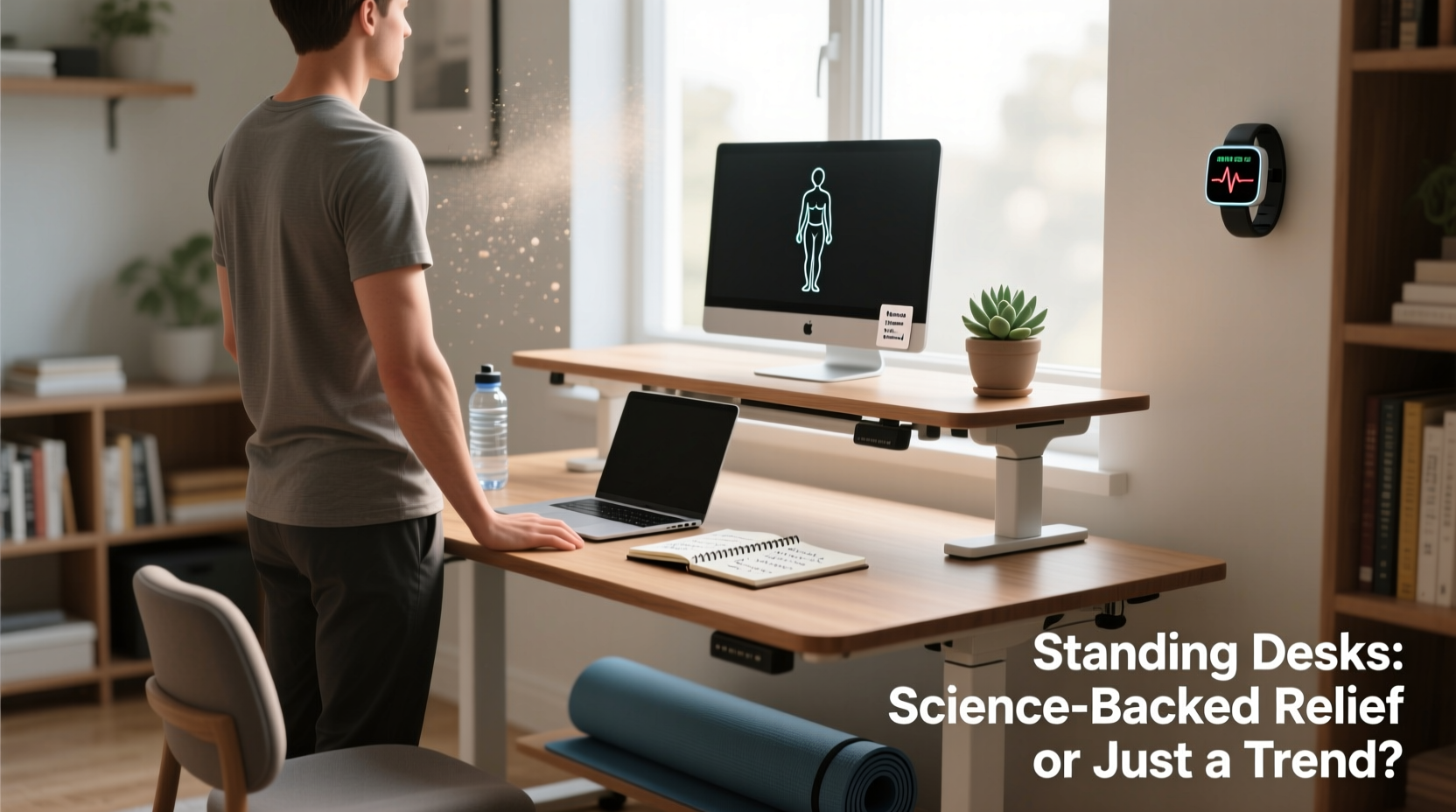
Human spines evolved for motion, not prolonged stillness. Sitting for extended periods increases pressure on the lumbar discs by up to 90% compared to standing, according to studies published in *Spine* and *Clinical Biomechanics*. This sustained load can contribute to disc degeneration, muscle fatigue, and poor posture—all linked to chronic back pain.
Standing desks reduce this static loading. When you stand, your spine assumes a more neutral alignment, and core muscles engage subtly to maintain balance. A 2020 study from the *Journal of Occupational Rehabilitation* found that participants using sit-stand desks reported a 32% reduction in lower back pain after six weeks, compared to those using traditional desks.
However, the benefits depend heavily on usage patterns. Standing for hours without breaks introduces new risks: increased pressure on joints, varicose veins, and fatigue-related postural collapse. The real advantage isn’t standing per se—it’s reducing sedentary time through frequent transitions between sitting and standing.
“Movement is medicine for the spine. The goal isn’t to replace sitting with standing, but to interrupt prolonged static postures.” — Dr. Lena Patel, Physical Medicine and Rehabilitation Specialist, Johns Hopkins Medicine
Common Misconceptions About Standing Desks
Despite growing adoption, several myths persist about how standing desks work and who benefits from them.
- Misconception 1: Standing all day eliminates back pain. In reality, excessive standing can worsen pain, especially for individuals with plantar fasciitis, hip issues, or joint disorders.
- Misconception 2: Any standing desk will help. Poorly adjusted desks—too high, too low, or lacking proper monitor alignment—can strain the neck and shoulders, negating any spinal benefits.
- Misconception 3: They’re only for people with existing back problems. Proactive use can prevent pain before it starts, particularly for those logging eight or more hours at a desk daily.
The most effective approach treats the standing desk as a tool within a broader ergonomic strategy—not a standalone fix.
Who Actually Benefits From Standing Desks?
Not everyone experiences relief from back pain when switching to a standing desk. Effectiveness varies based on individual factors including body mechanics, job type, and pre-existing conditions.
People most likely to benefit include:
- Office workers with mild-to-moderate lower back pain linked to prolonged sitting.
- Individuals with forward head posture or slouching habits during seated work.
- Those recovering from disc-related injuries under physical therapist guidance.
Conversely, standing desks may not be ideal for:
- People with severe spinal stenosis or advanced osteoarthritis.
- Workers required to perform fine motor tasks (e.g., detailed design work), where stability is crucial.
- Those with circulatory issues or balance concerns.
A 2021 survey by the American Chiropractic Association revealed that 61% of users reported improved comfort after three months of consistent sit-stand desk use—but only 44% maintained long-term adherence due to workflow disruption or discomfort if improperly set up.
Optimizing Your Setup: Ergonomic Best Practices
A standing desk is only as good as its configuration. Incorrect height, monitor placement, or lack of supportive flooring can turn a potential solution into a source of new strain.
| Component | Correct Position | Common Mistake |
|---|---|---|
| Desk Height | Elbows at 90°, wrists straight when typing | Too high (causing shoulder shrug) or too low (wrist extension) |
| Monitor Top | At or slightly below eye level | Too low (neck flexion) or too far (leaning forward) |
| Feet Support | Anti-fatigue mat recommended | Standing directly on hard floor |
| Posture | Neutral spine, slight knee bend, weight balanced | Locked knees, leaning on one leg, slouching |
Additionally, footwear matters. Avoid standing in socks or flat shoes with no arch support. Consider orthotics if you have flat feet or previous foot pain.
Step-by-Step Guide to Transitioning to a Standing Desk
Jumping into full-day standing leads to burnout and discomfort. Follow this phased timeline to build tolerance safely:
- Week 1: Stand for 15–20 minutes every two hours. Total standing time: 1–2 hours/day.
- Week 2–3: Increase to 30–45 minutes per session, aiming for 3–4 intervals daily.
- Week 4: Alternate every 30–45 minutes between sitting and standing.
- Ongoing: Listen to your body. If you feel lower back tightness or foot pain, sit and reassess your form or setup.
Use a small notebook or app to log how you feel after each standing session. Note any pain location, duration, and posture cues. This self-tracking helps identify optimal routines.
Real-World Example: Sarah’s Experience with Chronic Back Pain
Sarah, a 38-year-old data analyst, spent nearly nine hours a day seated. After two years of recurring lower back pain, her physical therapist suggested trying a sit-stand desk alongside targeted core exercises.
Initially skeptical, she rented a convertible standing desk for six weeks. She started with 20-minute standing intervals twice a day, gradually increasing as her leg endurance improved. Within four weeks, she noticed reduced stiffness in the mornings and less need to shift positions constantly.
However, at week five, she developed heel pain. Her therapist pointed out she was standing on a hardwood floor without a mat and wearing dress flats. After adding an anti-fatigue mat and supportive shoes, the discomfort resolved.
After three months, Sarah reported a 70% reduction in pain frequency and no longer relied on daily ibuprofen. “It wasn’t the desk alone,” she said. “It was moving more, setting reminders, and finally paying attention to how I sit—or stand.”
Expert Recommendations and Long-Term Outlook
Leading ergonomists emphasize that standing desks should be part of a holistic approach to spinal health. Key complementary strategies include:
- Daily core-strengthening exercises (planks, bird-dogs, bridges).
- Stretching hip flexors and hamstrings, which tighten from sitting.
- Taking microbreaks to walk, even for 60 seconds every hour.
- Using a lumbar support cushion when seated.
Dr. Rajiv Mehta, an occupational health physician at Cleveland Clinic, notes: “We’ve seen patients improve simply by breaking up their sitting time. A standing desk makes that easier, but it’s the behavior change that heals.”
“The best desk is one that moves. Whether manual or electric, the ability to shift positions throughout the day is what protects the spine.” — Dr. Elena Torres, Certified Ergonomics Assessment Professional (CEAP)
Frequently Asked Questions
Can standing desks cure sciatica?
No single intervention cures sciatica, which is a symptom of underlying nerve compression. However, alternating between sitting and standing can reduce pressure on the sciatic nerve caused by prolonged sitting. Always consult a healthcare provider for diagnosis and treatment.
How much time should I spend standing each day?
Research suggests 2–4 hours of total standing time spread across the workday is optimal. Aim for 30–45 minutes of standing followed by an equal period of sitting. Avoid exceeding four hours of cumulative standing to prevent joint fatigue.
Are cheap standing desks worth buying?
While budget models exist, stability and smooth adjustability matter. Wobbly desks encourage poor posture. Look for models with dual motors, height memory presets, and weight capacity above 200 lbs. For long-term use, investing $300–$500 typically yields better durability and safety.
Action Plan: Making Standing Desks Work for You
If you're considering a standing desk for back pain, follow this checklist to maximize effectiveness and avoid common pitfalls:
- ✅ Consult a physical therapist if you have chronic or severe back pain.
- ✅ Choose a height-adjustable model (electric preferred).
- ✅ Measure your desk setup: elbows at 90°, screen at eye level.
- ✅ Buy an anti-fatigue mat and supportive footwear.
- ✅ Set phone or computer reminders to switch positions every 30–45 minutes.
- ✅ Start slow: begin with 1–2 hours of standing per day, then increase gradually.
- ✅ Pair desk use with daily stretches and core exercises.
- ✅ Track pain levels weekly to assess progress.
Conclusion: Beyond the Hype—A Tool, Not a Cure
Standing desks are not a magic bullet for back pain, nor are they merely a marketing ploy. They are practical tools that, when integrated thoughtfully into a dynamic work environment, can significantly reduce discomfort caused by sedentary behavior. The real value lies not in standing, but in movement—breaking the cycle of immobility that so often underlies chronic back issues.
Success depends on correct setup, gradual adaptation, and combining the desk with other healthy habits. For many, the investment pays off in reduced pain, improved energy, and greater body awareness. But like any wellness tool, its effectiveness hinges on consistent, informed use.




 浙公网安备
33010002000092号
浙公网安备
33010002000092号 浙B2-20120091-4
Comments
No comments yet. Why don't you start the discussion?