
Every holiday season, millions of households face the same decision: should they bring home a freshly cut evergreen or dust off their artificial tree from the attic? While tradition, convenience, and aesthetics often guide this choice, a growing number of consumers are asking a deeper question—what’s better for the planet? The debate between artificial and real Christmas trees isn’t as straightforward as it seems. It hinges on factors like production, transportation, lifespan, disposal, and long-term environmental impact. Understanding these elements reveals that sustainability isn't just about one season—it's about cumulative choices over years.
The Environmental Cost of Artificial Trees
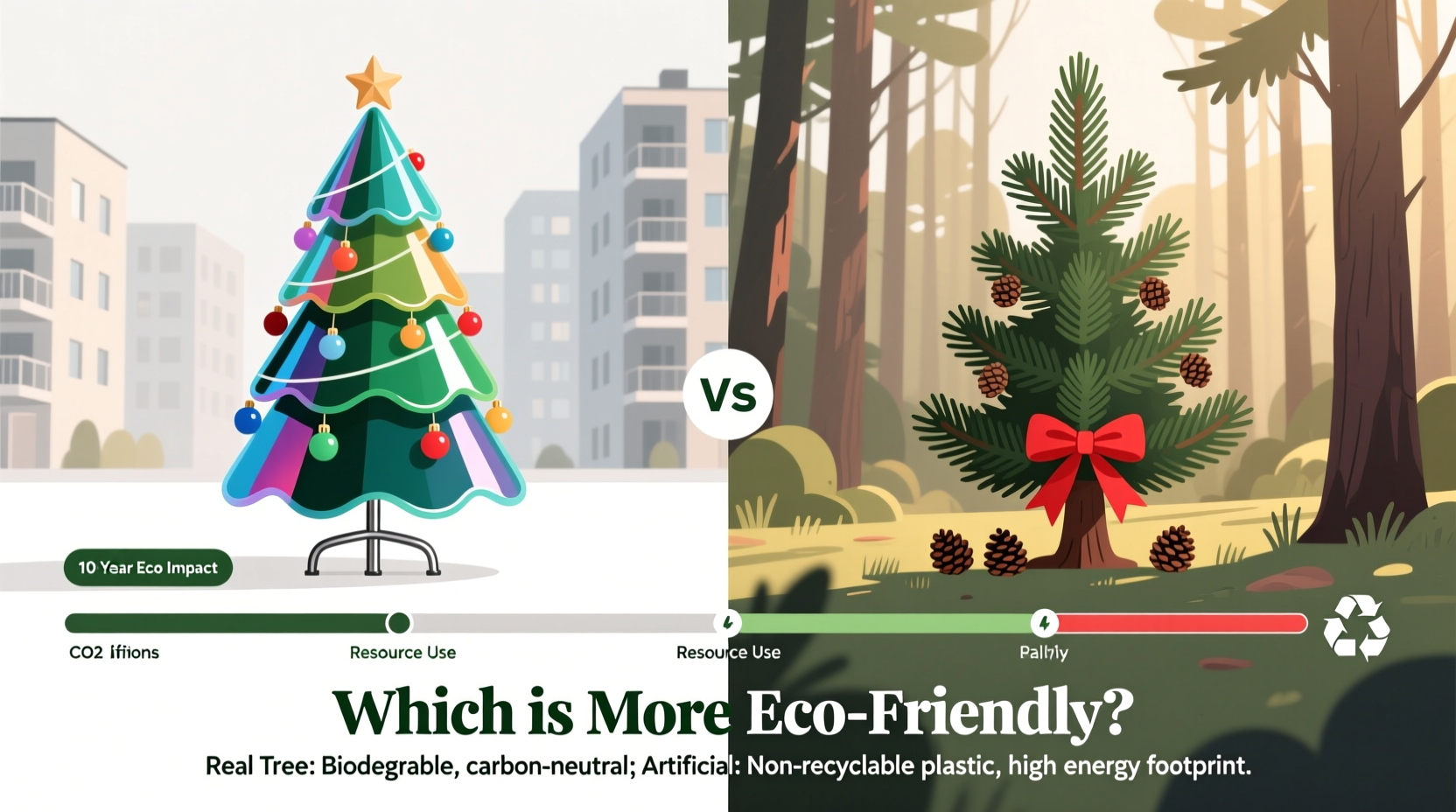
Artificial Christmas trees are typically made from polyvinyl chloride (PVC), a petroleum-based plastic known for its durability but also for its environmental drawbacks. Most are manufactured in factories overseas, primarily in China, where energy sources are still heavily reliant on coal. This means each tree carries a significant carbon footprint before it even reaches a consumer’s doorstep.
According to a 2008 life cycle assessment by Ellipsos, a Canadian environmental consulting firm, the average two-meter artificial tree generates about 40 kilograms of CO₂ equivalent emissions during production and transport. That doesn’t include end-of-life disposal, which usually involves landfilling, where PVC can take centuries to decompose and may leach harmful chemicals into soil and water.
Because artificial trees are designed to last, their environmental justification rests on reuse. However, many households replace theirs every six to nine years due to wear, changing styles, or damage. If a tree is used for fewer than five years, its annual carbon footprint exceeds that of purchasing a new real tree each year.
The Lifecycle of a Real Christmas Tree
Real Christmas trees are grown on farms, not harvested from wild forests—a common misconception. These farms operate much like agricultural plots, with growers planting new seedlings each year to replace those cut. During their 7–12 year growth cycle, real trees absorb carbon dioxide, produce oxygen, stabilize soil, and support local ecosystems. A single acre of Christmas trees can absorb roughly 1 ton of CO₂ annually—equivalent to the emissions from driving a car about 2,300 miles.
Harvesting involves cutting the tree at the base, which ends its life but allows for immediate replanting. After the holiday season, most real trees are collected through municipal recycling programs and turned into mulch, used for erosion control, or chipped for biomass energy. In some areas, trees are sunk into lakes to create fish habitats, further extending their ecological benefit.
However, real trees aren’t without environmental costs. Farming requires water, fertilizers, and pesticides, though many growers now use integrated pest management and organic practices to reduce chemical inputs. Transportation from farm to retail lot also contributes to emissions, especially if trees are shipped long distances. Still, because most are regionally grown, the average transport distance is relatively short compared to imported artificial trees.
“Christmas tree farming is a renewable agricultural practice. When managed responsibly, it supports biodiversity and carbon sequestration.” — Dr. Sarah Thompson, Forestry Ecologist, University of Vermont
Comparative Analysis: Key Environmental Factors
To determine which option is more eco-friendly over time, several key metrics must be weighed: carbon emissions, resource use, waste generation, and longevity. The following table summarizes a side-by-side comparison based on data from peer-reviewed studies and environmental agencies.
| Factor | Artificial Tree | Real Tree |
|---|---|---|
| Primary Material | PVC and metal (non-biodegradable) | Living pine, fir, or spruce (biodegradable) |
| Production Emissions | ~40 kg CO₂ per tree | ~3.5 kg CO₂ per tree (including farming & transport) |
| Lifespan | 5–15 years (average 8) | 1 season (but replaced by new growth) |
| End-of-Life Impact | Landfilled; does not decompose | Composted, mulched, or repurposed |
| Annualized Carbon Footprint (10-year use) | 4 kg CO₂/year | 3.5 kg CO₂/year (per tree) |
| Renewability | No (fossil fuel-derived) | Yes (replanted annually) |
While the artificial tree has a higher upfront carbon cost, its impact per year decreases with prolonged use. However, only when reused for a decade or more does it begin to approach—or slightly undercut—the environmental footprint of buying a new real tree annually. Most consumers don’t meet this threshold, tipping the balance in favor of real trees for typical usage patterns.
Real-World Scenario: The Johnson Family’s Tree Choice
The Johnsons, a family of four in Portland, Oregon, switched from real to artificial trees in 2015, believing it was the greener option. They bought a $180 pre-lit artificial tree expecting it to last forever. But after five years, the branches began shedding, the lights malfunctioned, and the color faded. By 2021, they replaced it with a newer model.
In that time, their total carbon footprint from the artificial tree was approximately 80 kg of CO₂ (including production, shipping, and disposal). Had they purchased a locally grown Douglas fir each year—averaging 15 miles from farm to home—their total emissions would have been around 25 kg of CO₂ over the same period. Even factoring in recycling, the real tree option was significantly lower in emissions. The Johnsons didn’t realize their well-intentioned switch had actually increased their holiday footprint.
This case illustrates a common misperception: that reusability automatically equals sustainability. Without long-term commitment, the environmental math doesn’t add up.
Making the Best Eco-Friendly Choice: A Step-by-Step Guide
Choosing between artificial and real isn’t just about personal preference—it’s about aligning your habits with environmental outcomes. Follow this timeline to make the most sustainable decision for your household.
- Assess Your Usage Pattern: Will you keep an artificial tree for at least 10 years? If not, a real tree is likely the better choice.
- Source Responsibly: For real trees, buy from local farms that practice sustainable agriculture. Look for certifications like “SFI” (Sustainable Forestry Initiative) or ask about pesticide use.
- Optimize Artificial Tree Longevity: If using artificial, protect it from sunlight and moisture, store it properly in a breathable bag, and repair minor damage instead of replacing it.
- Dispose Sustainably: Never throw a real tree in the trash. Use municipal drop-off programs, composting services, or creative reuse (e.g., bird feeders, garden borders).
- Consider Alternatives: Explore potted living trees that can be replanted after the holidays, or rent a tree from a local service that returns it to a nursery.
Expert Recommendations and Industry Insights
Environmental scientists emphasize that no option is perfectly green, but informed decisions can minimize harm. Dr. Alan Pierce, a sustainability researcher at MIT, notes: “The real issue isn’t the tree itself—it’s how we treat it over time. An artificial tree used for 20 years beats ten real trees, but only if it’s actually kept that long.”
Meanwhile, the American Christmas Tree Association (ACTA) acknowledges that artificial trees dominate the U.S. market (about 82% of households), but encourages longer use to improve sustainability. On the other side, the National Christmas Tree Association (NCTA) promotes real trees as part of a renewable cycle, highlighting that over 90% of real trees are recycled nationwide.
Emerging innovations are also shifting the landscape. Some companies now offer artificial trees made from recycled materials or biodegradable plastics, though these remain niche. Others provide tree rental services, combining the convenience of artificial with the renewability of real.
Frequently Asked Questions
Do real Christmas trees contribute to deforestation?
No. Nearly all real Christmas trees are grown on farms specifically for harvest, similar to crops. For every tree cut, one to three seedlings are planted the following year, ensuring a continuous supply and sustained forest cover.
Is it better to burn my old tree instead of trashing it?
Burning releases CO₂ and particulate matter, making it less eco-friendly than composting or mulching. If you must burn, do so only in areas where it’s legal and safe, and never burn treated wood or trees with flocking or heavy decorations.
Can I recycle an artificial tree?
Currently, there are no widespread recycling programs for artificial trees due to their mixed materials (PVC, metal, wires). Most end up in landfills. Some communities accept them for specialized processing, but options are limited.
Conclusion: What Should You Choose?
The answer depends on your behavior, not just the product. If you’re disciplined about reuse and will keep an artificial tree for 10–15 years or more, it can be the lower-impact option. But for most people who replace artificial trees every few years—or who value natural materials and local economies—a real tree is the more sustainable choice.
Ultimately, the greenest tree is the one you care for, source thoughtfully, and dispose of responsibly. Whether real or artificial, your awareness and habits shape the true environmental cost. Sustainability isn’t a single purchase—it’s a pattern of mindful decisions repeated over time.




 浙公网安备
33010002000092号
浙公网安备
33010002000092号 浙B2-20120091-4
Comments
No comments yet. Why don't you start the discussion?