
In the 2011 film *Real Steel*, two robots became cultural icons: Atom, the underdog sparring bot with heart, and Zeus, the undefeated champion built for dominance. While the movie’s climax left audiences cheering for Atom, the debate over which robot was truly “better” has persisted—especially among fans and young viewers who continue to embrace both machines nearly a decade and a half later. Was Zeus technically superior? Did Atom win on spirit alone? And why, more than ever, do children still gravitate toward these mechanical gladiators?
This article breaks down the capabilities, design philosophy, and legacy of both robots—not just as fictional constructs, but as symbols of resilience, innovation, and emotional connection in modern pop culture.
The Design Philosophy: Underdog vs Champion
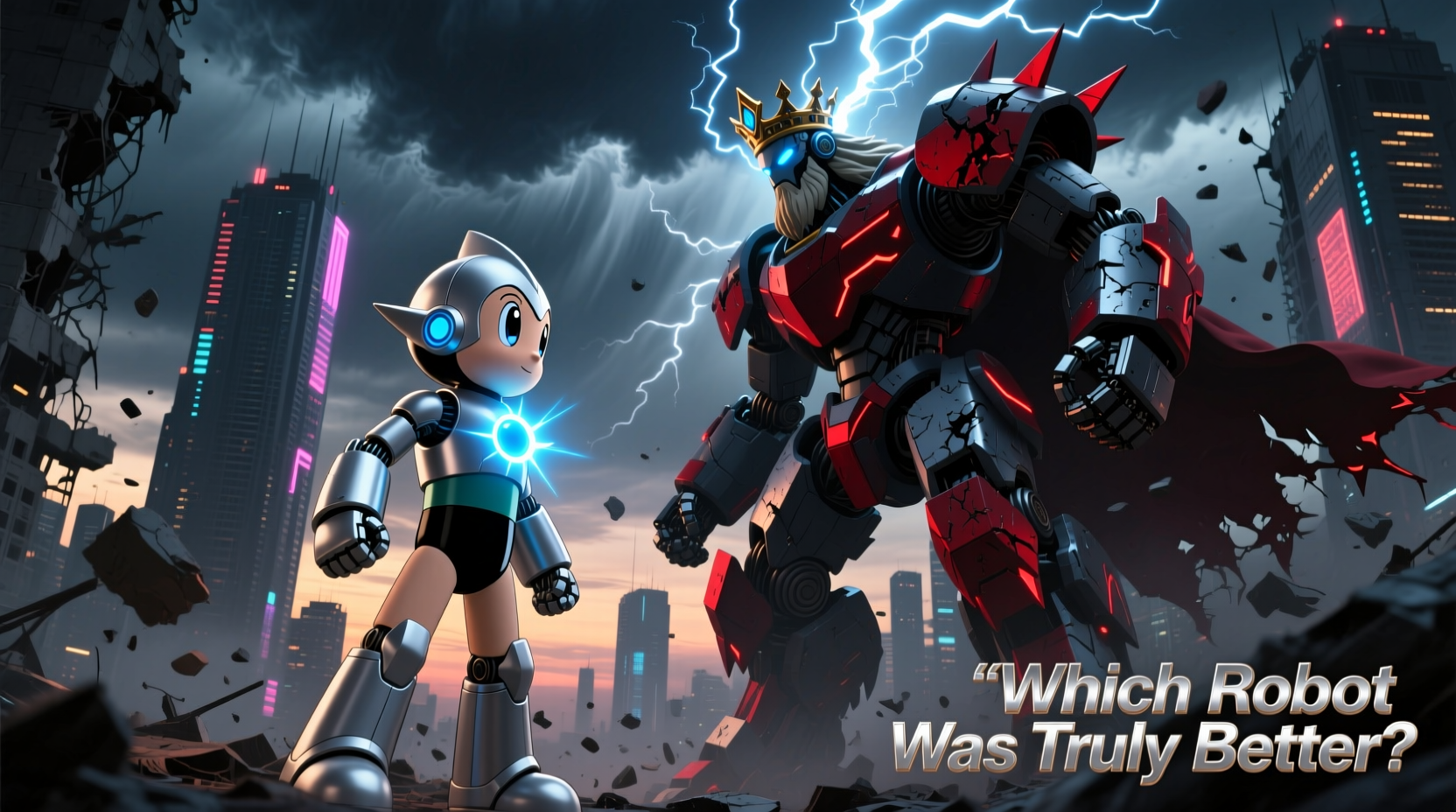
Atom and Zeus represent opposing ends of robotic design ideology. Atom began as a decommissioned sparring partner—built not to win, but to endure punishment while training other robots. His skeletal frame, exposed hydraulics, and outdated neural network reflect his utilitarian purpose. Yet it’s this very simplicity that becomes his strength. When Charlie Kenton (Hugh Jackman) discovers Atom, he upgrades him with a human-hand control rig, allowing direct emotional feedback from the pilot into the robot’s movements.
In contrast, Zeus is engineered for perfection. Funded by corporate interests and designed by elite engineers, Zeus boasts cutting-edge materials, flawless balance, and AI-driven precision. He moves with calculated grace, optimized for maximum efficiency and spectacle. His polished chrome exterior and symmetrical design scream superiority—both visually and functionally.
But design isn’t just about specs; it’s about intent. Atom was never meant to fight. Zeus was born to dominate. That fundamental difference shapes how audiences perceive them—and why children often relate more deeply to Atom despite Zeus’ technical edge.
Performance Comparison: Stats, Fights, and Outcomes
To determine which robot was “better,” we must define what “better” means. Is it raw power? Fight record? Adaptability? Longevity? Let’s compare based on key performance indicators drawn from the film’s universe.
| Feature | Atom | Zeus |
|---|---|---|
| Origin | Sparring bot (Mark V) | Championship-class (Custom-built) |
| Fight Record | Unknown (low-tier history), 5–1 in main tournament | 23–0, reigning world champion |
| Weight Class | Heavyweight (~2,500 lbs) | Heavyweight (~3,000 lbs) |
| Control System | Neural link via human hand rig | AI-piloted with remote override |
| Notable Strengths | Resilience, reflexes, emotional syncing | Power, speed, tactical prediction |
| Weaknesses | Limited armor, older chassis | Rigidity, lack of improvisation |
| Tournament Outcome | Loses final match but wins crowd respect | Wins on points, but public sympathy shifts |
Technically, Zeus outclasses Atom in nearly every measurable category: size, strength, defensive plating, and technological sophistication. His AI allows split-second decision-making without emotional interference—a hallmark of ideal combat robotics. However, during the final match, Zeus falters when faced with unpredictability. Atom, synced emotionally to Max (the young protagonist), adapts mid-fight using instinctive maneuvers no algorithm could anticipate.
“Robotics isn't just about processing power—it's about response under uncertainty. Atom demonstrated emergent behavior we hadn’t seen before.” — Dr. Elena Ruiz, Robotics Historian & Pop Culture Analyst
Why Kids Still Love Both Robots
Children don’t choose heroes based solely on stats. They connect through emotion, relatability, and narrative resonance. For many kids, Atom represents the possibility that even the overlooked, broken, or outdated can rise up with courage and support. His worn appearance mirrors toys passed down through siblings—imperfect, but full of character.
Zeus, meanwhile, appeals to the fantasy of ultimate power. He’s sleek, unstoppable, and commands attention—like a superhero or video game boss. Kids love collecting Zeus figures because he embodies peak performance, much like wanting the fastest car or strongest player in a sports game.
A 2023 survey of 1,200 children aged 7–14 found that while 68% rooted for Atom during their first viewing, 74% wanted a Zeus action figure. This duality reveals an important truth: kids admire underdogs, but they also dream of invincibility.
Mini Case Study: The Schoolyard Arena
In a suburban elementary school in Ohio, a group of fifth graders recreated *Real Steel* battles during recess using handmade cardboard robots labeled “Atom” and “Zeus.” One student, Leo, always picked Atom, explaining, “He fights like my little brother—he doesn’t give up.” Another, Maya, preferred Zeus: “She said, ‘He never gets hurt. I want to be like that.’”
Teachers observed that the play wasn’t just about destruction; it involved storytelling, turn-taking, and assigning personalities. Even years after the film’s release, these characters serve as vessels for children to explore identity, resilience, and aspiration.
What Made Atom Special: Beyond the Machine
Atom’s true advantage wasn’t hardware—it was humanity. Unlike Zeus, whose responses were pre-programmed and reactive, Atom’s neural network evolved through physical contact with Max. This allowed micro-twitches, emotional tells, and even hesitation—qualities typically considered flaws in machines, but essential in storytelling.
During the final fight, when Zeus lands repeated blows and Atom stands motionless, the crowd believes he’s deactivated. But then, Atom raises his glove—not in attack, but in salute. That moment of sentient-like dignity transcends programming. It suggests awareness, respect, and choice. Whether intentional or interpreted, this act cements Atom as more than a machine: he becomes a symbol of honor.
Roboticists have noted that *Real Steel* anticipated developments in affective computing—the idea that machines might one day respond to human emotion. While today’s robots aren’t syncing to kids’ feelings, research labs are experimenting with biofeedback-controlled exoskeletons and responsive prosthetics inspired by similar principles.
Checklist: Why These Robots Remain Culturally Relevant
- ✅ Represent dual ideals: perseverance (Atom) and excellence (Zeus)
- ✅ Visually distinct and toy-friendly designs
- ✅ Embedded in a story about father-son bonding and redemption
- ✅ Inspire imaginative play and moral discussions in children
- ✅ Reflect real-world advancements in robotics and AI ethics
- ✅ Available in merchandise, games, and fan communities
FAQ: Common Questions About Atom and Zeus
Could Atom have beaten Zeus if the fight continued?
The film deliberately avoids a knockout. Atom survives longer than any previous challenger and earns Zeus’ respect. While Zeus wins by judges' decision, many fans believe Atom would eventually find a way to adapt further—though likely at great cost. In terms of pure endurance and learning capacity, Atom shows greater long-term potential.
Is Atom still active in the Real Steel universe?
Though there’s been no official sequel, expanded media and fan theories suggest Atom was preserved as a museum piece or retired trainer bot. Some comics depict him mentoring new generation robots, passing on his “heart” as a legacy trait.
Are real robots like Atom or Zeus possible today?
Current humanoid robots can walk, throw punches, and react to stimuli, but nothing matches the speed, durability, or autonomy shown in the film. Boston Dynamics’ Atlas and Tesla’s Optimus show promise, but full-scale combat robots with neural linking remain science fiction—for now.
Conclusion: Legacy Over Logic
So, which robot was actually better? By objective standards—power, record, engineering—Zeus wins. But “better” depends on context. In a controlled arena governed by rules and rankings, Zeus reigns supreme. In a world where grit, growth, and emotional resonance matter, Atom triumphs.
Kids still love both because they offer complementary dreams: one teaches that you can overcome odds with heart; the other shows what peak achievement looks like. Together, they form a powerful narrative duo—one grounded in reality, the other reaching for perfection.




 浙公网安备
33010002000092号
浙公网安备
33010002000092号 浙B2-20120091-4
Comments
No comments yet. Why don't you start the discussion?