
Many people find themselves repeatedly involved with narcissistic individuals—charming at first, then controlling, dismissive, or emotionally draining. If you’ve noticed a pattern of being drawn to or pursued by narcissists, you’re not alone. More importantly, it’s not a flaw in your character. It’s often a reflection of deeper emotional dynamics shaped by upbringing, attachment styles, and subconscious relationship blueprints. Understanding why this happens is the first step toward reclaiming your emotional autonomy and breaking the cycle for good.
The Psychology Behind Attraction to Narcissists
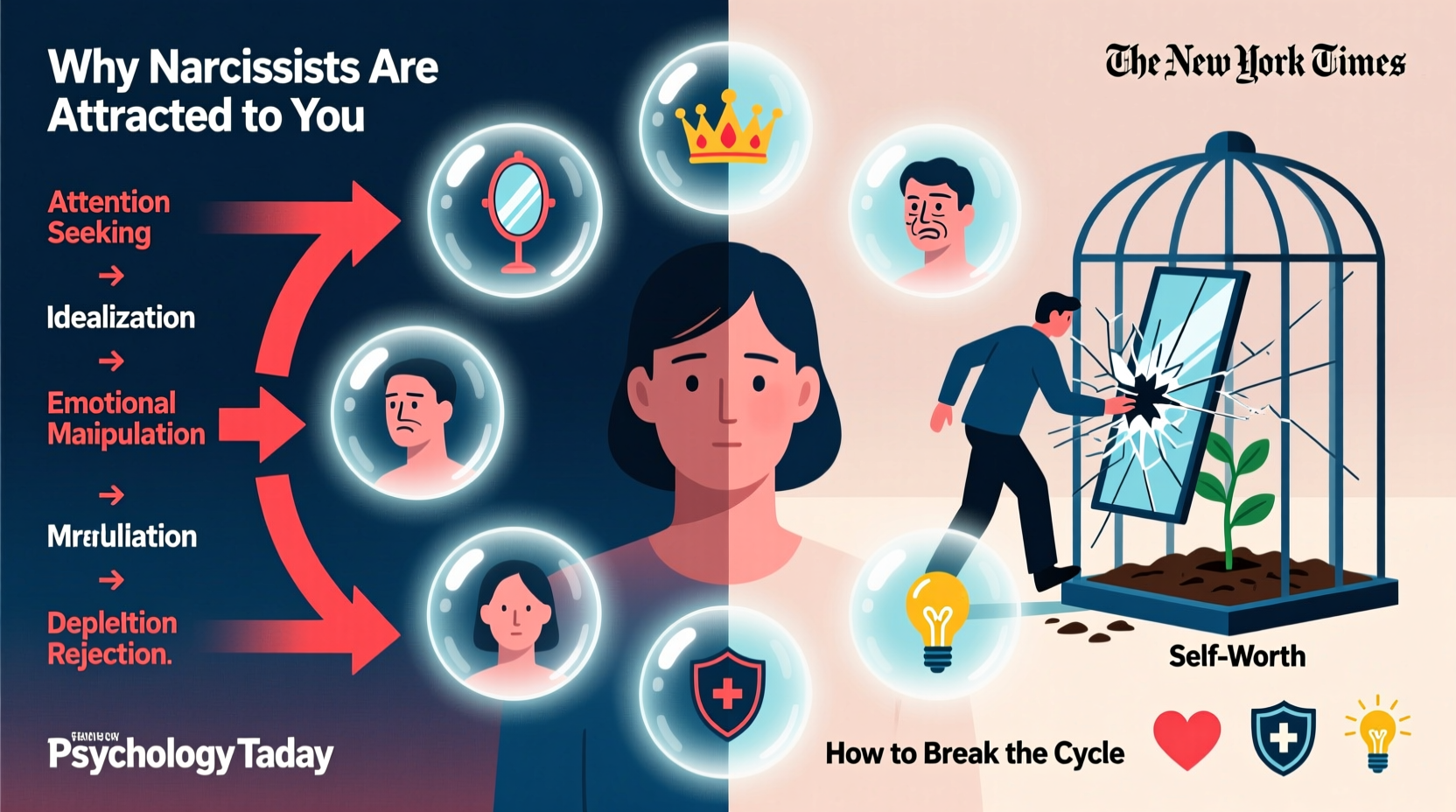
Narcissists often present as confident, charismatic, and magnetic—traits that naturally draw others in. But behind the charm lies a manipulative core: a need for control, admiration, and dominance in relationships. So why do certain people consistently attract them?
Research in psychology suggests that attraction isn’t random. People with high empathy, a history of childhood emotional neglect, or codependent tendencies are more likely to be targeted. Narcissists subconsciously identify those who are nurturing, forgiving, and less likely to set firm boundaries—making them ideal sources of \"narcissistic supply.\"
Dr. Ramani Durvasula, a clinical psychologist and expert on narcissism, explains:
“Narcissists are like emotional predators. They don’t fall in love—they fall in lust with potential sources of validation. And they’re skilled at identifying people who will give it freely.” — Dr. Ramani Durvasula, Should I Stay or Should I Go?
Common Traits That Draw Narcissists In
While anyone can encounter a narcissist, certain personality traits and life experiences increase vulnerability. These aren’t weaknesses—they’re often signs of strength misused in unhealthy contexts.
- High empathy: You feel others’ pain deeply and want to help, even at your own expense.
- Low self-boundaries: You struggle to say no or fear conflict when asserting your needs.
- Childhood emotional labor: You were expected to manage adult emotions early in life, making caretaking second nature.
- History of inconsistent caregiving: If your emotional needs were met unpredictably, you may tolerate erratic behavior in adulthood.
- A desire to “fix” others: You believe love can heal trauma or change someone’s behavior.
Why the Cycle Repeats: The Role of Attachment
Attachment theory helps explain why some people keep returning to narcissistic partners. If your early caregivers were emotionally unavailable, unpredictable, or critical, you may have developed an anxious or disorganized attachment style.
In adulthood, this can manifest as:
- Seeking reassurance constantly
- Fearing abandonment more than toxicity
- Misinterpreting intensity for intimacy
- Feeling responsible for your partner’s mood
Narcissists thrive in such dynamics. Their hot-and-cold behavior—love bombing followed by withdrawal—mirrors the inconsistency you may have experienced in childhood, creating a traumatic bond that feels familiar, even addictive.
How Narcissists Identify Potential Targets
They don’t choose randomly. Narcissists use subtle cues to assess who might tolerate manipulation. These include:
| Behavior | What It Signals to a Narcissist |
|---|---|
| You apologize frequently | You’re conflict-averse and easy to control |
| You prioritize others’ needs | You’ll put their desires above your own |
| You excuse bad behavior | You’ll rationalize their actions |
| You crave closeness quickly | You’re emotionally available and vulnerable |
| You downplay your worth | You won’t challenge their superiority |
Breaking the Cycle: A Step-by-Step Guide
Escaping the pattern requires awareness, courage, and consistent action. Here’s how to dismantle the cycle from the inside out.
- Recognize the pattern. Reflect on past relationships. Did you often feel drained, confused, or blamed? Was there a gap between early charm and long-term respect?
- Identify your triggers. What emotions or situations make you overlook red flags? Loneliness? Fear of being unlovable?
- Rebuild self-trust. Start small: honor your own decisions, even minor ones. This rebuilds internal authority.
- Set non-negotiable boundaries. Practice phrases like, “I’m not comfortable with that,” or “That doesn’t work for me.”
- Pause before committing. Delay emotional or physical intimacy. Let time reveal consistency, not just charisma.
- Seek secure relationships. Spend time with emotionally stable people. Observe how healthy dynamics feel—calm, respectful, balanced.
- Therapy or support groups. Work with a trauma-informed therapist to reprocess old wounds and rewire relational habits.
Mini Case Study: Sarah’s Turnaround
Sarah, 34, noticed she always dated men who started with grand gestures—weekend trips, constant texts, declarations of destiny. Within months, they’d grow cold, accuse her of being “too sensitive,” and demand she prove her loyalty.
After her third breakup with a similar pattern, she sought therapy. She realized her father was loving one moment and withdrawn the next—a dynamic mirrored in her partners. With help, she learned to slow down dating, journal red flags, and sit with discomfort instead of fixing it. Two years later, she’s in a quiet, steady relationship where she feels seen—not pursued, not idolized, but truly known.
Practical Checklist: Protect Yourself Moving Forward
Use this checklist before entering a new relationship to avoid repeating old patterns:
- ✅ I take at least 2–3 months to assess consistency, not just chemistry.
- ✅ I notice how they treat service staff, family, or pets.
- ✅ I pay attention if they accept feedback or deflect blame.
- ✅ I check in with trusted friends about my partner’s behavior.
- ✅ I maintain my own hobbies, friendships, and routines without guilt.
- ✅ I end interactions that leave me feeling confused, small, or anxious.
- ✅ I prioritize peace over passion—stable > intense.
Frequently Asked Questions
Can a narcissist change?
Genuine change is rare. While some may modify behavior in therapy, true narcissistic personality disorder involves a deep-seated lack of empathy and accountability. Lasting change requires sustained effort most are unwilling to commit to. Focus on what you can control: your choices and boundaries.
Am I a narcissist for wanting attention?
No. Needing connection, appreciation, and emotional reciprocity is human. Narcissism is defined by exploitation, lack of remorse, and a need to dominate—not by confidence or enjoying praise.
Why did the narcissist choose me over others?
Not because you’re special—but because you were usable. They selected you based on perceived availability, empathy, and low resistance. That says nothing about your worth and everything about their strategy.
Final Steps Toward Freedom
Attracting narcissists isn’t fate—it’s a learned response to early emotional environments. The good news? These patterns can be unlearned. Healing begins when you stop asking, “What’s wrong with me?” and start asking, “What did I learn about love that no longer serves me?”
Each boundary you set, each red flag you honor, each moment you choose yourself over chaos—it all rebuilds your inner foundation. You’re not broken. You’re awakening.




 浙公网安备
33010002000092号
浙公网安备
33010002000092号 浙B2-20120091-4
Comments
No comments yet. Why don't you start the discussion?