
Wet food is a staple in many cats' diets due to its high moisture content, palatability, and health benefits. However, one major challenge pet owners face is preserving the freshness of wet food once it's exposed to air. Leaving wet food out for too long leads to bacterial growth, drying, and spoilage—especially in warm environments. Two common feeding solutions are automatic cat feeders and gravity bowls. But when it comes to keeping wet food fresh, they differ significantly in design, functionality, and safety. Understanding these differences is essential for maintaining your cat’s health and ensuring every meal stays appetizing.
How Wet Food Spoils: The Science Behind Freshness
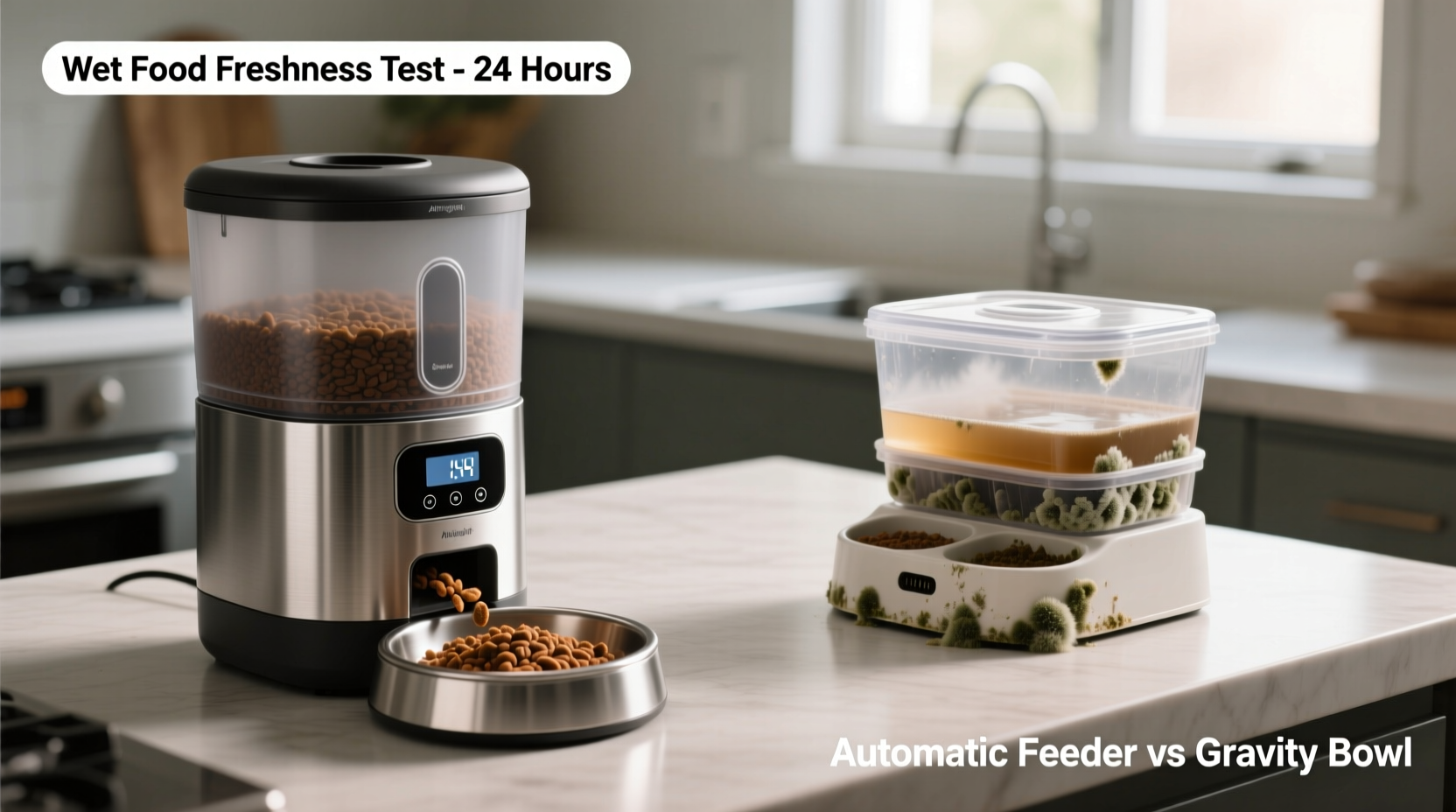
Wet cat food typically contains 70–80% moisture, making it highly perishable. Once opened, exposure to oxygen, ambient temperature, and airborne bacteria accelerates spoilage. The USDA recommends not leaving perishable food at room temperature for more than two hours; for wet pet food, that window shrinks to just one hour in temperatures above 90°F (32°C).
Bacteria such as *Salmonella*, *E. coli*, and *Listeria* can proliferate rapidly in moist, protein-rich environments. Even if the food doesn’t smell off, harmful microbes may already be present. Signs of spoilage include:
- Unpleasant odor
- Drying or crust formation on the surface
- Change in texture or color
- Mold development
Preserving freshness isn’t just about taste—it’s a matter of digestive health and disease prevention. This makes choosing the right feeding method critical.
Automatic Cat Feeders: Precision and Preservation
Modern automatic cat feeders are engineered specifically to handle wet food with mechanisms designed to minimize exposure. These devices typically feature sealed compartments, cooling elements, or timed dispensing systems that release food only when needed.
High-end models use insulated chambers or even built-in refrigeration to keep food cold until serving time. Others employ rotating trays with individual portions sealed under foil or plastic lids, reducing contact with air until the moment of dispensing.
Key advantages include:
- Portion control: Delivers exact amounts at scheduled times, preventing overfeeding.
- Air-tight storage: Keeps food sealed and cool between meals.
- Remote scheduling: Allows customization via smartphone apps, ideal for busy households.
- Reduced waste: Only dispenses what the cat will eat within minutes, minimizing spoilage risk.
Some advanced units integrate desiccant packs or UV-C sanitization to further extend shelf life. Because food remains isolated until dispensed, oxidation and microbial contamination are dramatically reduced.
“Automatic feeders with sealed, cooled compartments can preserve wet food freshness up to four times longer than open-air methods.” — Dr. Lena Torres, Veterinary Nutritionist
Gravity Bowls: Simplicity vs. Spoilage Risk
Gravity bowls are commonly associated with dry kibble, where their continuous-flow design works well. These bowls rely on a refillable hopper positioned above the dish, using gravity to replenish food as the cat eats.
However, gravity bowls are fundamentally unsuited for wet food. Most models lack sealing mechanisms, meaning any food loaded into the tray is immediately exposed to air. Even if the hopper is covered, the portion in the feeding chamber begins degrading the moment it’s placed.
Because wet food is sticky and dense, it doesn’t flow like kibble. It clumps, sticks to surfaces, and blocks dispensing mechanisms. Attempting to use a standard gravity feeder with wet food often results in clogs, inconsistent portions, and rapid spoilage.
In practice, gravity systems force pet owners to load large quantities of wet food hours—or even days—ahead of consumption. This creates an ideal environment for bacterial growth, especially in homes with fluctuating temperatures.
Why Gravity Feeders Fail with Wet Food
| Factor | Automatic Feeder (Wet Food Compatible) | Standard Gravity Bowl |
|---|---|---|
| Air Exposure | Minimal; food sealed until dispensed | Constant; food sits exposed |
| Temperature Control | Some models include cooling features | No temperature regulation |
| Dispensing Mechanism | Timed, portion-controlled release | Continuous flow (unsuitable for wet textures) |
| Spoilage Risk | Low to moderate (with proper use) | High (especially after 1–2 hours) |
| Cleaning Frequency | Daily cleaning recommended | Daily cleaning required, but harder due to residue buildup |
The data shows a clear disadvantage for gravity bowls when handling wet food. Their design prioritizes convenience for dry food, not preservation for perishables.
Best Practices for Keeping Wet Food Fresh
Regardless of the feeding tool you choose, certain practices are non-negotiable for food safety and freshness. Implementing these steps ensures your cat receives nutritious, uncontaminated meals every time.
- Use single-serve pouches or cans: Open only what your cat will eat in one sitting. Avoid transferring large amounts to containers unless used immediately.
- Refrigerate unused portions: Seal leftovers with plastic wrap or transfer to an airtight container. Label with date and discard after 48 hours.
- Choose feeders with sealed compartments: If using automation, select models explicitly rated for wet food with moisture barriers.
- Clean equipment daily: Bacteria thrive in residual food film. Wash bowls, trays, and dispensers with hot, soapy water each day.
- Monitor ambient temperature: In hot climates, consider placing feeders in shaded, cooler areas of the home.
Mini Case Study: The Johnson Family’s Transition
The Johnsons had been using a gravity-style feeder for their two cats, assuming it would reduce their morning rush. They attempted to adapt it for wet food by loading a full day’s supply into the tray each night. Within days, both cats showed signs of mild gastrointestinal upset—occasional vomiting and softer stools.
After consulting their vet, they learned that the food was spoiling overnight. Switching to a programmable automatic feeder with separate chilled compartments eliminated the issue. Meals were dispensed fresh at 7 AM and 6 PM, and symptoms resolved within a week. The cats also became more consistent in their eating patterns, and food waste dropped by nearly 60%.
This real-life example underscores how inappropriate feeding tools can silently compromise pet health—even when intentions are good.
Step-by-Step Guide to Choosing the Right Feeder
Selecting the best system for wet food involves evaluating your lifestyle, your cat’s eating habits, and product capabilities. Follow this sequence to make an informed decision:
- Assess your cat’s diet: Does your cat eat wet food exclusively, or only during specific meals? If wet food is part of a mixed diet, ensure the feeder supports both types safely.
- Determine feeding frequency: Cats thrive on routine. Identify how many meals per day you need to automate.
- Research wet-food-compatible models: Look for brands like PetKit, Vanstek, or Cat Mate that offer sealed, portion-controlled dispensers with cooling options.
- Check hygiene features: Removable trays, dishwasher-safe parts, and anti-jam mechanisms improve usability and cleanliness.
- Test and monitor: Run a trial period. Observe whether food remains fresh, your cat eats comfortably, and the device operates reliably.
Never assume a feeder labeled “for wet food” is automatically safe. Read user reviews focusing on long-term performance and spoilage reports.
Frequently Asked Questions
Can I leave wet food in a gravity bowl for a few hours?
No. Wet food should not remain unrefrigerated for more than one to two hours, depending on room temperature. Leaving it in a gravity bowl exposes it continuously to air and heat, increasing the risk of bacterial contamination. Even if your cat returns to it later, the food may already be unsafe.
Are there gravity feeders designed for wet food?
True gravity feeders—those relying on constant flow—are not suitable for wet food due to texture and spoilage risks. Some manufacturers market \"semi-automatic\" feeders with large reservoirs, but these still expose food prematurely. The closest functional alternative is a multi-compartment automatic feeder, which mimics scheduled access without true gravity flow.
Do automatic feeders really keep wet food fresh?
Yes—when properly designed. Models with sealed pods, refrigerated zones, or vacuum-sealed portions maintain freshness far better than open bowls. However, no feeder eliminates the need for daily cleaning and proper food handling. The technology enhances preservation but doesn’t replace basic hygiene.
Final Recommendations and Action Plan
When comparing automatic cat feeders to gravity bowls for wet food freshness, the answer is definitive: automatic feeders win decisively. Their ability to portion, seal, and dispense food on demand aligns perfectly with the biological needs of wet food preservation. Gravity bowls, while convenient for dry kibble, introduce unacceptable risks when used with perishable meals.
To protect your cat’s health and maximize food quality, transition to a high-quality automatic feeder designed for wet food. Prioritize models with the following features:
- Airtight, compartmentalized storage
- Programmable timers with app integration
- Easily cleanable, non-porous materials
- Optional cooling or insulation
Pair your device with disciplined food handling—refrigerate extras, clean daily, and serve promptly. These habits, combined with smart technology, create a feeding routine that supports longevity, digestion, and overall feline wellness.




 浙公网安备
33010002000092号
浙公网安备
33010002000092号 浙B2-20120091-4
Comments
No comments yet. Why don't you start the discussion?