
Every morning, millions of commuters make a silent but significant decision: how they’ll carry their essentials from home to work. The choice between a backpack and a shoulder bag may seem trivial at first glance—after all, both get the job done. But over weeks, months, and years, that decision impacts posture, comfort, efficiency, and even long-term physical health. With urban commutes growing longer and workloads heavier, the gear we choose matters more than most realize.
This isn’t just about fashion or convenience. It’s about biomechanics, daily strain, and practicality in real-world conditions. Whether you’re walking ten blocks, cycling through city streets, or navigating crowded subways, your bag influences your experience more than you think. Let’s examine the real differences—and determine whether switching styles could improve your commute.
Ergonomics and Physical Impact
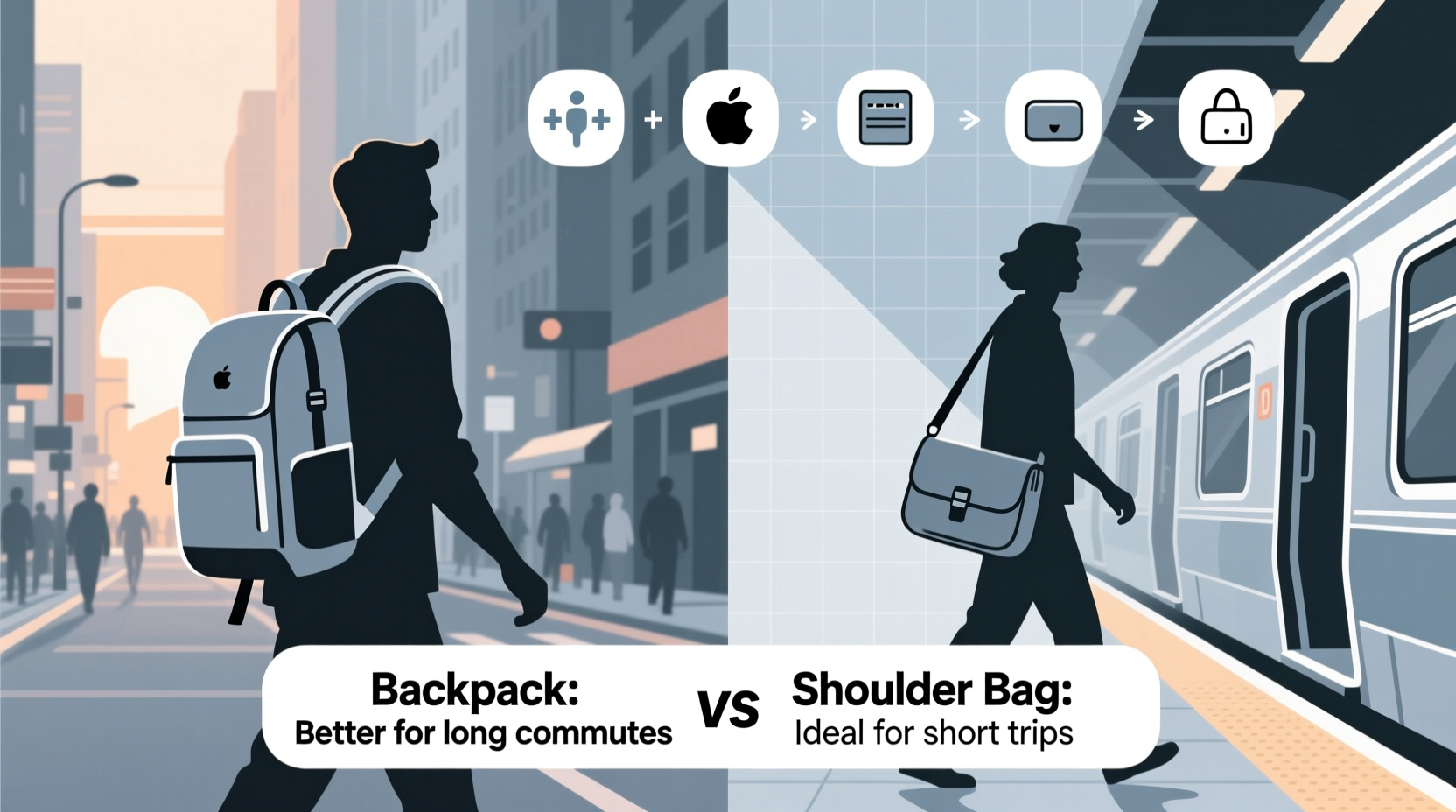
The human body wasn’t designed to carry uneven loads for extended periods. Shoulder bags, especially when worn on one side, create asymmetrical weight distribution. This forces the spine to compensate, often leading to muscle imbalances, neck tension, and lower back pain over time. Studies by the American Chiropractic Association suggest that carrying a heavy single-strap bag can increase spinal curvature and contribute to chronic postural issues.
In contrast, backpacks distribute weight across both shoulders and closer to the body’s center of gravity. When properly fitted, they reduce strain on the spine and promote balanced posture. Adjustable padded straps and chest or waist stabilizers further enhance load management, particularly useful for those carrying laptops, gym clothes, or groceries during their commute.
“From a biomechanical standpoint, a well-fitted backpack reduces spinal load by up to 40% compared to a single-strap shoulder bag.” — Dr. Lena Torres, Physical Therapist & Ergonomics Consultant
However, not all backpacks are created equal. Poorly adjusted straps, excessive weight, or wearing only one strap defeats the purpose. Similarly, lightweight shoulder bags used for minimal loads (wallet, phone, keys) pose little risk. The key factor is proportionality: match the bag type to your load and duration of carry.
Capacity and Organization Compared
When evaluating utility, capacity and organization play decisive roles. Commuters today often carry more than just a wallet—they tote laptops, chargers, notebooks, water bottles, lunch containers, and sometimes gym gear. Backpacks typically offer superior internal volume and dedicated compartments, making them ideal for structured packing.
| Feature | Backpack | Shoulder Bag |
|---|---|---|
| Average Capacity | 15–30 liters | 5–12 liters |
| Laptop Sleeve | Standard (fits 13”–16”) | Often limited or absent |
| Compartmentalization | Multiple pockets, hidden zips, front panels | Fewer sections, open main cavity |
| Access Speed | Moderate (must remove to access) | High (quick draw while worn) |
| Bulk When Empty | Can be bulky if rigid frame | Collapses easily, compact storage |
While backpacks win in raw storage, shoulder bags excel in accessibility. Need to grab your transit card or phone mid-walk? A shoulder bag allows swift access without stopping. For minimalist commuters—those with smartphones, AirPods, and a small notebook—a sleek shoulder bag might be all they need.
Lifestyle and Commute Type Matter Most
The best bag depends less on universal superiority and more on individual routine. Consider three real-world scenarios:
- The Cyclist: Needs stability and hands-free movement. A backpack with reflective strips and breathable mesh fits perfectly.
- The Subway Rider: Navigates crowds and overhead bins. A slim shoulder bag avoids getting caught or jostled.
- The Walker: Covers 3+ miles daily. Even weight distribution via a backpack prevents fatigue.
Mini Case Study: Alex, Urban Software Developer
Alex commuted 45 minutes each way—first a bike ride, then a train, followed by a 15-minute walk. Initially, he used a leather shoulder bag for its professional look. Within two months, he developed left-side shoulder pain and found himself constantly adjusting the strap. After switching to a minimalist backpack with a laptop sleeve and ventilation panels, his discomfort faded. He also noticed improved energy levels, attributing it to reduced physical strain. “I didn’t realize how much tension I was carrying—literally,” he said.
This shift highlights a critical point: function should guide form. Style matters, but not at the expense of sustainability.
Security and Environmental Factors
Urban environments introduce additional concerns: theft, weather, and congestion. Backpacks, especially those worn on the front in crowded spaces, offer better protection against pickpockets. Rear-facing backpacks are vulnerable, particularly on packed trains or buses.
Shoulder bags, when worn crossbody, provide moderate security and allow constant visual monitoring. However, dangling straps can catch on doors or handles—a hazard on escalators or public transit.
Weather resistance varies by model, but backpacks often feature roll-top closures or rain covers, making them more suitable for unpredictable climates. Shoulder bags, particularly leather or fabric designs without waterproofing, are more prone to damage from rain or snow.
Step-by-Step Guide to Choosing Your Ideal Commute Bag
Follow this sequence to determine the right option for your needs:
- Assess your daily load: List everything you carry regularly. If it exceeds 8 lbs (3.6 kg), lean toward a backpack.
- Map your commute: Note transportation modes, walking distance, and environmental challenges (e.g., stairs, rain).
- Test carry patterns: Try both styles with your typical load for a week each. Track physical feedback—shoulder pain, back stiffness, fatigue.
- Evaluate access needs: Do you frequently retrieve items? Shoulder bags offer faster access; backpacks require removal.
- Check workplace norms: Some offices favor professional aesthetics. Consider a hybrid solution—like a sleek, professional backpack—or keeping a change of clothes at work.
FAQ
Can a shoulder bag ever be ergonomic?
Yes—if it's worn crossbody, has wide, padded straps, and carries light loads (under 5 lbs). Frequent strap switching between shoulders also helps prevent imbalance.
Are backpacks unprofessional for office settings?
Not anymore. Modern commuter backpacks come in minimalist, leather, or tailored designs suitable for corporate environments. Brands like Aer, Tumi, and Bellroy have redefined professional backpack aesthetics.
What’s the maximum safe weight for a commute bag?
Experts recommend no more than 10–15% of your body weight. For a 150-lb person, that’s 15–22 lbs. Exceeding this increases injury risk significantly.
Final Verdict: Does It Actually Matter?
Yes—it absolutely matters, but not in the way most assume. The debate isn’t about which bag is universally better, but which aligns with your body, routine, and responsibilities. For most people with moderate to heavy loads, a well-designed backpack offers measurable advantages in comfort, posture, and endurance. However, for short, low-carry commutes where quick access and style are priorities, a quality shoulder bag remains a valid choice.
The real issue lies in defaulting to a bag without considering its long-term impact. Small daily compromises—like enduring shoulder pain or fumbling for transit cards—accumulate into frustration, inefficiency, and avoidable health strain.
“The right bag doesn’t just carry your things—it supports your life.” — Marcus Lin, Urban Mobility Designer
Take Action Today
Don’t wait for discomfort to dictate your next purchase. Audit your current bag: How much do you carry? How do you feel after a full day? Could a switch improve your physical ease or mental clarity? Experiment thoughtfully. Try borrowing different styles. Adjust straps. Distribute weight wisely.
Your commute shouldn’t be an endurance test. By choosing intentionally, you invest in daily well-being—one step, and one carry, at a time.




 浙公网安备
33010002000092号
浙公网安备
33010002000092号 浙B2-20120091-4
Comments
No comments yet. Why don't you start the discussion?