
Every school day begins with a checklist: books, homework, supplies, snacks — and the bag that carries it all. Among the many accessories available, two stand out as near-universal: the backpack and the pencil case. Recently, a new hybrid has entered the scene — the backpack with a built-in lunchbox compartment. But how does this innovation stack up against the long-standing staple of student life, the humble pencil case? Is one genuinely more useful than the other, or do they serve entirely different purposes? The answer isn’t as straightforward as it seems.
To determine real-world usefulness, we need to evaluate function, durability, convenience, age appropriateness, and overall impact on a student’s daily routine. Let’s break down both options beyond surface-level appeal and explore which truly adds more value in a school setting.
Understanding the Core Functions
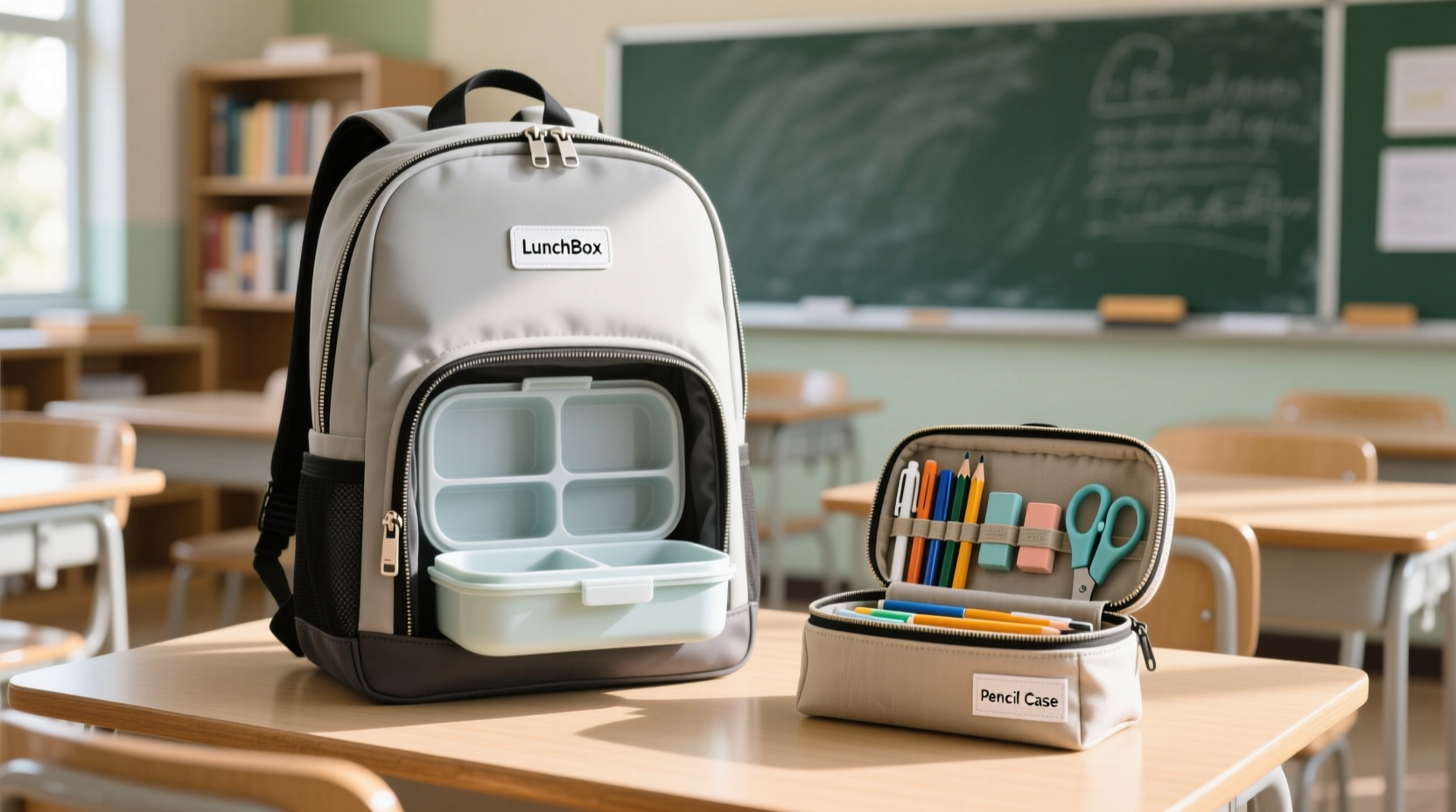
The fundamental difference between a backpack with a built-in lunchbox and a pencil case lies in their primary purpose.
- Backpack with built-in lunchbox: Designed to carry books, notebooks, electronics, and food — combining storage for academic essentials and meals in one integrated system.
- Pencil case: A compact container focused solely on organizing writing tools, erasers, sharpeners, rulers, and small stationery items.
At first glance, comparing them may seem like comparing apples to oranges. One is a large-capacity carrier; the other is a specialized organizer. However, when evaluating “usefulness,” we must consider how each contributes to efficiency, preparedness, and stress reduction during the school day.
Convenience and Daily Practicality
Let’s examine how each item performs in real-life school scenarios.
A backpack with a built-in insulated lunchbox eliminates the need for a separate cooler bag. This means fewer items to juggle, less clutter in lockers, and no risk of forgetting the lunch bag at home. For younger students especially, this integration simplifies routines. Parents appreciate not having to pack multiple bags, and kids benefit from having everything in one place.
On the other hand, a pencil case ensures that pens don’t leak into textbooks and that small items like highlighters or mechanical pencils aren’t lost at the bottom of a backpack. Without a pencil case, students waste time searching for tools during class — a distraction that accumulates over weeks and months.
While both are convenient, they solve different problems. The backpack-lunchbox combo streamlines meal transport, while the pencil case optimizes access to learning tools.
Comparative Analysis: Key Features Side by Side
| Feature | Backpack with Built-in Lunchbox | Pencil Case |
|---|---|---|
| Primary Function | Carry books, devices, and packed meals | Store and organize writing instruments |
| Average Cost | $35–$70 | $3–$15 |
| Lifespan | 1–3 years (depending on material) | 6 months to 2 years |
| Maintenance Needs | Spot clean; wipe interior after meals | Occasional emptying and cleaning |
| Age Suitability | Best for elementary to middle school | All ages (elementary through college) |
| Portability Impact | Reduces number of bags needed | Minimal added bulk |
| Critical for Academic Success? | No (but helpful for meal planning) | Yes (directly affects classroom readiness) |
Real-World Example: A Day in the Life of Two Students
Case Study: Emma (Grade 4) vs. Jordan (Grade 9)
Emma uses a colorful backpack with an insulated lunch compartment. Her mom packs her sandwich, apple, and yogurt every morning. Because the lunch fits snugly inside her main bag, Emma never forgets it. She also uses a small zippered pencil case to keep crayons, glue sticks, and pencils separated. On busy mornings, her system works seamlessly.
Jordan, a high school freshman, owns a sleek laptop backpack but prefers a separate thermal lunch tote. He finds the built-in lunch compartments too small for his larger meals. However, he relies heavily on a hard-shell pencil case to manage multiple colored pens, sticky notes, and exam tools. During finals week, he credits his pencil case with helping him stay organized under pressure.
This contrast shows that usefulness depends on context. For younger children, the all-in-one backpack offers tangible benefits. For older students, customization and flexibility often outweigh integrated features.
“Organization starts with predictability. When students know exactly where their tools are, cognitive load decreases and focus improves.” — Dr. Linda Park, Educational Psychologist
When the Backpack Falls Short
Despite its advantages, the backpack with a built-in lunchbox has limitations. Many models feature thin insulation that fails to keep food cold for more than a few hours. In warmer climates or longer school days, perishable items can spoil. Additionally, if the lunch leaks, it can damage books or electronics stored nearby unless compartments are fully sealed — a feature not always present.
Some students also report discomfort due to uneven weight distribution when carrying both heavy textbooks and a full lunch. Ergonomic design varies widely across brands, making some models less suitable for daily use.
In contrast, a pencil case introduces no such risks. It adds negligible weight, rarely malfunctions, and remains effective as long as it’s intact. Its simplicity is part of its strength.
Step-by-Step: Choosing What Works for Your Student
- Assess Grade Level: Elementary students benefit most from integrated lunch solutions. Older students may prefer modular systems.
- Evaluate Meal Needs: Does the child pack hot or perishable food regularly? If so, consider whether the backpack’s insulation is sufficient.
- Check School Policies: Some schools restrict certain bag types or prohibit food in classrooms, affecting utility.
- Involve the Student: Comfort and personal preference play a big role in consistent use.
- Test Durability: Look for reinforced stitching, water-resistant materials, and easy-clean interiors.
Frequently Asked Questions
Can a pencil case replace a backpack with a lunchbox?
No — they serve completely different functions. A pencil case cannot store meals, just as a lunch compartment cannot hold pens effectively. They are complementary, not interchangeable.
Are backpacks with built-in lunchboxes worth the extra cost?
For families seeking simplicity and young children who tend to misplace items, yes. The convenience of having lunch and books together often justifies the higher price. However, if your child already manages meals well with a separate cooler, the added feature may be redundant.
Do teachers have a preference?
Most educators emphasize organization and preparedness. While they don’t usually specify gear, many note that students with dedicated pencil cases are less likely to disrupt class asking to borrow supplies. As for lunch storage, it’s typically a parental concern unless food safety becomes an issue.
Final Verdict: Which Is More Useful?
The truth is, neither item universally surpasses the other in usefulness. Instead, their value depends on the user’s needs, age, and daily routine.
A backpack with a built-in lunchbox excels in reducing logistical complexity, especially for younger students and busy households. It promotes consistency and minimizes forgotten lunches. However, its usefulness diminishes if the insulation is poor or the design is impractical.
A pencil case, though smaller in scope, plays a direct role in academic performance. It supports focus, reduces distractions, and fosters responsibility. Every student — from kindergarten through college — benefits from having a reliable place for essential tools.
If forced to choose only one, the pencil case emerges as the more universally essential item. Why? Because access to functional writing tools is non-negotiable in nearly every classroom. Food can sometimes be purchased at school or shared, but being unprepared to write, take notes, or complete assignments has immediate academic consequences.
Take Action Today
Instead of viewing these items as competitors, think of them as partners in student success. Invest in a well-designed backpack with a functional lunch compartment for seamless daily logistics, and pair it with a sturdy, well-organized pencil case to ensure academic readiness. Teach students early that preparation isn’t about having the fanciest gear — it’s about using the right tools consistently.




 浙公网安备
33010002000092号
浙公网安备
33010002000092号 浙B2-20120091-4
Comments
No comments yet. Why don't you start the discussion?