
If you've ever stood in front of a display of dangling accessories, squinting at tiny metal cats, enamel hearts, or miniature books on chains, wondering whether you're picking a \"keychain\" or a \"charm,\" you're not alone. The line between a bag pendant keychain and a backpack charm seems blurry—so blurry that many retailers use the terms interchangeably. But subtle distinctions do exist, rooted in function, design intent, and cultural usage. Let’s untangle this knot.
Defining the Terms: What Exactly Are We Talking About?
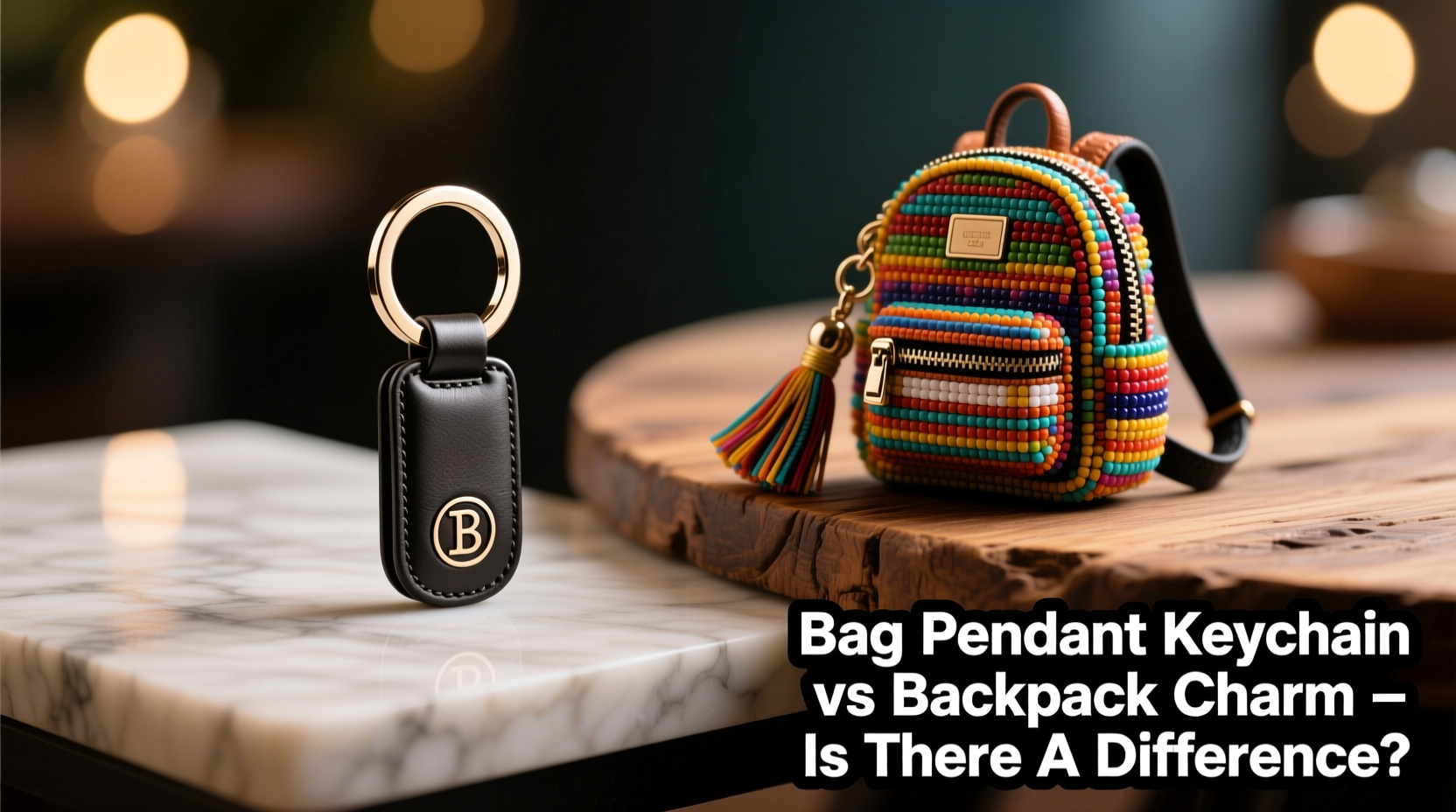
At first glance, both items serve the same purpose: decoration. They dangle from bags, zippers, or straps, adding personality to otherwise utilitarian gear. But when you look closer, differences emerge in how they’re designed, where they’re meant to go, and what they’re built to endure.
- Bag pendant keychain: Typically a small, durable accessory attached via a split ring or lobster clasp directly to keys or a bag’s key leash. Often includes functional elements like bottle openers, mini tools, or USB drives.
- Backpack charm: A decorative piece—often softer, lighter, or more delicate—designed to clip onto backpack zippers, straps, or D-rings primarily for aesthetic appeal.
The confusion arises because many modern “charms” are sold as “keychains,” and vice versa. A plush anime character might be marketed as a keychain despite being too fragile for actual key duty. Similarly, a sleek metal locket labeled a “backpack charm” might outlast your car keys.
Functional Differences: Purpose, Placement, and Practicality
Function separates these two categories more than appearance. A true keychain must withstand daily friction, jostling, and exposure to elements. It’s clipped to keys, shoved into pockets, and dragged across surfaces. A backpack charm, meanwhile, lives a gentler life—hanging off a zipper pull or shoulder strap, mostly visible rather than handled.
| Feature | Bag Pendant Keychain | Backpack Charm |
|---|---|---|
| Primary Use | Functional + decorative | Decorative only |
| Attachment Type | Split ring, heavy-duty clasp | Zipper pull loop, soft clip |
| Material Durability | Metal, silicone, rugged resin | Felt, plush, acrylic, lightweight alloys |
| Average Lifespan (daily use) | 1–3 years | 6 months – 2 years |
| Common Locations | Purse, belt loop, luggage tag | Backpack, tote, jacket zipper |
While overlap exists, the key distinction lies in resilience. If it can survive a week in a gym bag next to sweaty clothes and loose change, it’s likely a keychain. If it risks fraying, chipping, or breaking after one rough commute, it’s probably a charm.
Cultural Trends and Identity Expression
The rise of kawaii culture, fandom merchandise, and personalization has blurred functional lines. In Japan, *keitai straps* (mobile phone charms) evolved into full-scale fashion statements. Today, platforms like Etsy and TikTok fuel demand for hyper-personalized accessories—regardless of practicality.
Teenagers and young adults often treat backpack charms as identity markers. A single charm might represent a favorite band, mental health awareness, or LGBTQ+ pride. These aren’t chosen for utility but for visibility and emotional resonance.
“Backpack charms have become wearable diaries. They’re less about holding keys and more about telling stories.” — Lena Park, Cultural Anthropologist specializing in youth material culture
In contrast, professional environments favor understated bag pendants—minimalist geometric shapes, engraved initials, or leather tags. These signal taste without shouting, blending function with quiet elegance.
Mini Case Study: Maya’s Commute Evolution
Maya, a 24-year-old graphic designer, used to attach a plush raccoon charm to her work tote. Within three weeks, the thread unraveled, and one ear fell off. After replacing it twice, she switched to a compact enamel keychain shaped like a paint palette—durable, meaningful, and secure. For weekends, she clips her original plush charm onto her canvas backpack, where it sees less wear. Her solution? Context-based accessorizing: durable for daily use, expressive for leisure.
How to Choose: A Practical Checklist
Still unsure which category fits your needs? Use this checklist before purchasing:
- Will it carry weight? If attached to keys or frequently handled, opt for metal or reinforced resin.
- Where will it live? Backpack zippers tolerate delicate items; belt loops demand toughness.
- Is it sentimental? High-emotion pieces may warrant protective placement—even if less convenient.
- Does it need to stay put? Look for secure closures like screw clasps or double loops.
- What’s the environment? Rain, sand, and constant motion degrade soft materials faster.
Step-by-Step Guide: Building a Balanced Accessory System
You don’t have to pick one type. Many people benefit from using both—strategically. Here’s how to build a system that works:
- Assess your bags: Identify which carry keys daily and which are mainly decorative or occasional-use.
- Select a primary keychain: Choose one durable, multifunctional piece (e.g., with a bottle opener or flashlight).
- Add secondary pendants: Attach smaller bag pendants near handles or key leashes for visual flair without compromising function.
- Designate charm zones: Reserve backpacks, crossbody straps, or jacket zippers for non-durable charms.
- Rotate monthly: Swap out items to prevent overuse and keep your style fresh.
This layered approach maximizes both expression and longevity. You get the best of both worlds: meaning without maintenance headaches.
Frequently Asked Questions
Can I use a backpack charm as a keychain?
Technically yes, but not recommended for long-term use. Soft materials like felt, fabric, or glued components degrade quickly under friction and stress. Reserve delicate charms for low-impact zones.
Are there unisex options for these accessories?
Absolutely. While some designs lean toward traditionally feminine (hearts, pastels) or masculine (skulls, tools) aesthetics, many brands now offer gender-neutral styles—abstract shapes, nature motifs, minimalist typography—that appeal across identities.
Do luxury brands differentiate between the two?
Yes. High-end designers like Coach, Fossil, and Montblanc often label their offerings precisely. A “leather key fob” implies function; a “zipper charm” signals ornamentation. Packaging and price reflect this distinction—functional pieces tend to cost more due to material quality.
Conclusion: No, You’re Not Overthinking It—But Clarity Helps
The difference between a bag pendant keychain and a backpack charm isn’t imaginary. It’s just nuanced. One prioritizes resilience and utility; the other celebrates individuality and visual impact. Recognizing this allows you to make intentional choices—protecting your favorites, extending their life, and expressing yourself authentically across contexts.
You don’t need to settle for either/or. With thoughtful selection and strategic placement, your accessories can be both meaningful and durable. So go ahead—clip on that tiny dinosaur, engrave your initials, or support your cause with pride. Just know where each belongs, and why.




 浙公网安备
33010002000092号
浙公网安备
33010002000092号 浙B2-20120091-4
Comments
No comments yet. Why don't you start the discussion?