
When it comes to organizing your everyday carry, the keychain might seem like a minor detail—until you’re fumbling through your bag or pocket trying to find the right key. The shape of your keychain plays a surprisingly significant role in accessibility, durability, and even comfort. Among the most common designs are the classic round keychain and the increasingly popular bag-shaped (or oval D-ring) keychain. While both serve the same basic function, their differences can impact how efficiently you use them every day.
This guide breaks down the strengths and weaknesses of each design, compares real-world usability, and helps you determine which shape aligns best with your lifestyle, whether you're a minimalist commuter, an outdoor enthusiast, or someone who carries a heavy keyring.
Understanding Keychain Shapes: Round vs Bag Shape
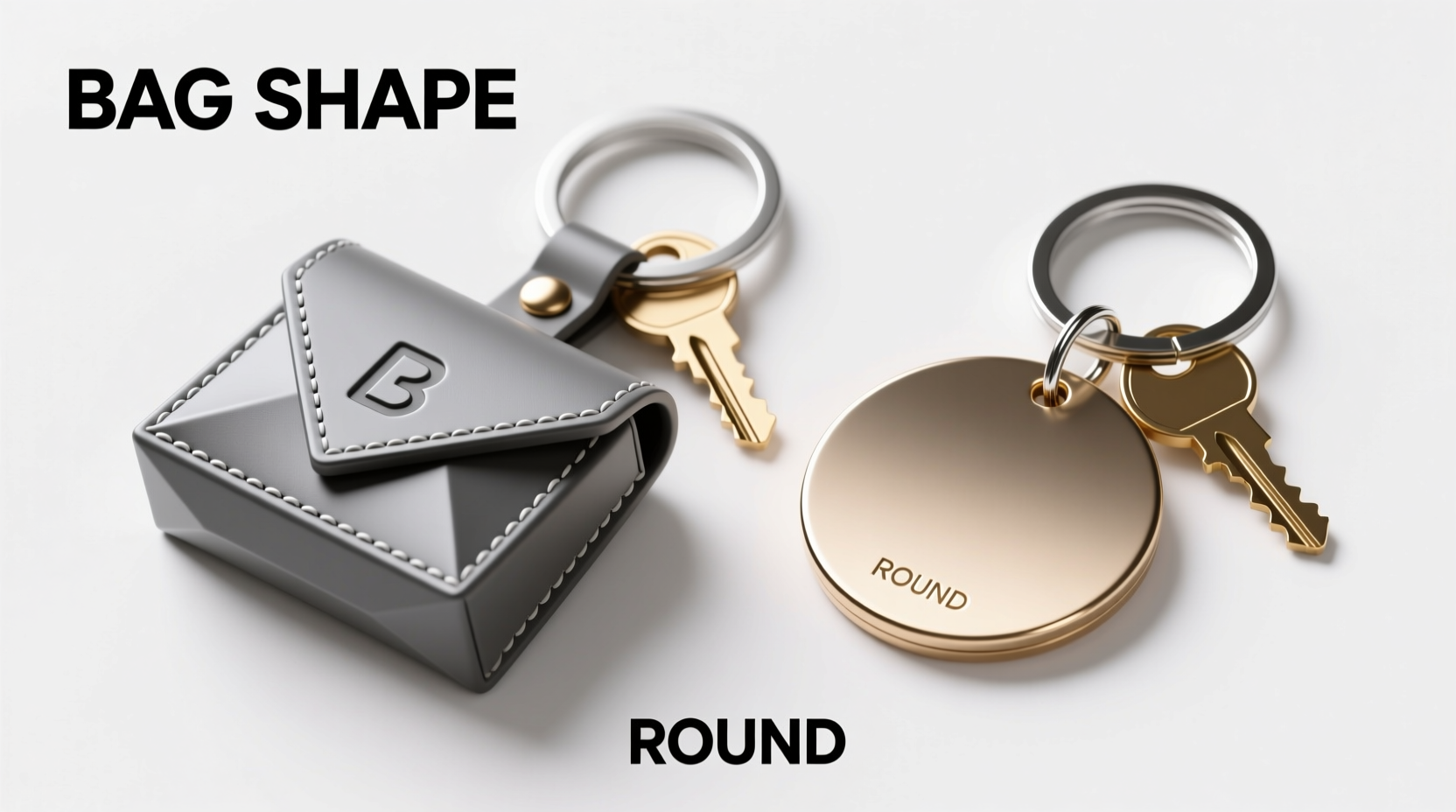
The round keychain is the traditional choice—circular, compact, and widely available. It typically features a split ring that allows keys to be added or removed with relative ease. Its symmetrical design makes it easy to manufacture and distribute, which explains its dominance in hardware stores and promotional giveaways.
In contrast, the bag-shaped keychain—also known as an oval key ring or D-ring style—features an elongated oval or teardrop form with a larger opening. This design originated in luggage and handbag hardware but has gained traction in key organization due to its functional advantages. The wider gap allows easier access to individual keys and better accommodation of bulky items like USB drives or bottle openers.
Functional Comparison: Accessibility, Durability, and Comfort
Choosing between shapes isn’t just about aesthetics—it’s about performance. Let’s examine how each design performs across three critical factors.
Accessibility
Round keychains often suffer from \"key nesting,\" where multiple keys stack tightly together, making it difficult to identify and pull out one without jostling the entire bunch. This becomes especially frustrating in low-light conditions or when wearing gloves.
Bag-shaped keychains provide greater spacing between keys. Their elongated profile naturally separates keys along the longer axis, reducing tangling and improving fingertip access. For users with dexterity challenges or those carrying many keys, this difference can be transformative.
Durability
Both types are commonly made from stainless steel or nickel-plated alloys, but structural stress differs. Round keychains concentrate pressure at a single point on the split ring, especially when loaded with heavy keys or tools. Over time, this can lead to warping or breakage.
Bag-shaped rings distribute weight more evenly across the oval structure. The broader base and reinforced ends reduce strain, making them less likely to deform under regular use. Outdoor workers, tradespeople, and frequent travelers often report longer lifespans with bag-style rings.
Comfort and Carry
Pocket carry comfort is another overlooked factor. A densely packed round keychain can create sharp protrusions that dig into your thigh or damage fabric. Because bag-shaped rings allow keys to lie flatter and spread out, they tend to conform better to the contours of pockets or bags.
Additionally, the smoother edges of high-quality bag-shaped keychains reduce the risk of snagging on fabrics—a small but meaningful advantage for those who value clean clothing and quiet movement.
“Ergonomic design matters more than people realize. A well-shaped keychain reduces friction, improves retrieval speed, and prevents long-term hand strain.” — Marcus Reed, Industrial Designer & EDC Specialist
Keychain Comparison Table
| Feature | Round Keychain | Bag-Shaped Keychain |
|---|---|---|
| Key Accessibility | Moderate – keys nest together | High – keys are spaced apart |
| Durability Under Load | Low to moderate – prone to splitting | High – distributes weight evenly |
| Pocket Comfort | Fair – can create lumps | Good – lies flatter |
| Compatibility with Add-ons | Limited – hard to attach tags or tools | Excellent – wide opening for clips and charms |
| Price & Availability | Widely available, very affordable | Slightly higher cost, growing availability |
| Best For | Light key loads, infrequent access | Heavy key sets, daily frequent use |
Real-World Example: Office Worker vs. Maintenance Technician
Consider two users: Sarah, a marketing professional who carries three keys and a small USB drive, and James, a building maintenance technician with over ten keys, a padlock, and a mini flashlight.
Sarah uses a slim round keychain clipped to her purse. It works well for her because she rarely accesses her keys and values minimalism. Her setup is lightweight and unobtrusive.
James initially used a standard round ring but found that keys would jam, the ring would bend, and retrieving the correct key took too long during emergencies. After switching to a large bag-shaped keychain, he noticed immediate improvements: faster access, reduced finger fatigue, and no more broken rings. The extra space allowed him to organize keys by zone (electrical, plumbing, entry), improving efficiency.
This contrast illustrates that the “best” shape depends on usage intensity and personal habits—not just preference.
Step-by-Step Guide: Choosing Your Ideal Keychain Shape
- Assess Your Key Load: Count how many keys you carry regularly. More than five? A bag-shaped ring will handle the volume better.
- Evaluate Access Frequency: Do you unlock doors multiple times a day? Frequent access favors the bag shape for quicker retrieval.
- Check Your Carry Method: If you keep keys in a front pocket, test both shapes for comfort. Bag-shaped ones usually win for ergonomics.
- Consider Attachments: Need to add a tracker (like Tile or AirTag), tool, or ID tag? The bag shape’s larger opening simplifies integration.
- Test for Long-Term Use: Try each type for one week. Note any discomfort, difficulty accessing keys, or signs of wear.
FAQ: Common Questions About Keychain Shapes
Can I replace my round keychain with a bag-shaped one easily?
Yes. Transferring keys is straightforward—simply open the split ring of the new keychain, slide off your keys from the old one, and reattach them. Just ensure the new ring is made of sturdy material to support your load.
Are bag-shaped keychains harder to find?
They were once niche, but availability has increased significantly. You’ll find them in specialty EDC (everyday carry) stores, online retailers like Amazon or REI, and even some hardware chains. Look for brands like Nite Ize, Gearline, or Kwik Link.
Do bag-shaped keychains attract more lint in pockets?
Not inherently. Any keychain can collect lint if carried loosely. Using a pocket pouch or clip-on holster minimizes this issue regardless of shape.
Final Recommendation: Match Shape to Lifestyle
There’s no universal winner in the bag shape vs round keychain debate—but there is a clear trend: functionality favors the bag-shaped design for most active users. Its superior organization, durability, and comfort make it ideal for anyone carrying more than a few keys or relying on quick access throughout the day.
That said, the round keychain still holds value for light users who prioritize simplicity and cost. If you only carry house, car, and office keys and rarely use them outside routine moments, a compact round ring remains a perfectly adequate solution.
The key is intentionality. Instead of defaulting to whatever came with your latest lock purchase, take a moment to evaluate how you use your keys. Small upgrades in design can yield outsized benefits in convenience and longevity.




 浙公网安备
33010002000092号
浙公网安备
33010002000092号 浙B2-20120091-4
Comments
No comments yet. Why don't you start the discussion?