
As the skincare world shifts toward cleaner, gentler formulations, one ingredient has emerged as a compelling challenger to the long-reigning anti-aging champion: retinol. Bakuchiol, derived from the seeds and leaves of the Psoralea corylifolia plant, is being hailed as a natural, non-irritating alternative that delivers similar results without the redness, peeling, or sun sensitivity. But does it really measure up when it comes to reducing fine lines and improving skin texture? Or is it simply a trend with underwhelming science?
The debate between bakuchiol and retinol isn’t just about efficacy—it’s also about accessibility, tolerance, and long-term sustainability in a skincare routine. For those who’ve struggled with retinol’s harsh side effects or prefer plant-based ingredients, bakuchiol offers hope. But hope needs evidence. Let’s examine the science, compare performance, and explore whether this botanical contender can truly stand shoulder-to-shoulder with dermatology’s gold standard.
Understanding Retinol: The Anti-Aging Benchmark
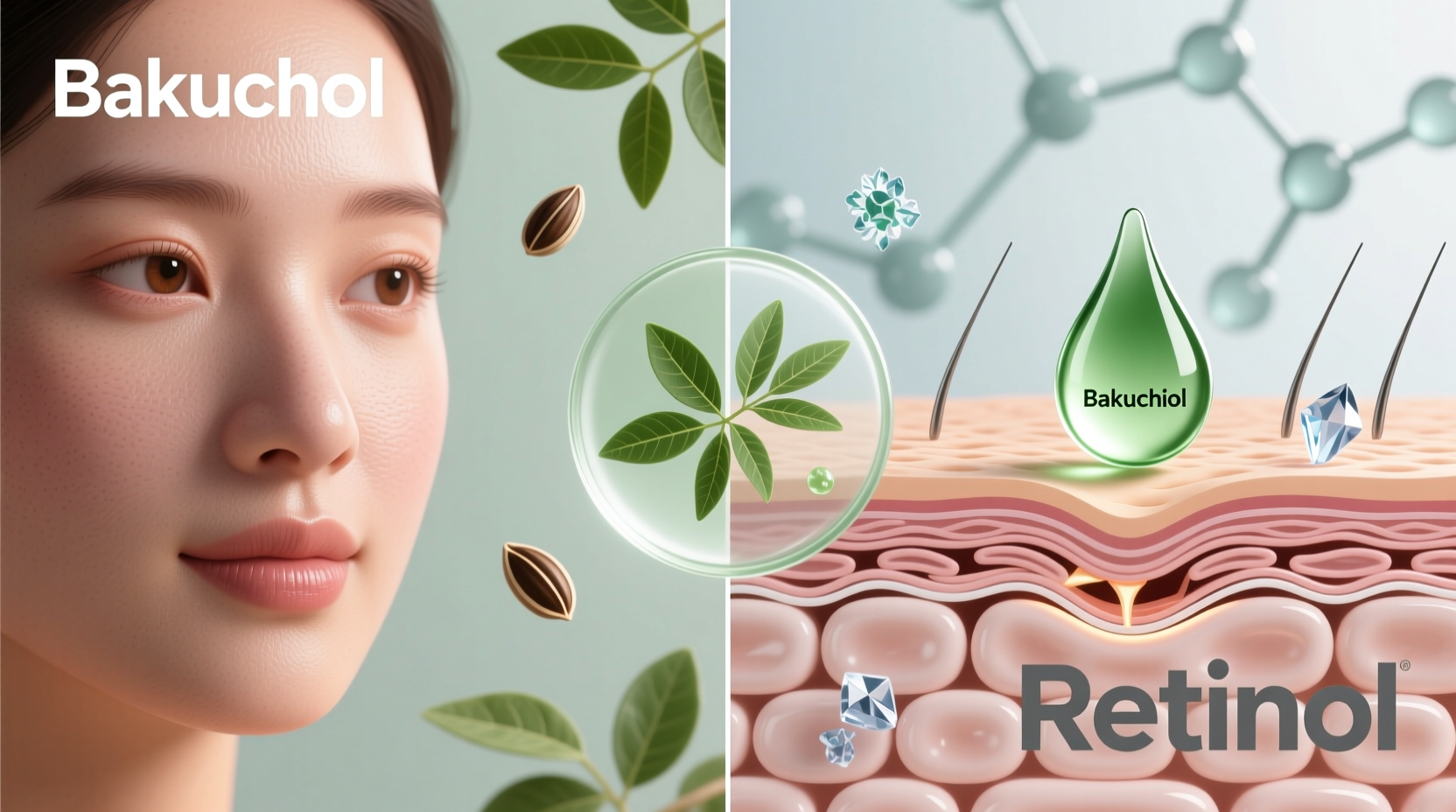
Retinol, a derivative of vitamin A, has been a cornerstone of anti-aging skincare for decades. Once applied, it converts into retinoic acid—the active form that binds to receptors in the skin and triggers cellular turnover, collagen production, and elastin synthesis. These processes are essential for smoothing fine lines, fading hyperpigmentation, and refining skin texture.
Clinical studies consistently show that regular use of retinol (typically 0.3% to 1%) over 12 weeks leads to measurable improvements in wrinkle depth and skin firmness. However, its potency comes at a cost. Up to 50% of users experience irritation, including dryness, flaking, stinging, and increased photosensitivity—especially during the initial “retinization” phase.
Dermatologists often recommend starting with low concentrations and gradually increasing frequency. Even then, some individuals—particularly those with sensitive or reactive skin types—may never tolerate retinol well enough to maintain consistent use.
“Retinol remains the most well-researched topical ingredient for reversing signs of photoaging. But if patients can’t stick with it due to irritation, they won’t see results.” — Dr. Lena Patel, Board-Certified Dermatologist
Bakuchiol: Nature’s Answer to Retinol?
Bakuchiol enters the conversation not as a vitamin A analog but as a meroterpene compound with antioxidant, anti-inflammatory, and collagen-stimulating properties. Unlike retinol, it doesn’t bind to retinoic acid receptors. Instead, it influences gene expression related to skin repair and renewal through different pathways—primarily by modulating oxidative stress and inflammation.
A landmark 2019 study published in the British Journal of Dermatology compared 0.5% bakuchiol applied twice daily to 0.5% retinol used once nightly over 12 weeks. The results were surprising: both groups showed statistically significant and nearly identical improvements in wrinkle depth, hyperpigmentation, and overall skin elasticity. Crucially, the bakuchiol group reported significantly fewer adverse reactions.
This suggests that while bakuchiol works differently than retinol, it may achieve comparable outcomes with a far more favorable tolerability profile. It’s also photostable, meaning it can be used safely during the day (though sunscreen remains essential), unlike retinol, which degrades in sunlight and increases UV sensitivity.
Direct Comparison: Bakuchiol vs Retinol
To understand where each ingredient excels—and where compromises exist—a side-by-side analysis helps clarify their roles in an anti-aging regimen.
| Feature | Bakuchiol | Retinol |
|---|---|---|
| Mechanism of Action | Antioxidant-mediated gene regulation; reduces inflammation and oxidative damage | Binds to retinoic acid receptors; accelerates cell turnover and collagen synthesis |
| Efficacy on Fine Lines | Visible improvement in 8–12 weeks; slightly slower onset | Noticeable reduction in 6–10 weeks; faster initial results |
| Skin Tolerance | High; suitable for sensitive, rosacea-prone, and reactive skin | Low to moderate; common irritation, especially early on |
| Photosensitivity Risk | None; stable in sunlight | High; must be used at night and paired with SPF |
| Pregnancy Safety | Generally considered safe (non-hormonal) | Typically avoided due to vitamin A concerns |
| Stability | High; resistant to light and air | Low; degrades quickly when exposed to light/air |
| Scientific Backing | Growing body of evidence; smaller but promising studies | Extensive clinical research spanning decades |
The data indicates that bakuchiol isn’t merely a “softer” version of retinol—it’s a distinct agent with unique advantages. While retinol still holds the edge in speed and volume of research, bakuchiol closes the gap for users prioritizing comfort, consistency, and long-term adherence.
Can Bakuchiol Replace Retinol Completely?
For many, the answer is yes—especially if their primary goals are mild to moderate wrinkle reduction, improved radiance, and gentle exfoliation without irritation. However, those dealing with advanced photoaging, deep-set wrinkles, or severe acne may still benefit more from prescription-strength retinoids like tretinoin.
An emerging approach gaining traction among skincare professionals is combination therapy: using bakuchiol in the morning and retinol at night. Because they work through different mechanisms, they don’t interfere with each other and may even provide synergistic benefits.
In fact, some formulations now blend both ingredients at lower concentrations to deliver enhanced results with reduced irritation. This hybrid strategy allows users to harness retinol’s power while mitigating its downsides through bakuchiol’s soothing and protective effects.
Step-by-Step Guide: Transitioning from Retinol to Bakuchiol
If you’re considering switching due to sensitivity or lifestyle preferences, follow this gradual transition plan:
- Week 1–2: Dual Trial – Use retinol every other night and apply bakuchiol on alternate evenings. Observe how your skin reacts to each.
- Week 3: Reduce Retinol Frequency – Cut back retinol to twice weekly. Apply bakuchiol on remaining nights.
- Week 4: Full Switch – Discontinue retinol and use bakuchiol nightly. Monitor hydration and texture changes.
- Week 5+: Evaluate Results – After four weeks of consistent bakuchiol use, assess improvements in smoothness, tone, and comfort.
This phased method minimizes disruption and gives your skin time to adapt. If you experience no regression in line reduction and enjoy better comfort, the switch is likely sustainable.
Real-World Example: A Sensitive Skin Success Story
Sophia, a 42-year-old teacher with combination-sensitive skin, had tried multiple retinol products over five years. Each time, she experienced tightness, redness around her mouth, and occasional breakouts—classic signs of barrier disruption. Despite loving the smoother texture after just a few weeks, she could never use retinol consistently for more than a month.
After reading about bakuchiol, she switched to a 1% serum applied nightly. Within three weeks, she noticed less morning dullness. By week eight, her forehead lines appeared softer, and her skin felt more resilient. Most importantly, there was no irritation—even during winter months when her skin typically flares.
“I finally have something I can stick with,” she said. “It’s not flashy or dramatic, but my skin looks healthier every week. That’s worth more than a fast fix that makes me miserable.”
Sophia’s experience reflects a growing trend: consumers aren’t just chasing maximum potency—they want effective solutions they can maintain for years.
Expert Recommendations and Usage Tips
While bakuchiol is generally well-tolerated, optimal results depend on proper formulation and usage habits. Here are key guidelines from dermatologists and formulators:
- Look for concentrations between 0.5% and 2%. Below 0.5%, effects may be too mild; above 2%, no added benefit has been proven.
- Choose products in opaque, air-tight packaging to preserve stability—even though bakuchiol is photostable, oxidation can degrade potency.
- Apply after cleansing and toning, before moisturizer. It layers well with hyaluronic acid, niacinamide, and peptides.
- Consistency matters more than concentration. Daily use over 8–12 weeks yields best outcomes.
- Avoid mixing with strong acids (like high-percentage glycolic or salicylic acid) unless your skin is acclimated, as this may increase sensitivity despite bakuchiol’s calming nature.
Frequently Asked Questions
Is bakuchiol safe during pregnancy?
Yes, bakuchiol is widely regarded as safe during pregnancy and breastfeeding because it is not a vitamin A derivative and does not carry the same teratogenic risks associated with retinoids. Many prenatal skincare brands feature bakuchiol as their go-to anti-aging ingredient.
How long does it take to see results with bakuchiol?
Most users notice subtle improvements in skin smoothness and brightness within 4–6 weeks. Significant reduction in fine lines typically becomes visible after 8–12 weeks of nightly use, similar to over-the-counter retinol regimens.
Can I use bakuchiol with other active ingredients?
Yes, bakuchiol is compatible with most actives, including vitamin C, AHAs/BHAs (with caution), peptides, and niacinamide. In fact, combining it with complementary ingredients can enhance overall anti-aging effects without increasing irritation risk.
Final Verdict: A Worthy Alternative, Not Just a Substitute
Bakuchiol isn’t just a “natural retinol”—it’s a distinct anti-aging agent with its own strengths. While it may not match prescription retinoids in raw power, it delivers meaningful improvements in fine lines and skin quality with exceptional tolerability. For those who’ve abandoned retinol due to discomfort, or who seek a sustainable, plant-based solution, bakuchiol isn’t merely “strong enough”—it may actually be the smarter long-term choice.
The future of skincare lies not in choosing between nature and science, but in integrating the best of both. Bakuchiol exemplifies this evolution: a botanical compound validated by clinical research, offering real results without compromising skin health.




 浙公网安备
33010002000092号
浙公网安备
33010002000092号 浙B2-20120091-4
Comments
No comments yet. Why don't you start the discussion?