
Choosing your character class in Baldur’s Gate 3 is one of the most impactful decisions you’ll make. For first-time players, the experience should be engaging, intuitive, and rewarding—without overwhelming complexity. Two popular melee-focused classes often catch the eye: the Monk and the Barbarian. Both offer high mobility, raw power, and satisfying combat, but they deliver very different gameplay experiences. So, which one is truly more fun on a first playthrough? The answer depends on what kind of fun you’re after.
Understanding the Core Differences
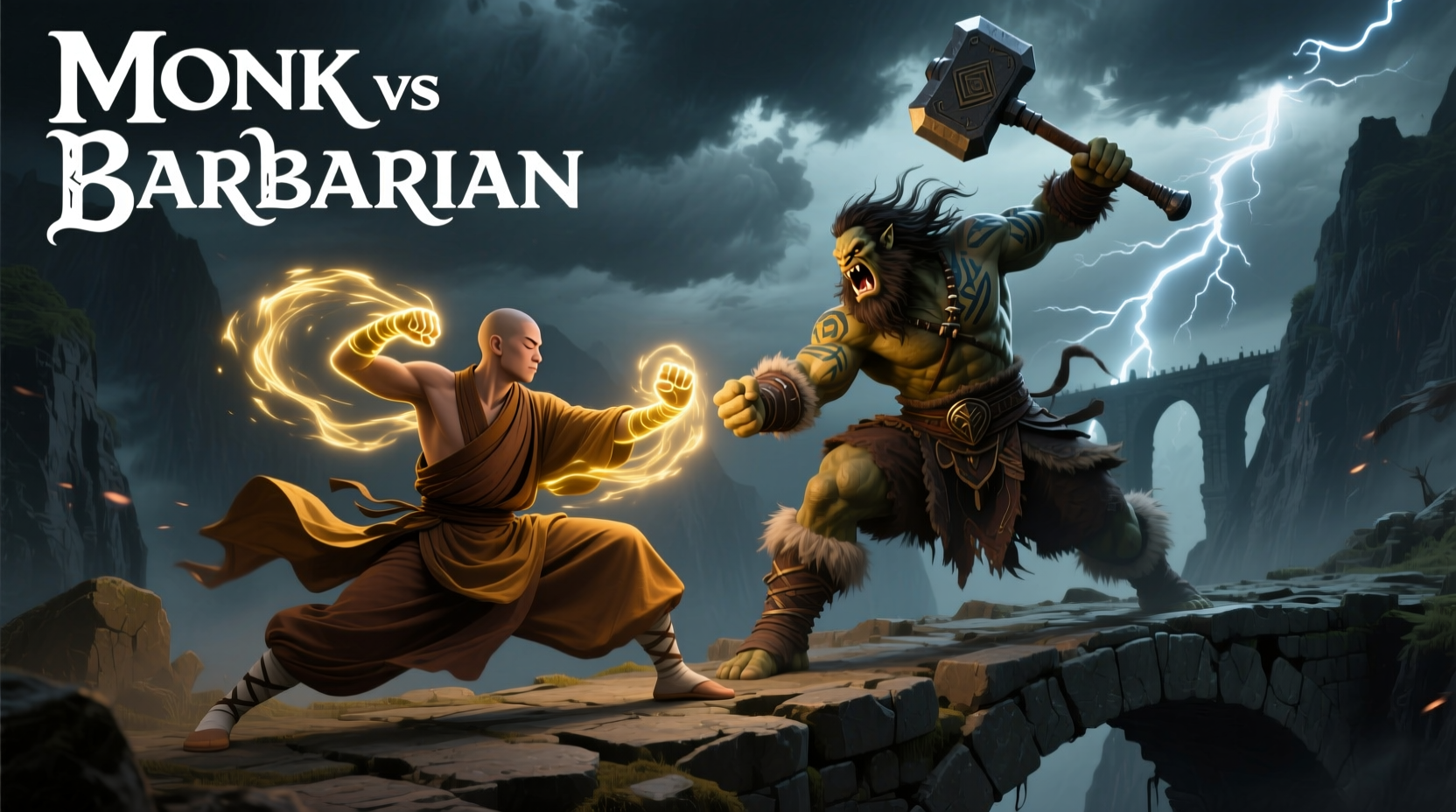
The Monk and the Barbarian are both martial classes, meaning they rely on physical prowess rather than spellcasting. However, their mechanics diverge significantly. The Monk channels inner energy (ki) to perform supernatural feats like dashing between enemies and striking multiple times in a single turn. The Barbarian, meanwhile, enters a rage that increases damage resistance and output, thriving in prolonged brawls.
Monks are agile, precise, and built around positioning and resource management. They scale with Dexterity and Wisdom, using ki points to fuel abilities such as Flurry of Blows and Patient Defense. Their strength lies in speed, evasion, and battlefield control.
Barbarians are tanks by nature. With high hit points and damage resistance during rage, they absorb punishment while dealing heavy blows. Their core mechanic—rage—lasts for a limited number of turns per rest and enhances attacks. Strength-based and fearless, they excel at drawing enemy attention and dominating close-range combat.
“Barbarians are about momentum; Monks are about precision. One charges through the storm, the other dances around it.” — Lysara Venn, D&D Rules Analyst and BG3 Speedrunner
Beginner Friendliness: Who Forgives Mistakes?
For a first-time player, forgiveness matters. Combat in Baldur’s Gate 3 is tactical and unforgiving—positioning, line of sight, and action economy can mean the difference between victory and a party wipe. How each class handles mistakes varies greatly.
The Barbarian has a higher survivability ceiling early on. Rage grants resistance to bludgeoning, piercing, and slashing damage—the three most common damage types. This means even if you stand in the open or draw aggro from multiple foes, you’re less likely to go down quickly. High hit dice (1d12 per level) also ensure solid health progression.
Monks, while mobile, are fragile. They wear no armor and depend on high Armor Class from Dexterity and Wisdom bonuses. A misplaced dash or failed saving throw can result in a quick death. Ki point management adds another layer of decision-making that new players might find overwhelming.
Combat Flow and Player Engagement
Fun isn’t just about survival—it’s about how engaged you feel during combat. Here, the two classes shine in different ways.
Barbarians follow a straightforward loop: enter rage, attack, sustain damage, repeat. This simplicity is a strength. You don’t need to micromanage resources beyond tracking rage duration. Abilities like Reckless Attack (which grants advantage on attacks at the cost of giving enemies advantage on theirs) encourage aggressive play. Path of the Totem Warrior (Bear) or Path of the Zealot are particularly beginner-friendly subclasses, offering passive benefits without complex activation requirements.
Monks, especially Way of the Open Hand or Way of Shadow, offer more dynamic turns. You can use bonus actions to flurry, step, or disengage—all within a single round. This creates a “high-action” rhythm that feels fluid and cinematic. Landing a perfect sequence of strikes, dashes, and dodges is immensely satisfying. But it requires planning and familiarity with action economy—a hurdle for newcomers.
Consider this: a Barbarian can often win by charging into the fray and swinging repeatedly. A Monk needs to assess distance, enemy placement, ki availability, and opportunity costs before acting. That extra layer of choice amplifies fun for experienced players but may distract beginners from learning core mechanics.
Detailed Comparison: Monk vs Barbarian
| Feature | Monk | Barbarian |
|---|---|---|
| Starting HP | 8 + Constitution modifier | 12 + Constitution modifier |
| Primary Stats | Dexterity, Wisdom | Strength, Constitution |
| Armor Proficiency | None (relies on AC from Dex/Wis) | Light/medium, shields (with subclass) |
| Resource System | Ki points (recharge on short rest) | Rage (limited uses per long rest) |
| Mobility | Unarmored Movement, Step of the Wind | Base speed only (unless multiclassed) |
| Synergy with Companions | Good with ranged allies (avoids clustering) | Excellent tank for protecting squishy allies |
| Learning Curve | High (action economy, ki management) | Low to moderate (straightforward rotation) |
| First-Run Enjoyment | High for tactically inclined players | High for action-oriented, resilient play |
A Real First-Time Player’s Experience
Jamie, a longtime RPG fan but new to D&D mechanics, decided to start Baldur’s Gate 3 with a Wood Elf Monk. “I loved the idea of being fast and graceful,” they said. “But my first real fight against goblins went badly. I dashed too far forward, got surrounded, and died in one turn. My companions had to reload.” After switching to a Half-Orc Barbarian, Jamie found immediate success. “I just raged and swung. I took hits, but I stayed standing. It felt powerful, and I could focus on understanding cover, flanking, and reactions instead of managing ki.”
This story reflects a common pattern: Monks reward mastery, while Barbarians reward presence. For a first run, resilience often trumps versatility when the goal is enjoyment over optimization.
Step-by-Step Guide: Choosing Your First-Class Experience
- Assess your comfort with strategy games. If you’ve played XCOM, Divinity: Original Sin, or similar, you may adapt faster to Monk mechanics.
- Determine your preferred playstyle. Do you want to dodge attacks and strike from shadows (Monk), or wade into battle and survive punishment (Barbarian)?
- Consider party composition. If playing solo or with AI companions, a Barbarian can anchor the frontline. A Monk works best with supportive casters who can control the battlefield.
- Test early-game viability. Barbarians gain rage at level 1; Monks get useful abilities, but full potential emerges at level 5+.
- Think about roleplay fit. Want a spiritual warrior seeking enlightenment? Go Monk. Prefer a fierce survivor shaped by trauma or heritage? Barbarian fits naturally.
When the Monk Shines on a First Run
The Monk isn’t off-limits for beginners—but certain choices improve the experience. Opting for the Way of the Open Hand subclass provides the most balanced toolkit. Features like Knockdown and the ability to push enemies enhance crowd control, letting you manipulate the battlefield without relying solely on damage.
Pairing a Monk with a high-Dexterity race like Wood Elf or Tabaxi boosts AC and initiative, helping you act first and reposition safely. Starting gear also plays a role: unarmed strikes scale well, but having a ranged option (like a hand crossbow) helps when locked behind obstacles.
The Monk truly excels in scenarios requiring agility—navigating traps, scouting ahead, or isolating enemies. If your group lacks mobility, a Monk can fill that gap beautifully. But again, this assumes you’ve grasped basic mechanics like cover and action usage.
Why the Barbarian Is the Safer Bet for Fun
“Fun” in a first playthrough often correlates with empowerment. The Barbarian delivers that consistently. From level 1, you feel like a force of nature. Rage activates with a single button press. Reckless Attack lets you break stalemates. And when things go wrong, your high HP pool gives you breathing room.
Additionally, Barbarians synergize well with common party roles. They can protect vulnerable casters like Shadowheart or Gale by drawing fire. They benefit from buffs like Haste or Bless without needing to understand intricate spell interactions. Their simplicity doesn’t make them weak—it makes them reliable.
Subclass options like Path of the Totemic Warrior (Wolf) enhance pack tactics, encouraging coordination with allies. Meanwhile, Path of the Zealot offers temporary resurrection during rage—a godsend during tough boss fights. These passives reduce pressure on the player, allowing you to enjoy the story and world without constant fear of failure.
Frequently Asked Questions
Can Monks wear armor in Baldur’s Gate 3?
No. Monks cannot wear armor and must rely on their Unarmored Defense, which calculates AC using Dexterity and Wisdom modifiers. This makes high stats in both crucial for survivability.
Do Barbarians need a lot of gear to be effective?
Not really. Barbarians benefit from simple, high-damage weapons like greataxes or greatswords. Since rage adds extra damage dice, even basic gear feels impactful. Focus on Strength-boosting items rather than complex enchantments early on.
Is multiclassing recommended for either class on a first run?
Generally, no. Multiclassing introduces additional rules and delays access to powerful class features. Stick to a single class until you’ve completed your first campaign. Once familiar with mechanics, experimenting becomes far more enjoyable.
Final Recommendation: Which Class Offers More Fun?
If your priority is **immediate satisfaction, resilience, and straightforward progression**, the **Barbarian** is the better choice for a first run. It minimizes frustration, maximizes impact, and allows you to learn the game’s systems at your own pace. You’ll spend less time worrying about resource management and more time enjoying the narrative, exploration, and combat flow.
The **Monk** is a thrilling option—if you’re drawn to precision, speed, and tactical depth. But its steep learning curve can overshadow the fun for newcomers. Save it for your second or third playthrough, once you understand action economy, positioning, and enemy behaviors.
Ultimately, Baldur’s Gate 3 rewards replayability. There’s no “wrong” choice forever. But for that crucial first journey through the Underdark, the surface world, and the mind flayer scars in your brain, starting strong matters. And strength, in this case, wears furs, roars defiantly, and laughs in the face of damage.




 浙公网安备
33010002000092号
浙公网安备
33010002000092号 浙B2-20120091-4
Comments
No comments yet. Why don't you start the discussion?